DPI Budget Plan Would Phase Out Special Needs Vouchers Statewide
Proposal ends new enrollment after 2027-28 while boosting special ed aid to public schools.
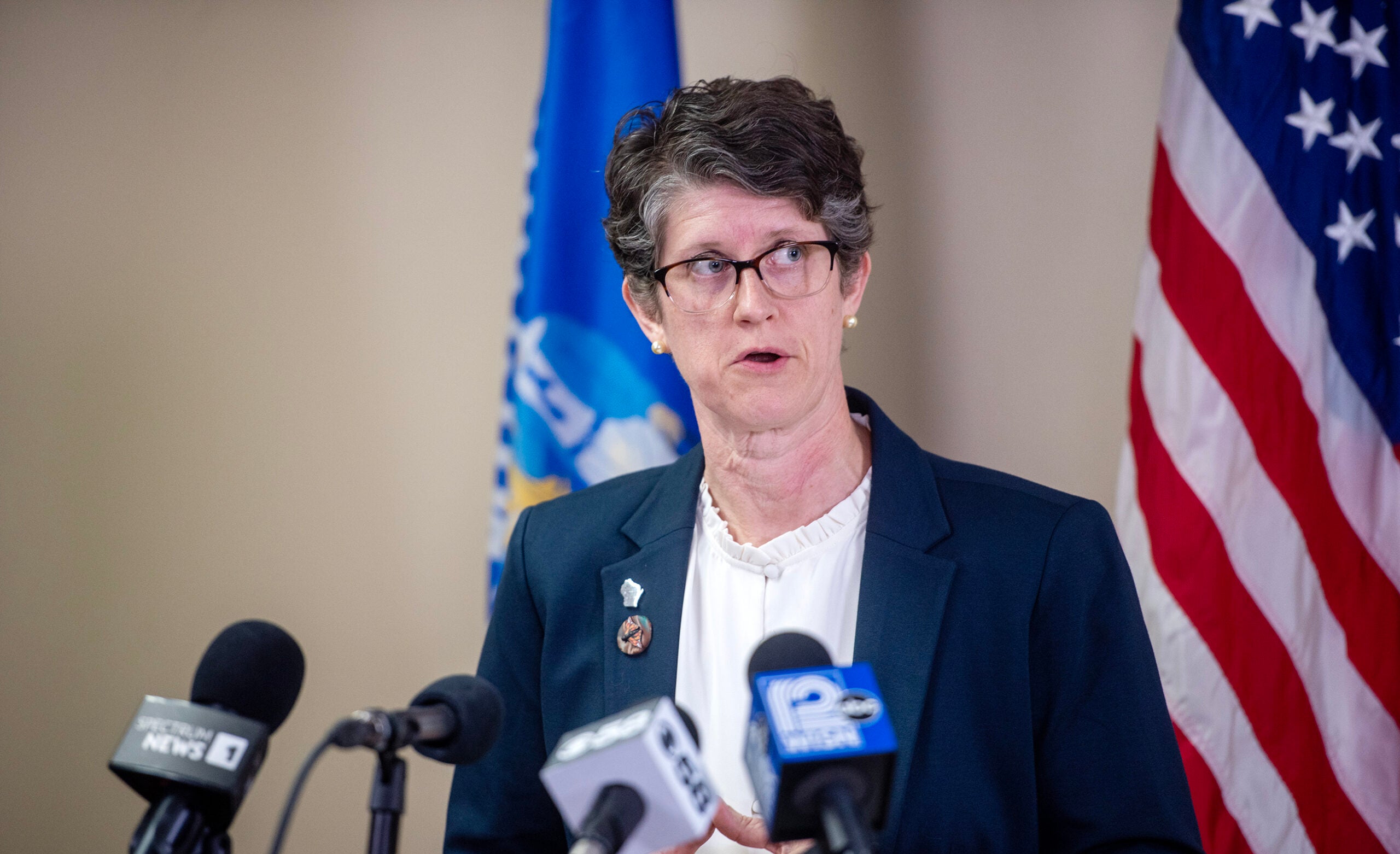
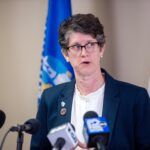
Wisconsin Superintendent Jill Underly speaks during a press conference Tuesday, Nov. 4, 2025, at the Tommy G. Thompson Center in Madison, Wis. Angela Major/WPR
The Wisconsin Department of Public Instruction’s budget proposal includes phasing out a private school voucher program that serves about 3,800 students with disabilities.
DPI’s proposal to freeze and then end the Special Needs Scholarship Program is tucked into the $2.75 billion budget request the department unveiled last week.
Budget documents released Friday are calling for a “fundamental shift” in the state’s school funding formula, tying revenue increases to inflation and putting more money toward special education.
Under DPI’s plan, no new students could enroll in the Special Needs Scholarship Program and no new private schools could join the program after the 2027-28 school year.
The program would be phased out in fiscal year 2029. Students currently in the program can remain.
The SNSP program allows all families, regardless of income, to receive a voucher, up to $16,477 depending on need, to go to a private school that participates in the program.
To help cover the costs of special education services, SNSP pays several thousand more than the state’s standard voucher program.
For the 2026–2027 school year a Wisconsin School Choice Voucher was $11,305 for grades K to 8 and $13,799 for grades 9 to 12.
Since 2016 the program has grown substantially — from 205 students in its first year to 3,859 students this year. Once students are accepted into the scholarship program, they remain eligible until they graduate from high school or turn 21.
The estimated cost of the program in 2024-25 was $44.5 million, according to the Wisconsin Legislative Fiscal Bureau. It is funded through a reduction in state aid to the public school districts that would normally serve the students enrolled in the scholarship program.
DPI spokesperson Chris Bucher said public money requires public accountability and there has been a lack of that over the years with private schools that receive vouchers.
“What we’re proposing are reasonable changes that really ensure that students are appropriately served in all publicly-funded school settings,” Bucher said.
DPI’s budget proposal also includes increasing the amount schools are reimbursed for special education from the current rate of 35 percent to 50 percent in 2028 and 60 percent of costs in 2029.
“Public schools are the best place for students with disabilities to learn because public schools accept all students,” Bucher said. “They have a federal responsibility to provide that appropriate education and make sure that all services that a student with disabilities needs is offered to them. But those costs have continued to increase.”
Special education costs that aren’t reimbursed must be covered by public school districts through general operating funds and local property taxes.
In Milwaukee, Superintendent Brenda Cassellius said if the special education reimbursement rate was 42 percent, as promised in the state budget, instead of 35 percent, the district would have gotten another $36 million this year.
Rebecca Hannemann is the director of student services at St. Marcus Lutheran School in Milwaukee. She said the special needs program rivals any special education program offered at a public school.
“We do have licensed and certified special education teachers, special education aides and three speech pathologists in our program,” Hannemann said. “Each year, I have hundreds of parents that are seeking a different experience for their child with special needs outside of the public district.”
St. Marcus has three campus and currently serves a total of 1,256 students in the Wisconsin voucher program, according to DPI data. Of those students, 123 children receive the special needs voucher. This year, St. Marcus will receive $14.5 million from the state.
Hannemann said DPI’s budget request to end the special needs program feels like a “knife” to the program St. Marcus has built.
“You’re now mandating them to go to a public district if you’re not willing to support the school services in a private school,” she said.
The cost to educate a student with disabilities is why, in part, the SNSP program was created, said state Sen John Jagler, R-Watertown.
Jagler, who co-authored the bill in 2015 that launched the program, said he was hearing from dozens of families who had children with disabilities and wanted to use open enrollment to move to a different public school district.
Jagler’s daughter has Down syndrome. He said the public school district where he lives served her well, but he knows many parents who wanted a different opportunity for their child.
“They were stuck in situations in schools that weren’t fitting their kids needs,” Jagler said. “It was a 42 percent denial rate, compared to students without IEPs.”
A non-resident school district in Wisconsin can deny open enrollment for a student with an individualized education plan, or IEP, if the district lacks space or does not offer the special education programs or related services required by the student’s IEP.
While Jagler said the scholarship program was inspired by complaints about being closed out of the public school open enrollment system — which allows families to enroll children in public schools outside their own school district — it focused not on changing rules for open enrollment, but on creating more access to private schools.
Jagler said the program has grown because of the need and parents should be “outraged” that it could be ending.
“Sometimes you got to take off your blinders, ‘I’m a public school supporter, School Choice is terrible,’ and you’ve got to look at the kids,” Jagler said. “This is very, very cynical to just cut this off now. I know DPI never really liked the program. It’s clear now that they saw an opportunity to go for a hammer and put an end to it.”
Wisconsin special needs voucher program would end under DPI budget proposal was originally published by Wisconsin Public Radio.
If you think stories like this are important, become a member of Urban Milwaukee and help support real, independent journalism. Plus you get some cool added benefits.