

Wisconsin Home Affordability Hits Lowest Level Since 2009
High mortgage rates, rising prices and flat incomes push buyers to the sidelines, new report finds.
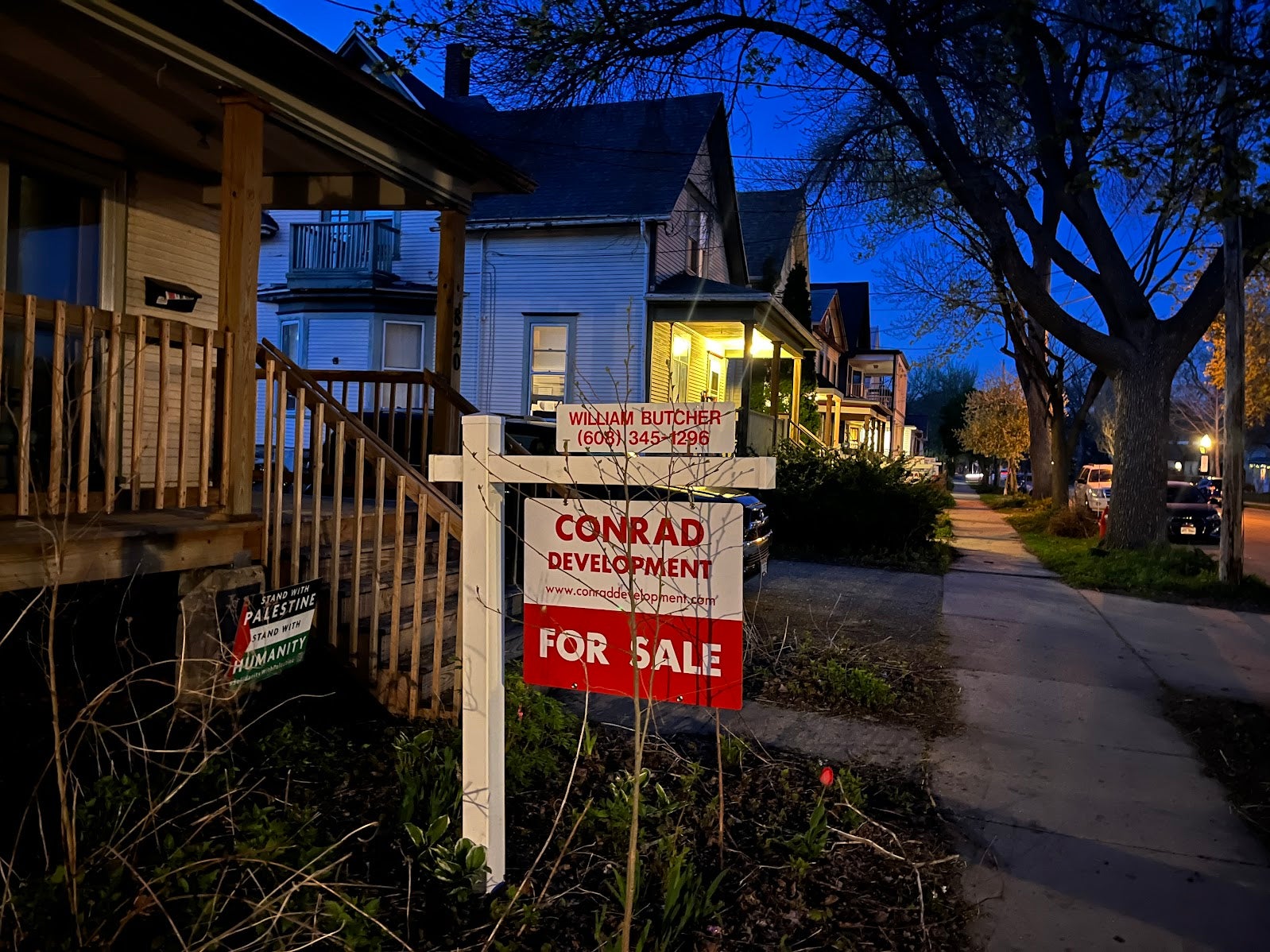
A home for sale in Madison. Joe Tarr/WPR
Last month, housing affordability in the state reached its lowest levels since the Wisconsin Realtors Association began tracking the measure in 2009, fueled by a rise in mortgage rates and stagnant incomes.
That’s according to a new report from the Wisconsin Realtors Association. The report found that home sales fell 8.5 percent in October compared to the same month last year.
The report found that housing affordability, as measured by the association’s housing affordability index, fell 12.2 percent over the last year. The report shows a spike in interest rates, rising home prices and stagnant incomes combined to hurt affordability.
Amy Curler, Wisconsin Realtors Association board of directors chair, said mortgage rates have remained above 6.5 percent since July, and rose almost half a percent in the last two months.
“While higher rates have kept some buyers on the sidelines, we remain hopeful that rates will begin to ease, bringing renewed opportunities and confidence to the market,” she said in a statement.
Median home prices were $341,000 last month.
According to the report, the average 30-year fixed mortgage rate was 7.33 percent in October.
For the median-priced home, the monthly payment for a 30-year loan with the October average mortgage rate would be about $2,600 after a 10 percent down payment. That payment would require an annual income of about $100,000 — the median household income in Wisconsin is $80,213.
While higher mortgage rates make it more expensive for consumers to borrow money, the report also says median family income growth “was essentially unchanged over the last 12 months.”
David Clark, an economist with the Wisconsin Realtors Association, said median family incomes increased by an estimated 0.3 percent since last October, while mortgage rates increased by more than 1 percent and home prices increased by 2.3 percent.
Adjusted for inflation, Clark said, median family incomes have “definitely gone down” over that period. When incomes aren’t keeping up with inflation, consumers’ purchasing power erodes.
“It leaves less in terms of purchasing power for both small ticket and big ticket items,” Clark said. “If you’re buying a home, that’s the largest investment that most people are making in terms of ongoing expenditures.”
At the same time, because the rate of inflation has remained above 3 percent, interest rates have stayed high.
“You’re not going to lend money at a lower rate than you expect inflation to be,” Clark said.
October also marked the second straight month where new listings in Wisconsin fell by more than 5 percent compared to last year but total listings grew.
Clark said the growth in total listings is likely the result of homes staying on the market longer.
Even though listings have improved, he says it’s still a seller’s market, rather than a buyers market.
“A balanced market is six months of available inventory,” Clark said. “Those inventory figures have been consistently improving over the course of the last several years. We’re not there yet. We’re not at that six-month balance point.”
The report adds that median home prices rose slower than the rate of inflation over the last year.
And if those prices follow seasonal patterns, then they peaked for the year at $361,000 in August, association data shows. Median home prices were at $341,000 last month. Home prices are generally lower through the winter months.
“Affordability tends to improve during off-peak periods,” Tom Larson, president of the Wisconsin Realtors Association, said in a statement. “Sellers listing their homes in the colder winter months tend to be more motivated to sell, which can lead to more generous concessions on the final sale price.”
Looking ahead to 2027, Clark said affordability could improve if mortgage rates come down, and incomes and housing supply increase.
Home affordability in Wisconsin reached lowest levels since realtors began tracking it was originally published by Wisconsin Public Radio.
If you think stories like this are important, become a member of Urban Milwaukee and help support real, independent journalism. Plus you get some cool added benefits.