
Milwaukee Takes Next Step in Zoning Overhaul
After a contentious debate over the plan, Milwaukee officials are preparing to tackle the actual code changes.
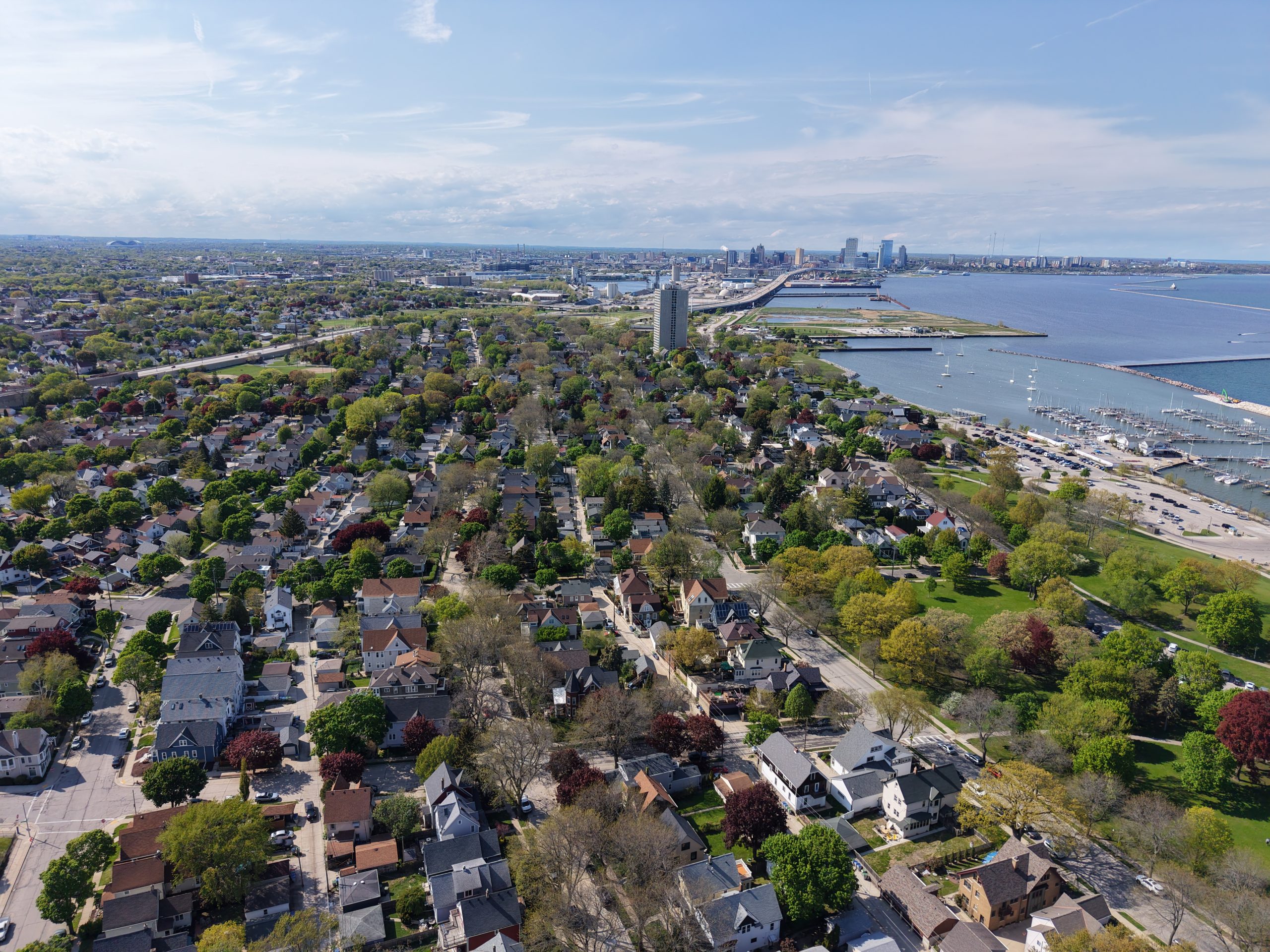
Bay View and the Milwaukee skyline. Photo by Urban Milwaukee staff.
Adopting a plan to encourage more housing in Milwaukee was difficult enough. Now comes the potentially more contentious task of changing the laws that govern what can actually be built.
The Department of City Development (DCD) is launching the second phase of its Housing Element initiative, formerly known as Growing MKE, with a series of public meetings next week to review proposed changes to the city’s zoning code.
The work follows the Common Council’s July 2025 adoption of the Housing Element, a long-debated policy document intended to encourage more housing development, expand housing choices and address rising housing costs.
But adopting the plan didn’t actually change most of the city’s zoning code. That requires a separate legislative process, one that could reopen some of the political battles that nearly derailed the original initiative.
“We’ve set a new vision for Milwaukee’s housing through an update to the City’s Comprehensive Plan. Now, we’re updating the Zoning Code to help bring that vision to life,” said DCD in a Friday email announcing the upcoming meetings.
The department is promising to release details of the proposed changes Monday, Nov. 16, followed by three public engagement sessions.
The changes are expected to address four areas: small-scale infill housing in existing neighborhoods, larger multi-unit and mixed-use buildings, building design standards and technical changes to zoning definitions and regulations.
Importantly, DCD says the proposal will not change the zoning classifications assigned to individual properties. Instead, it would alter the rules governing what can be built within existing zoning districts.
That distinction could prove politically significant.
The Housing Element initiative, which began in 2022, originally contemplated sweeping changes to the city’s zoning code. Among them was a proposal to allow four-unit residential buildings in many areas currently reserved for less intensive development.
That proposal was removed before the first public hearing in July 2024, which itself turned contentious as residents and elected officials raised concerns about neighborhood character, displacement and the loss of Common Council oversight of individual development proposals.
DCD subsequently scaled back the proposal further, eliminating recommendations to legalize duplexes and three-unit buildings citywide.
The compromises frustrated housing advocates and several council members who argued that Milwaukee needed to take more aggressive steps to address a shortage of housing.
Other council members, including Ald. Robert Bauman, expressed concern about allowing additional development without requiring approval from the local alderperson and Common Council.
The final plan, which was approved in a 12-2 vote with one abstention, retained a series of recommendations to encourage new housing along transit corridors, permit additional housing types, adjust minimum lot sizes and facilitate the construction of so-called “missing middle” housing, which falls between single-family houses and large apartment buildings.
The plan also includes commitments to prevent displacement, support homeownership and repair existing housing.
“This will help us to finally begin to address the housing crisis that continues to plague us,” said Ald. JoCasta Zamarripa when the plan was adopted.
At the time, Zamarripa acknowledged the compromises necessary to secure approval.
Mayor Cavalier Johnson, who signed the plan into law the following day, defended the scaled-back proposal.
“It was always my goal to have the most progressive policy that we could muster through. That’s exactly what we got,” he said. “I think that too often in politics and in government, people allow perfection to be the enemy of the good.”
The administration is now preparing to see how much of that vision can be translated into enforceable zoning rules.
One major component of the Housing Element has already been implemented. On the same day the larger plan was approved, the council voted by a single vote to legalize accessory dwelling units, sometimes called carriage homes or granny flats, in areas zoned for single-family housing.
Another related measure, adopted in April 2025, created a zoning designation permitting residential buildings with up to eight units. But the new designation has not been applied to any properties since its creation.
The council has already provided additional funding for the next phase. In September, council members endorsed legislation transferring $30,000 to support public engagement and technical assistance for the zoning analysis.
Milwaukee’s zoning code was initially adopted in 1922 and was last substantially overhauled in the early 2000s. Although the code has been amended repeatedly, it continues to dictate everything from permitted housing types to building height, placement and design.
The upcoming process will determine how significantly those rules change.
Three Public Meetings Scheduled
DCD has scheduled two community dinner-and-learn sessions and a drop-in office hours session next week.
- Tuesday, Nov. 17: UMOS, Suite D, 2701 S. Chase Ave. Open house from 4:30 to 7 p.m., with a presentation from 5:30 to 6 p.m.
- Thursday, Nov. 19: Washington Park Senior Center, 4420 W. Vliet St. Open house from 4:30 to 7 p.m., with a presentation from 5:30 to 6 p.m.
- Friday, Nov. 20: Zeidler Municipal Building, 841 N. Broadway, first-floor conference room. Drop-in hours from 1 to 5:30 p.m.
Dinner will be provided at the first two sessions, with Spanish interpretation and translated materials available. Individuals are encouraged to register in advance to ensure there is enough food available.
The proposed changes are scheduled to be published Monday, Nov. 16, at engage.milwaukee.gov/housing-tune-up, where residents will also be able to submit feedback.
Existing members must be signed in to see the interactive map. Sign in.
If you think stories like this are important, become a member of Urban Milwaukee and help support real, independent journalism. Plus you get some cool added benefits.
More about the Growing MKE proposal
- Milwaukee Takes Next Step in Zoning Overhaul - Jeramey Jannene - Nov 13th, 2026
- Proposal Will Remove Key Barrier to Building Rear Cottages - Jeramey Jannene - Nov 11th, 2026
- City Backs Free Designs To Jumpstart Backyard Carriage Homes - Jeramey Jannene - Oct 27th, 2026
- ‘Revive’ Housing Pilot Advances After Months Of Negotiations - Jeramey Jannene - Sep 10th, 2026
- Milwaukee Seeks ‘Missing Middle’ Housing Developers - Jeramey Jannene - Nov 24th, 2025
- Milwaukee Aims To Build ‘Missing Middle’ Housing in 2026 - Jeramey Jannene - Oct 29th, 2025
- Despite Its Passage, ‘Growing MKE’ Still Not A Done Deal - Jeramey Jannene - Sep 16th, 2025
- Mayor Signs Housing Legislation, Praises Late Jonathan Brostoff - Jeramey Jannene - Jul 16th, 2025
- Council Adopts Growing MKE Plan - Jeramey Jannene - Jul 15th, 2025
- After Lengthy Debate, Council Legalizes Carriage Homes - Jeramey Jannene - Jul 15th, 2025
Read more about Growing MKE proposal here
Political Contributions Tracker
Displaying political contributions between people mentioned in this story. Learn more.
- February 20, 2016 - Cavalier Johnson received $250 from Robert Bauman