
Residents Asked To Help Reimagine Burnham Canal Wetland
MMSD seeks public input Nov. 10 as it moves from pollution cleanup to wetland design in Menomonee Valley.
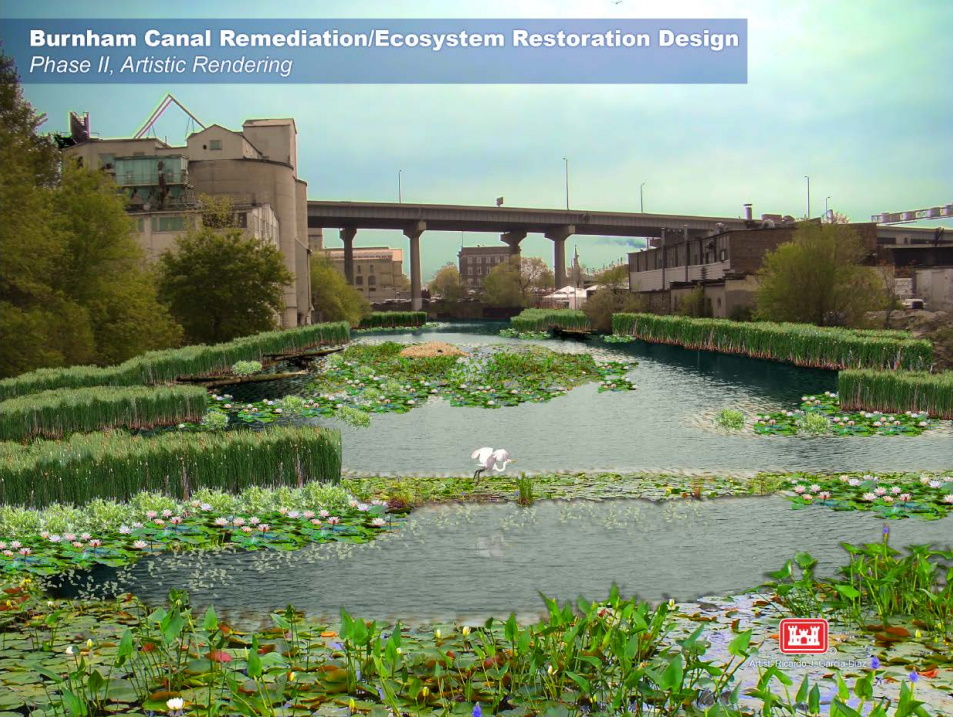
Rendering by Ricardo J. Garcia-Diaz
Five years after revealing plans to transform a heavily polluted industrial canal into a natural wetland, the Milwaukee Metropolitan Sewerage District (MMSD) is advancing the next phase of the project and asking residents what the restored waterway should look like.
The agency plans to transform approximately 6.7 acres of the Burnham Canal in the Menomonee Valley into a wetland, creating habitat for fish and wildlife while potentially opening new recreational opportunities.
Could the former shipping canal become a place to watch wildlife, enjoy the waterfront or launch a kayak?
MMSD and its partners are hosting a public meeting Tuesday, Nov. 10, to solicit ideas for public access and recreation.
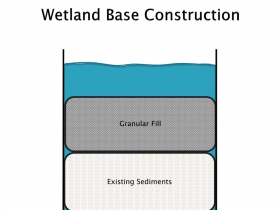
The meeting comes as the project transitions from the initial work of burying contaminated sediment under sand and gravel fill to designing the wetland that will eventually take its place.
In March, the MMSD Commission approved a $393,426 contract with Rambolls for engineering and ecological design services. The contract is being funded through federal Great Lakes Restoration Initiative grants.
The project has been years in the making.
When Urban Milwaukee first reported on the plan in May 2021, MMSD was preparing to begin filling the approximately 3,000-foot-long western portion of the canal with clean sand and gravel.
The work was intended to accomplish two goals: cap heavily contaminated sediment left behind by decades of industrial activity and establish a foundation for a new wetland.
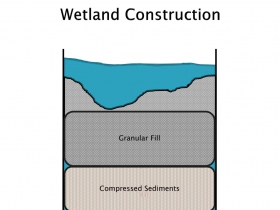
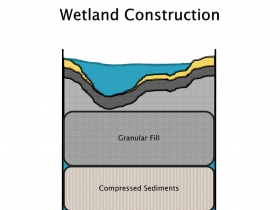
The initial phase was completed in stages between 2021 and 2023, with clean material placed over the polluted canal bottom. The fill was then left to settle and compress before additional soil and wetland vegetation could be installed.
At the time, officials envisioned completing the final wetland design in 2024 and beginning construction in 2025 or 2026.
That timeline has since shifted.
MMSD’s current project schedule calls for final design work between 2025 and 2027, followed by wetland construction in 2027 and 2028. Post-construction monitoring is expected to continue through 2031.
The agency, on its project webpage, says federal funding delays have slowed progress.
The restored canal would represent a return, at least in part, to the Menomonee Valley’s original landscape.
Before Milwaukee’s industrial development, the valley was a sprawling 1,200-acre marsh. Much of it was filled during the 19th and 20th centuries to accommodate factories, railroads and other industrial uses.
The Burnham Canal was created in the 1870s to serve J.L. Burnham & Sons, a brick manufacturer that used clay from the Menomonee Valley to produce Cream City bricks.
The canal later served other industrial users, but ceased to function as a navigable shipping corridor in the 1980s when the city constructed a fixed bridge across it.
Its western end, near S. 16th and W. Bruce streets, became heavily contaminated by operations at Miller Compressing Company, which operated a wire reclamation furnace from the 1970s to the 1990s.
Federal environmental investigations identified elevated levels of heavy metals, including copper, lead and cadmium, as well as polycyclic aromatic hydrocarbons.
Miller Compressing, now part of Alter Trading, agreed in 2008 to study cleanup options. MMSD subsequently joined the effort, expanding what was initially a contamination cleanup into a larger ecological restoration project.
The project is part of the broader effort to remove the Milwaukee Estuary’s federal Area of Concern designation, which identifies waterways impaired by historic pollution and habitat destruction.
For the Burnham Canal, the next challenge is determining what the restored landscape will look like and how the public might use it.
The Nov. 10 meeting will take place from 5 to 7 p.m. at All Hands Boatworks, 621 S. 12th St., with project presentations at 5:15 and 6 p.m.
Attendees will be invited to share ideas for public access and recreational opportunities. Food and wetland-inspired art activities will also be available, as will Spanish interpretation.
Residents unable to attend can provide feedback through the Waterway Restoration Partnership website.
Conceptual Canal Plans
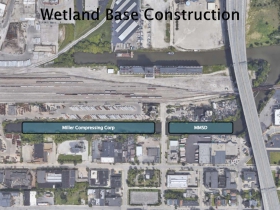
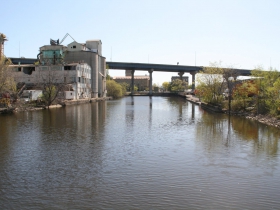
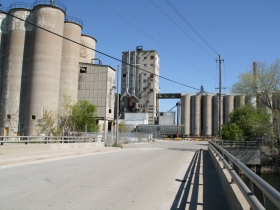
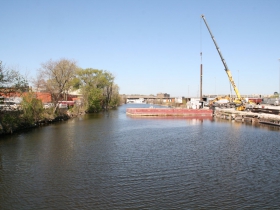
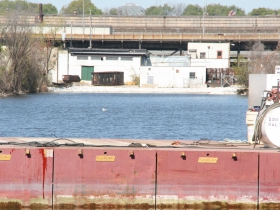
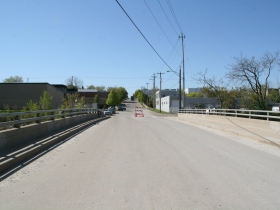
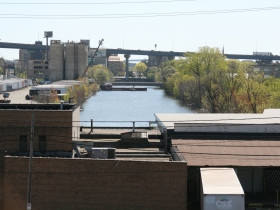
Canal in 2021
Existing members must be signed in to see the interactive map. Sign in.
If you think stories like this are important, become a member of Urban Milwaukee and help support real, independent journalism. Plus you get some cool added benefits.
More about the Area of Concern Abatement Effort
- Residents Asked To Help Reimagine Burnham Canal Wetland - Jeramey Jannene - Nov 6th, 2026
- Massive Harbor Cleanup Facility Completed Ahead of Schedule, Under Budget - Jeramey Jannene - Oct 20th, 2026
- New Mosaics Mark the Spot for River Cleanup Updates - Sophie Bolich - Jul 1st, 2026
- New Machine Quietly Cleans Milwaukee’s Water - Jeramey Jannene - Mar 21st, 2025
- Photo Gallery: New South Shore Park Beach Takes Shape - Graham Kilmer - Mar 14th, 2025
- MKE County: Effort Aims To Reduce E. Coli Closures at Bradford Beach - Graham Kilmer - Feb 27th, 2025
- MKE County: Habitat Restoration Planned in Kletzsch Park - Graham Kilmer - Feb 14th, 2025
- MKE County: County Deploying $1.3 Million in Environmental Cleanup Grants - Graham Kilmer - Sep 19th, 2024
- MKE County: Habitat Restoration Coming to Kohl Park - Graham Kilmer - Jan 12th, 2024
- MKE County: Largest Fish Barrier Between Grafton and Lake Michigan Removed - Graham Kilmer - Dec 21st, 2023
Read more about Area of Concern Abatement Effort here