
Wisconsin Woman Says Pregnancy Crisis Center Misled Her
Advocates say they are dangerous. Abortion rights group calls for investigation of centers.
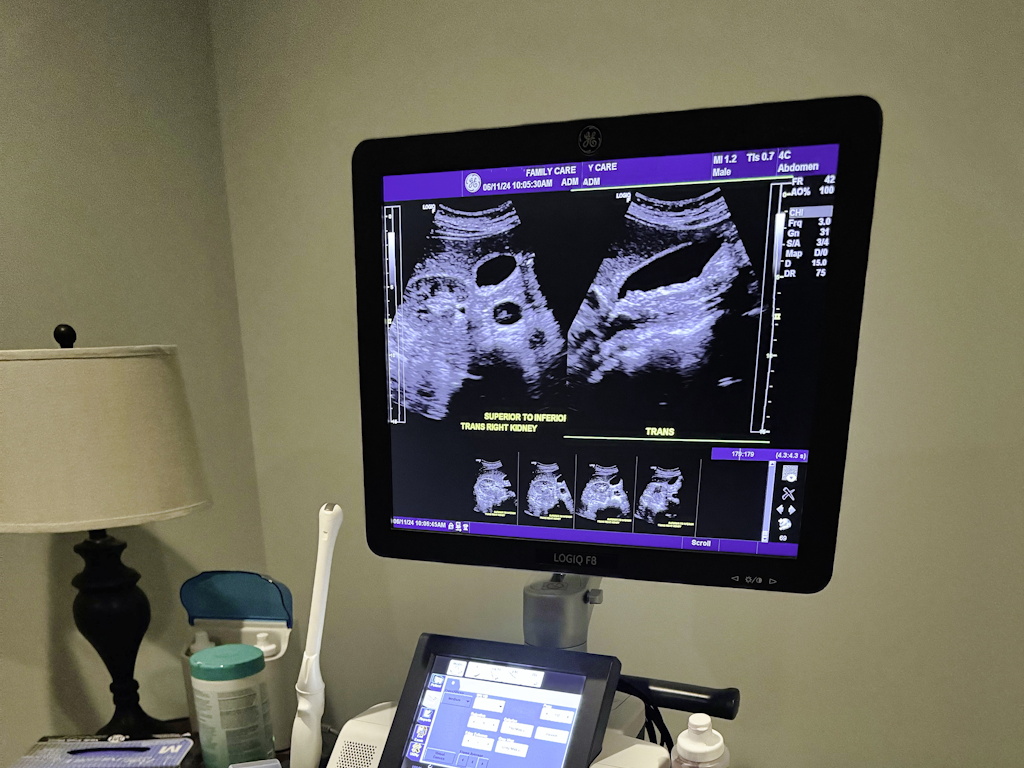
A modern medical ultrasound scanner. Photo by Harrison Keely. (CC BY 4.0)
Codyone Cameron has two kids and knows what it feels like to be pregnant.
The 32-year-old Brookfield woman also knows what it feels like when the pregnancy is amiss. A decade ago, she had an ectopic pregnancy — a complication where the fertilized egg implants outside of the uterus, usually in the fallopian tubes.
Those kinds of pregnancies can never be viable. If left alone, they can rupture, causing infections or even death.
Cameron learned she was pregnant in August. In September, when she began feeling a severe pain in her abdomen, she thought something might, again, be wrong.
“It felt like somebody was just pinching me in my lower pelvic right side,” she said. “I just didn’t have the energy for anything, you know. And I felt like I was declining. I wasn’t doing my normal motherly duties … because when I got up, everything hurt so bad.”
Cameron made an appointment with her doctor for three weeks out. But the pain didn’t abate. So she looked elsewhere and found Life’s Connection, a pregnancy resource center in nearby Waukesha. The private clinic could see her that day, for free.
On Wednesday, an attorney with the Center for Reproductive Rights, an abortion access advocacy group, sent a letter to Attorney General Josh Kaul and leaders at state consumer protection, financial and licensure agencies, calling for them to use Cameron’s story as cause to investigate Life’s Connection and similar private pregnancy clinics. They say she was given life-threatening misinformation that day — and that a lack of regulations for these kinds of centers could put others at risk.
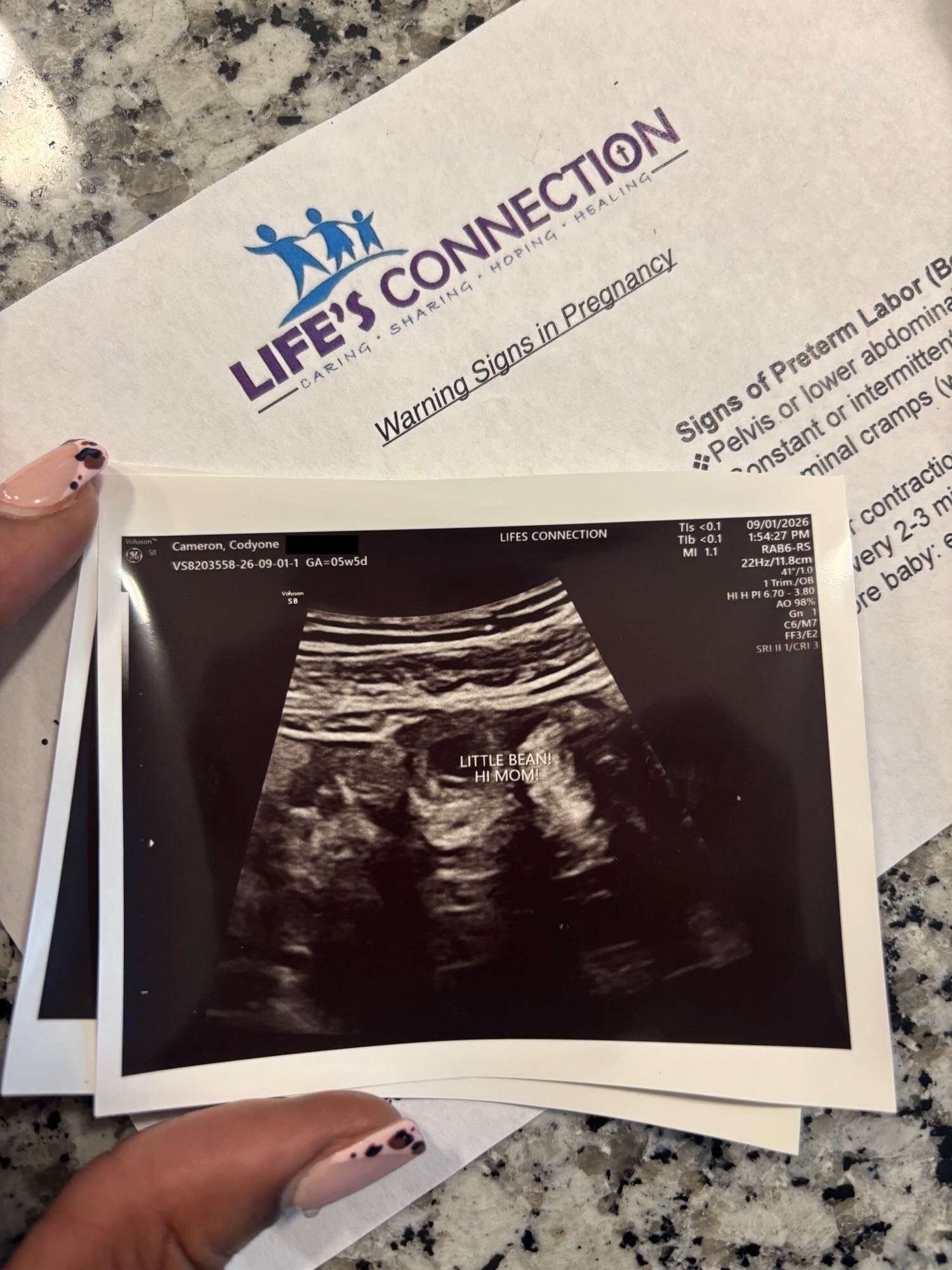
Codyone Cameron said she received an ultrasound image marked “Little Bean” and “Hi Mom” from Life’s Connection pregnancy resource center. Photo courtesy of Codyone Cameron
At the clinic, Cameron received an ultrasound and got three scans of her pregnancy, labeled with “Baby” and “Little bean.”
Reassured, Cameron went home. But the pain didn’t subside. Ten days later, she visited Care For All, a reproductive health clinic and abortion provider in Milwaukee. Dr. Meredith Manire gave her her results.
“She was just like, ‘Can I hug you?’” Cameron recalled. “And I was like, ‘I already know what that means.’”
It was another ectopic pregnancy.
Hours later, Cameron was in the emergency room. Seeing the damage from the past days, and from her previous ectopic pregnancy, a surgeon said the best course of action would be to remove both fallopian tubes. Cameron said that, in 30 seconds, she had to decide whether to try to preserve her fertility or risk losing her life.
“I don’t want to be selfish to my kids, you know,” she said. “I still got two kids I got to live for.”
So she chose the surgery.
According to Center for Reproductive Rights, the information she got from the pregnancy center put Cameron at risk.
“Antiabortion pregnancy centers provide false reassurance to pregnant people and delay them from obtaining time-sensitive medical care, placing their health and lives in grave danger,” wrote staff attorney Alice Wang. “At minimum, these practices violate Wisconsin’s prohibitions on fraudulent representations, unfair trade practices, deceptive fundraising practices and unlicensed practice of medicine.”
Abortion rights advocates see legal ‘loophole’ for pregnancy centers
According to Choose Life Wisconsin, more than 60 pregnancy resource centers, sometimes called pregnancy crisis centers, operate across the state. These private, often faith-based organizations offer a range of services for those who are pregnant or recently gave birth, from formula and diapers to parenting classes.
Life’s Connection, which operates clinics in Waukesha, Mukwonago and Menomonee Falls, also advertises counseling services and grief support for those experiencing miscarriage, as well as “life-affirming ultrasounds.”
That’s what Cameron received. But when she brought scans of those ultrasounds to Manire, more than a week later, Manire immediately clocked a problem.
The scan wasn’t of Cameron’s uterus, but of her intestines. And the mass labeled “Little bean” wasn’t an embryo. It was stool.
“There’s a very different appearance of the uterus and the intestines on an ultrasound, and so anyone who looks (at) the scan is never going to make that mistake between those two organ systems,” Manire said. “This is clearly not someone who was qualified to be scanning someone.”
Centers like Life’s Connection exist to offer an alternative to abortion, operated by groups that categorically oppose the procedure. Life’s Connection advertises abortion pill reversals, a medically unsupported practice, as well as counseling about the risks of abortion.
Wisconsin state law provides funding for pregnancy-related services. Some are earmarked for only public groups, but those groups can then pass the money through to nonlicensed, private or faith-based groups. Notably, those public funds can’t go toward advocating for abortion, and many can’t go to groups that perform or refer for abortions, either. They can go to groups that advocate against abortion.
And unlike in some other jurisdictions, Wisconsin state law does not require these facilities to affirmatively disclose that they are not licensed medical facilities.
In combination, Manire argued, that removes a layer of accountability. People in white coats and scrubs can perform a medical-like procedure such as an ultrasound, but they aren’t subject to the same kinds of regulations — or malpractice standards — as medical providers.
“This is such a huge loophole in our obstetrical system right now, that these places are allowed to continue to provide business to our patients, but aren’t … beholden to any sort of standards of normal practice in the medical space,” she said.
Life’s Connection did not respond to WPR’s request for comment, or to questions about the training of people who administer ultrasounds and whether physicians are on-site.
Collateral damage beyond abortion access
Cameron said she didn’t go to the clinic that day seeking an abortion. She wanted to understand why she was in pain.
And treatment for an ectopic pregnancy is not the same as an abortion. Because the egg has implanted outside of the uterus, it’s often treated with methotrexate, an immune-system suppressant often used in cancer treatment. In case of a rupture, it can be treated with surgery, including, sometimes, dilation and curettage, which can be an abortion procedure but is also used in other circumstances, including miscarriage management.
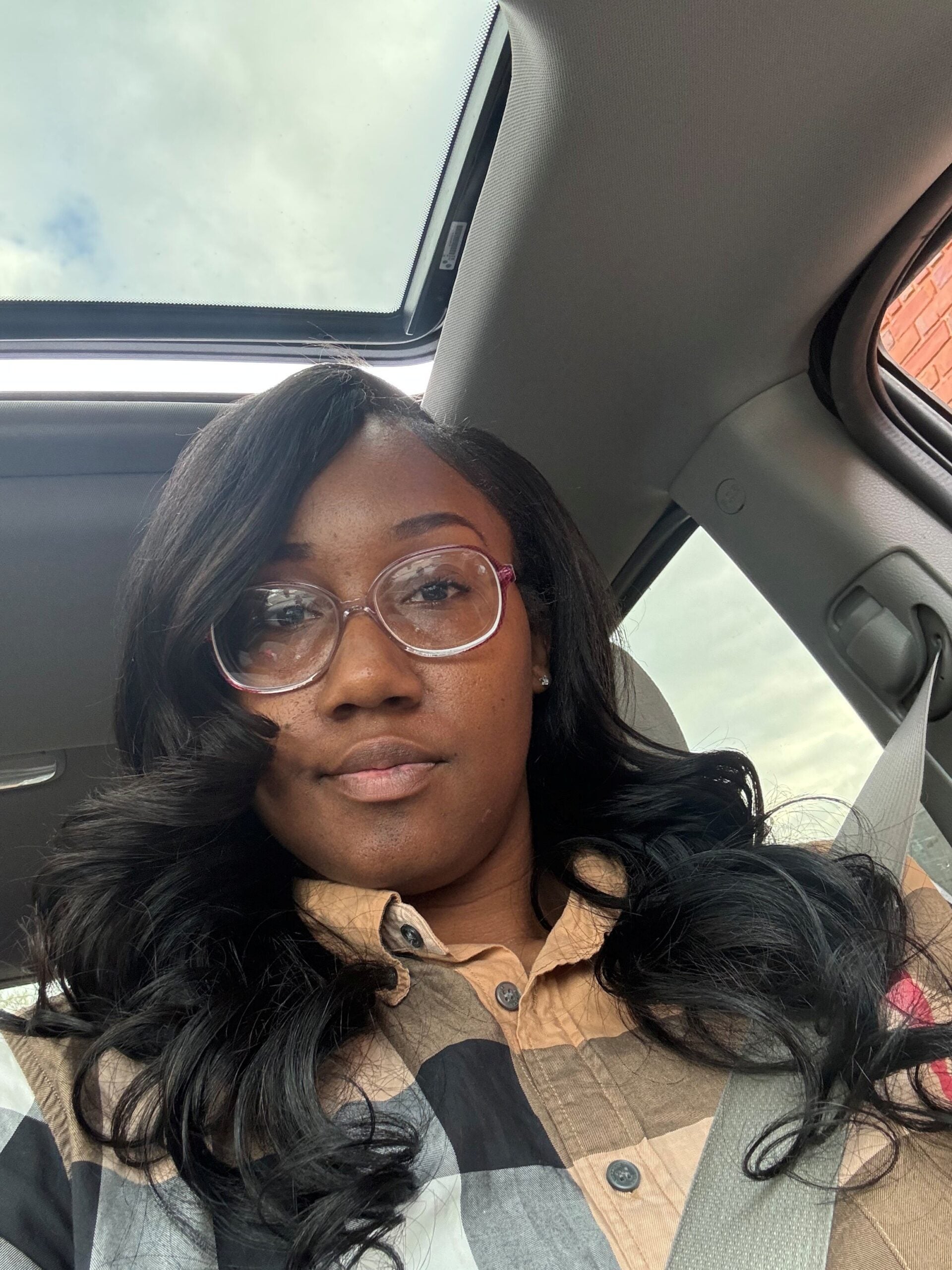
Codyone Cameron. Photo courtesy of Codyone Cameron
Cameron says she feels misled both by the clinic and by her public insurance program, which included the crisis center among her options.
“How many other people could they have done this to? That didn’t have the support or even the will to be strong enough to share their story with other people,” she said.
And Manire, the doctor, said Cameron is far from the first patient to show up at her clinic after first seeking treatment at a crisis center.
“It scares me what other patients are out there who may have never been able to get into another clinic or healthcare facility quick enough,” she added. “It just feels like this near miss that should have never been the case.”
Wang, the attorney, points to Wisconsin state law about medical practice without a license and false advertising, and argues that those should curtail the kinds of services that pregnancy crisis centers provide.
“Had Codyone not been delayed for 10 days by the false reassurance provided by Life’s Connection, then the treatment options available to her and her outcome could have been entirely different,” she said.
Cameron said things have been hard for the last two months. She lost her job working nights at a hotel after she couldn’t return during her recovery period. It took a long time before she could pick up her 6-year-old again. Then there’s been the ongoing emotional fallout of knowing, a month out from her 33rd birthday, that she likely won’t ever be able to get pregnant again.
But the experience inspired her to “want to help people and be an advocate for others and myself,” she said.
Cameron just finished a training program to become a certified nursing assistant.
All that’s left is passing an exam to become a licensed health provider in the state of Wisconsin.
Wisconsin woman says a pregnancy crisis center misled her. Advocates say they are dangerous. was originally published by Wisconsin Public Radio.
If you think stories like this are important, become a member of Urban Milwaukee and help support real, independent journalism. Plus you get some cool added benefits.