
Board Adopts $1.5 Billion Budget, After Dealing With Accounting Error
Supervisors kill key parking policy.
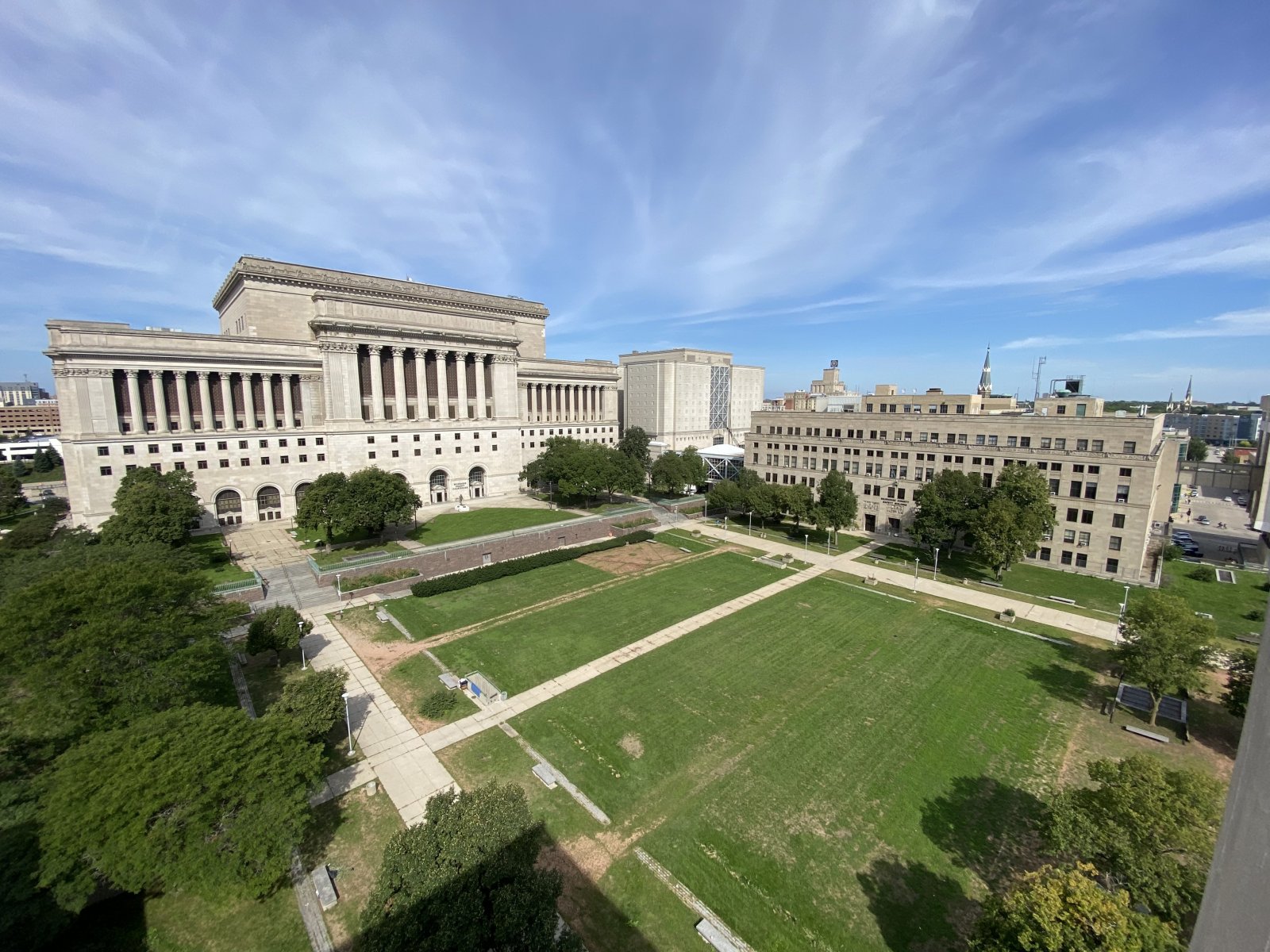
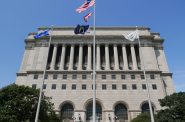
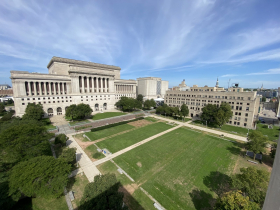
Milwaukee County Courthouse complex. (Left to right) the historic courthouse, the jail and the Safety Building. Photo by Graham Kilmer.
The Milwaukee County Board of Supervisors adopted a $1.5 billion budget for 2027 on Thursday, albeit with a $4.6 million hole reportedly created by an accounting error.
Supervisors made few changes to Milwaukee County Executive David Crowley‘s proposal. After adopting a handful of amendments Thursday, supervisors passed a budget with a $316 million property tax levy. Sup. LeeVan Roundtree Jr. was the only supervisor to vote against the budget, citing the $4.6 million accounting error.
The budget increases the property tax levy by 2.32% over 2026 but reduces the property tax rate by 4.6%. The property tax on $1,000 of equalized value will be reduced from $2.92 to $2.79 next year, according to the Office of the Comptroller. The rate has fallen in recent years as assessed values have increased.
Most of the changes supervisors made to the county executive’s proposed budget came in a single amendment sponsored by Chairwoman Marcelia Nicholson-Bovell and unanimously adopted by the board. The amendment adjusted projections upward for revenue and prescription drug rebates to restore funding for a handful of community-focused programs that lost funding in Crowley’s proposed budget.
The county executive had to close a $50.8 million budget gap before submitting his budget to the board. The county closed the gap largely by withdrawing $22 million from its debt service reserve, a fund set aside to pay down the county’s debt. The Milwaukee County Transit System (MCTS) avoided sweeping service cuts with an infusion of about $12 million from the debt fund. The rest of the gap was closed through spending reductions and growth sales tax revenue.
In an analysis of the 2027 budget, the non-partisan Wisconsin Policy Forum said it could be “likened to a brief pause in a play that comes before a climax in the action.” Structural budget problems remain. The MCTS deficit will return even larger in 2027. The overall county budget gap will similarly widen.
The government has a longstanding imbalance in revenues and expenditures, frequently referred to as the structural deficit. It is largely created by a financially disastrous pension plan enacted 20 years ago and more than two decades of frozen state aid. In March, the comptroller projected the gap would grow to $168.7 million by 2031. A 0.4% sales tax has not offset the cost of the pension plan and reduced purchasing power of the state aid.
Last Minute Budget Gap
Less than 24 hours before supervisors took up budget adoption, the county’s budget office notified them that an automated accounting program had made an error, and the proposed budget was not, in fact, balanced but had a $4.6 million budget hole.
The revelation came the day after Crowley was elected governor, leading to speculation that the administration waited to notify supervisors for political reasons.
Nick Sinram, director of the Office of Strategy, Performance and Budget, said his office discovered the error on Oct. 20. Ten days later, his office sent a list of technical budget corrections — highlighting typos and calculation errors in the proposed budget — but provided no notice of the $4.6 million calculation error.
Sinram said he notified Crowley’s office of the error the same day the error was discovered, but said it was his decision to withhold the information from the board. He and the county executive’s office said it took two weeks to investigate the cause of the error. Sinram explained the decision to wait to notify the board by saying he wanted to bring solutions, not only an accounting problem.
Transit
In June, MCTS officials announced plans to cut transit service by 25%. The deep cut would stabilize the system for at least three years, giving leaders time to implement a redesign of the bus network and lobby the state for more mass transit aid.
Crowley, who was running for governor when he released his proposed budget, closed the gap with reserve funds. The one-time cash infusion did not address the structural problems, but it bought county officials time and saved transit riders from huge upheaval two years in a row; initially, they would have faced a 25% cut in 2027 followed by a system redesign in 2028.
Mass transit aid, the primary source of revenue for MCTS, has not kept pace with inflation. Without additional funding, the system’s gap will grow to $18.3 million in 2028.
Parks
Milwaukee County Parks was facing difficult decisions in 2027. It needed to cut $887,000 in spending from its budget. The department responded with a plan to charge parking fees at select high-traffic locations along the lakefront and American Family Field.
Supervisors nixed the plan and backfilled the department’s budget gap with $486,862 from a trust fund established in 2012 for the maintenance of the Estabrook Park dam, which has since been removed. The parking fee proposal had a dual purpose of generating revenue and advancing a department priority for investing in recreational amenities over automobile infrastructure. The parks system has a backlog of projects estimated at approximately $500 million, and the county budget does not have the resources to allow the system to catch up. Since 2018, the department has spent $23 million maintaining parking lots and roadways.
The department did receive a boost in the county’s capital budget, which provides funding for maintenance and new infrastructure. The budget includes a long list of new playgrounds and maintenance for park amenities. The chairwoman’s comprehensive amendment adopted by the board also provided approximately $497,000 to fund replacement of the Washington Park pool with a new aquatic facility.
Health and Human Services
For the second year in a row, the county’s Behavioral Health System (BHS) — overseen by the Mental Health Board — is absorbing a budget cut. The agency will see its property tax levy go down by $4.3 million.
BHS will dip into reserve funds to maintain a substance abuse service contract, and funding for subsidized bus passes and three community-based mental health non-profits and respite facilities is being cut.
Tax levy support for the Department of Health and Human Services (DHHS) is increased in 2027, but not enough to spare the agency from potential cuts as the cost to operate county government rises and the structural deficit grows. The budget for the Credible Messengers program is cut by $532,500, down to $1.27 million.
Nicholson-Bovell’s amendment sets aside $950,000 for youth justice expenses that could be used for Credible Messengers. But the county is awaiting a decision in the upcoming biennial budget on how much the state will charge counties to incarcerate youth ordered by courts to confinement in the state juvenile prisons. If the rate is increased as proposed, the money will be needed to fill the funding gap for these placements.
Milwaukee County Sheriff’s Office and Community Reintegration Center
The Milwaukee County Sheriff’s Office (MCSO) requested a $10 million budget increase, including $8 million for overtime and $2 million for new positions. The adopted budget only provides enough new funding to cover inflationary cost increases of previous staffing and overtime levels.
The agency is responsible for the Milwaukee County Jail, patrolling county parkland and expressways, and providing security for the circuit court system. It has struggled for years with short-staffing and overtime, exceeding its annual overtime budget every year. MCSO leaders have worked on recruitment and retention, but the agency still has not filled all the positions it has budgeted. The agency was projected to exceed overtime funding by $7.6 million, according to a September estimate by the comptroller.
The board adopted an amendment to the budget sponsored by Sup. Roundtree Jr. that asks for a workforce retention and overtime report from the MCSO and the Community Reintegration Center (CRC). The latter is a county-run prison overseen by the county executive that is not staffed by MCSO personnel. The comptroller projected the agency would run over budget on overtime by $2.9 million this year.
If you think stories like this are important, become a member of Urban Milwaukee and help support real, independent journalism. Plus you get some cool added benefits.
More about the 2027 Milwaukee County Budget
- MKE County: Board Adopts $1.5 Billion Budget, After Dealing With Accounting Error - Graham Kilmer - Nov 6th, 2026
- MKE County: County Software Error Creates $4.6 Million Budget Hole - Graham Kilmer - Nov 5th, 2026
- MKE County: Supervisors Vote Down Amendment That Would Have Saved Millions In Drug Costs - Graham Kilmer - Oct 30th, 2026
- MKE County: Board Moves to Quash Lakefront Parking Fees - Graham Kilmer - Oct 24th, 2026
- MKE County: Supervisors Save Education Aid, Food Assistance From Budget Cuts - Graham Kilmer - Oct 23rd, 2026
- Supervisor Coggs-Jones to Host Listen and Learn Sessions on Child Support, County Budget - Sup. Priscilla E Coggs-Jones - Oct 22nd, 2026
- Collaborative Nicholson-Bovell Amendment Lowers Levy, Funds Community Priorities - County Board Chairwoman Marcelia Nicholson-Bovell - Oct 22nd, 2026
- MKE County: Crowley Avoids Transit Cuts In 2027 Budget Proposal - Graham Kilmer - Oct 1st, 2026
- MKE County: Parks Proposing Charging For Parking in Busy Areas - Graham Kilmer - Aug 14th, 2026
Read more about 2027 Milwaukee County Budget here
Political Contributions Tracker
Displaying political contributions between people mentioned in this story. Learn more.