

Parks Proposing Charging For Parking in Busy Areas
Parks reopens pay-to-park policy discussion as budget cuts raise questions about spending priorities.
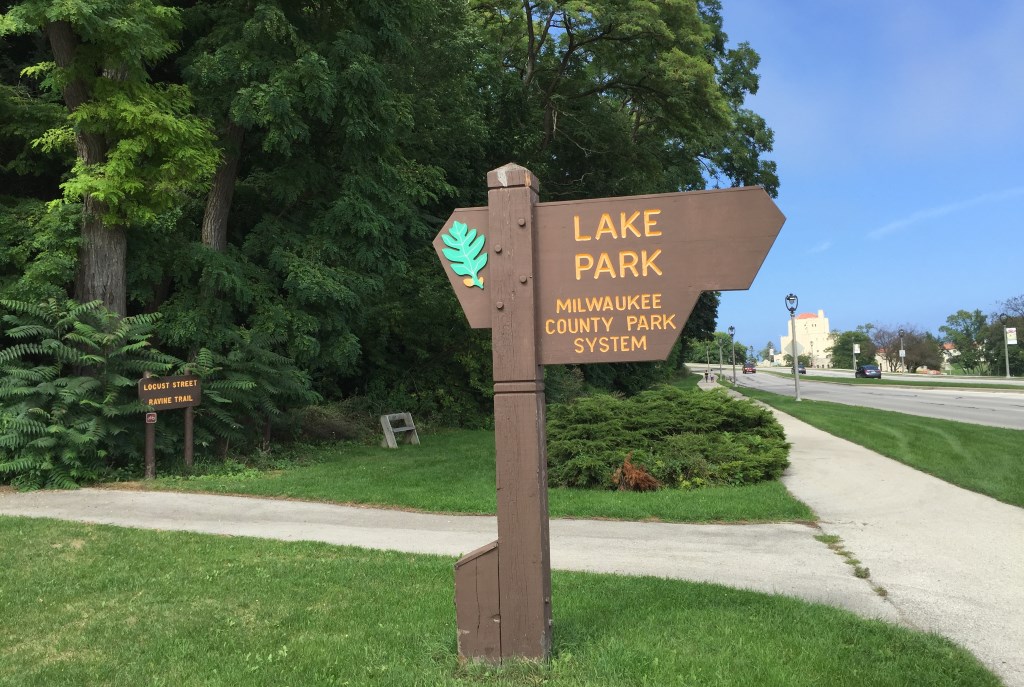
Lake Park. Photo by Dave Reid.
Milwaukee County Parks is revisiting the idea of charging parking fees, but only in a small number of parks and with an eye toward the future of the system.
The department last considered requiring parking fees at a few high-traffic parks a decade ago. The impetus then was Milwaukee County’s fiscal state. The county’s funding gaps were widening and it needed new revenue to avoid cutting budgets for departments like Parks. Then-County Executive Chris Abele included a parking fee plan in his proposed 2018 budget, but he dropped it after facing criticism that parking fees would limit access to public parks.
The fiscal conditions underlying the idea to begin charging for premium parking spots in a handful of parks have not materially changed. Milwaukee County policymakers will need to close a $50.9 million budget gap in 2027, according to projections from the Office of the Comptroller and the county’s parks face a deferred maintenance backlog of more than $500 million. But the reasoning, and the long-term vision behind the policy, have.
Like every other county department in 2027, Parks will need to cut spending to balance its budget. Without a new source of revenue, the department anticipates cutting approximately $887,000 in spending next year. Right now, those cuts would translate to a $450,000 cut to aquatics, closing two additional pools, 15 splash pads and wading pools, and reducing hours at others; a $50,000 cut to traffic safety project spending; and a $300,000, across-the-board cut to general park operations.
The parking fee plan would be a pilot program, testing out fees in a few areas with heavy vehicle traffic, to raise revenue and also advance long-term goals for transportation infrastructure and land use.
“We do need to fill that budget hole and not make those trade-offs,” Jim Tarantino, Parks deputy director, told Urban Milwaukee. “But it’s also good policy.”
Since 2018, Parks has spent approximately $23 million rebuilding and fixing parking lots across the parks system. The funding has come from the county property tax levy. But 40% of residents in the city of Milwaukee don’t drive and 16% don’t own a car, according to U.S. Census data.
Parking fees in select areas with high traffic volumes would generate a new stream of revenue to help pay for the parking infrastructure that already exists, as well as funding for alternative transportation options, like multi-use trails or even a shuttle service along the lakefront, Tarantino said.
As a matter of policy, Parks has tried in recent years to reduce the amount of paved surfaces in the parks system wherever possible. It has begun converting duplicative roadways into bicycle and pedestrian paths, increasing the amount of parkland dedicated to recreation, and providing more infrastructure for other forms of transportation.
“We know that we’re not going to change people’s transportation behaviors overnight. It’s taken us decades to become as car dependent as we are, and it’s going to take us decades to change anything,” Tarantino said. “We have to take a global view of these transportation issues. Everything’s related. “And if we are going after every fare on transit… and we’re really doubling down on those efforts. Why are we also allowing completely free access for drivers in other parts of the of the county?”
The lakefront — Bradford Beach, McKinley Marina and Veterans Park — experiences high vehicle traffic volumes, particularly in the summer. It’s the primary focus of the parking fee pilot program. Along with generating revenue, Parks thinks fees would actually improve access, not limit it.
“What we have right now is basically unregulated car access to the lakefront,” Tarantino said. “People really can just park all day; show up early, especially on a busy summer day, and just occupy that spot. And what that does is it prevents turnover. It limits access for other people to come to those sites.”
Motorists are frequently driving laps around the area looking for parking, which worsens creates congestion and local emissions. Parks has also had trouble with parking lot parties and street takeovers in parking lots and on Lincoln Memorial Drive, Tarantino said.
Separate from the county, the City of Milwaukee has an extensive parking operation for city streets and lots. It has experimented with demand-based pricing in certain areas and is currently extending hours Downtown to increase availability and revenue.
The pilot proposal
In September, Parks will formally present its proposal to the Milwaukee County Board of Supervisors. The department plans to include the program in its 2027 proposed budget to offset cuts.
The plan is to develop a parking fee collection program in the first year. The department is looking at QR code technology to create a scan-and-pay system similar to one recently implemented at the Milwaukee County Zoo. There will not be parking meters lining Lincoln Memorial Drive, Tarantino said, adding, “The technology has evolved dramatically in the last 10 years.”
The plan, right now, is to focus paid parking on approximately 1,100 lakefront parking spots and 115 parking spots along two parkways near American Family Field: N. Story Parkway and Mitchell Boulevard Parkway.
The department has not settled on a fee structure nor the hours paid parking would be required yet. But it is developing estimates based on a $2 fee for lakefront spots and $4 for spots along the parkways around the ballpark. It estimates these fees would generate $671,344 in net income in 2027.
Parks already collects parking revenue in these areas through vehicle citations, Tarantino said. Park rangers ticket vehicles left in parking lots late after the park has closed.
If the program moves forward, Parks would work with supervisors and residents to begin identifying potential park improvements that could be made with some of the parking revenue. Revenue could be used to improve or expand the local trail network. Another concept is a lakefront shuttle, ferrying visitors up and down Lincoln Memorial Drive where there currently is no bus service, Tarantino said. The shuttle would reduce vehicle dependency and parking space demand.
Local Supervisors Willing to Explore the Proposal
Supervisors Sky Capriolo and Sheldon Wasserman represent the areas that would be the focus of the pilot program. Both told Urban Milwaukee they are neither for nor against the proposal.
Aware of the department’s need for revenue, both supervisors said they are interested in exploring the proposal and hearing from constituents.
“My first reaction was, residents are not going to like this,” Capriolo told Urban Milwaukee, after hearing about the proposal from Parks. “My immediate second reaction was, I know we need to come up with new ways to bring in revenue.”
Capriolo appreciates that Parks is looking for new ways to raise revenue. After years of budget cuts, the department has had to find ways to generate more than 50% of its annual operating budget through business services, fees and rentals. The supervisor also said it makes sense to have motorists who use the amenity contribute more to maintaining the infrastructure than the average taxpayer.
However, under the current proposal, which has not been finalized, there could be problems in the Story Hill neighborhood. Residents living on Story Parkway have struggled with heavy vehicle traffic during Milwaukee Brewers games in the past. In recent years, parking along the parkway has been prohibited during game days. If paid parking is instituted, the game day traffic would return to the neighborhood, Capriolo said.
“There are already huge concerns over traffic in that neighborhood during Brewers games, so with anything that is implemented, I think we really need to consider as much community input as we can,” Capriolo said. “I’m hoping that in the end we will find a great compromise that brings in revenue and helps with traffic control, pedestrian safety and those concerns in Story Hill in the long run.”
Capriolo said she has already talked to some Story Hill residents about the idea, and found some residents didn’t like the idea and others weren’t against it.
Sup. Sheldon Wasserman, chair of the Committee on Parks and Recreation, is similarly open to exploring the policy, but is declining to support or oppose the idea for now. He noted that constituents were adamantly opposed to paid parking on the lakefront in the past. Both Wasserman and Capriolo are also interested in considering other areas for paid parking in the system.
“I’m sympathetic to the goals and needs of the parks department,” Wasserman said. “The devil is in the details with this.”
If you think stories like this are important, become a member of Urban Milwaukee and help support real, independent journalism. Plus you get some cool added benefits.
More about the 2027 Milwaukee County Budget
- MKE County: Crowley Avoids Transit Cuts In 2027 Budget Proposal - Graham Kilmer - Oct 1st, 2026
- MKE County: Parks Proposing Charging For Parking in Busy Areas - Graham Kilmer - Aug 14th, 2026
Read more about 2027 Milwaukee County Budget here


MKE County
-
Crowley Avoids Transit Cuts In 2027 Budget Proposal
 Oct 1st, 2026 by Graham Kilmer
-
Committee Endorse Removing Flock from Parks
 Sep 30th, 2026 by Graham Kilmer
-
Another Inmate Charged With Witness Intimidation Using Jail Tablet
 Sep 25th, 2026 by Graham Kilmer













The Pension Scandal strikes again. My past alderman was a beneficiary of the pension scandal AND he took a salary as a “do nothing” alderman. It’s the gift that keep on giving.
Me thinks this would just open the door for them to keep adding and adding and adding paid spaces. Once that gate is open, you can’t close it.
Charging for parking is perfectly reasonable, but please just put in some form of meter and not this QR code nonsense like at the zoo. So annoying.
Instead of charging people who park legally, how about ticketing those who drive their vehicles into the parks illegally? It’s a problem every summer at several of our local parks, where people drive up over the curbs onto the turf and park near their picnic sites illegally. There’s already fine structures in place but no enforcement. Start there.
Parking fees help cover the costs of maintaining the parking lots. A smart parking system also allocates access to automobile storage more fairly while providing revenue to maintain the park’s land. Of course, parks themselves are always free to people, and so multimodal ways to get to them, including walking, bicycling, and transit, should always be available. I think some people may find it hard to understand that we love our County Parks, but that doesn’t mean we have to love free parking lots. Drivers of automobiles may feel that the world should revolve around their convenience, however costly it is to others. This may challenge many people’s thinking, but charging for parking in certain high-impact sections of parks would be a fair way to raise needed revenue. Many areas of the US already charge for parking in county parks in Minnesota, New York, Florida, New Jersey, California, Washington, and Oregon.
The purpose seems to be generating income for operations, and secondarily to reduce inappropriate (long term, overnight) parking and traffic from back and forth driving from those searching for a parking place. For the first problem of income generation, why not enable businesses to “adopt a park” with name advertising in the parking area, for contributions of money for park operations, and employees for periodic park cleanups (like in the spring)? Many other cities have corporate sponsorship of zoo & museum exhibits, flower and shrub landscaping, placement of permanent benches, chess boards & tables (we don’t have those), and so on. How are the several “Friends of ” and the Preserve Our Parks, and the Park People, et al. providing input into this process? Finally, I am realizing how important a car is for getting to a park when I am no longer to walk or take my bike due to physical limitations of my getting older. For those who cannot afford, how can we ensure their full access without having to pay-to-park?
And so the other shoe drops. Preserve Our Parks has long opposed charging for parking in county parks. Yes, Waukesha County charges, and yes, the State Parks charge a fee. I’ll quote a former Parks Director: Big City Parks are not like National or Rural Parks where one must drive usually a long distance to arrive, and then park: Big or Densely populated city parks, can be accessed in many ways, including by car. This proposal if enacted, must be enforced or what’s the point, and therein lies the problem, the measures that must be taken to enforce fee collections defy the very spirit of public park land for a large urban base. The parks are our lungs, our water, our place of spiritual reflection in a densely populated area, and government wants to charge for this? For our fundamental rights of free speech, assembly and worship, if nothing else this is a bad way to collect the tithe for our well-being. Let the discussion begin. POP has created a task force to lead this discussion, it looks like the administration is putting its thumb on the scale. This is bad form form for starting a healthy discussion.
Question: Is MCTS in on this plan? Would it advertise where its relevant routes and bus stops are? Would Parks have extra shuttles?
We have travelled the country in our motorhome and frequently stay at city and county parks. We can then use our bikes or public transportation to explore the city. RV traveling is increasing. Big corporations are taking advantage of this trend by buying up campgrounds. They are easy to operate and profitable. We have counties close to us who successfully operate RV campgrounds and are expanding them. During the winter we stay at two county parks in Florida. We have beautiful areas in Milwaukee county that can easily be utilized as campgrounds. We campers coexist easily with local residents, in fact they enhance the experience. Many times we meet locals who suggest areas for us to see. We have been invited to picnics by local residents. Right now we have one campground in the city at State Fair Park. This campground sees a high occupancy rate year round. We often recommend it to others traveling here and get high praise for its location. I can imagine 30 or 40 sites along the lake bringing in $60 or $70 a night. (Yes, that’s the going rate today) You give one site to a volunteer who does the clean up. We were once camphosts and know the ropes. Then there are the parks in the city. These are wonderful sites for family reunions and those visiting relatives in the city. This idea is out of the box but I know it works well all across the country.
Paid parks parking aside, which I’m not opposed to if it’s reasonable, time-restricted, enforced by the Sheriff’s Department, and enhanced by a currently non-existent but sorely-needed lakefront Lincoln Memorial MCTS route. I’m tired of all of the ugly privately-owned surface parking lots that blight our downtown area, while generating minimal needed tax revenue for our city. These concrete eyesores provide substantial income for private owners who rarely perform improvements or care about safety & security. Moreover, surface parking lots actually attract criminal activity downtown for opportunists who, despite purported “24-hour video surveillance,” regularly break in to the candy store of vehicles sitting there for the taking, because nobody is really paying attention. They impede revenue-generating development, take away valuable police time, are unsafe, and contribute to the urban heat island climate effect. It is possible to create more parking space with an attractive structure or two like those in the Historic Third Ward, while providing valuable development on the many remaining lots.
Speaking of, do we need all of those concrete lots that sit empty most of the year next to SummerFest? Take a look at a satellite view of the Third Ward. Much of it is ugly concrete! Talk about potential for tax-revenue-generating development and deterrent to criminal activity. Milwaukee World Festival contracted buses, MCTS Freeway Flyers, and private bar-sponsored shuttles can receive a sizable return for transportation during special events. It’s less hassle for visitors. And that can help alleviate the traffic impediments that occur with most events and negatively impact the burgeoning and significant surrounding residential population.
As a past chairman of our County Board’s Parks, Energy and Environment Committee, I’m in complete agreement with my former colleague, Pat Jursik.
Our parks were never intended to be self supporting, much less, centers for generating revenue. That was Abele’s idea. Instead, they were intended to be open and free urban green spaces aimed at providing all citizens, regardless of income, a place to escape into nature. In these frenetic times that need has only increased.
Some may recall the referendum held in 2008. It asked public approval to increase the local sales tax by 0.5% in order to provide our parks and transit system with much needed revenue….and the voters approved it! But the MMAC and other private interests had their own agenda and made sure the state withheld approval to implement the public will. Imagine if they hadn’t meddled, what 18 years of that new revenue stream might have done to reduce the $500,000 hole parks are in today, not to mention the likely improvements that could have been made in our public transit system.
How about a new, BINDING referendum? One that would establish an independent park governance board with a mandatory revenue stream? Other communities have done it. Whatever the ultimate solution, I would look to Preserve Our Park’s newly created task force to help define the best of available options. They could use your moral and financial support. After all, they are the PUBLIC’S watch dog when it comes to the well-being of our parks.
The County should have been collecting parking fees at the Stadium since it opened in 2001.
We’ve been paying through the nose for 25 years.
I can still hear the recording of former Gov Tommy Thompson comment, “Let’s stick it to Milwaukee!” He was up north somewhere.
A few years ago the Republican Legislature (gerrymandered) signed us up to pay until 2050!
MMAC, a very powerful Lobbyist corporation, has “Pimped” Milwaukee at every opportunity.