

At Great Lakes Ports, Steel Is Slowing Even As Trump Hails A Comeback
Ports report double-digit drops in steel shipments while the White House touts new plants and tougher import tariffs.
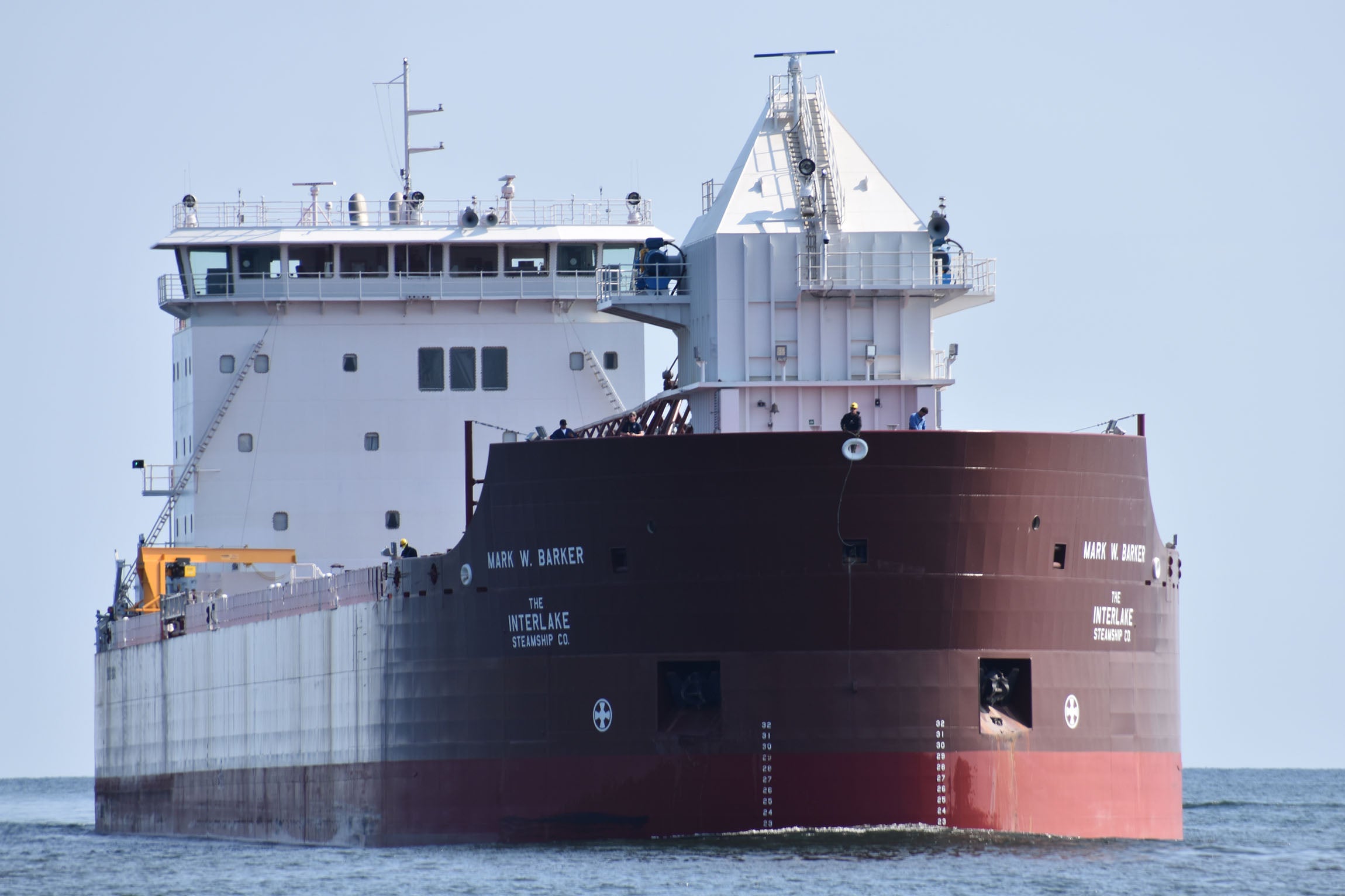
The Mark W. Barker arrives in the Twin Ports with a load of salt on Tuesday, Sept. 6, 2022. The vessel is the first U.S.-flagged freighter built on the Great Lakes in nearly 40 years. After unloading, the vessel was set to pick up iron ore in Duluth. Danielle Kaeding/WPR
Great Lakes ports are seeing declines in iron ore and steel shipments that are tied in part to the ongoing trade dispute between the U.S. and Canada.
In August, President Donald Trump imposed 50 percent tariffs on $20 billion worth of Canadian goods, including alcohol, dairy products and motor vehicles. Canada responded on Sept. 8 with about $20 billion of its own retaliatory tariffs that include steel, agricultural equipment and pulp and paper products.
The Port of Duluth-Superior, which moves the most tonnage on the Great Lakes, moved 11.4 million tons of cargo through August — a 25 percent drop from the same time last year. The decline is largely driven by a decline in coal shipments, which fell by 2.9 million tons due to the closure of a coal terminal in Superior.
But the rest is due to declining iron ore shipments, which fell by 946,000 tons. A mix of factors led to the drop, said Jayson Hron, spokesperson for the Duluth Seaway Port Authority.
“Several factors playing a role in that decline, including the transition to scrap iron usage, electric arc furnaces, just the transition in the steelmaking industry, but also some trade and policy decisions as well,” Hron said.
About half of the drop in iron ore stemmed from fewer northbound shipments to Canada. The number of Canadian-flagged vessels calling on the port was down 37 percent through August.
Algoma Steel in Sault Ste Marie, Ontario, said late last year that U.S. tariffs forced the steel producer to speed up plans to shift away from making steel with traditional blast furnaces that used iron ore and coke to electric arc furnaces. The port authority has previously said iron ore exports from the port went to the facility, but it’s unclear how much.
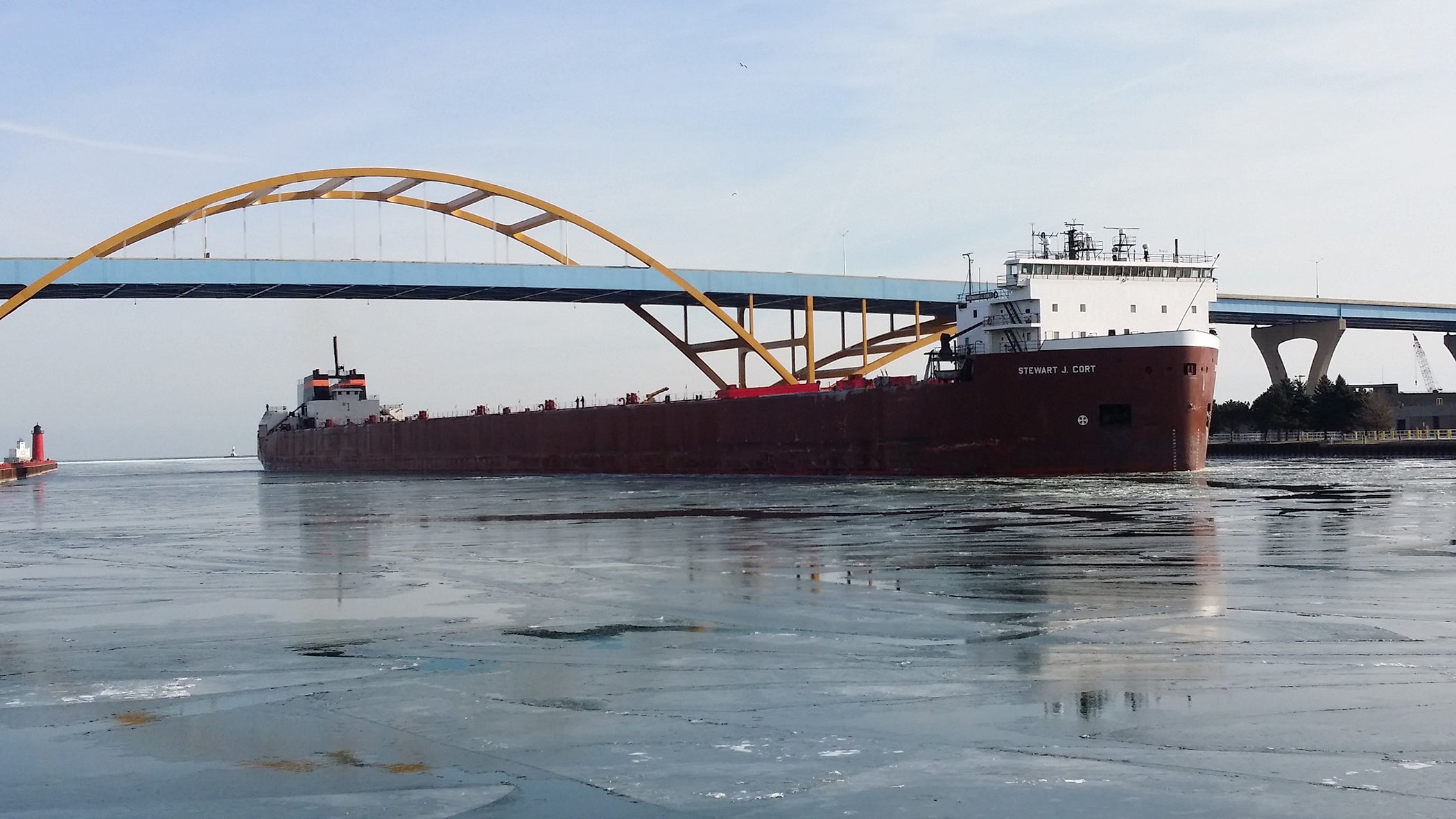
The Great Lakes freighter Stewart J. Cort passes through the Port of Milwaukee in 2017. Photo courtesy of the Port of Milwaukee
A Port Milwaukee spokesperson said steel volumes there are down more than 30 percent this year.
The port spokesperson said actual amounts are considered proprietary information, but attributed the decline to U.S. tariffs on steel imported from both Canada and Europe.
“As global trade conditions and tariff policies continue to evolve, Port Milwaukee remains focused on providing reliable, multimodal transportation opportunities that help businesses reach international markets while supporting a resilient regional supply chain,” the spokesperson said.
Jason Card is vice president of external affairs for the Chamber of Marine Commerce. The Ottawa-based industry association represents more than 100 ship operators, ports and terminals in the U.S. and Canada.
He said the U.S. removed tariffs from road salt and cement, and shipping for those products has been unaffected.
“Now, in terms of steel, that is, of course, a challenge to a lot of members and to ports that have engaged the movement of steel and the component parts that are used to make steel,” Card said.
He added that it needs to be a priority for both nations to not take action that negatively affect what’s moved on the Great Lakes.
Jim Weakley is president of the Lake Carriers’ Association, which represents the U.S.-flagged fleet on the Great Lakes. He argued the ongoing dispute has not affected binational trade, noting customers are largely under longer-term contracts to move goods.
He claimed a bigger issue is that Canadian regulations have “created a monopoly” on Great Lakes trade, including bringing in vessels built in China. The nation makes up roughly half of commercial shipbuilding while the U.S. makes up less than 1 percent. The U.S. has tried to counter China’s dominance in shipbuilding, but Card has said shipyards lack capacity to build vessels closer to home.
Iron ore shipments on the Great Lakes this year totaled 27.5 million tons through August, according to the association. That’s up 3 percent from last August, but around 5 percent below the five-year average.
“Our frustration is we’re not seeing a market shift in the service from Canadian-flagged lakers to U.S.-flagged lakers, so we’re seeing no impact from the tariffs,” Weakley said. “If anything, we’re hopeful that there will be an increase in domestic steel production, which is the aim of the tariffs, and that will help us get back to our five-year average.”
Earlier this week, Trump announced plans for a new $15 billion steel plant in Iowa that would create thousands of jobs and use iron ore mined in Minnesota. Trump said Monday the steel industry is “roaring back to life” due to 50 percent tariffs on steel imports imposed last year.
“Everyone is building their plants here because they don’t want to pay tariffs,” Trump said.
Industry advocates, including the American Iron and Steel Institute, urged the president to stand firm on steel tariffs, saying they’ve driven $47 billion in investment.
But John Taylor, associate professor of global supply chain management for Wayne State University, said tariffs raise costs. Canada is Wisconsin’s largest trading partner and the nation’s second-largest next to Mexico. He said tariffs on steel imports from Canada increases the price of items made from steel, making U.S. manufacturing more expensive.
“That hurts auto companies. That hurts construction equipment companies, agricultural equipment companies,” Taylor said.
By the time the Iowa plant is built, Taylor added tariffs on imported steel may no longer exist.
“That (plant) would theoretically be increasing manufacturing of steel in the U.S.,” Taylor said. “But I would argue it’s going to be at a much higher cost than the imported steel.”
Iron ore, steel shipments decline at Great Lakes ports due in part to Trump tariffs was originally published by Wisconsin Public Radio.
If you think stories like this are important, become a member of Urban Milwaukee and help support real, independent journalism. Plus you get some cool added benefits.























We also need to know how many layoffs, or reductions in hours, Mr., TRUMP has caused for workers. Certainly a 30% in a shipments drop will mean less need for employment on the Great Lakes.
I wonder how much HWSNBN is profiting off the tariffs. They are certainly not benefiting the people of Wisconsin.