
How A U.S.-Canada Tariff Fight Hits Wisconsin’s Small Businesses
Consultant says uncertainty and higher input costs may stall hiring and investment across the state.
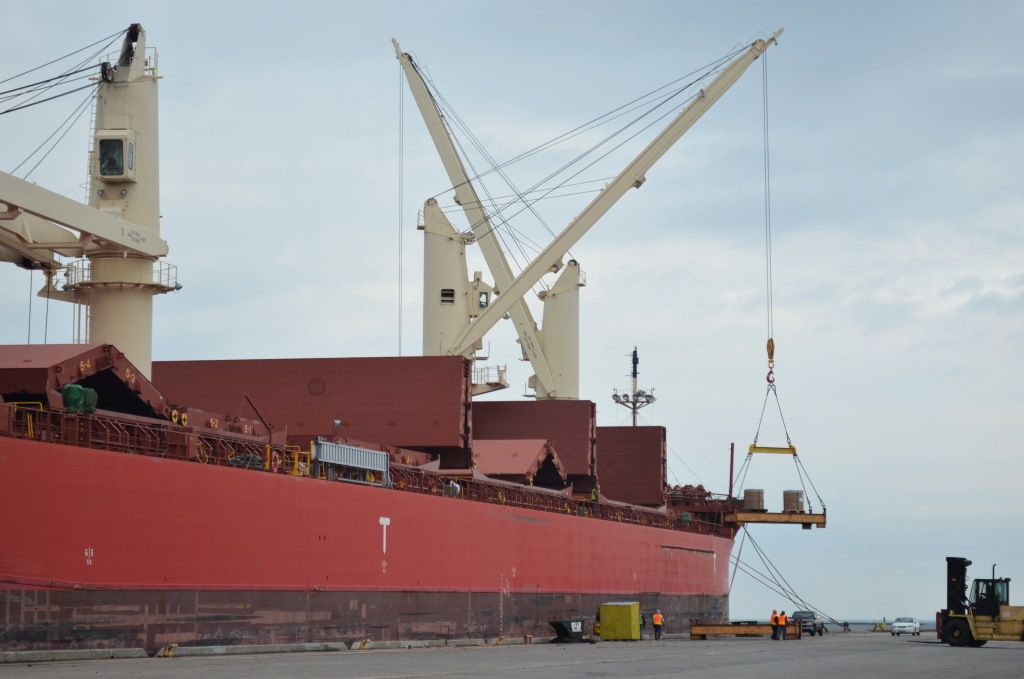
Unloading of the Federal Champlain. Photo by Jack Fennimore.
On Saturday, the Trump administration rolled out a 50 percent tariff on many Canadian imports after failed trade talks.
These latest tariffs cover a range of Canadian goods including dairy and paper products and alcoholic beverages. And they are in addition to existing tariffs on Canadian steel, aluminum, auto parts and lumber.
Tuesday, Canada announced retaliatory tariffs of between 15 and 50 percent on about 700 U.S. products that will go into effect right after Labor Day.
Chris Wojtowicz is an international trade consultant with the Wisconsin Small Business Development Center and chair of the Wisconsin District Export Council. He spoke with WPR’s “Wisconsin Today” about how the impact of this trade war is being felt in Wisconsin.
The following interview has been edited for brevity and clarity.
Rob Ferrett: It’s been a roller coaster. “Hey, it looks like we have a deal. We don’t have a deal.” American tariffs on Canadian stuff. Now Canadian tariffs on American stuff. What have you been hearing from Wisconsin businesses you work with over these last few days? Chris Wojtowicz: When costs go up at the border, small businesses feel it — their purchasing departments — long before a consumer notices it. But it’s the uncertainty that is often worse than the tariff itself.
RF: I was looking at charts of where Wisconsin exports stuff to and imports stuff from. Canada is a pretty big trading partner. How big a deal is our connection with our neighbors to the north?
CW: Around 28 percent of the state’s goods are exported to Canada. That’s roughly $7.5 billion. It puts Canada at no. 1 as our most important trade partner.
RF: What kinds of things are we sending north to Canada? What kind of products are making up a lot of that $7.5 billion?
CW: We have major paper and packaging. We’re a manufacturing state, so all the good, cool stuff manufactured here. Furniture and wood products. And, of course, dairy. All of that goes north.
RF: Supply chain-wise, we’re not just selling stuff to Canada. We’re importing things. Some of that we’re selling directly to consumers. Some of it manufacturers might be using, like aluminum and other products. How big is the import side of things? How much do Wisconsin businesses rely on that?
CW: That’s where it really takes the hit. One of the major exports out of Canada that we import is lumber and wood. And that’s going to affect home builders, cabinet makers, furniture and packaging companies.
I look at myself. We’re remodeling our kitchen, and the last thing I want to do is go down to the lumber store now and pay 50 percent more potentially for a two-by-four. So that is going to have its impact on our contractors.
RF: What do you recommend large or small businesses do to prepare as the price of key ingredients for their work might be going up?
CW: I think that the small businesses shouldn’t navigate any of these trade changes alone. They should have a really good partner in that with a customs broker, a logistics provider or a trade advisor. Evaluate your options. Develop a contingency plan. I understand not everybody makes a two-by-four, but there are other suppliers of wood and wood products, and dairy products and (other) inputs into your manufactured products.
When you have these big companies out there — like Harley Davidson or Kohler or Milwaukee Tool — they have staff on hand that helps them through with navigating these murky waters. But small businesses do not, so they have to rely on communication with their customers — can they forward these expenses, how they’re going to recover. A lot of times, that shows up in not being able to hire additional help or to improve their own businesses, upgrade tools or things of that nature. So it’s really difficult for the small businesses.
RF: The president and supporters of tariffs say, “Yeah, this might be rocky in the short run. The goal here is to develop more production in America.” So, if I’m a distiller and I’m looking at these tariffs on Canadian beverages, well, maybe I should start making a Canadian whiskey. Do you see opportunities for Wisconsin businesses?
CW: That’s really great that you bring that up because not every impact is negative. Wisconsin companies that compete directly with Canadian suppliers may gain that market share, especially if those Canadian imports become more expensive. So now we flip the tables. Domestic lumber mills, domestic wood product manufacturers, some paper producers could see increased demand — but that’s just a gamble.
Analysts expect some U.S. producers to benefit from trade protections. I do have Wisconsin small business stories of companies that have actually benefited from the tariffs. That’s kind of hard to believe, but they’ve benefited and they’ve increased their market share.
If I were a company, I would look at this as an opportunity. I would do what I could to take that market share and maintain that market share. It’s not that I made a better Canadian whiskey, but maybe I made a Wisconsin whiskey and promote that.
Wisconsin businesses brace for impact as trade war with Canada heats up was originally published by Wisconsin Public Radio.
If you think stories like this are important, become a member of Urban Milwaukee and help support real, independent journalism. Plus you get some cool added benefits.
More about the Trump Tariffs
- Gov. Evers Announces Wisconsin Becomes a Top 10 U.S. Food, Forestry, and AG Exporter Under Evers Administration - Gov. Tony Evers - Sep 23rd, 2026
- Baldwin Calls Out Trump’s Trade War With Canada as Tariffs Hit Wisconsin Dairy, Paper - U.S. Sen. Tammy Baldwin - Sep 8th, 2026
- Read: Gov. Evers Slams Wisconsin Republicans in Congress for Repeatedly Caving on President Trump’s Erratic Tariffs, Enabling Latest Reckless Trade War With Wisconsin’s Largest Export Partner as Retaliatory Tariffs Take Effect - Gov. Tony Evers - Sep 8th, 2026
- Tiffany Splits with Trump on Renaming Lake Ontario - Danielle Kaeding - Aug 29th, 2026
- How A U.S.-Canada Tariff Fight Hits Wisconsin’s Small Businesses - Richelle Wilson - Aug 28th, 2026
- New Trump Tariffs, Same Old Support From MAGA Extremist Congressman Tom Tiffany - Democratic Party of Wisconsin - Aug 24th, 2026
- Gov. Evers Blasts President Trump, Republicans in Congress for Trade War With Wisconsin’s Largest Export Partner, Leaving America’s Dairyland in the Lurch - Gov. Tony Evers - Aug 24th, 2026
- Dem Gov Nominee David Crowley Calls Out Maga Congressman Tom Tiffany for Refusing to Stand Up for Wisconsin’s Farmers and Manufacturers Against New Tariff Taxes - David Crowley - Aug 24th, 2026
- Wisconsin DOJ Sues Trump Administration Again to Stop Illegal Tariffs - Wisconsin Department of Justice - Aug 3rd, 2026
- Op Ed: Trump Tariffs Have Failed - John Torinus - Sep 27th, 2020
Read more about Trump Tariffs here