

Francesca Hong’s Policy on Data Centers Is Unique
Only governor candidate to propose 1-year moratorium. What would it mean for Wisconsin?

Rep. Francesca Hong, center, speaks to attendees at a governor candidate forum while sitting between Milwaukee County Executive David Crowley, left, and Sen. Kelda Roys, right, on Wednesday, Jan. 21, 2026, at the Cooperage in Milwaukee, Wis. Angela Major/WPR
At a June debate, six Democrats vying to be Wisconsin’s next governor were asked whether they support a one-year moratorium on data center construction.
In response to the question, state Rep. Francesca Hong of Madison, a Democratic Socialist, raised a green thumbs-up sign.
All of the other Democrats raised a red thumbs-down sign.
While the Democratic primary field has narrowed in recent weeks, Hong has remained the only Democrat who supports a statewide moratorium on new construction for AI data centers.
Business groups argue that would threaten Wisconsin’s continued economic growth and strip away local control from communities that may be interested in hosting a data center. But as public opinion polling has shown, voters in the Badger State are increasingly skeptical of those projects, and none of the major candidates in either party has embraced the rapid expansion of data centers in Wisconsin.
In an interview with WPR, Hong said her proposed data center moratorium would not stop projects already under construction in places like Mount Pleasant, Port Washington and Beaver Dam. She said a moratorium would give the state time to create regulations for the industry before even more developments can be greenlit.
Hong said she wants those rules to eliminate Wisconsin’s subsidies for data centers, shield consumers from higher utility costs, impose environmental safeguards and require the projects be built with union labor.
“If we don’t have regulations that are enforceable in place, that unchecked growth is going to lead to more economic devastation as well as environmental devastation,” Hong said. “We don’t have enough data on data centers right now to even measure that impact yet. The scale and speed in which these developments and the proposals are going up, the state has a responsibility to respond.”
Lawmakers in 15 states, including Wisconsin, have considered moratoriums or other restrictions on data center development, according to the National Conference of State Legislatures.
In the last legislative session, Hong introduced a bill that would’ve placed a moratorium on data centers, but it failed to pass. It would have prohibited large data centers from operating until conditions related to utility costs, environmental protections, labor standards and local approval processes were met.
Democrats and Republicans also both introduced competing proposals to regulate data centers last session, but neither reached Gov. Tony Evers’ desk.
Data center developments have contributed to economic growth
Dale Kooyenga, president of the Metropolitan Milwaukee Association of Commerce, said data center investment has been key to Wisconsin’s growth in recent years.
An October 2025 analysis by Mark Zandi, chief economist at Moody’s Analytics, found Wisconsin’s economy was growing even as those in neighboring states were slowing or holding steady.
Kooyenga, a Republican former state lawmaker, said the national data center boom has allowed Wisconsin companies in the industry’s supply chain — such as Generac and Modine Manufacturing — to grow their workforce in response to rising demand.
He also said projects underway in the state are providing thousands of union construction jobs, while the tech companies behind them are making additional investments to support the state economy.
He said property tax growth generated from those projects will also help support local schools and municipal governments.
“To put a moratorium on data centers is to put a moratorium on economic growth,” he said.
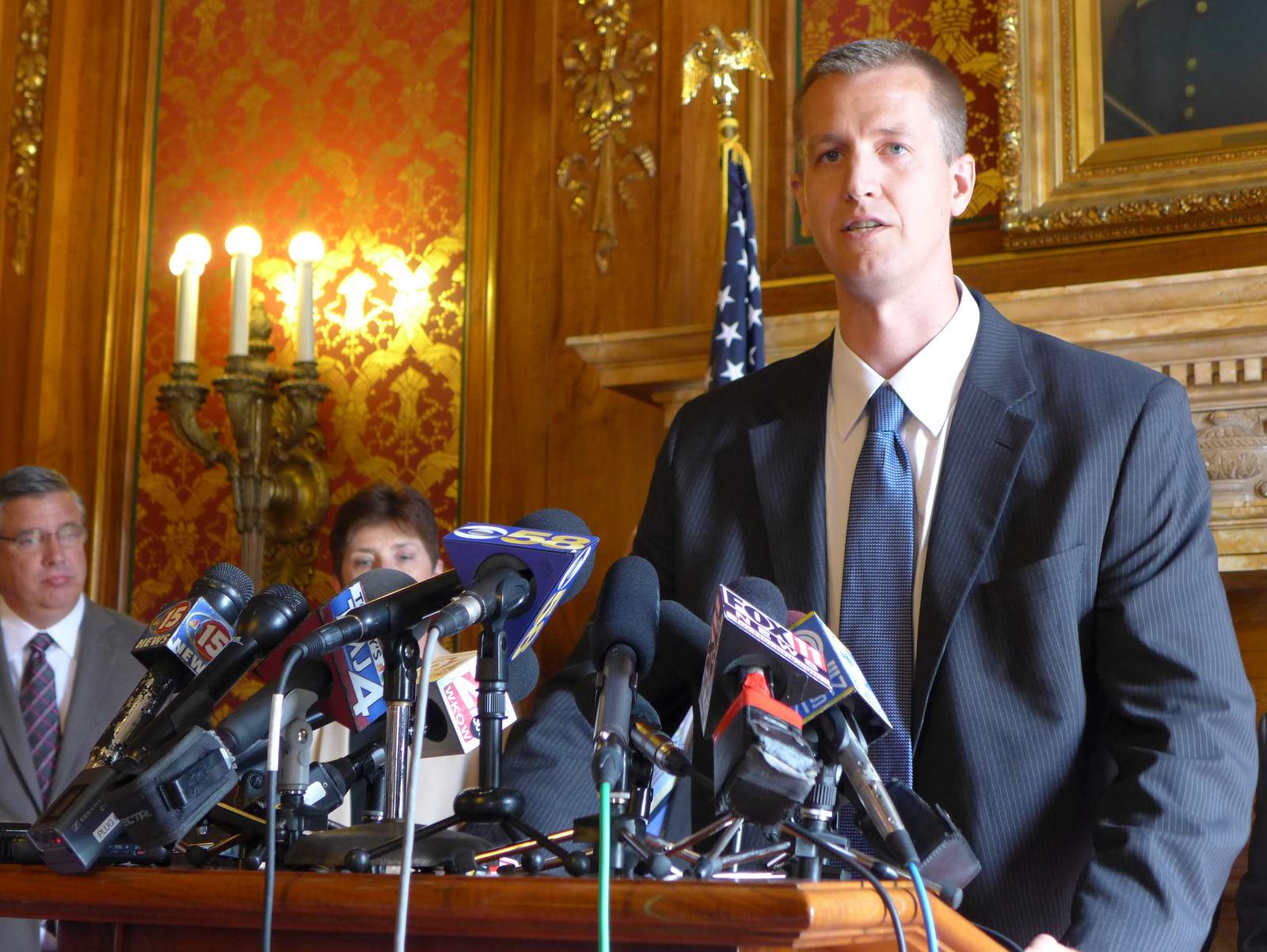
Metro Milwaukee Association of Commerce President Dale Kooyenga speaks at a press conference in Madison during his time in state government. Shawn Johnson/WPR
Wisconsin’s candidates, voters skeptical of data center industry
But data centers are broadly unpopular in Wisconsin.
In May, the Marquette Law School Poll found that 71 percent of Wisconsin voters believe the costs of data centers outweigh the benefits.
Charles Franklin, director of the Marquette Law School Poll, said opposition to data centers cuts across political ideologies, with Democrats, Republicans and independents all skeptical of the projects.
That’s why none of the candidates in this year’s governor’s race have embraced data centers with open arms, he said.
“You’re not seeing anybody speaking up for data centers, but Hong has been more outspoken against them than anybody else,” Franklin said.
Candidates on both sides of the aisle have called for ratepayer protections and more transparency around those developments.
Hong’s Democratic primary opponents have similarly called for environmental and labor protections, with some also calling for an end to Wisconsin’s subsidies for data centers. While not a formal moratorium, former Lt. Gov. Mandela Barnes has said he will “ensure new data center construction does not happen until there are guardrails on the books.”
On the GOP side, presumptive nominee U.S. Rep. Tom Tiffany of Minocqua has also said he would end Wisconsin’s data center subsidies and protect farmland from industrial development.
Kooyenga said he’s not a fan of any of the candidates’ views on data centers, regardless of party affiliation.
“All of their positions on data centers are partially, if not fully, rooted in a populism in politics that is based on information about data centers that is not accurate,” he said.
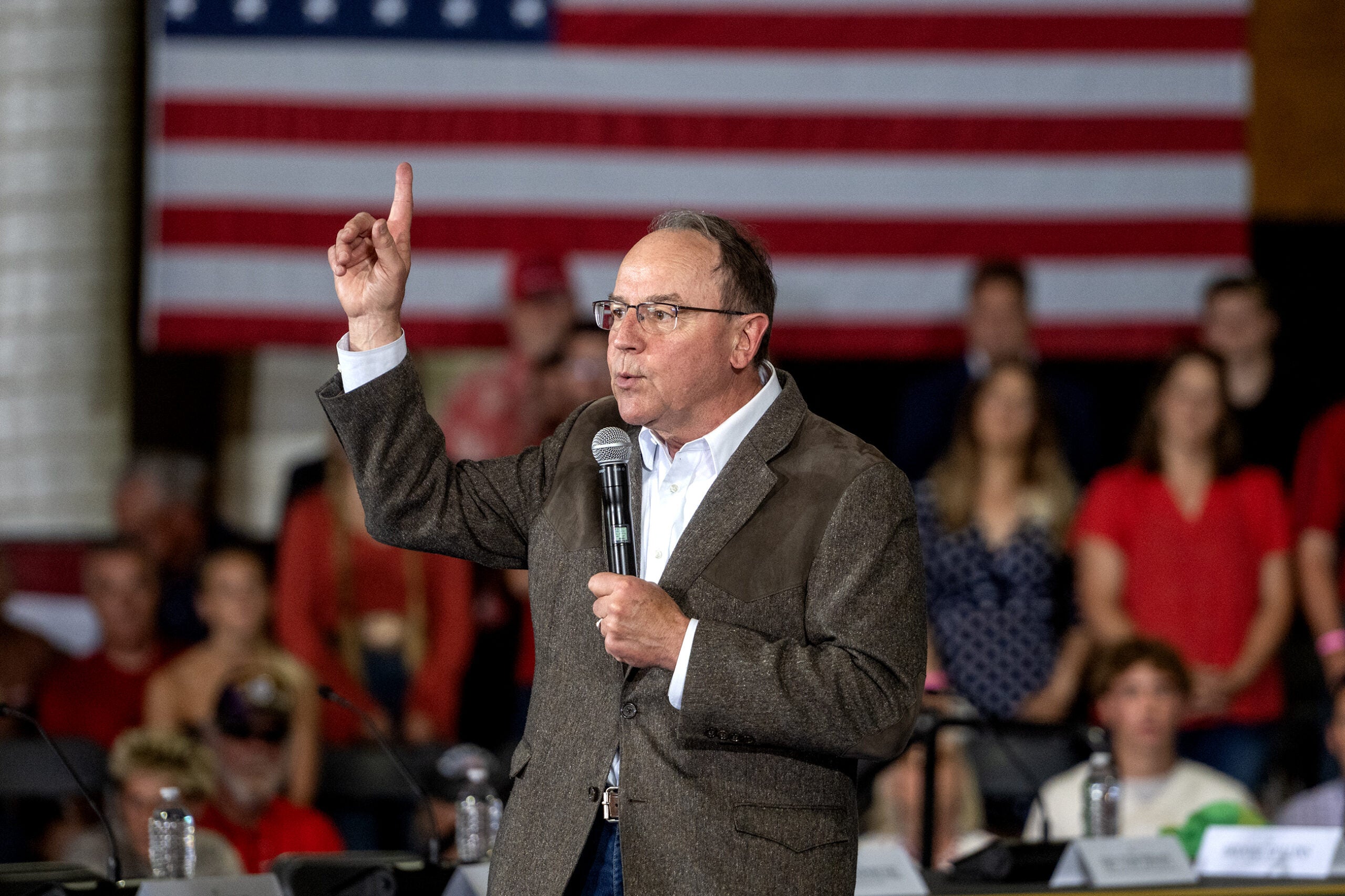
U.S. Rep. Tom Tiffany, who is running for Wisconsin governor, speaks before President Donald Trump arrives at a roundtable event Friday, June 5, 2026, in Chippewa Falls, Wis. Tiffany has said he would end Wisconsin’s data center subsidies. Angela Major/WPR
Moratorium could make it more difficult for developers looking at Wisconsin
Hong says her moratorium would not interfere with data center construction currently underway, but the specifics would still need to be hammered out in the state Legislature.
“That’s legislation that hasn’t been passed yet,” she said. “My current position — in my conversations that I’ve been having with the trades (unions) — has been that the moratorium would not interfere with existing construction right now.”
But a moratorium could make it more difficult for Cloverleaf Infrastructure to secure a site in northeast Wisconsin, after the company was the initial developer behind the Port Washington data center.
When the company has been connected to potential communities in the region, residents have shown up at meetings to oppose a potential data center.
Some local governments — including the city of Superior, the village of Wrightstown and Manitowoc and Dane counties — have even implemented their own data center moratoriums.
Kooyenga argues that Hong’s plan is “anti-local control” and would essentially take power away from local governments.
“It should be local control, and that local community should make an assessment based on specific proposals from specific companies, and work out a deal and an arrangement that is in the best interest of the community,” he said. “But (we should) not have a blanket ban that doesn’t invite a conversation in the first place.”
But Hong argued a statewide moratorium is “the responsible response to the scale and speed in which these developments are going up,” and that more state funding for local government would mean they don’t have to chase those development opportunities. She said a moratorium would ensure “local governments are equipped to make these decisions” with environmental guardrails in place.
“This is a broader issue of democracy and how we are prioritizing people over massive profits and wealth disparities,” Hong said. “I’m coming from that perspective, that this really is a democracy issue, and I think the people of Wisconsin see it that way too.”
While polling shows that data centers are unpopular in Wisconsin, Franklin said it remains to be seen where the issue ranks with voters when they cast ballots in Wisconsin’s Aug. 11 primary for governor.
“When data centers come up for debate at city councils or planning commissions, we’re seeing a large turnout of pretty angry people opposed to the data centers,” Franklin said. “But that doesn’t mean that’s motivating voters across the state to anything like the same degree. We just don’t know the answer to that question.”
What would Francesca Hong’s proposed data center moratorium mean for Wisconsin? was originally published by Wisconsin Public Radio.
If you think stories like this are important, become a member of Urban Milwaukee and help support real, independent journalism. Plus you get some cool added benefits.




















I still can’t believe the rest of the candidates were not on the same page! Yes, jobs are created, but it feels like building data centers is building just to build. Even worse that the trendy construction is for noisy, pollution spewing, giant wastes of space. The common man does not want this, and Hong is the only one who can see that!
Dale Kooyenga is an unwelcome presence in any serious conversation. His ideology is one of pro-business at all costs, and will reject common sense if it hurts some rich person somewhere.
Once again only Francesca Hong is willing to be decisive and strong with her policy. Data centers may look positive today much like the giant tower, massive screen, and wired keyboard collecting dust on a basement shelf in my house once did when it occupied my entire desk. The technology to replace data centers is already in motion. What will we do with these massive structures when Edge computing, or Colocation become the go to technology. The monolithic Pt. Washington structure will sit empty when underwater technology takes over. We can’t find uses for all the vacant Walgreen buildings, imagine trying to find a tenant for the Microsoft giant in Mt. Pleasant?
How many data centers are built with TIF money? If more than none, even Kooyenga is peddling misinformation about tax revenue for schools…