325 Political Candidates Offer Their Favorite Wisconsin Fun Fact
Including the sundae, hamburger, Dungeons & Dragons and an underground railroad ship.
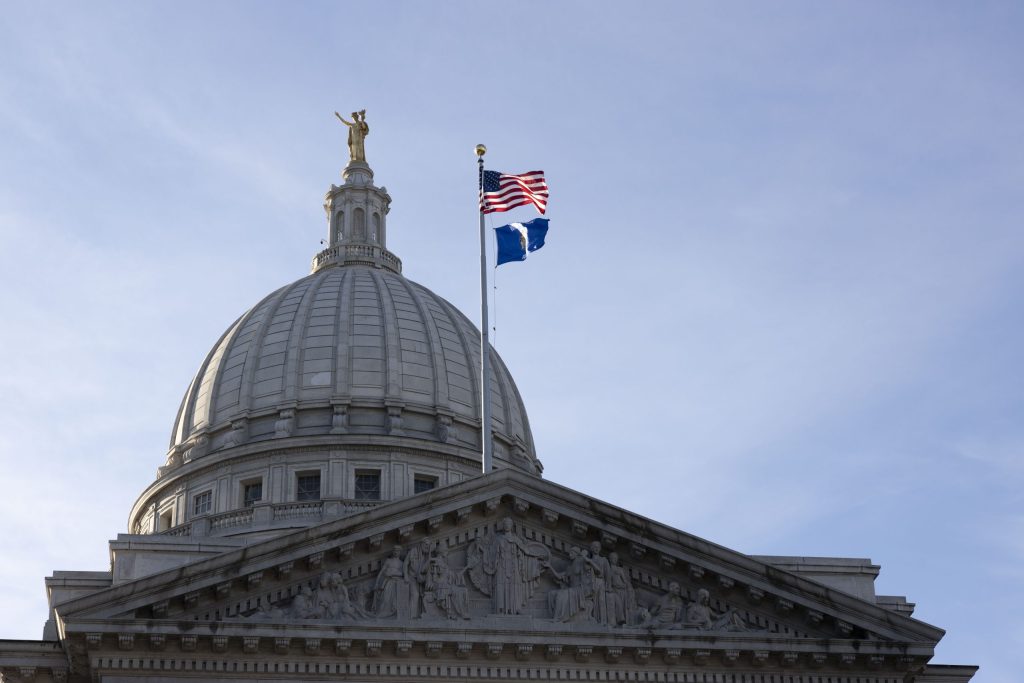
The Wisconsin State Capitol building is photographed on Nov. 14, 2023, in Madison, Wis. (Drake White-Bergey / Wisconsin Watch)
What’s your favorite fun Wisconsin history fact?
We asked the 325 candidates running for state and legislative office in 2026 that question and others as a part of Wisconsin Watch’s 2026 voter guide, a resource that launches today to help voters learn about the people running for office ahead of the state’s partisan primary election on Aug. 11 and general election on Nov. 3.
It’s a pivotal election year across the state. Eight candidates — six Democrats and two Republicans — are competing for an open governor’s seat after two-term Democratic Gov. Tony Evers decided against running for reelection. New legislative maps and Democratic gains in the Assembly and the Senate in 2024 set up real competition for both chambers of the Legislature this year after more than a decade of Republican control.
To help Wisconsinites navigate this election season, we contacted all 325 candidates running for office, from the Legislature to Congress, to get information about candidates and their plans if they are elected later this year.
The hundreds of responses show stark division between Republicans, Democrats and independents on what’s best for Wisconsin’s future. But all respondents shared an admiration for our state and its history.
For example, both Republicans and Democrats mentioned the rebuilding of Wisconsin’s state Capitol in Madison after a fire a little more than a century ago. They also highlighted the state’s role in establishing the first kindergarten in the country. At least 14 candidates — both Republicans and Democrats — shared appreciation that Wisconsin was the first state to ratify the 19th Amendment, which gave women the right to vote.
Every candidate running for a statewide race, such as governor and attorney general, responded to our questions. We received responses from a majority of congressional and legislative candidates, though more Democrats responded than Republicans. About 90% of the Democratic candidates responded compared with 40% of Republicans.
When candidates didn’t respond we dug through websites, social media and news stories to find information on candidates and their campaigns to help voters as they head to the polls. (If you are a candidate who is reading this and missed our many calls and emails in June, we would be glad to add your information.)
Here are some of the other “Wisconsin fun fact” highlights candidates shared:
Republicans aren’t the only ones to appreciate the GOP’s roots in Wisconsin
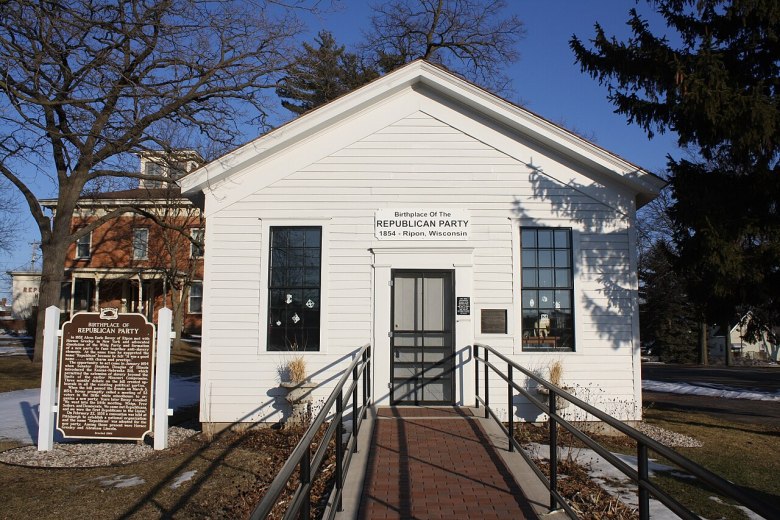
The Little White Schoolhouse in Ripon, Wis., is shown on Feb. 19, 2011. The schoolhouse is regarded by many as the birthplace of the Republican Party, although Jackson, Mich., claims that the party started at a meeting under a cluster of oak trees there. (Royalbroil via Wikimedia Commons)
Ten candidates responded that their favorite fun fact was that the Republican Party started in Wisconsin. In February 1854, abolitionist supporters of the soon-to-be party gathered in Ripon about 30 minutes west of Fond du Lac in opposition to a new slavery bill. The group ultimately dubbed themselves as Republicans in another Ripon meeting later in March.
“It’s an honor to serve as district attorney for a county with that kind of legacy, and one could argue Ripon became a catalyst that helped end slavery in America — truly embracing Wisconsin’s motto ‘Forward,’” said Eric Toney, Republican candidate for attorney general.
“Ironically, as a Democrat, I think that the birthplace of the Republican Party being the 39th District is super interesting!” said Michael Skivington, a Democratic candidate for the 39th Assembly District. “Of course, the party of today is a lot different than it was in the past. And Lincoln would most likely not be a part of (or even recognize) what is going on in the state or nationally — but it is still a fun historical fact in Wisconsin history.”
“Whether someone is Republican, Democrat, independent, or politically homeless today, I think that history is a reminder that Wisconsin has always had people willing to challenge stale politics and demand something better,” said Elizabeth Anne Fitzgibbon, an independent candidate running for the 6th Congressional District.
Wisconsin’s movements and symbols
Candidates from across the aisle highlighted the role Wisconsinites played in leading social and political movements that led to pivotal changes for our state, from political reforms to defining state features.
“In 1854, Joshua Glover, an escaped slave from Missouri, was captured in Milwaukee. Local abolitionists raided the jail, freed him, and helped him safely escape to Canada by boat from Racine. This incident led the Wisconsin Supreme Court to become the only state high court in the nation to declare the federal Fugitive Slave Act unconstitutional,” said U.S. Rep. Gwen Moore, the Democratic incumbent for the 4th Congressional District.
“One of my favorite Wisconsin history facts is that Wisconsin became known as the ‘Badger State’ not because of the animal, but because early lead miners in the 1820s and 1830s often dug tunnels into hillsides and lived in them during the winter. People said they lived like badgers, and the nickname stuck. I enjoy this story because it reflects the determination, resilience, and ingenuity that have long characterized Wisconsin residents,” said Shandowlyon Reaves, a Republican candidate for the 11th Assembly District.
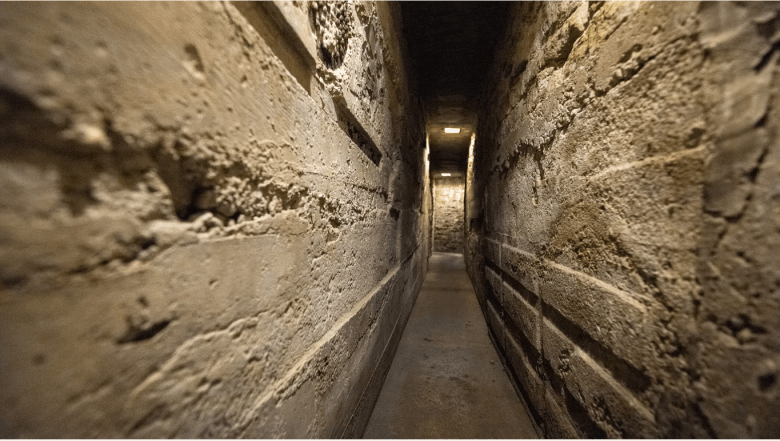
A tunnel below the Milton House used as a part of the Underground Railroad is open to visitors of the Milton House Museum, June 28, 2022, in Milton, Wis. (Angela Major/WPR)
“One of my favorite Wisconsin history facts is that Wisconsin has long been a national leader in progressive ideals. In 1895, the state passed one of the earliest civil rights laws in the country prohibiting discrimination in public accommodations. Later, Wisconsin led the nation again by adopting the first constitutional workers’ compensation system and the first state income tax in 1911. I love that our state has a history of trying new ideas that make government work better for working people,” said Ismael Luna, a Democrat running for the 8th Assembly District.
Duke Tucker, a Republican running in the 75th Assembly District in far northwestern Wisconsin, had a different take on Wisconsin’s place in tax history.
“Not sure about it being a fun fact, but Wisconsin was the first state to enact an income tax … ugh,” Tucker said.
Food and farm facts
As the Dairy State, both Republicans and Democrats pointed to Wisconsin’s role as a leading producer of cheese. But candidates also highlighted the state’s cranberry production and desserts, like the kringle.
“I’m the granddaughter of dairy farmers, so I’m obligated to defend Wisconsin’s cheese supremacy. Wisconsin is the only state in the country with a master cheesemaker program. This certification is so rigorous that the journey from becoming a licensed cheesemaker to earning the master title typically takes more than 13 years. I think that says something bigger about Wisconsin. We’re a state that takes the time to do things right, whether that’s cheese, our schools, or how we take care of each other,” said Lt. Gov. Sara Rodriguez, a Democratic gubernatorial candidate.
“My favorite bit of Wisconsin history was taught to me while listening to Brewers baseball on the radio by the late great Bob Uecker. He told stories of making oleo runs with his family. This was in reference to the margarine bans from 1895 to 1967,” said Jeremiah Fredrickson, a Democratic candidate for the 92nd Assembly District. “Even today restaurants in Wisconsin can not serve margarine as a butter substitute unless the customer requests it.”
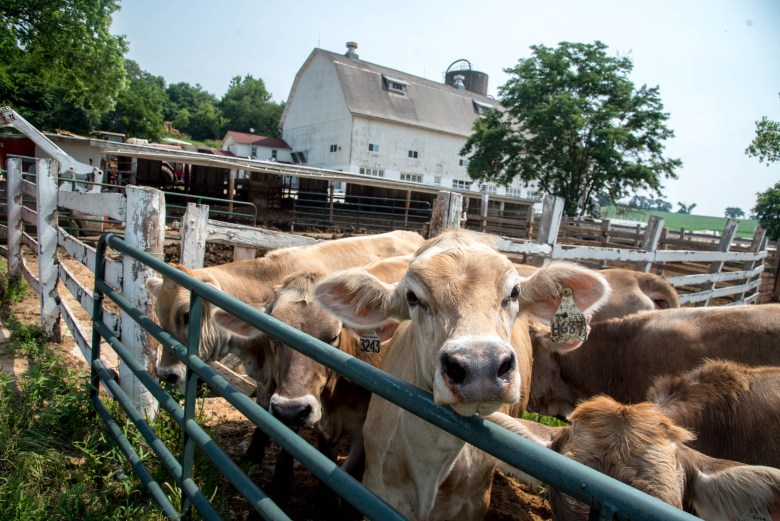
Cows are seen at Bryan Voegeli’s dairy farm, which specializes in Brown Swiss cattle, in Monticello, Wis., on July 9, 2020. (Will Cioci / Wisconsin Watch)
“One of my favorite Wisconsin history facts is that the state was once home to the world’s largest brewery. For many years, Milwaukee was known as the beer capital of America, with breweries like Pabst Brewing Company, Schlitz and Miller Brewing Company helping put Wisconsin on the map. What I enjoy most about that history isn’t the beer itself — it’s what it says about Wisconsin. Generations of immigrants came here, built businesses, created jobs, and helped shape thriving communities,” said Matthew Arndt, a Green Party candidate for the 6th Congressional District.
“I’ve gotta go with Seymour being the home of the hamburger. It’s pretty great to know that it all originates at the Outagamie County Fair, right here in northeast Wisconsin,” said U.S. Rep. Tony Wied, the Republican incumbent for the 8th Congressional District.
“The ice cream sundae was originally invented in Two Rivers, Wisconsin, in 1881,” said Katie Baney, a Republican candidate for the 1st Senate District.
“Here in Racine, we are so proud to be the home of the Wisconsin state pastry, kringle! My family has been eating kringle in Racine for several generations, and we hope everyone enjoys our state pastry as much as we do,” said Assembly Minority Leader Greta Neubauer, the Democratic incumbent for the 66th Assembly District.
Wisconsin sports fans
Republicans, Democrats and independents alike can put aside political differences to agree on their pride for Wisconsin sports.
“Milwaukee was actually one of the original cities in the American League when it formed in 1900. The Milwaukee Brewers lasted just one season before relocating to St. Louis and becoming the Browns (later the Baltimore Orioles). Making it even cooler, Connie Mack was their manager,” said Peter Karas, a Green Party candidate for secretary of state.
“The Green Bay Packers are incorporated as a cooperative, owned by over 500,000 shareholders who vote on management policies,” said Charly Ray, a Democratic candidate for the 25th Senate District.
“The Super Bowl trophy is called the Lombardi Trophy,” said Jeff Foster, a Democrat running for the 23rd Senate District. Unsaid (perhaps because it doesn’t need to be) is that Vince Lombardi coached the Green Bay Packers to five championships, including two Super Bowls, in the 1960s.
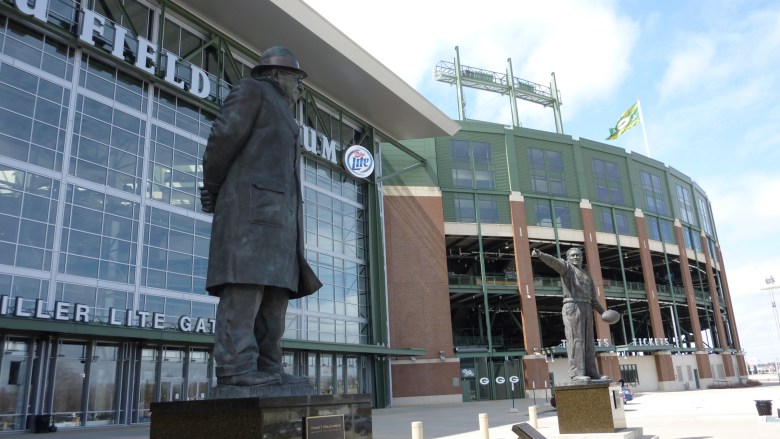
Statues at Lambeau Field in Green Bay, Wis., April 18, 2011. (JL1Row / Wikimedia Commons)
“All four of the Green Bay Packers Super Bowl victories have been when our state had a Republican governor,” said Clint Moses, Republican incumbent for the 92nd Assembly District.
“One of my favorite Wisconsin history facts is that the Green Bay Packers’ first competitive season was in 1919. They went 10-1, outscoring their opponents 565-12, and their only loss that season came right here in Beloit, when the Beloit Fairies defeated the Packers 6-0 on Nov. 23, 1919. It is a fun fact I love to share every football season,” said Rep. Clinton Anderson, D-Beloit.
Miscellaneous facts
There are many, many more history facts from the 200-plus candidates that responded to our questions. Here are a few others that we enjoyed.
“I love that Dungeons & Dragons was created in Wisconsin and that the manuscripts for ‘The Lord of the Rings’ trilogy permanently reside here,” said Bridget Maniaci, Democrat for the 19th Assembly District.
“The Golden Fleece Award was a tongue‑in‑cheek recognition created by U.S. Senator William Proxmire (D‑Wisconsin) in 1975 highlighting what he saw as wasteful, ridiculous or ironic use of taxpayer money. The name was a play on the Order of the Golden Fleece, a prestigious chivalric order, and on the verb ‘to fleece,’ meaning to charge excessively,” said Mike Morgan, a Republican running for the 13th Assembly District.
“One of my favorite Wisconsin history facts is that a piece of Sputnik IV actually fell in Manitowoc in 1962. A chunk of a Soviet satellite landed right in the middle of the street,” said Christian Ellis, an independent candidate running for the 9th Senate District.
“At the bottom of Lake Michigan near Manitowoc, there is a fully intact schooner shipwreck. That ship, Home, was part of the Underground Railroad and helped fugitive slaves reach freedom. It ran into another boat on a foggy morning and sank to the bottom of the lake. It’s one of my favorite pieces of Wisconsin lore because it ties to who we’ve always been as a state. Wisconsin was the only state to declare the Fugitive Slave Act unconstitutional,” said former Lt. Gov. Mandela Barnes, a Democratic candidate for governor.
This article first appeared on Wisconsin Watch and is republished here under a Creative Commons Attribution-NoDerivatives 4.0 International License.