

Wisconsin Egg Production Down By 57%
Farmers struggling with avian flu, rising fuel and feed prices.
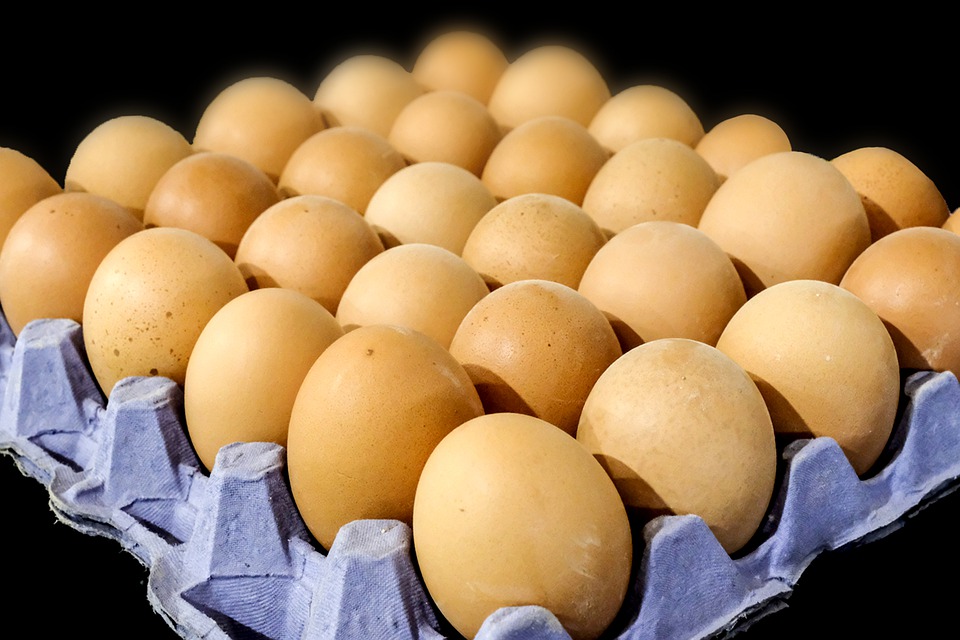
Eggs. Pixabay License.
Egg production in Wisconsin is less than half of what it was a year ago, reflecting a major decline in the number of laying hens in the state.
That’s according to the latest data collected by the U.S. Department of Agriculture.
Wisconsin produced 91.7 million eggs in April, the latest month available. That’s down 57 percent from the same month in 2025.
The data shows there were 3.69 million laying hens in the state. It’s 56 percent lower than the previous April, when Wisconsin had 8.3 million birds.
The state’s total laying hens fell dramatically last September, after Daybreak Foods’ farm in Jefferson County was hit by avian influenza and culled more than 3 million birds.
Laying hen numbers started to rally in December into February. But numbers fell sharply again in March after three different locations — each with more than 1 million birds — were forced to cull their flocks due to avian flu, including the same farm in Jefferson County.
Ron Kean, poultry specialist for the University of Wisconsin-Madison’s Division of Extension, said it takes time for a farm to recover from an infection. Producers have to cull their flocks and compost the dead birds, before sanitizing their facilities.
Replacing the lost birds can take close to two years, according to Kean. He said there are a limited number of new laying hens, referred to as pullets, ready to go each year.
“It’s like if you lost all of your cows in a herd, there aren’t just more cows out there that you can go get right away,” he said.
Kean said the data from USDA primarily captures the largest egg producers in the state. So each time a farm is culled due to avian flu, it can cause a big swing on the monthly report.
But he said Wisconsin has a growing industry of small to medium-sized farms, many that are raising hens on pasture to sell their eggs at a premium.
“By number of birds, it’s still definitely the large facilities that have the most,” he said. “But I’m going to say there might be… half a million to a million, I think it’s safe to say, that may not be getting counted.”
National egg production in April was up 5 percent from a year ago. The supply of eggs has started to recover from avian flu outbreaks across the country, and egg prices have come down from record highs in 2025.
The adjustment may be good for consumers’ wallets, but it has left some farmers feeling squeezed as they continue to face a higher cost of doing business.
Maro Ibarburu, Business Analyst for the Egg Industry Center at Iowa State University, said egg farmers across the country are facing rising feed prices and fuel surcharges from their processors.
He told WPR in an email that shell egg prices from March to May were “the 4th lowest compared with the same period in the last 20 years, and are the lowest when they are adjusted by inflation.”
“These 20-year lows, when combined with the (March to May) cost of production increase, which is 5 percent higher than the same period last year, have made this time very challenging for egg farmers,” Ibarburu wrote in an email.
But Kean said the egg industry does have one reason to look on the sunny side: Americans’ obsession with protein could help drive new consumer demand.
“In general, everybody seems to be gung ho on protein right now,” he said. “I think the high price of other proteins, those have also helped.”
Wisconsin egg production cut in half as farms struggle with avian flu, higher expenses was originally published by Wisconsin Public Radio.
If you think stories like this are important, become a member of Urban Milwaukee and help support real, independent journalism. Plus you get some cool added benefits.























The Trump administration cut millions of dollars from Avian Flu research.