Wisconsin Prisons Bar Journalists From Recording Inmate Phone Calls
DOC cites victims’ rights and security, while open-government advocates see a blow to transparency.
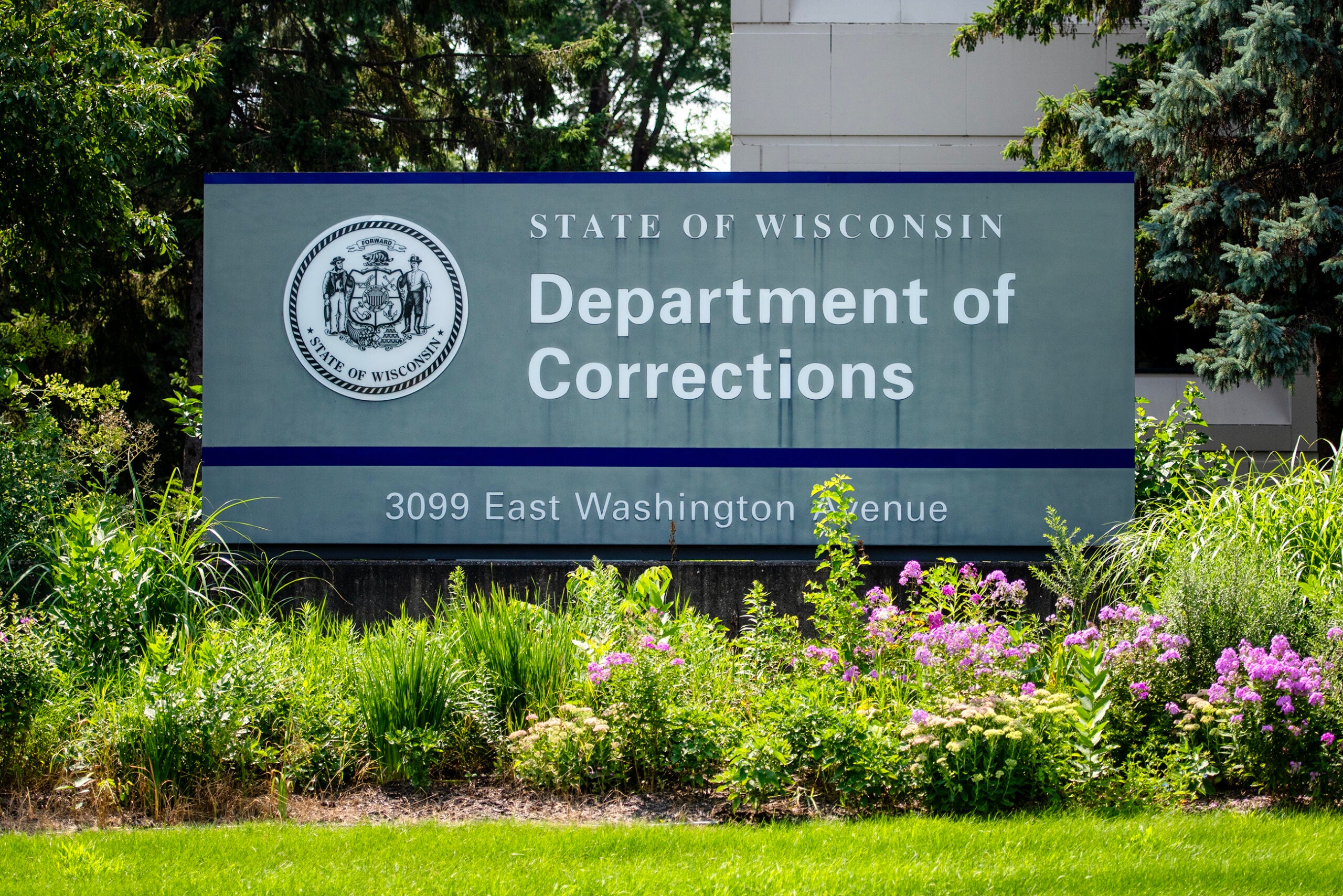
The Wisconsin Department of Corrections on Wednesday, Aug. 6, 2025, in Madison, Wis. Angela Major/WPR
“Calls other than properly placed attorney calls may be monitored and recorded.”
That automated message plays at the beginning of phone calls placed from Wisconsin prisons, warning participants that the conversation may not be private.
Wisconsin’s Department of Corrections reserves the right to record prisoner phone calls, and those recordings can end up as evidence in the hands of police or prosecutors.
But, even though prison calls can be recorded by the state as a matter of routine, inmates could get in trouble if they let other people, including journalists, record their calls.
A prison system policy states that a person incarcerated at a DOC facility shall “not allow their phone calls to be recorded by another party except for law enforcement purposes.” A separate policy applies to video calls with prisoners. It warns that participants “shall not record” the video conversation.
Under DOC policy, there’s no blanket ban that prohibits incarcerated people from being interviewed by a journalist over video or the phone. But, under the policy, an incarcerated person face disciplinary action if they knowingly allow a reporter to record that conversation.
That poses problems for broadcast journalists, in particular, who often rely on soundbites to tell stories, said Bill Lueders, the president of the Wisconsin Freedom of Information Council.
“It’s the same reason that radio uses anybody’s voice,” Lueders said. “It’s part of the mechanism for telling a story, and for shining light on the institutions of government.”
In recent years, Wisconsin’s prison system has weathered a long list of scandals — including lockdowns,fatal violence and lawsuits alleging “cruel and unusual” conditions. And Lueders says taxpayers should be concerned about any policy that restricts the media’s ability to report on those conditions.
“In some situations, the public’s right to know is really the right to hear,” Lueders said. “They have a right to speak, and we have a right to hear what they have to say. And I think these policies cut against that and are problematic.”
What reasons does the DOC cite for the policy?
In an email to WPR, Wisconsin’s Department of Corrections spokesperson Beth Hardtke called the ban on recording calls “longstanding.” A review from the Internet Archive indicates that the DOC’s current language banning third party phone call recordings took effect in March 2020.
In response to questions from WPR, DOC officials cited several reasons for the policy. First, Hardkte said the recording ban is intended to preserve victims’ rights.
“Recording of resident phone calls means there is a potential for that offender to speak directly to his/her victim via the media, social media or other means,” Hardtke wrote in an email. “The victim could unexpectedly hear the resident’s voice in the media without prior warning or notice, resulting in potential retraumatization.”
Additionally, Hardtke argued that call recordings could run counter to someone’s “rehabilitation interests.”
“DOC’s media policy aims to ensure that residents do not seek to exploit their crimes for fame and notoriety contrary to rehabilitative interests, and that residents are not exploited,” she wrote.
Lastly, Hardkte cited the “security” of DOC facilities.
“Third party recordings of resident phone calls without DOC’s oversight could lead to the dissemination of coded language which could impact the security of the institution and public,” Hardtke wrote.
Open-government advocate calls DOC’s rationale ‘speculative’
But Lueders, the open-government advocate, called those reasons, “awfully speculative.”
“The DOC is a highly secretive agency, as government agencies go, and it regularly asserts that certain things can’t be shared, certain contacts can’t be made,” Lueders said. “In many cases, I think those exclusions are questionable.”
And Lueders says the DOC has a history of citing “security” in over-broad ways.
“They can get away with almost anything (by) saying it’s necessary for prison security,” he said. “Security, security, security — it allows them to pretty much whatever they want in every situation.”
The leader of a group representing formerly incarcerated Wisconsinites also raised concerns about the DOC’s ban on recording phone calls.
“Victims’ rights and facility security matter, and those interests should not be used as a blanket justification to restrict public accountability, silence incarcerated people, or prevent the public from hearing directly from those most impacted by the system,” Marianne Oleson, the co-director of Ex-Incarcerated People Organizing of Wisconsin, wrote in an email to WPR.
People incarcerated at DOC facilities are able to place phone and video calls through the vendor IC Solutions. Those calls aren’t free. Typically, Wisconsin prisoners get one free video call a week. After that, each video visit costs $2.25. For phone calls, IC Solutions charges adult Wisconsin prisoners six cents a minute in addition to other fees and taxes.
Is the DOC’s restriction legal?
The DOC’s current restrictions on recording those calls raise First Amendment issues, impacting both the free-speech rights of people imprisoned in Wisconsin, as well as the rights of journalists who seek to interview them, said Brian Spahn, a media law attorney who serves as outside counsel to the Wisconsin Broadcasters Association.
Nonetheless, Spahn pointed to a 1987 U.S. Supreme Court decision, which allowed a Missouri prison to restrict inmates from sending mail to each other. The high court said the prison could restrict a inmate’s First Amendment rights because of the need to preserve prison security.
Since then, Spahn said courts have been likely to side with prisons when those institutions cite security as a reason for restricting inmate communication.
“There is case law that that has allowed jails or prisons to prohibit, say, face-to-face media interviews, things that are similar to (Wisconsin’s) restriction,” Spahn said in an interview with WPR. “Courts have typically deferred to department of corrections or prisons, when putting restrictions in place that assist with the administration of the jail or prison.”
Wisconsin bans journalists from recording prison phone calls, raising transparency concerns was originally published by Wisconsin Public Radio.
If you think stories like this are important, become a member of Urban Milwaukee and help support real, independent journalism. Plus you get some cool added benefits.