More Milwaukee Seniors Becoming Homeless
Local health care professionals and leaders call for change.
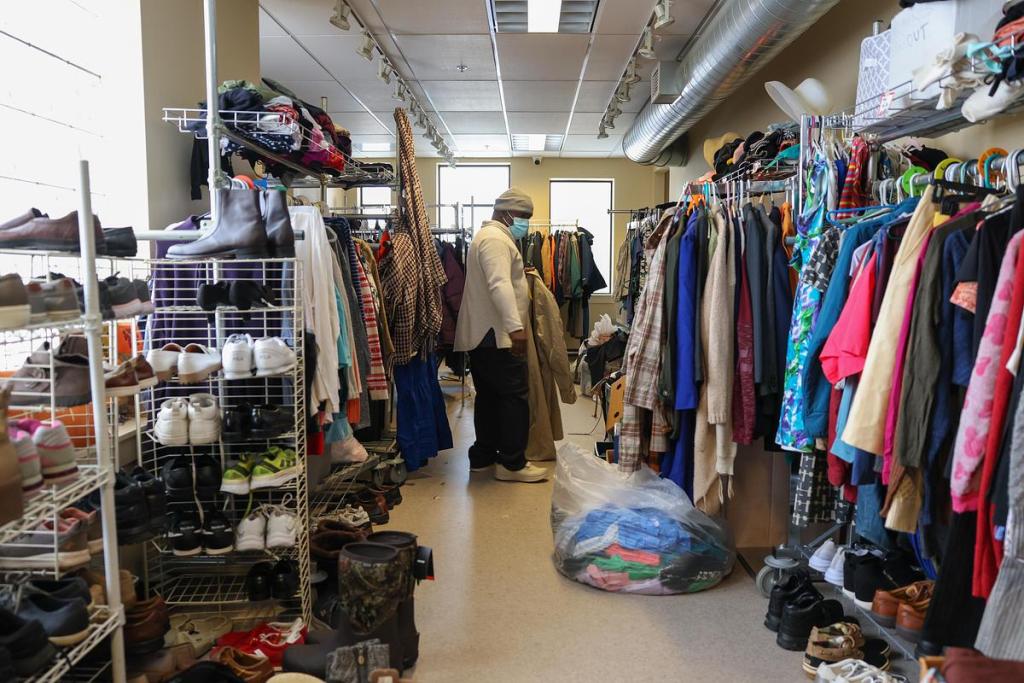
A new study found that more seniors are becoming homeless and are in need of increased services. An employee at Repairers of the Breach organizes donated clothes for those in need. (Photo by Jonathan Aguilar / Milwaukee Neighborhood News Service / CatchLight Local)
More Milwaukee seniors are facing homelessness, according to findings from a yearlong study funded through a grant from the Advancing a Healthier Wisconsin Endowment, which included Community Advocates Public Policy Institute and the Medical College of Wisconsin.
Community Advocates is a social service agency that provides a number of services, including those related to housing.
Researchers of the study examined why seniors are at risk for homelessness and what changes need to be made to keep them housed.
“Older adults used to be stable and now there’s instability,” said Erin Cronn, director of nursing for the City of Milwaukee Health Department.
The breakdown
The study showed that the majority of Milwaukee’s homeless seniors are Black males between 55 and 65, who have a high school diploma or some college.
According to Community Advocates Public Policy Institute and the Medical College of Wisconsin, their homelessness was due to a loss of income, family conflict or health challenges.
Matt Raymond, supportive housing programs director for Community Advocates, said their intakes of people 62 and older have doubled and sometimes tripled over the last 10 or so years.
Raymond said that many of the older adults had never been homeless and that accessibility to resources for them can be difficult.
“This is many of their first time experiencing homelessness and having to navigate a system that can be complex and nuanced,” Raymond said.
To help get older adults the housing resources they need, Cronn said, there needs to be a better way of sharing important information.
“A lot of information is disseminated in electronic ways and there’s a lot of isolation, so word of mouth doesn’t always work,” Cronn said.
The study also revealed that many older adults would prefer for all services to be in one place, have better transportation and more places to stay.
Understanding the hard truth
Although the study highlighted promising solutions, Emily Kenney, director of strategic initiatives and transformation at the Milwaukee County Department of Health & Human Services, said there’s still no housing system, which is why older adults struggle.
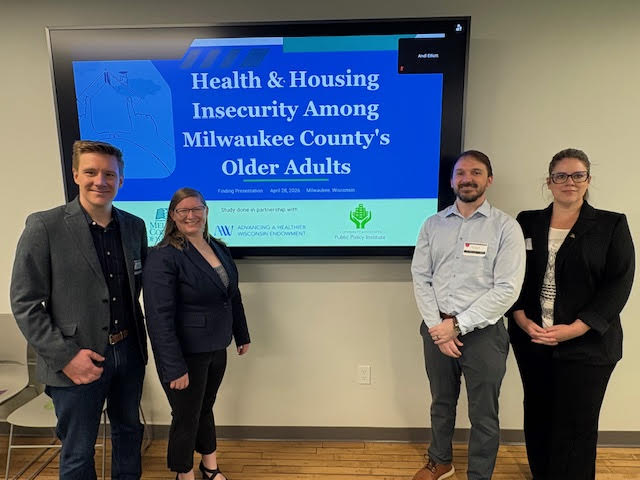
Matt Raymond, Emily Kenney, Dr. William Calawerts and Erin Cronn (left to right) shared insight about housing instability among older adults. (Photo by Community Advocates)
She believes that homeless shelters, housing programs and landlords should be functioning under one system instead of operating separately.
“When you think about the criminal justice system, health or behavioral system, those systems work together with you from beginning to end, but not for housing,” she said.
She said this gap causes a lack in prevention support for older adults and only assists people when they’re already homeless.
“When I was running a coordinated entry system, what I heard all day was people were on the brink of losing their housing and needing resources, and the only solution was to come into a homeless system first,” Kenney said.
Homelessness and the health care system
Family medicine specialist Dr. William Calawerts said he’s received older patients with high blood pressure, diabetes and other health challenges but can’t help if they don’t have stable housing.
Without a home, older adults can’t take their medicine or attend doctor appointments, which will make them more ill, he said.
“Their health issues are usually extremely complex and serious, but oftentimes we’re not able to address that adequately in the outpatient setting,” he said.
Cronn said health can mean different things to homeless older adults compared with health care professionals.
For older adults, it means having safe housing, clipped nails, ability to wash their hands or having clean and dry clothes, but professionals may see health as traditional doctor visits, he said.
“As a practitioner, it’s hard to prioritize health and the folks we’re seeing because their version of what their needs are is different than what we’re seeing,” Cronn said.
Calawerts said when he’s training medical students about homeless patients, he teaches them to take their time, have compassion and treat them beyond their illness.
“We try to tell them that you’re a human first and a physician second,” Calawerts said. “I think we’ve lost the humanism component in a lot of things we do.”
Affordable housing challenges
Kenney raised concerns about housing programs that give out vouchers to help with paying rent but have been a contributing factor to older adult homelessness.
She said developers are using loans to build houses, and the way the loans get paid off is through rent.
“Developers can’t offer rent at a price people need because the tax credits they get aren’t enough,” Kenney said. “The people who get the vouchers have already entered the homeless system.”
As a result, Raymond said some older adults have been moving into permanent supportive housing. These programs help homeless individuals get their own long-term place and additional services to help.
Community Advocates refers some of its intakes to Autumn West Safe Haven, an apartment on Milwaukee’s North Side that gives homeless or mentally ill individuals a place to stay short term until they find stability.
According to Community Advocates, 36 individuals who were homeless or mentally ill received services and housing through Autumn West Safe Haven, while 101 individuals who were chronically homeless and living with a disability received immediate help in 2025.
“Over the last few years at Autumn West Safe Haven, we’ve gone into outreach community centers to offer on-site telepsychiatry care to our residents and established a relationship with Advocate Aurora to bring in their mobile clinic on a monthly basis,” Raymond said.
Hopes for the future
Overall, community leaders want people to know that existing organizations need to make their population broader and do a better job at synthesizing resources, even though it may take time.
“There’s no reason for Milwaukee not to be at the forefront fighting this nationally,” Kenney said.
Calawerts also mentioned the resilience of older adults, having heard many success stories of them getting through mental health, homelessness, unemployment and other challenges.
“Those stories are the ones that give me hope, and with more robust services that are connected in these spaces, we can see more of those successfully,” Calawerts said.
This article first appeared on Milwaukee Neighborhood News Service and is republished here under a Creative Commons Attribution-NoDerivatives 4.0 International License.