
Trump EPA Cuts Could Hit Small Wisconsin Towns Hardest
Rural communities fear higher water rates and delayed projects if loan forgiveness shrinks sharply.
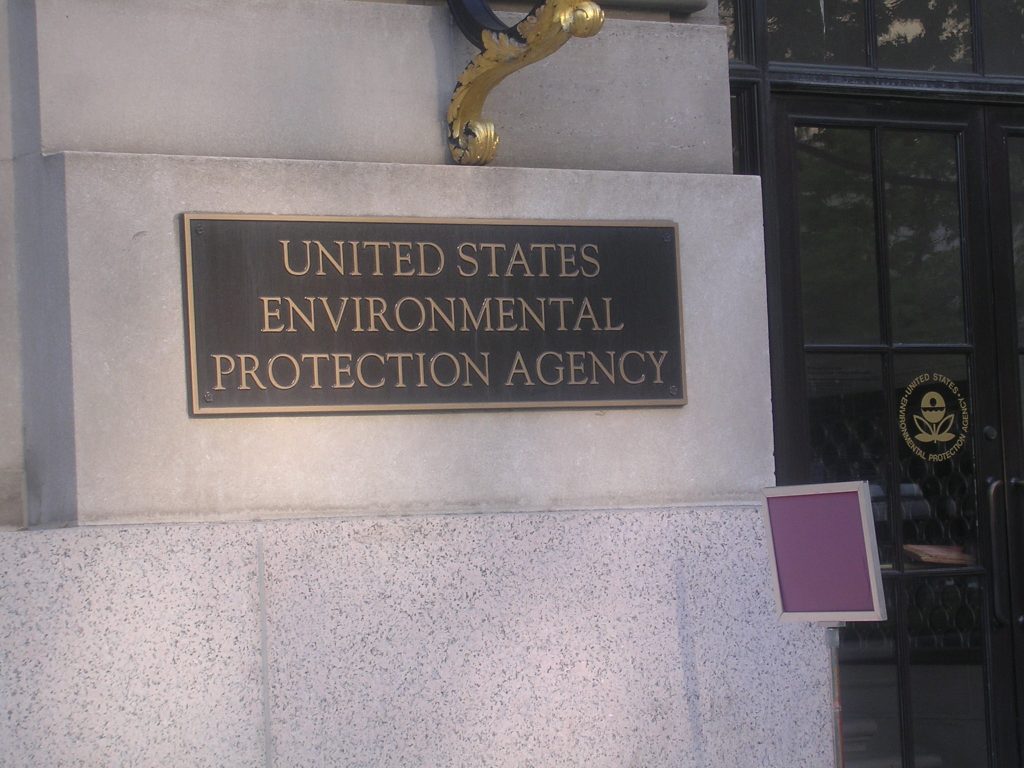
The U.S. Environmental Protection Agency. (Mcready | Flickr) (CC BY 2.0) https://creativecommons.org/licenses/by/2.0/
Wisconsin and other states again face steep funding cuts for water and wastewater projects under the Environmental Protection Agency’s proposed budget, but it’s drawing bipartisan opposition in Congress.
President Donald Trump has proposed slashing the EPA’s budget by more than half in fiscal year 2027 to $4.2 billion. State revolving loan funds that fund drinking water and wastewater projects face a 90 percent cut or reduction of roughly $2.5 billion.
Trump’s budget also cuts $1 billion in categorical grants for environmental programs that include managing air quality and controlling pollution.
In the last fiscal year, Wisconsin received $1 billion in funding requests for more than 200 projects across several state loan programs, said Matt Marcum, an environmental loan section manager for the Department of Natural Resources.
“That’s a record, by the way, to top the billion-dollar mark,” Marcum said.
The state’s safe drinking water loan program and clean water fund have seen record demand in recent years due to additional funds under the bipartisan infrastructure law and a slew of water upgrades tied to aging infrastructure and regulatory requirements.
Under Trump’s budget, revolving loan funds for Wisconsin would drop from around $40.6 million to nearly $6.4 million. Tribes nationwide would see their share decline from nearly $22.9 million to $6.1 million.
During a Senate appropriations subcommittee hearing Wednesday, U.S. Sen. Lisa Murkowski, R-Alaska, said she opposed virtually eliminating all funding for state revolving loan funds and categorical grants.
“Cutting them would hurt public health and safety,” Murkowski said.
Democratic U.S. Sen. Tammy Baldwin also objected to the cuts.
“States and local governments around the country use these funds to rapidly scale replacement of lead laterals, of which Wisconsin still has hundreds of thousands that pose (risks) to health,” Baldwin said.
EPA Administrator Lee Zeldin claimed nearly $6 billion of state revolving loan funds have sat untouched by states, though he noted Wisconsin is not one of those. Zeldin also accused lawmakers of raiding state revolving loan funds and turning them into grants for congressionally earmarked projects.
“The agency is currently reviewing options to make sure (state revolving loan fund) capitalization dollars go to states that are ready and willing to use them to improve their local communities,” Zeldin said.
The DNR’s Marcum said federal funding cuts would reduce principal forgiveness offered to communities, which is the portion of a loan that they don’t have to pay back. Other experts agree that’s crucial.
“The influx of money from EPA grants is vital to the continued ability of that program to function, particularly with respect to principal forgiveness,” said Vanessa Wishart, an attorney who represents the Municipal Environmental Group-Wastewater Division, a Wisconsin coalition of wastewater utilities. “It’s critical, particularly to smaller communities and disadvantaged communities, to be able to afford these projects.”
Small rural communities rely on principal forgiveness to bring the costs of projects down, said Chris Groh, executive director of the Wisconsin Rural Water Association.
“If the regulators want something done, regulatory and compliance issues with the water or wastewater that’s going on in the state, they better have some money for it because there’s no way these small towns have a budget to do anything, really,” Groh said.
Without it, advocates for water and wastewater utilities say communities may delay projects or face higher water rates.
Wisconsin communities will also see their last chance this year to apply for supplemental drinking water and clean water funding under the 2021 bipartisan infrastructure law, as well as additional funding for private lead service line replacements. However, infrastructure law funds for emerging contaminants that include PFAS could be carried over to future funding rounds.
The state has projected communities need around $1.6 billion in loans for clean water and safe drinking water projects under the state budget, as well as nearly $1.3 billion in the 2027-29 biennium. In response, state lawmakers and Gov. Tony Evers devoted around $732 million in borrowing to help communities make upgrades.
Despite any federal cuts, Marcum said the state would still have a lot of loan funding available for now unless reductions continue.
Budget largely maintains funds for Great Lakes Restoration Initiative
In Wednesday’s hearing, Baldwin also asked about cuts to the Great Lakes Restoration Initiative, or GLRI, under the budget. President Trump’s previous proposals to eliminate funding for the program have been met with bipartisan opposition in Great Lakes states.
“I was disappointed that, rather than increasing our investment in GLRI, the EPA budget would cut funding for the program,” Baldwin said.
However, Zeldin said support for the program remains strong, noting the budget slightly reduces funding by nearly $1.3 million to $367.7 million.
“We believe that funding this initiative is incredibly important,” Zeldin said.
More than $4 billion has been spent under GLRI since 2010, including almost $1 billion in Wisconsin.
Steep cuts proposed for EPA draw bipartisan pushback, including from Wisconsin was originally published by Wisconsin Public Radio.

















Cares he doesn’t.
Once more the people who have the strongest support for MAGA are hurt the most. Who needs clean water to drink when there are so many transgenders to eliminate?