What The Supreme Court’s Conversion Therapy Ruling Means For Wisconsin
An 8-1 free speech decision raises new questions for state and local bans, but offers a path to rewrite them too.
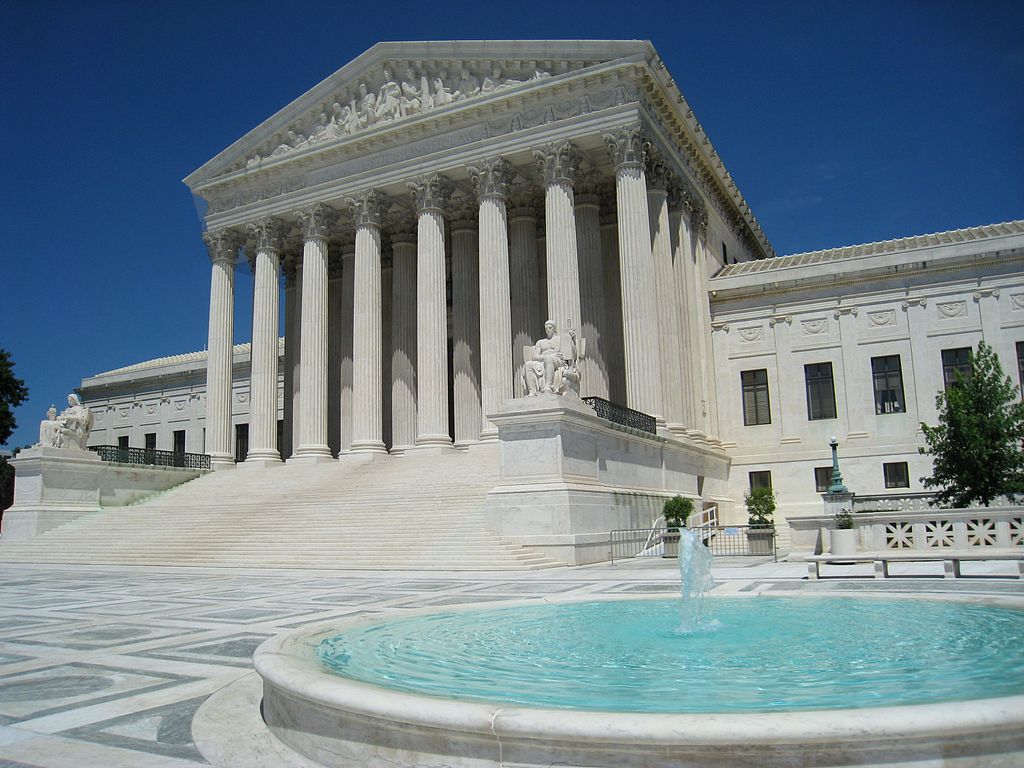
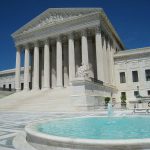
U.S. Supreme Court Building. Photo is in the Public Domain.
Days after the U.S. Supreme Court ruled decisively that bans on conversion therapy — the process of counseling people away from certain sexual or gender experiences — violate the First Amendment, it’s unclear exactly how, or when, the ramifications will be felt in Wisconsin.
And it’s a particularly loaded question because Wisconsin had its own complex journey with a state ban on conversion therapy — one that culminated in a seismic state Supreme Court decision that fundamentally reshaped the separation of powers in Wisconsin.
That statewide ban, which exists in the form of an administrative rule about ethical conduct for licensed counselors, is now in question — as are a number of local ordinances banning the widely discredited practice. Many of those ordinances mirror the language of the Colorado law that the U.S. Supreme Court deemed, in an 8-1 vote Tuesday, to violate practitioners’ First Amendment rights.
In that case, the court sided with a Christian counselor named Kaley Chiles, who said the Colorado law violated her free speech rights as she worked with teenagers struggling with their gender or sexual identities.
A spokesperson for Gov. Tony Evers said the administration does not expect the ruling to affect Wisconsin’s ban on conversion therapy right now, but that future litigation could have statewide ramifications. For now, the spokesperson said, the 2025 rule is still in effect.
Other Wisconsin groups who support the ban declined comment to WPR, saying they are still evaluating the ruling’s legal effects.
Marc Herstand, executive director of the Wisconsin Chapter of the National Association of Social Workers, lobbied for that ban in Wisconsin for seven years. He said professional organizations like his set standards of proper conduct. Just as an electrician who ignores a building code and causes a fire can’t claim free speech protections, Herstand argued, a mental health professional shouldn’t get free rein.
“This is not free speech. We’re dealing with standards of conduct so that people are not harmed, and each profession is given that responsibility to design that to protect people,” he said.
Evers championed the ban on similar grounds. And his name is on the lawsuit that effectively allowed it to go into effect, after the state Supreme Court found that administrative rules cannot be indefinitely postponed by the Legislature. That ruling shifted power from the GOP-held Legislature and into the executive branch, a move that conservatives have decried.
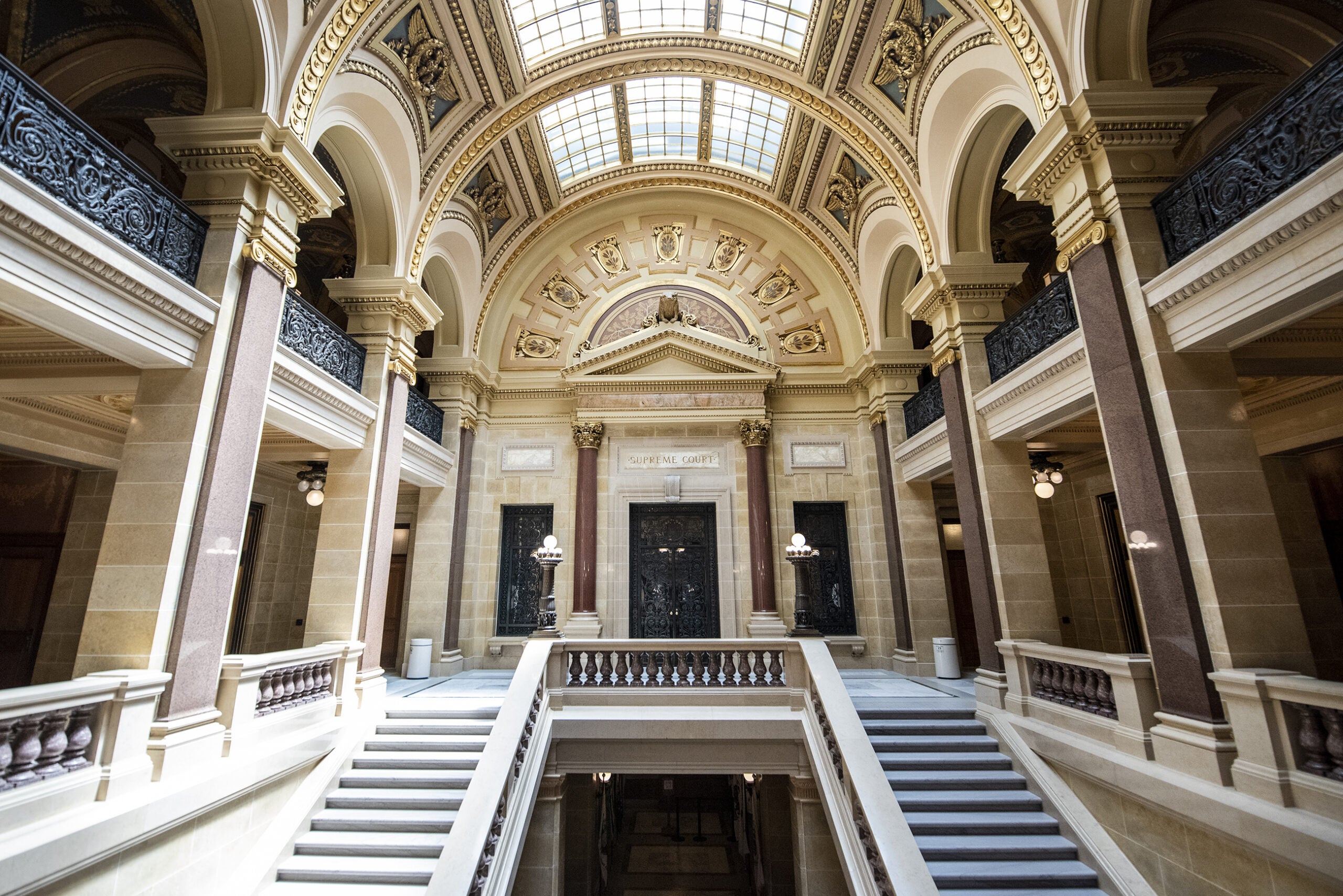
The Wisconsin Supreme Court on Wednesday, June 9, 2021, at the Wisconsin State Capitol in Madison, Wis. Angela Major/WPR
Conservative group says Wisconsin ban vulnerable to lawsuit
Those opponents now argue the U.S. Supreme Court has vindicated them.
The fact that the Wisconsin ban is not a statute passed by the Legislature makes it weaker and more vulnerable to the effects of the SCOTUS ruling, argued Luke Berg, deputy counsel at the Wisconsin Institute for Law and Liberty, a conservative law firm that filed an amicus brief in the Chiles case.
“The statewide rule is materially identical to the law that the U.S. Supreme Court just held violates the First Amendment,” said Berg. “So if anyone were to sue against that statewide rule, it would likewise be held unconstitutional.”
Three years ago, WILL filed a lawsuit against a local ordinance in La Crosse banning conversion therapy, using a similar argument that the law discriminates against certain viewpoints. Berg said they are awaiting a decision in that case, but he expects it to reflect the Supreme Court’s decision.
Research shows conversion therapy is often harmful to mental health, and it is condemned by major American medical organizations. But Berg argues the phrase — and often, laws banning the practice — are overly broad. He said resistance to former practices, such as electroshock therapy aimed at stopping a person from being gay, is now conflated with counseling around the experience of gender dysphoria.
“It bans counselors who have a different view — and clients who want counselors who have that view — to help people who struggle with this, and don’t want to struggle with it, from getting the help that they want,” said Berg.
“It would be better for the governor and the agency (that promulgated the ban) just to admit that their rule is unconstitutional and repeal it, withdraw it, whatever, rather than requiring a new lawsuit,” he added.
In the short term, the impacts of the Supreme Court decision may be limited, because it was narrowly decided, said Shannon Minter, executive director of the National Center for LGBTQ Rights in Washington.
“The court did not say or hold that conversion therapy is safe, that it’s effective, that it’s ethical. They didn’t dispute that it can be very harmful,” Minter said. “They really were just looking at whether, in their view, the statute was sufficiently even-handed.”
Local ordinances in Wisconsin that too closely resemble Colorado’s, Minter argued, could be rewritten so that they still make clear that coercive or dangerous therapy practices are banned, without the possibility of seeming like viewpoint discrimination. That possibility was alluded to in a concurrence issued by liberal Justices Elena Kagan and Sonia Sotomayor, saying the case would have been more difficult had the Colorado law, and others like it, been “content-based but viewpoint-neutral.”
During oral arguments in the Chiles case, Minter said, a key line of questioning centered around the tension between free speech protections and misconduct or malpractice claims that involved professional speech. As authorities determine what this decision means for Wisconsin’s professional ethics rule, they’ll have to measure that tension, too.
What SCOTUS’ conversion therapy ruling means for Wisconsin was originally published by Wisconsin Public Radio.
If you think stories like this are important, become a member of Urban Milwaukee and help support real, independent journalism. Plus you get some cool added benefits.