
Will Taxpayers Pay Salaries of College Players?
WI Legislature adds another category of millionaire players subsidized by taxpayers.
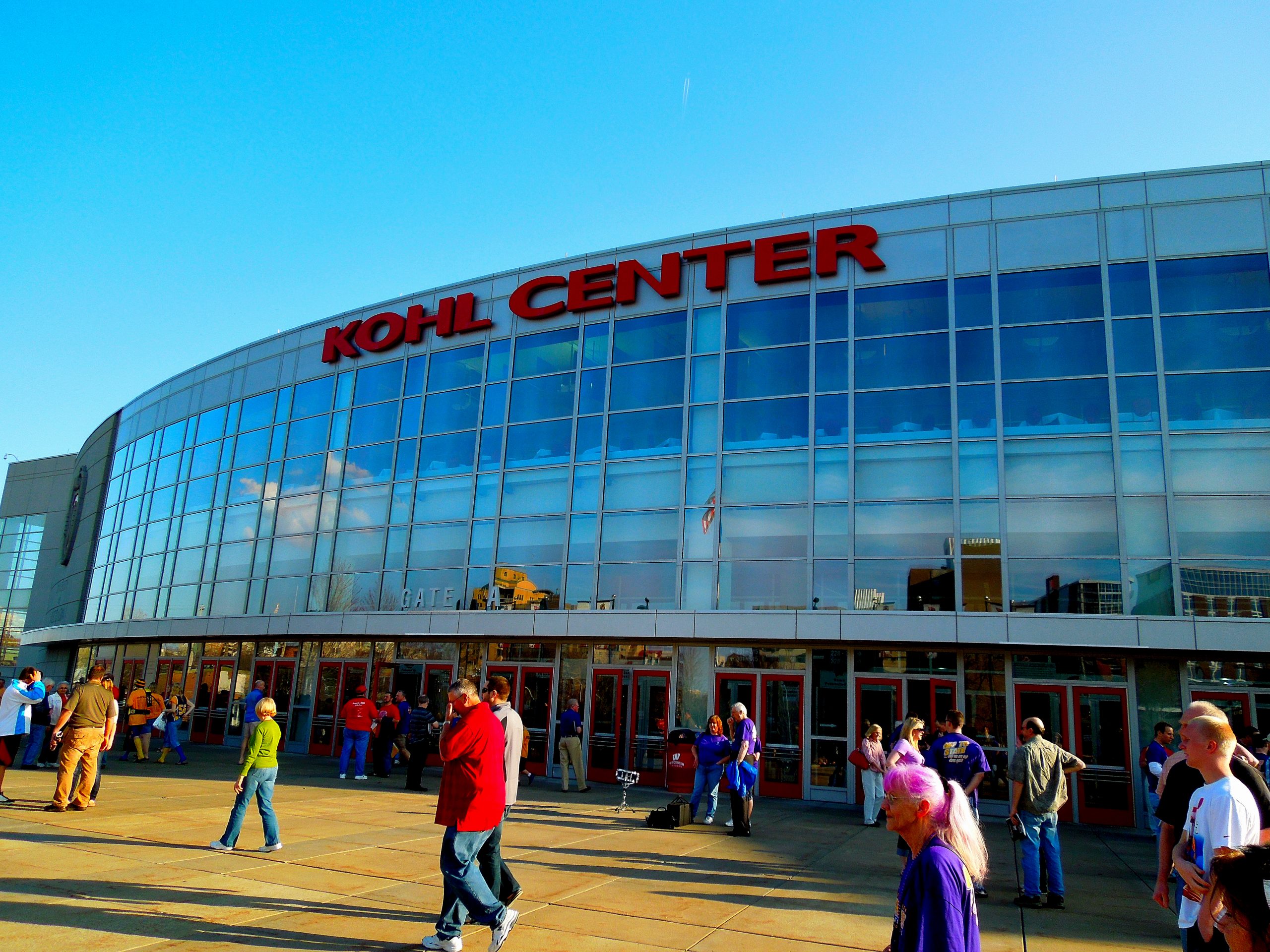
Kohl Center. Photo by Corey Coyle, (CC BY 3.0), via Wikimedia Commons
For fans of Wisconsin Badgers basketball, it was painful to see the fifth-seeded team lose to 12th-seeded High Point University in one of the biggest upsets so far of the NCAA Tournament. Making it all the tougher to swallow, the game was arguably lost by guard Nick Boyd, who tried several drives to the hoop where it was him against several players and he didn’t score.
Boyd was supposed to be the difference-maker for UW, who had come to the Badgers through the transfer portal and was its top-paid player, getting a reported $1.5 million per year. The Badgers had a far more expensive college basketball budget than High Point, a private college in North Carolina.
“High Point reported spending $4.13 million on its men’s basketball team in 2023-24, according to the most recent data available via the Department of Education,” Yahoo Sports reported. “Wisconsin, a No. 5 seed, spent nearly three times that number — $11.93 million. That’s a difference of $7.8 million.”
But apparently it’s not a big enough advantage for UW, which requested more funding for its sports program. The state Legislature duly passed a proposal, which Gov. Tony Evers seems ready to sign, saying he supports “the goals of the bill.” It provides $14.6 million for debt service and maintenance of athletic facilities at UW-Madison, and an additional $200,000 each to UW-Milwaukee and UW-Green Bay for their athletic facilities.
But the actual goal is to pay down the maintenance costs so UW can pay its players more. The funding will free up money “as the university navigates new revenue-sharing agreements with its athletes in a move to remain competitive,” as reporter Matt Smith explained.
“I want the Badgers to be able to win,” declared Republican Assembly Speaker Robin Vos. “I want to make sure that we can be competitive.”
Since the U.S. Supreme Court decision ruling that college athletes have a right to earn money, colleges have worked with or created NIL programs that sell the name, image and likeness of athletes for a fee. But some colleges began to offer salaries that exceeded the potential NIL value of a player.
“California allows its public universities to pay college athletes directly, with some funding originating from general, taxpayer-supported funds,” as the National Conference of State Legislatures reported. “The Florida university system’s Board of Governors authorized up to $22.5 million annually for each state university to share revenue with athletes.” Wisconsin and other states have followed suit with similar laws.
As of last July, according to Sports Illustrated, the top paid college player was quarterback Arch Manning of Texas, who gets $6.8 million. Football players are paid the most, but basketball players are not so far behind. AJ Dybantsa, a forward with BYU, which was upset in the first round of this year’s tournament, was fifth on the list, with $4.1 million.
While figures are more readily available for total spending by college basketball teams, the amount going to the players is closely guarded. The Wisconsin law funding UW sports teams has a public records exemption for the “generation, deployment or allocation of revenue” by an athletic department “when competitive reasons require confidentiality.”
As of last year, CBS Sports reported that 10 schools had a player payroll of at least $10 million, led by Arkansas and followed closely by BYU, Florida, Duke and others.
Universities and states are looking for more ways to pay players. In May 2025, Arkansas became the first state to pass a law exempting NIL earnings paid directly by universities to athletes from the state’s 3.9% income tax, essentially increasing the take-home pay for top athletes. The loss of tax dollars will be made up by other taxpayers.
We’ve seen this movie before. Once upon a time, pro sports teams built and owned their own stadiums and arenas. Then Milwaukee decided to build its publicly funded County Stadium for $5.9 million in 1953, or about $72 million in today’s dollars, and the Boston Braves moved to this city. Those were innocent days, when baseball players earned so little they had off-season jobs. But as other teams moved to other cities for better deals and sports became a big business, cities and states were eventually subsidizing pro baseball, football, basketball and hockey teams, for fear they would move to other towns.
Today the average pro player is a millionaire and the average owner is a billionaire. They would be rich even without public subsidies, but they continue to demand them because they can. In 2024 alone, more than $13 billion in public subsidies were proposed for teams in 12 U.S. cities. Meanwhile, the cost of tickets is beyond the budget of low-income and even middle-income taxpayers, who are effectively subsidizing stadiums and arenas for the well-to-do. Now there will be many hundreds of college basketball and football teams that taxpayers will increasingly be asked to subsidize.
The Badgers were once the good guys of men’s college basketball, who did not pay money under the table to athletes in violation of the old rules for amateur athletes. Coach Greg Gard and his predecessors Bo Ryan and Dick Bennett built good and sometimes great teams even while being out-recruited by the major universities who cut corners. UW was celebrated for athletes who finished their degrees.
But Gard now wins praise from announcers for “making the adjustment” to the transfer portal and buying top athletes to come to Madison. Nick Boyd is 24 and was in his sixth year as a “collegian.” He joined the Badgers to get ready for the pros, not to get an education.
Former UW-Madison Chancellor Jennifer Mnookin told the Cap Times that the current athletics system is “pretty problematic with a transfer portal where many athletes are moving every year for the strongest deal … You get students who are at six schools in six years, and that is no way to ground them in a quality education.”
Tony Bennett learned to play and then coach basketball the old way, from his father Dick Bennett, and then brought that style to the University of Virginia, where he won a national title. But in October 2024, he stunned the college basketball world by retiring at age 55, just 18 days before opening tipoff. He cited the state of unregulated NIL money and transfers as reasons he is “no longer equipped” to coach modern college basketball.
Meanwhile, it is the premier private college basketball team in the state, at Marquette University, that is rejecting the transfer portal and reversing the stereotype of the elite private institution. In four years, its coach Shaka Smart has had not one transfer. He emphasizes building deep connections and trust, preferring to coach players for three to four years and build team chemistry rather than having high roster turnover and buying stars off the shelf. In short, he approaches the job of coach as an educator. I’m guessing Dick and Tony Bennett would approve.
If you think stories like this are important, become a member of Urban Milwaukee and help support real, independent journalism. Plus you get some cool added benefits.


Murphy's Law
-
Utilities in Wisconsin Pile Up Profits
 Mar 18th, 2026 by Bruce Murphy
-
The Surprising Campaign of Rep. Francesca Hong
 Mar 9th, 2026 by Bruce Murphy
-
How Wisconsin Money Funded Trump’s Policies
 Mar 5th, 2026 by Bruce Murphy