The Bel Canto Sings of Silence
98-member chorus sings four works about silence, led by one about Beethoven.
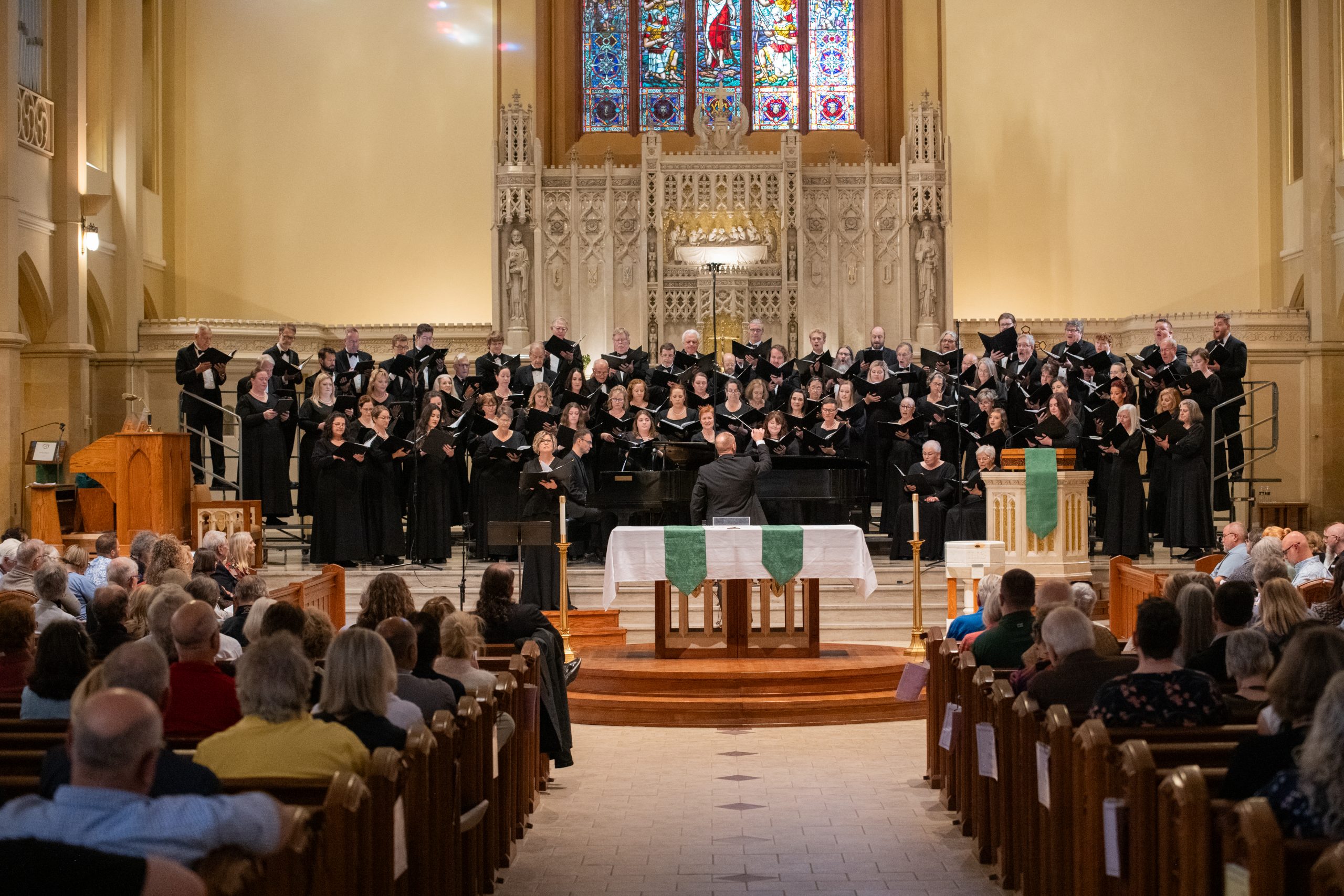
Bel Canto Chorus. Photo by Melissa Miller.
In 1802, as his deafness worsened and crushing depression engulfed him, Ludwig van Beethoven (1770-1827) wrote a letter to his brothers. A dramatic musical interpretation of that letter is one of five contemporary choral compositions the 98-member Bel Canto Chorus will sing at 3 p.m. Sunday, March 8, in a performance the group has titled Sonorous Silence. Bel Canto is conducted by artistic director Jon Laabs and accompanied by pianist Simone Gheller. A number of chorus members will be featured as soloists throughout the performance.
Beethoven’s four-page handwritten letter, known as the Heiligenstadt Testament, was never sent and was discovered after his death. The missive describes his physical suffering, his feelings of loss and isolation, and his thoughts of suicide. It also shares Beethoven’s conviction that his work was not done. “It seemed to me impossible to leave the world until I had brought forth all that I felt was within me,” he wrote.
“A Silence Haunts Me,” composer Jake Runestad’s (b. 1986) moving choral setting of the letter, incorporates strains of some of Beethoven’s most beloved works, including the Third, Sixth and Ninth symphonies and the “Moonlight” Sonata. Runestad says the choir’s role is to paint the drama of Beethoven’s tortured struggles.
Beethoven’s letter is among several powerful texts through which the chorus will musically interpret the beauty, meditation and inspiration that emerge from silence. “From Light to Light,” commissioned by the National Lutheran Choir and written by J. Aaron McDermid (b. 1974), sets to music four poems by hymn writer Susan Palo Cherwien (1953-2021). The thick harmonies of the piece weave together secular and sacred themes in movements titled Earth, Fire, Water and Wind. Poet Cherwien reflected on the transformation that occurs when choirs sing poetry: “We are shaped into one body by singing together holy songs. We begin to vibrate together. We are changed.”
Composer Alex Berko (b. 1995) incorporated a variety of text sources for “Sacred Place,” an ecologically themed piece that follows the order of the Jewish service. He drew upon poetry by Wendell Berry and William Stafford; a letter written by John Muir to Theodore Roosevelt; the English translation of a Hebrew prayer for healing; and the work of Bengali writer Rabindranath Tagore. “Each writer that I have chosen views the earth as sacred,” Berko writes. “They speak of us as inhabitants, as visitors. Without the earth, there is no us.” Violinist Tom Bewell and cellist Sophia Eckdale-Dudley join Gheller in accompanying Berko’s work.
Despite the crashing chords that open “Leonardo Dreams of His Flying Machine,” by Eric Whitacre (b. 1970), Laabs says the composition fits well within the concert theme of Sonorous Silence. Using Charles Silvestri‘s (b. 1965) text in English, Italian and simple syllables, the piece tells the story of Leonardo da Vinci’s feverish development of his brilliant ideas relating to flight. Laabs imagines Leonardo alone in his workshop, “all by himself, living in his head. Leonardo’s process of creativity happens in silence,” Laabs said.
Bel Canto Chorus will perform Sonorous Silence at 3 p.m. Sunday, March 8, at St. Sebastian Catholic Church, 5400 W. Washington Blvd., Milwaukee. Tickets are available online and at the door.

Existing members must be signed in to see the interactive map. Sign in.
If you think stories like this are important, become a member of Urban Milwaukee and help support real, independent journalism. Plus you get some cool added benefits.