The 80-Member Master Singers Have Much to Sing
Tuneful works in English, German, Spanish, Hindi, Icelandic, and Arabic.
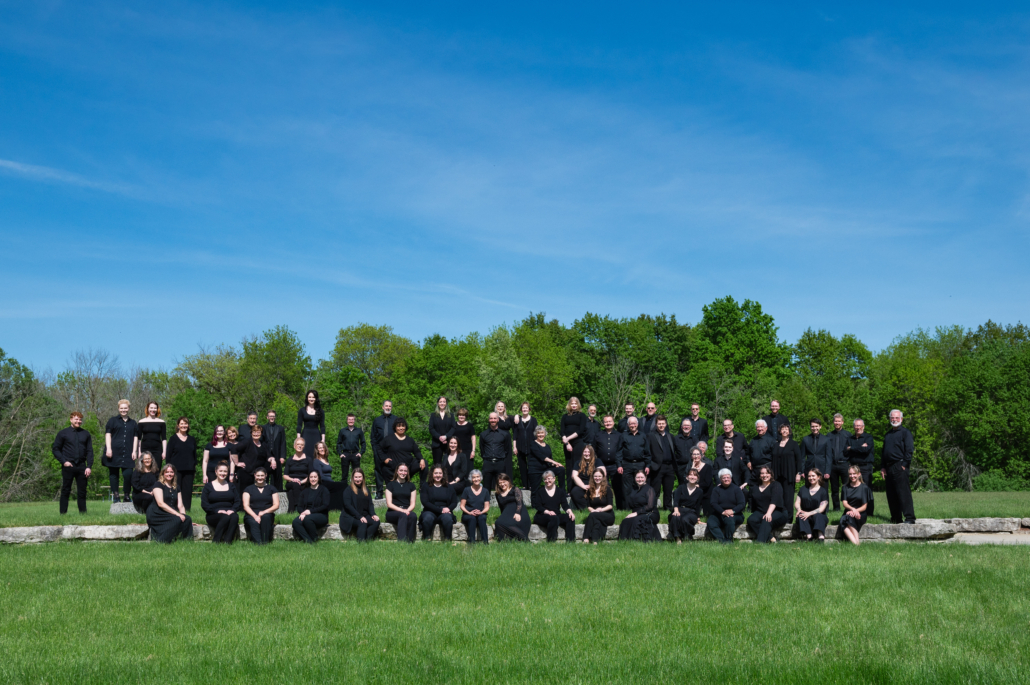
Master Singers of Milwaukee. Photo courtesy of the Master Singers of Milwaukee.
Milwaukee has a long and robust history of accomplished community choruses. As early as 1851, the Milwaukee Musical Society performed Franz Joseph Haydn’s oratorio The Creation. The Milwaukee Liedertafel singing society, a men’s chorus, was founded in 1858 and hosted a national songfest in Milwaukee a decade later.
Master Singers of Milwaukee, directed by Zack Durlam, is one of many local groups that continue this tuneful tradition. Established in 1972 as the Schütz Choir, specializing in German Baroque music, the ensemble has evolved into an 80-member chorus with a broad repertoire appreciated by enthusiastic audiences. The next Master Singers concert, titled “(Not the Same Old) Song and Dance,” celebrates the ways music and movement are an integral part of being human. The performance is at 4 p.m. Sunday, Feb. 22. The chorus also will appear later this month during the opening concert for the Midwest conference of the American Choral Directors Association.
The program includes two works by Old World composers: “Music, Spread Thy Voice Around” from George Frideric Handel’s oratorio Solomon, and excerpts from the Liebeslieder Waltzes by Johannes Brahms. The waltzes, written in 1869, are delightful vocal settings of German love poems written by Georg Friedrich Daumer. The work incorporates two trends that were popular at the time: song texts about love and a four-hand piano accompaniment. Master Singers pianist Jayne Latva will be joined at the keyboard by Eryn Durlam.
In addition to English and German, the chorus will use Spanish, Hindi, Icelandic and Arabic to express the universal appeal of song and dance across time and culture. The opening selection, “El Aire Baila,” composed by Jake Runestad, is a setting of text by Guatemalan poet Humberto Ak’abal. The poem, says Runestad, “is like living through the depths of history, like being gut-punched with core-shaking truths, like dancing with water, trees and birds.”
“Jai Ho!,” sung in Hindi and Spanish, was written by Indian composer A.R. Rahman for the film Slumdog Millionaire. The joyous piece, in which Rahman says “the protagonist comes out of darkness and pain to light,” won both Academy and Grammy awards.
“Lammaa Badaa Yatathannaa” is a musical setting of a 14th-century Arabic poem that is part of the Middle Eastern belly dance repertoire. The arrangement, crafted by Palestinian-Jordanian-Canadian composer Shireen Abu-Khadar, spins a haunting melody in 10/8 meter.
Icelandic composer Jón Ásgeirsson incorporated words of a folk song in “Í gleðinni.” “Dance merrily,” the text advises. “If one carries a happy disposition, it will ease your burdens …”
“Corcovado,” written by Brazilian composer Antônio Carlos Jobim in 1960, is sung to a gentle bossa nova rhythm. The lyrics express the tender beauty of “quiet nights of quiet stars.” Translated into English, the song was popularized by Frank Sinatra, Tony Bennett and Andy Williams, and will be performed by the Master Singers Jazz Choir, directed by MSM apprentice Sarah Melcher.
The Master Singers share the music of song and dance at 4 p.m. Sunday, Feb. 22, at the UW-Milwaukee Zelazo Center, 2419 E. Kenwood Blvd., Milwaukee. Tickets are available online.
If you think stories like this are important, become a member of Urban Milwaukee and help support real, independent journalism. Plus you get some cool added benefits.