Wisconsin Voters Back Legal Weed, Lawmakers Still Say No
Despite public support and booming hemp shops, GOP divisions keep marijuana bills stalled.
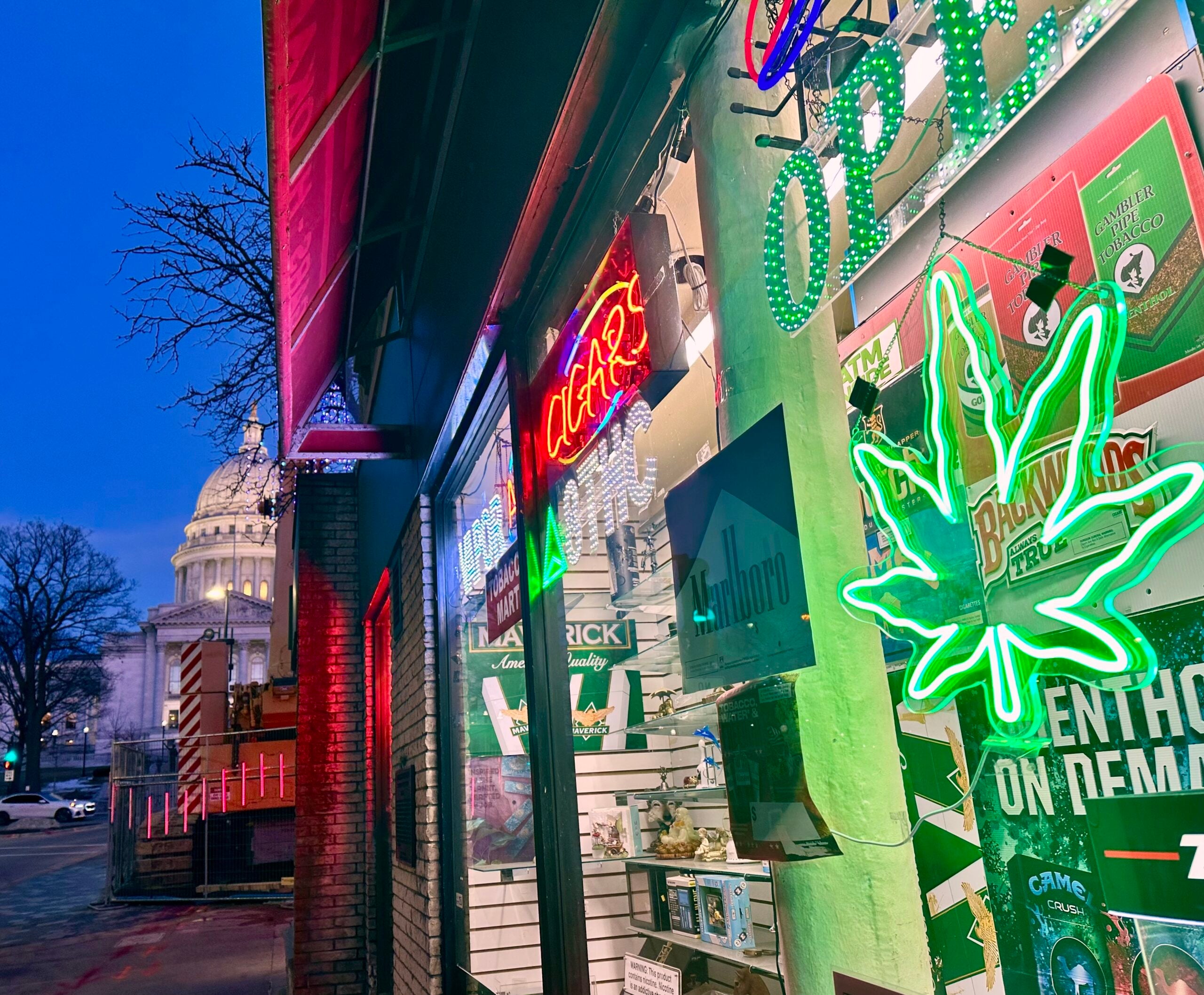
Storefronts advertise hemp-derived CBD and THC products on State Street in Madison, Wis., on Feb. 10, 2026. Anya van Wagtendonk/WPR
It can take a lot of work to pass a bill at the state Capitol, from nailing down the details to building coalitions. But promoting a bill? That happens all the time, often with a press conference, like one that took place earlier this month in the ornate parlor of the Wisconsin Assembly.
[inarticelad]There, in a room with marble floors, wood paneling and gold accents, a group of Democratic lawmakers wore suits and blazers as they gathered behind a lectern. Next to them stood advocates — farmers and business owners. One man wore a hoodie. Another wore a necktie with a decorative marijuana leaf print.
They were there to introduce what would be — at least in Wisconsin — historic legislation. It would fully legalize marijuana, for both medicinal and recreational use.
“The will of the people is clear on this issue,” said Rep. Darrin Madison, D-Milwaukee. “And today, we’re acting on it.”
Inside this room, there was optimism and energy. Madison said he thought this could be the year for legalization. Sen. LaTonya Johnson, D-Milwaukee, told activists they were on the verge “of actually getting something done.”
But perhaps it was fitting that this particular event was happening on Groundhog Day. Because this push — to legalize weed — has happened before in Wisconsin. In fact, it’s happened in every legislative session for the past 13 years.
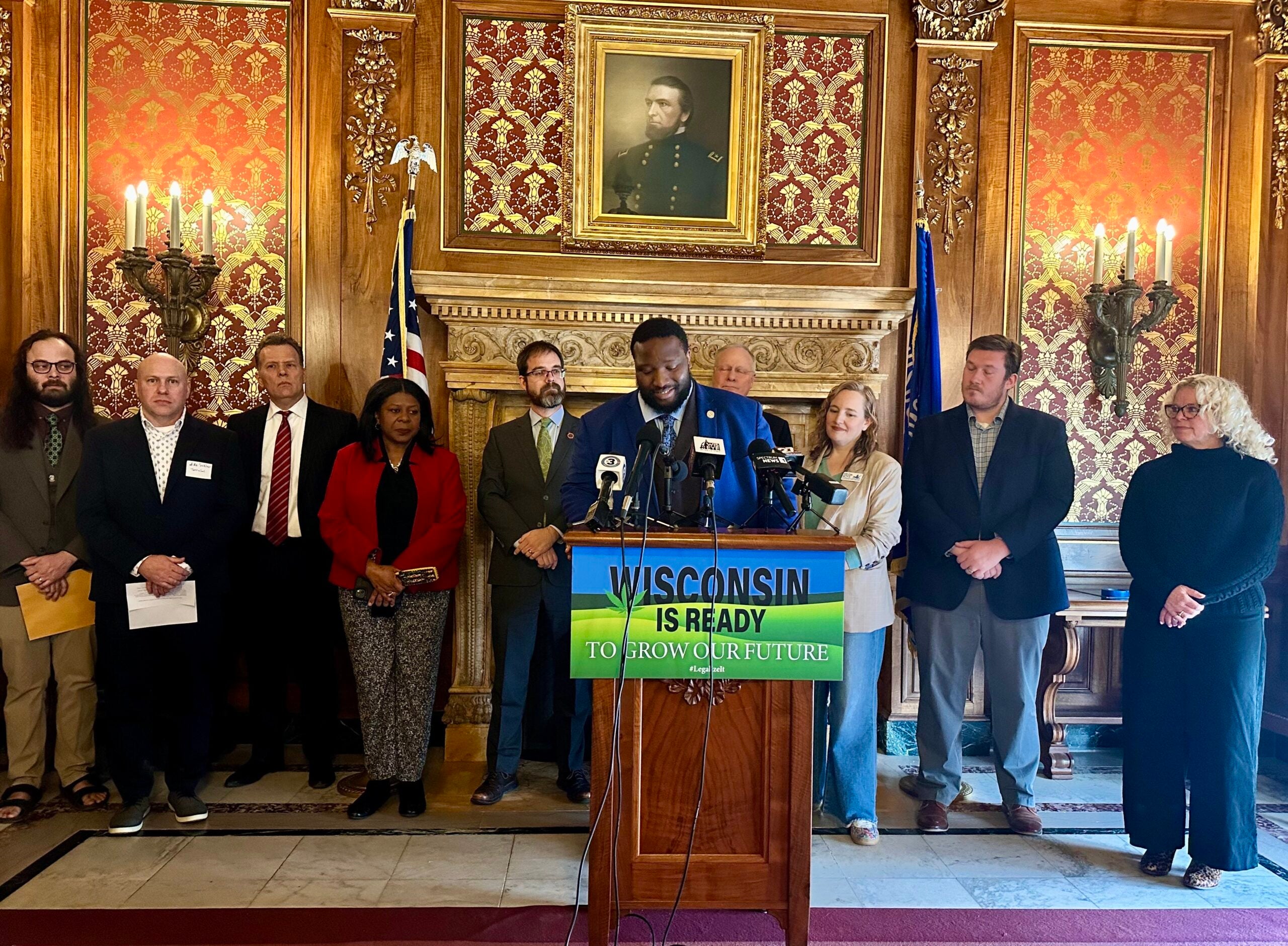
Rep. Darrin Madison, D-Milwaukee, introduces a bill to legalize marijuana at a press conference at the Wisconsin State Capitol in Madison, Wis., on Feb. 2, 2026. Anya van Wagtendonk/WPR
Elsewhere in the Capitol, this would-be historic law was met with a collective shrug. People know the legislation is doomed, the same as previous Democratic legalization efforts, because Republicans who run the Legislature won’t support it.
Still, the ground has shifted in the years since this push started. Forty states allow marijuana for medicinal use, according to the National Conference of State Legislatures. Another 24 — including neighboring Michigan, Illinois and Minnesota — have legalized recreational weed, leaving Wisconsin an island in the upper Midwest.One of the activists in the room, Jay Selthofner, is the founder of the Wisconsin Cannabis Activist Network, and has been writing and advocating on the issue since 2009.
“The party lines have no reflection on where the support lies within Wisconsin,” he said before the press conference. “The public overwhelmingly supports reforming the laws and ending prohibition.”
Years of political roadblocks
There are a few theories on why nothing has happened on legalizing marijuana, despite years of trying.
A common explanation is that the alcohol industry wants to prevent competition. Beer is in Wisconsin’s blood, this argument goes, and there are powerful lobbying groups working to keep things that way.
This suggestion holds sway with Rachel Cartwright, a cannabis activist who splits her time between Jefferson County and Wisconsin Dells. She’s been passionate about legalization in one form or another ever since she said her mom used cannabis to treat chronic pain and get off prescription medications.
“I believe that everybody should have access to what is a beautiful medicine,” she said.

Cannabis activist Rachel Cartwright displays CBD oils she manufactures and distributes at her home in Wisconsin Dells. Anya van Wagtendonk/WPR
Cartwright thinks the debate over legalization is really a money issue at its heart. Legalization, she said, gives people power, whether they have money or not.
“It would be great if we all could start growing at home and making our own medicines and taking everything into our own hands, as well as then giving power to small businesses,” she said.
Cartwright blames what she calls “dark forces” for the challenge of legalizing cannabis, referring to lobbying groups with deep pockets. Among those, in her view, is the state’s powerful Tavern League.
A spokesperson for the group didn’t respond to WPR’s request for comment. But public lobbying disclosures show that the Tavern League hasn’t previously weighed in on medicinal or recreational marijuana legislation. Past reporting suggests that the alcohol industry doesn’t necessarily see other intoxicants as a threat.
“We will not weigh in on that issue,” Tavern League lobbyist Scott Stenger told Wisconsin Watch in 2024. “It’s just not something our members care about.”
A long-running GOP fight over medical marijuana
Many other cannabis activists say the blame placed on alcohol lobbyists is overblown. They see a clearer roadblock at the Capitol: the powerful Republicans who’ve run the Legislature since 2011.
For session after session, Wisconsin Republicans have been involved in their own version of Groundhog Day, going back and forth over how to legalize medicinal marijuana. Top GOP leaders support the idea in theory. They just don’t agree on what, exactly, it should look like.Take Assembly Speaker Robin Vos, the powerful Republican from Rochester. He’s been speaker since 2013 — the first session Democrats introduced a full legalization bill. Vos says he’s supported medical marijuana for years, since his then-wife became sick and he wanted non-opioid medication options for her.
The way Vos sees it, any medical marijuana program should be limited. He favors a highly regulated, state-run system.
“For some who have kind of decided it’s going to be a for-profit enterprise and a new industry in Wisconsin, that’s not what it’s about,” he told WPR. “It’s about a very limited number of people who need access to something that is truly going to allow them to not become addicted to narcotics.”
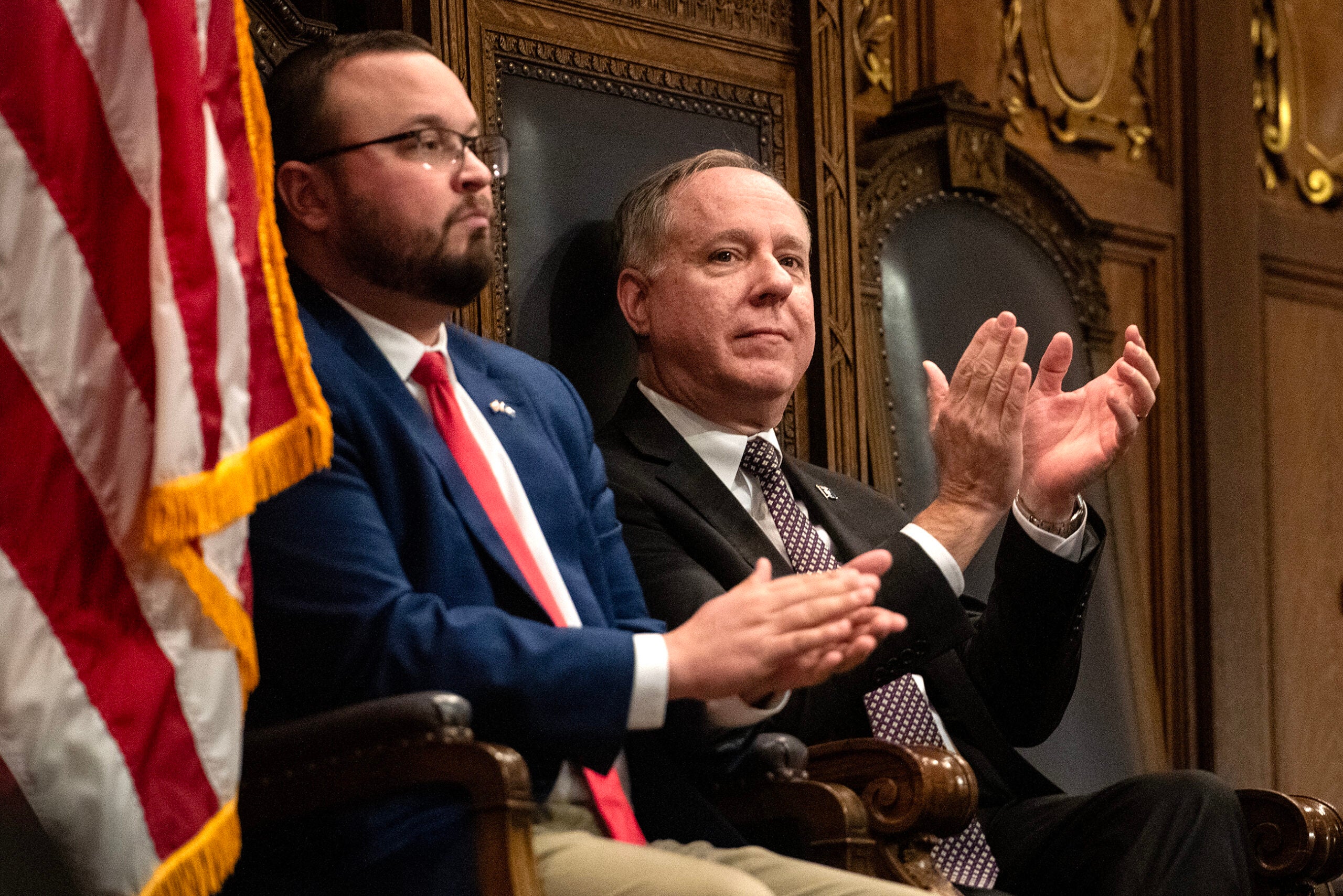
Wisconsin Assembly Speaker Robin Vos, right, awaits Gov. Tony Evers’ State of the State address Wednesday, Jan. 22, 2025, at the Wisconsin State Capitol in Madison, Wis. Angela Major/WPR
Then there’s Senate President Mary Felzkowski, a Republican from Tomahawk. A breast cancer survivor, Felzkowski has said in the past that she would have used medical marijuana to treat her symptoms if she’d had the option.
“I don’t want to force people that feel they need cannabis, or have had good results with cannabis, into doing something illegal for their medical needs,” she said on WisconsinEye in January 2025.
In that same appearance, Felzkowski also criticized Vos’ vision for a state-run program.
“I’ve had some preliminary conversations with the speaker,” she said. “He is pretty dug in on his vision of having state-owned dispensaries, but yet, we know it’s DOA — dead on arrival” in the Senate.
Felzkowski’s version of medical marijuana would issue state licenses to private processors and dispensaries. Vos, in no uncertain terms, said he can’t support that.
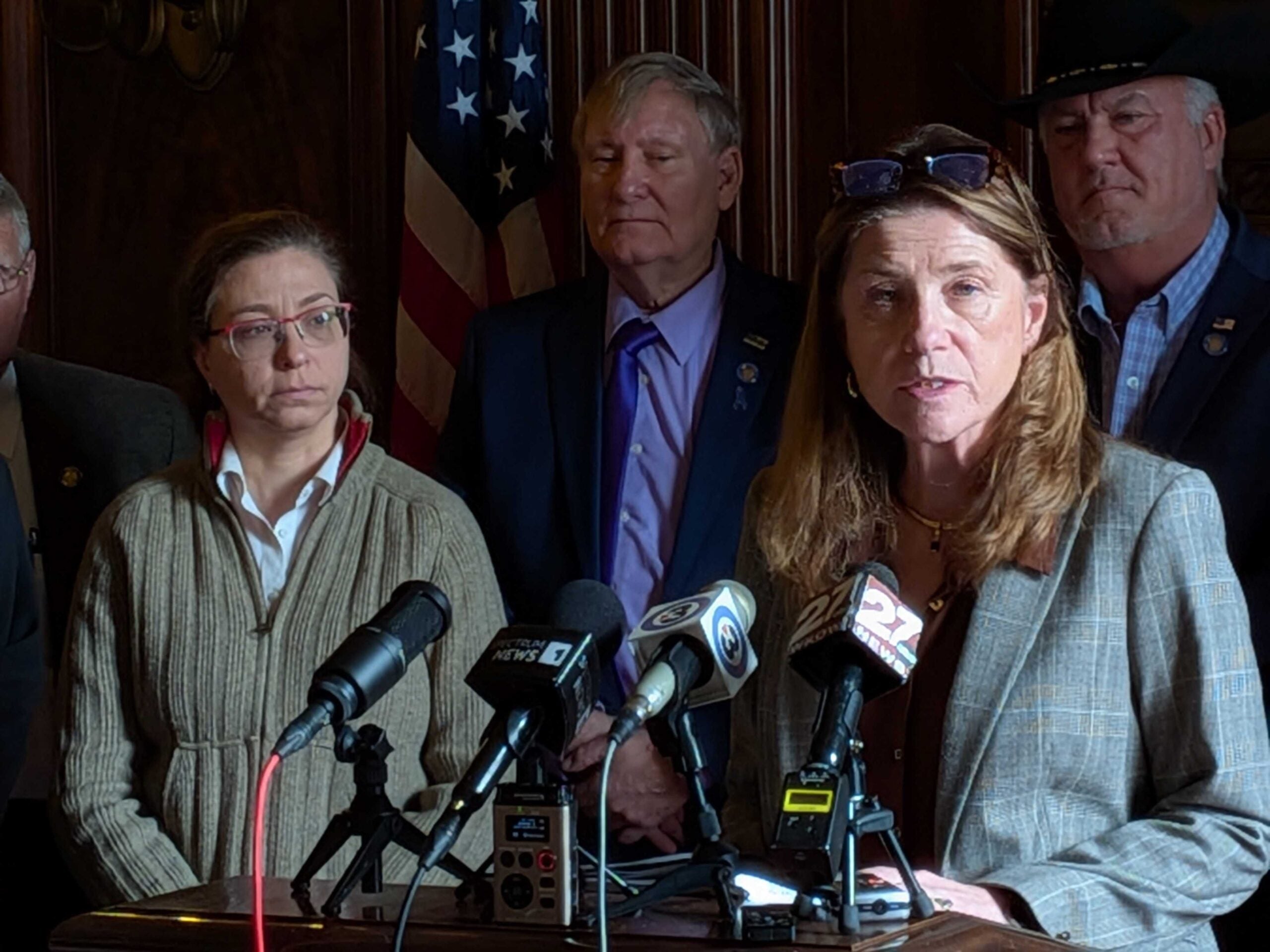
Senate President Mary Felzkowski, R-Tomahawk, speaks to reporters at the state Capitol in Madison, Wis. on Jan. 21, 2026. Shawn Johnson/WPR
Vos’ opposition alone is likely enough to kill the bill, but even in the Senate, the chamber’s top Republican — Majority Leader Devin LeMahieu of Oostburg — has expressed reservations.
“Probably the biggest concern from members of our caucus, who may not be as gung ho about medical marijuana as Mary is, is that it’s not essentially backdoor recreational marijuana,” he told WisconsinEye.
The public supports marijuana. But other issues dominate campaigns.
Lawmakers can move fast on legislation when they want to, and election years, like this one, can be powerful motivators. Parties need issues to run on and politicians need wins to highlight — and marijuana legalization is popular with voters.
In June, a Marquette University Law School poll found 67 percent of voters think marijuana should be legal. In 2024, another Marquette survey found 85 percent of voters support medicinal marijuana.But according to Robert Mikos, a drug law expert at Vanderbilt University, legalization is not an issue that sways most people at the ballot box.
“It’s hard to think of any other issue where you get such overwhelming consensus. So why haven’t some states like Tennessee and Wisconsin budged?” he said. “I think it’s precisely because this issue, it’s like, the 10th or 20th most important thing on voters’ minds.”
Those who support legalization have tried to link it to other issues that are popular with their respective political bases.
Democrats, for example, have emphasized marijuana’s intersection with criminal justice reform.
“We … need to come to terms with the fact that nonviolent drug arrests are contributing to overcrowding and economic inequity, instability and insecurity in our state,” said Democratic Gov. Tony Evers in 2019, when he proposed legalizing medical marijuana and decriminalizing low-level marijuana possession in his budget. (Evers proposed full legalization in every budget since. Each time, Republicans rejected it.)
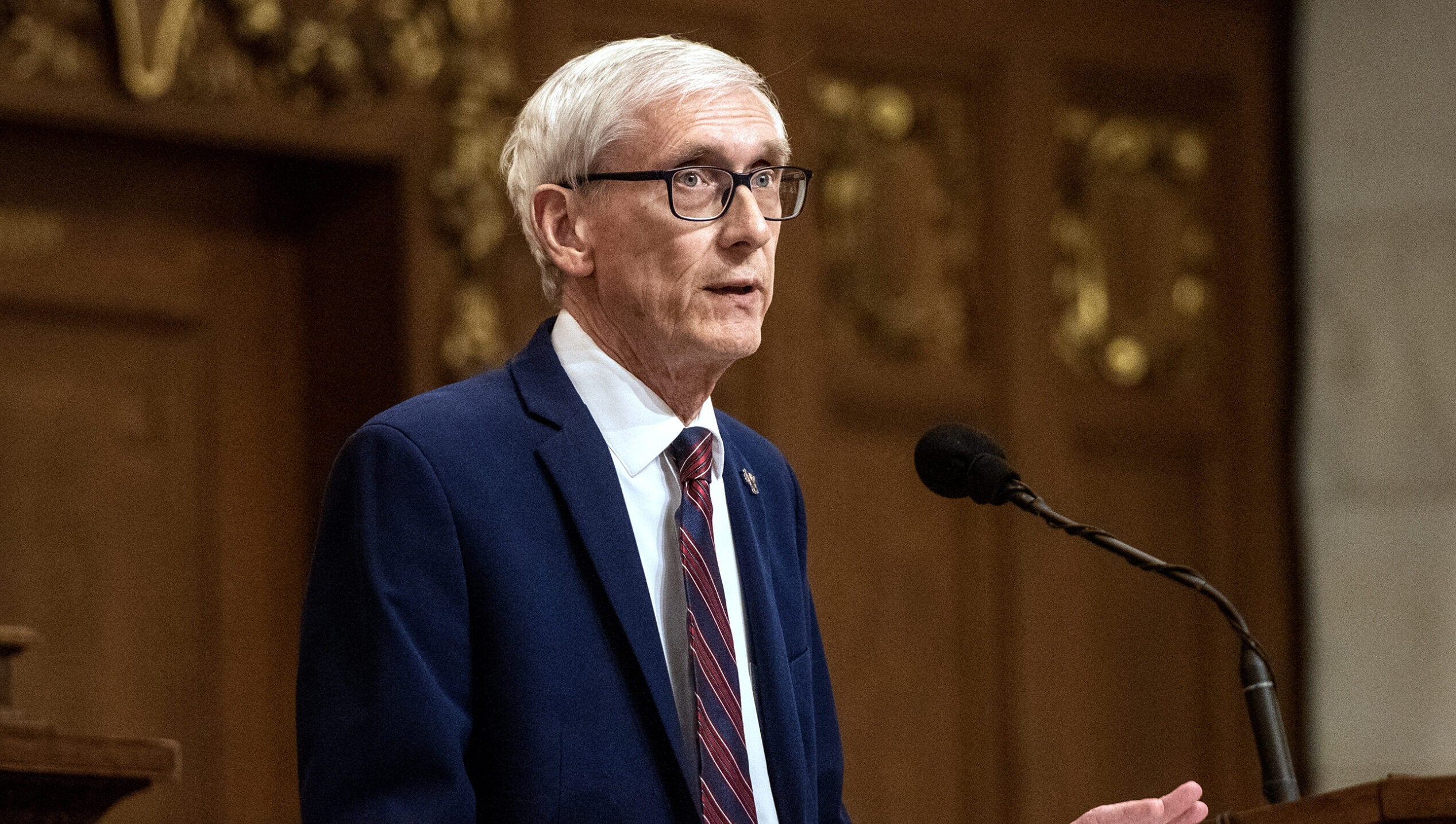
Gov. Tony Evers delivers the biennial budget message Wednesday, Feb. 15, 2023, at the Wisconsin State Capitol in Madison, Wis. Angela Major/WPR
When it comes to medicinal marijuana, Republican backers like Felzkowski lean into libertarian arguments.
“Why is government stepping in the way of allowing you to utilize a natural product, a product with very limited side effects compared to some of the opioids and other drugs that we have out there?” Felzkowski asked in her WisconsinEye interview last year.
And supporters from both sides see a potential cash cow, in the form of a clearly regulated industry that feeds tax revenue back into the state. At the very least, they argue, Wisconsinites will stop crossing state lines to buy these products.
But, Mikos said, those arguments don’t necessarily offset the other big issues that drive Americans to vote.
“You’ve got abortion, you’ve got immigration, you’ve got the economy, you’ve got taxes, you’ve got Trump kind of looming over all of this,” said Mikos.
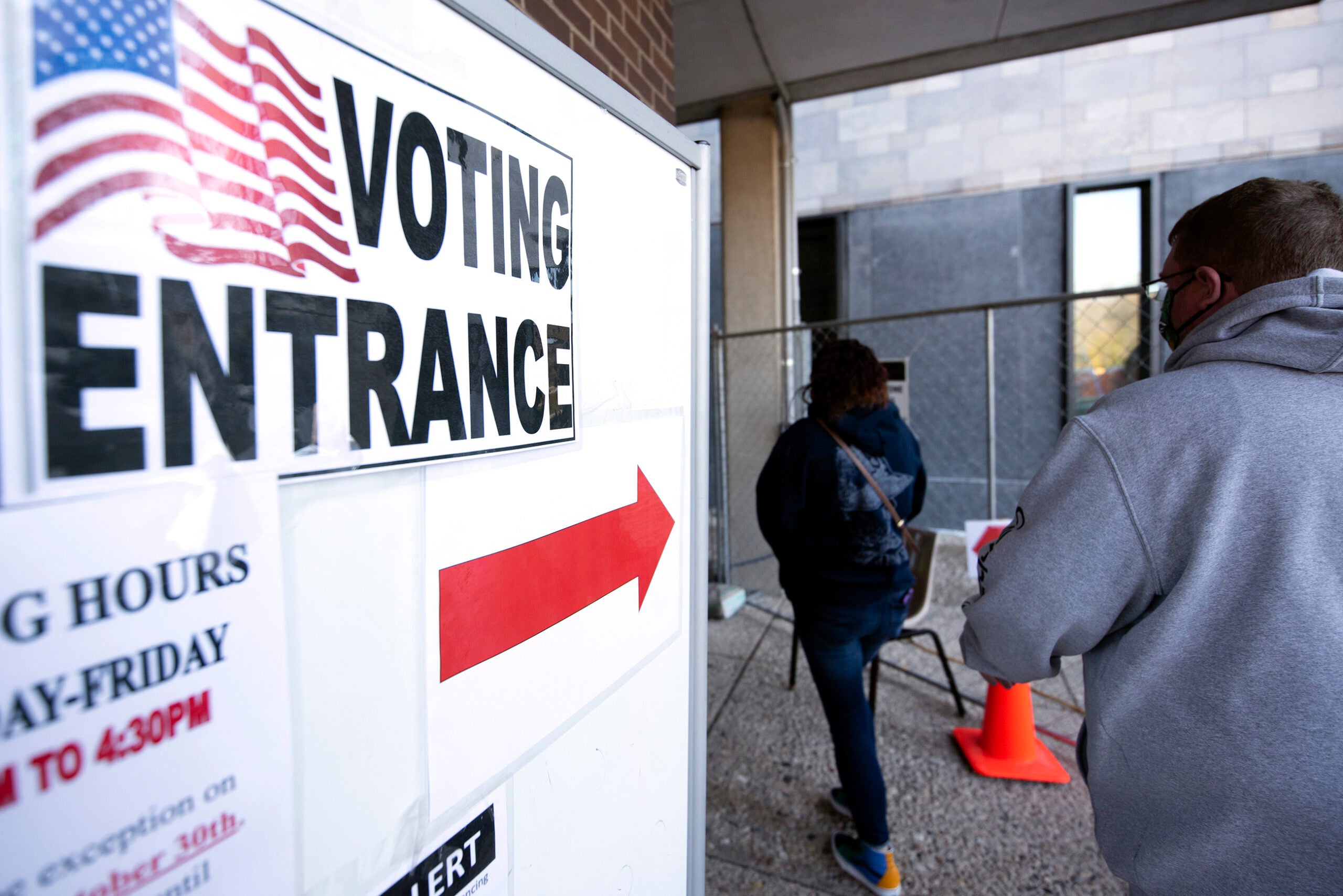
Voters walk to an early voting location Wednesday, Oct. 28, 2020, at Waukesha City Hall. Angela Major/WPR
In theory, there are enough votes in the Legislature to pass at least a limited marijuana bill, if both parties work together. In practice, Republicans typically only allow votes on bills when a majority of GOP lawmakers support them.
“So until the Republicans either take a stance of, ‘We need to just govern this in and let the Dems in,’ and they work on the issue and address it, we’re not going to get anywhere,” said Selthofner, the cannabis activist.
As state government stands still, a new industry emerges
Just down the street from the Capitol — in the state that has resisted legalizing cannabis — Madison’s State Street offers a confusing juxtaposition. There are half a dozen headshops, advertising products that sure look a lot like weed.
Likewise along Main Street in La Crosse, or College Avenue in Appleton — and in gas stations and strip malls lining suburban and rural roads — it’s easy to find gummies, drinks and cookies with the same intoxicating ingredients as an old-fashioned joint.
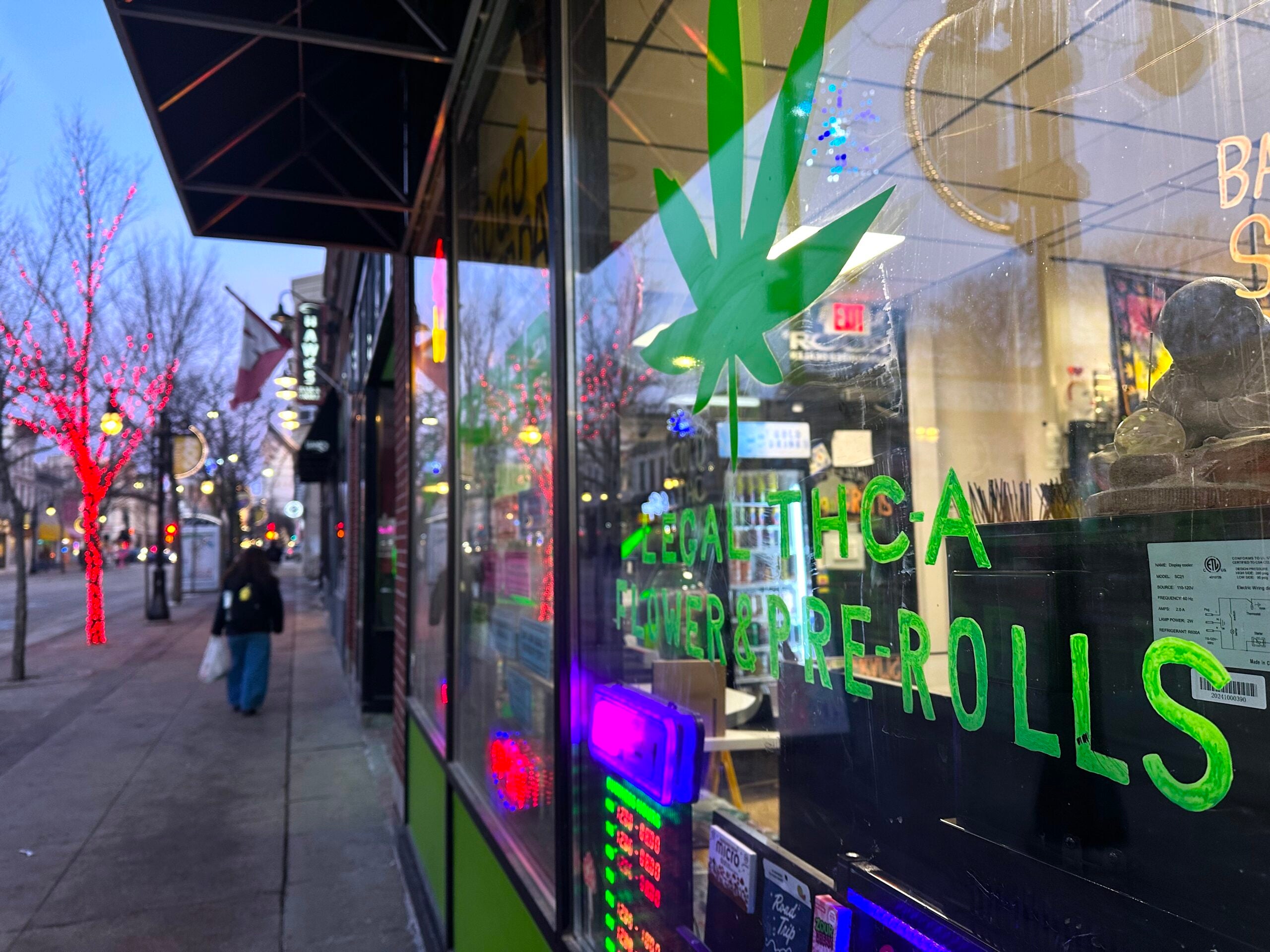
Storefronts advertise hemp-derived CBD and THC products on State Street in Madison, Wis., on Feb. 10, 2026. Anya van Wagtendonk/WPR
All of those businesses are the result of a federal loophole in the 2018 U.S. Farm Bill, which sought to make it easier to produce agricultural hemp. That law spawned an unregulated industry of cannabis products that are derived from hemp. In short, the drugs come from the same plant as pot — they’re just processed differently.
So, since 2018, some Wisconsin farmers have brought hemp to market, and some Wisconsin brewers have pivoted to putting THC in their drinks. Other enterprising Wisconsinites have developed businesses selling soaps, oils, chocolates, gummies, lotions, vapes and dog treats, all with ingredients derived from hemp.
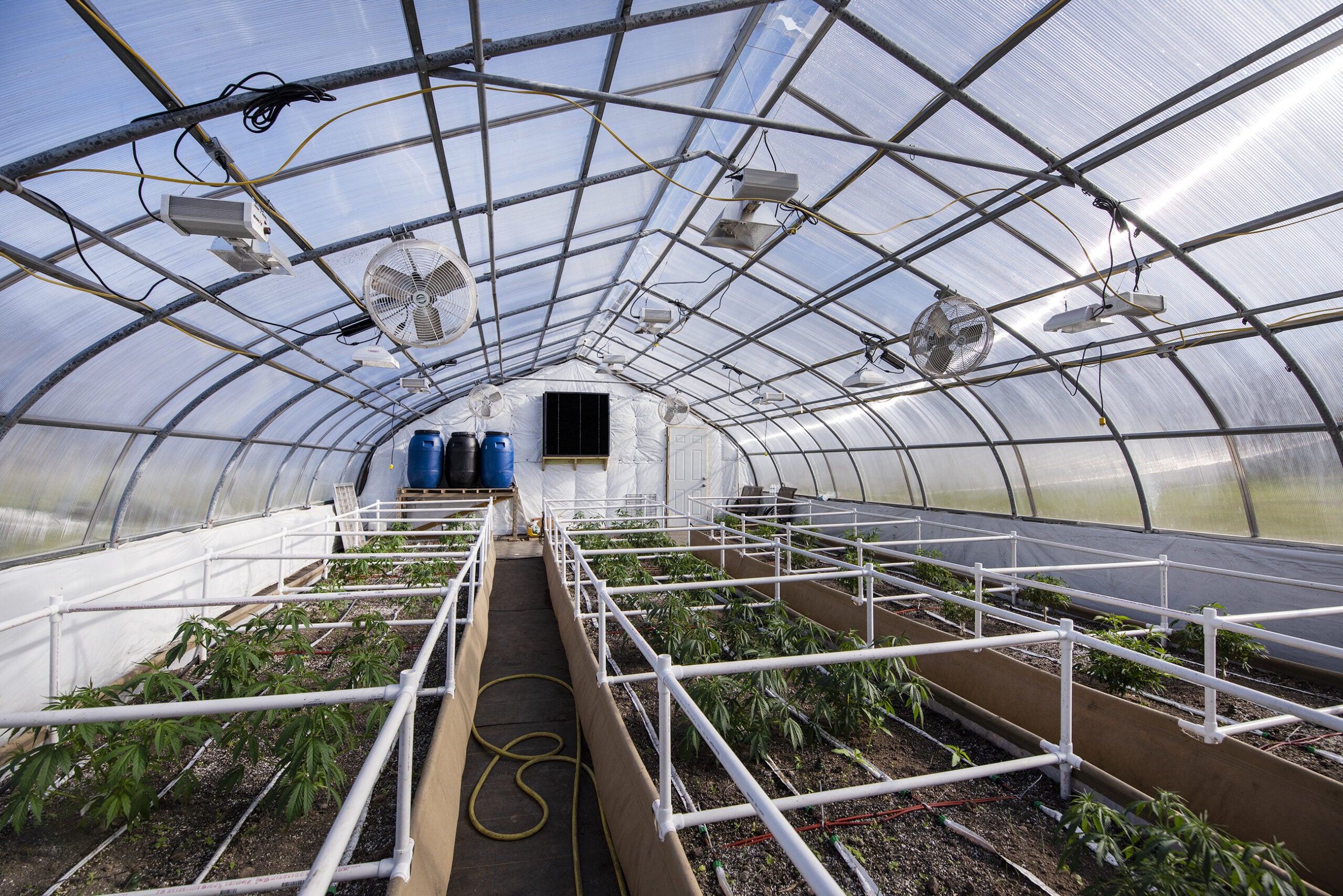
Hemp plants are grown in a greenhouse Friday, Nov. 5, at 3 Tall Pines Farm in Plymouth, Wis. Angela Major/WPR
Rachel Cartwright, the activist in the Dells, is part of that industry. She sells therapeutic CBD oils, and she runs a cannabis wedding business — think “budtenders” rather than bartenders.
For that reason, Cartwright has focused her activism on putting clear guardrails around the industry that already exists. Those efforts went into overdrive after Congress did away with the hemp loophole last year.
Cartwright says trying to clarify the existing system makes more sense to her business model now than trying to build something brand new from the ground up.
“I think that just putting in that additional little bit of framework helps to keep everybody safe and continues to keep cannabis in the hands of smaller businesses,” Cartwright said.
She’s backing one GOP bill at the Capitol that would essentially tighten up the existing framework for hemp-derived products. A competing bill would create a three-tiered regulatory system, similar to the one governing alcohol production and distribution. (Unlike other cannabis-related bills, the Tavern League has weighed in here, in support of treating cannabis like alcohol.)
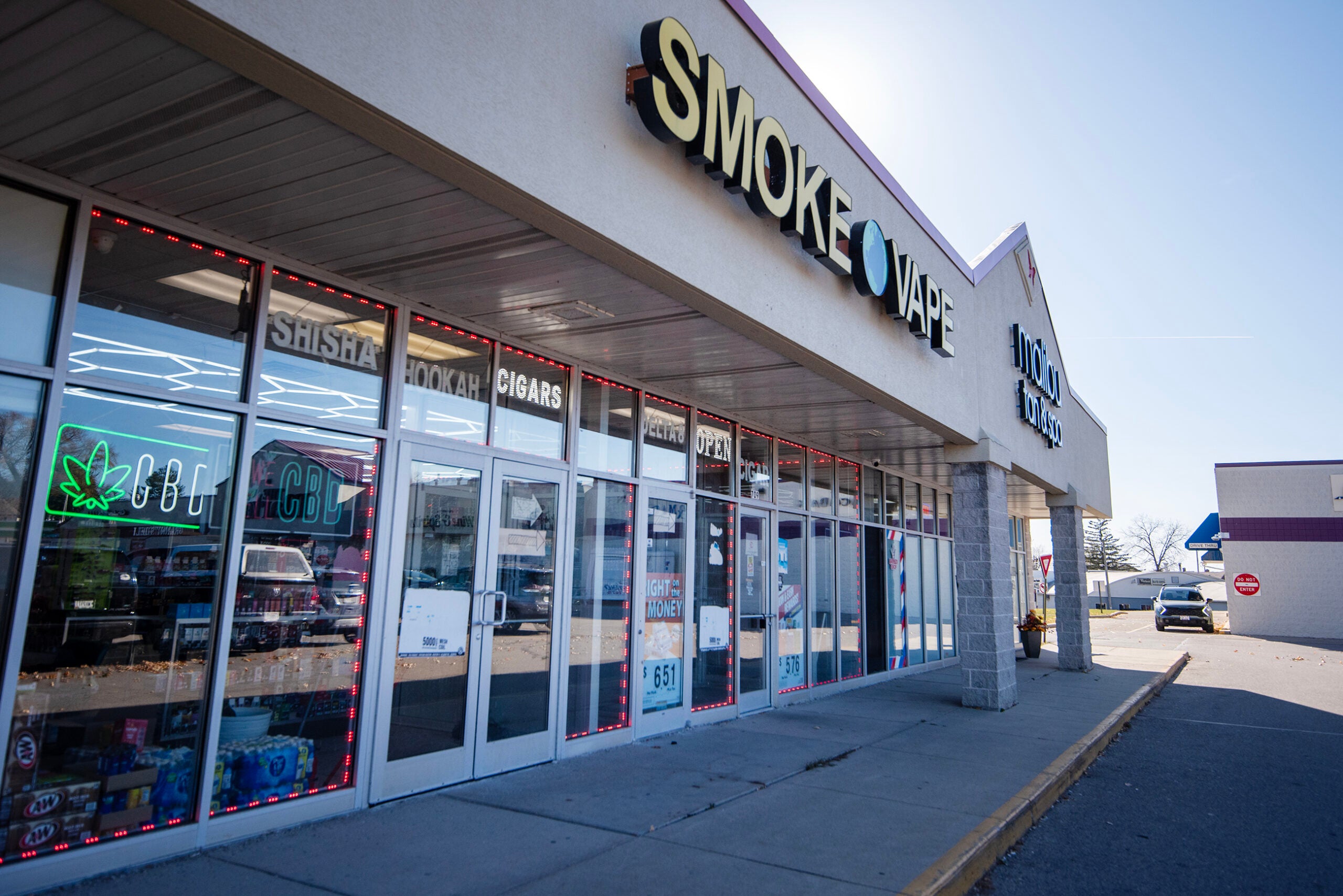
THC products are for sale Wednesday, Nov. 12, 2025, at Smoke World Vape in Beaver Dam, Wis. Angela Major/WPR
Jay Selthofner, the organizer, sees those efforts as legitimizing the hemp loophole, and thinks they don’t go far enough. Even if this year’s version of the Democratic legalization bill is going nowhere, Selthofner said it serves as an important reminder of where the public is at, and what’s possible, especially in an election year.
Either way, he said, activists want the state to do something. The time to stand still has passed.
“These products do exist,” Selthofner said. “When it gets down to it, cannabis is cannabis.”
Other states have legalized weed. Why hasn’t Wisconsin? was originally published by Wisconsin Public Radio.
If you think stories like this are important, become a member of Urban Milwaukee and help support real, independent journalism. Plus you get some cool added benefits.
More about the Legalizing of Marijuana
- Wisconsin Voters Back Legal Weed, Lawmakers Still Say No - Anya van Wagtendonk - Feb 12th, 2026
- Wisconsin Lawmakers and Hemp Producers Both Want New Regulations on THC - Lorin Cox - Oct 7th, 2025
- Hesselbein Will Revive Medical Marijuana Bill - Anya van Wagtendonk - Dec 16th, 2024
- Data Wonk: Will State Move to Legalize Marijuana? - Bruce Thompson - Sep 25th, 2024
- Data Wonk: Should Wisconsin Legalize Marijuana? - Bruce Thompson - Sep 18th, 2024
- Indigenous-Led Campaign Launches to Support Medical Marijuana - Isiah Holmes - Sep 4th, 2024
- How Delta-8 Impacts Marijuana Debate in Wisconsin - Richelle Wilson - Jun 18th, 2024
- Milwaukee Officials Praise Rescheduling of Cannabis by Biden - Isiah Holmes - May 20th, 2024
- What Will Wisconsin Do Now That Feds Are Moving to Ease Marijuana Restrictions? - Rich Kremer - May 2nd, 2024
- A Better Wisconsin Together Renews Call for Cannabis Legalization - A Better Wisconsin Together - Apr 20th, 2024
Read more about Legalizing of Marijuana here