
Mary Kastman
Purslane owner talks tahini, tinned fish and alternatives to black pepper.
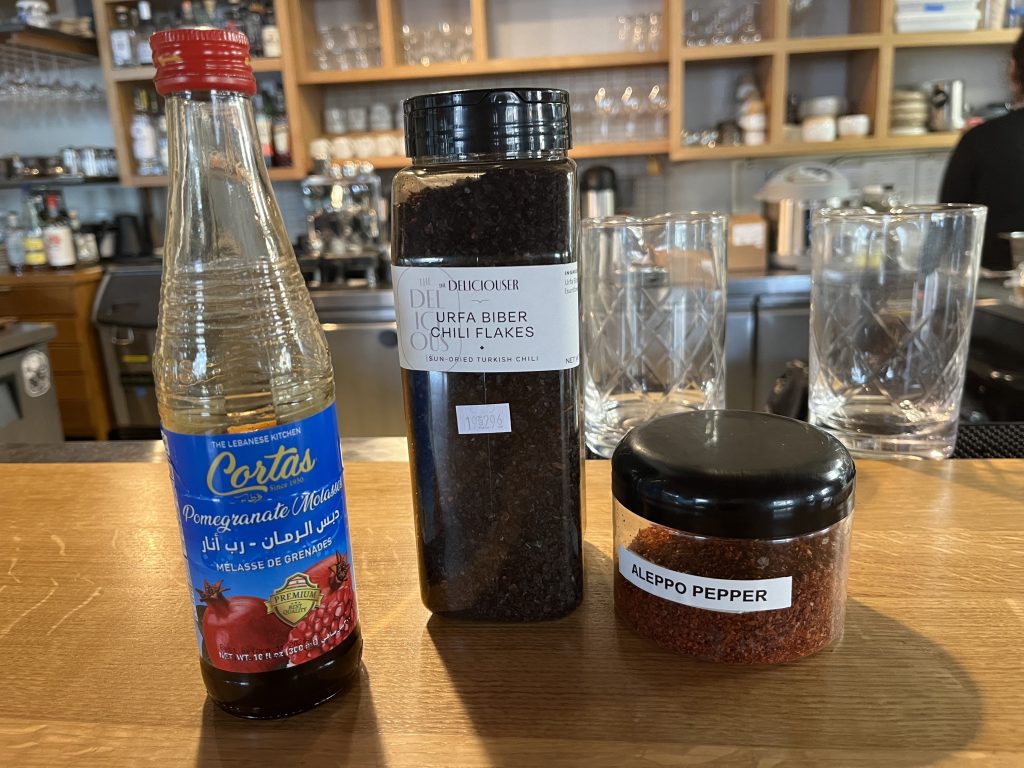
Ingredients at Purslane. Photo by Sophie Bolich.
Editor: This is the sixth installment of a new series in which Urban Milwaukee explores five ingredients and how to use them with Milwaukee chefs, growers and caterers.
Purslane is situated just below street level at the corner of N. Farwell Avenue and E. Royall Place—though you wouldn’t know it from inside, where sunlight dapples the mint-green walls as the kitchen team chops, roasts and pickles in preparation for dinner service.
“I’ve always loved it here,” said chef-owner Mary Kastman. “You walk in and it’s like a different world.”
The location is fitting, even symbolic, for Kastman, whose cooking style is defined by her dedication to digging deeper.
Kastman, who graduated from the University of Wisconsin-Madison with a degree in English literature, didn’t set out to become a chef, but an on-campus job piqued her interest in back-of-house operations, eventually leading to culinary school and a flourishing career in restaurants—to the benefit of Milwaukee diners.
Her early jobs included stints at Restaurant Muramoto and 43 North in Madison, but it wasn’t until a 2011 move to Boston that she discovered a distinct love of Eastern Mediterranean cuisine, working under award-winning Chef Ana Sortun at Oleana and Sarma. That passion later led Kastman to Northern Spain, Turkey and Western Europe, where she immersed herself in the each region’s flavors, traditions and stories—going beyond surface-level experience to cultivate a deep understanding of the cuisine and its roots.
She has since carved out a niche in showcasing Mediterranean and Middle Eastern flavors, highlighting ingredients sourced from small Wisconsin farms.
“We do mostly small plates, utilizing as much local produce and product as we can muster,” Kastman said. “We’re trying to really empower the farmers and producers in our area while creating something unique for the City of Milwaukee.”
That ethos earned Kastman a James Beard semi-finalist nomination for Best Chef, Midwest, in 2022 and carries through at Purslane, which began as a pop-up in the summer of 2024 before expanding to a brick-and-mortar last June.
Dishes from Kastman’s kitchen taste like an escape, but several of her staple ingredients can be found right here in Milwaukee. Downy clusters of sumac berries crown bushes along the Oak Leaf Trail each summer, and purslane—a type of succulent—webs across garden beds and creeps through cracks in the city sidewalks.
Of course, the restaurant sources from certified producers—local, when possible. But for Eastern Mediterranean staples like spices, pomegranate molasses and the tahini Kastman swears by, Purslane is more picky.
Here’s a closer look at five of Kastman’s must-have ingredients—and tips for trying them at home.
Urfa Biber and Aleppo Pepper
Where many chefs reach for black pepper, Kastman prefers alternatives like Urfa biber and Aleppo pepper, chili-based spices from Turkey and Syria which offer more mellow, warming profiles than the sharp bite of standard peppercorns.
“I don’t really utilize a lot of black pepper,” she said, noting an opportunity to layer additional flavor with Urfa biber’s earthy sweetness and Aleppo pepper’s smoky, fruity notes, which pair especially well with eggs in the morning and bring subtle, buildable heat to Purslane’s signature dishes.
Pomegranate Molasses
Unlike its caramelly, sugarcane-derived cousin, pomegranate molasses is tangy and tart, lending itself to salads, stews and any other dish in need of acidic brightness.
“It’s really versatile and also shelf-stable,” said Kastman, who typically keeps a jar on hand—if not for cooking, to make a Levant-style PBJ: pomegranate, grape or date molasses with a drizzle of creamy tahini.
Tahini
“Not all tahini is created equal,” warned Kastman, noting that she opts for Soom Foods, Lebanon Valley and Al Kanater brands.
Made from ground sesame seeds, tahini is thinner and more bitter than almond or peanut butter, with a nutty, rich and earthy flavor that complements sauces, dressings and dips like hummus and baba ghanouj.
Beans and Lentils
Cheap, long-lasting and high in protein, beans and lentils are a practical choice in any kitchen, Kastman said. “Canned chickpeas get a bad rap, but you can make a really delicious hummus in under 10 minutes.”
Another favorite is red lentil soup, which, according to Turkish legend, helped a bride impress her mother-in-law. Though Kastman finds the premise a bit antiquated, she’s all in on the dish itself—comforting, hearty and even said to soothe an upset stomach.
“It’s a big hit in my family,” she said of the soup, made simply with lentils, stock, bulgur or rice, red pepper paste, garlic, lemon and dried spearmint.
Tinned Fish
When Kastman and her husband don’t feel like making dinner, they reach for tinned fish instead of takeout. “We’ll get food on the table for the kids, but when we’re hungry later, we’ll just put out a bunch of tinned fish,” she said.
Kastman favors Fishwife sardines with preserved lemon—a treat served with crackers and yogurt mixed with cooled, sautéed greens.
For those less inclined to dive straight into a tin of anchovies, the fish is a simple way to add an “umami punch” to everything from Caesar dressing to deviled eggs.
If you think stories like this are important, become a member of Urban Milwaukee and help support real, independent journalism. Plus you get some cool added benefits.


Five Ingredients With a Foodie
-
Mother-Daughter Chefs Showcase Burmese Heritage
 Mar 3rd, 2026 by Sophie Bolich
-
Bartender James Potter
 Nov 21st, 2025 by Sophie Bolich
-
Jenny Lee
 Sep 19th, 2025 by Sophie Bolich