EVs Come with an Environmental Cost
All the city news you can use.
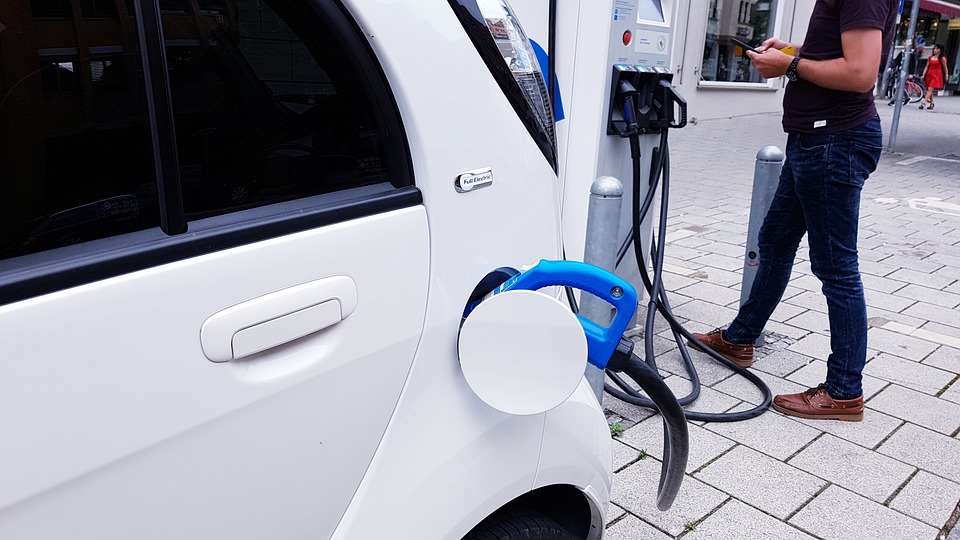
Electric car charging station. (CC0 Public Domain)
Every day at The Overhead Wire we sort through over 1,500 news items about cities and share the best ones with our email list. At the end of the week, we take some of the most popular stories and share them with Urban Milwaukee readers. They are national (or international) links, sometimes entertaining and sometimes absurd, but hopefully useful.
House Democrats push back on road building: The most recent House transportation bill pushes back on the “roads first” mentality that has run the United States for years. House Transportation and Infrastructure Committee chairman Peter DeFazio believes we can’t pave the whole country and need to focus on climate solutions. But to pass it, backers will have to convince Senators to not listen to the road building lobby and state transportation departments. (Sam Mintz | Politico)
The urban landscape of Soviet monotowns: Company towns have been part of life in many countries going back to the industrial revolution, but in Eastern Bloc countries, the state-controlled stability of these towns waned after the fall of the Berlin Wall. Now a new book takes a look at these places and their architecture, often derelict after years of abandonment. (Andreea Cutieru | Arch Daily)A devil disguised as a savior: AirBnB was knocked down during the pandemic as travel waned. Now as places start to open up again, the company is trying to cash in and saying it will take cities along for the ride. But in selling itself to cities as a savior, author Katya Schwenk agues AirBnB looks past the damage it has done in displacing people in popular neighborhoods around the world. (Katya Schwenk | Business Insider)
Electric cars have an environmental cost: The rush to produce electric cars that replace their oil propelled counterparts is raising eyebrows from environmentalists. Metals such as lithium are important in battery technology, but they are also part of a race to extract resources from fragile ecosystems like deserts and the ocean floor. While electrification is seen as an important step towards climate solutions, it’s also fraught with the potential for irreparable harm. (Evan Halper | Los Angeles Times)
A new metric for safer streets: New research from the University of Pennsylvania looks at using biometric data from pedestrian and cyclist cognitive workload evaluations to understand how these road users process information for safety. Areas of high workload are likely to create a higher crash threat. The benefit of using this measure is understanding dangerous intersections before they result in a collision and fatality. (Erica Brockmeier | Penn Today)
Quote of the Week
During the focus group, participants unanimously expressed their love for the new outdoor dining scene. Fewer parking spots didn’t deter them—quite the opposite. The new patios and pop-up markets drew them from the suburbs to the city, and deeper into their own neighborhoods, often by foot.
–Rachel Slade in Boston Magazine discussing how the city could benefit from going car free.
This week on the podcast, we’re joined by Mark Perepelitza, Director of Sustainability at SERA Architects.
Want more links to read? Visit The Overhead Wire and signup.


Transportation
-
Milwaukee Plans 60 Traffic Safety Projects for 2026
 Apr 8th, 2026 by Jeramey Jannene
-
State To Reveal New I-794 Cost Estimates
 Apr 7th, 2026 by Jeramey Jannene
-
Bus Riders Can Finally Pay With Credit Card
 Apr 6th, 2026 by Graham Kilmer
Urban Reads
-
Can School Buses and Waymo Robotaxis Share School Zones?
 Apr 4th, 2026 by Jeff Wood
-
Using Game Theory to Solve the Housing Shortage
 Mar 28th, 2026 by Jeff Wood
-
The High Cost of Car Ownership
 Mar 22nd, 2026 by Jeff Wood