Wisconsins Agriculture And Conservation Leaders Unite To Protect Our Waters And Strengthen Our Farms
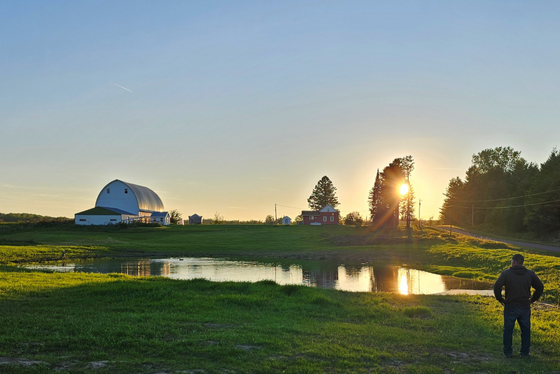
Together, we can keep Wisconsin’s waters healthy, its farms strong and its communities thriving. / Photo Credit: Wisconsin DNR
PLOVER, Wis. – The Wisconsin Department of Natural Resources (DNR) today announced that nearly 150 farmers, agricultural industry representatives, conservation organization members and government leaders gathered at the Agriculture & Conservation Roundtable on Dec. 9 to tackle one of Wisconsin’s most pressing challenges: keeping our waters drinkable, fishable and swimmable while sustaining the productivity of our farms.
Hosted by the Interagency Water Quality Workgroup (IWQW) at the Food + Farm Exploration Center in Plover, the event marked a major milestone in advancing Wisconsin’s next Nutrient Loss Reduction Strategy (NLRS), a statewide framework to reduce nutrient losses from agricultural lands through farmer-led innovation and science-based collaboration.“Clean water and thriving agriculture depend on each other,” said Karen Hyun, DNR Secretary. “This roundtable proves what’s possible when we bring farmers, researchers and agencies to the same table. Together, we’re building a future where conservation strengthens Wisconsin’s farm economy.”
Why It Matters
Every Wisconsin community depends on clean, reliable water for drinking, fishing, recreation and economic vitality. Nutrient losses from agricultural land can cause algae blooms, harm aquatic life and contaminate groundwater. But they also mean lost fertilizer, soil and profits for farmers.
The roundtable underscored a powerful truth: when agriculture and conservation work together, everyone benefits. Reducing nutrient loss improves farm efficiency and profitability, enhances soil health and protects the water resources that sustain Wisconsin’s way of life.
A Collaborative Approach
The IWQW is a partnership among the Wisconsin DNR, Wisconsin Department of Agriculture, Trade and Consumer Protection (DATCP); Wisconsin Land and Water Conservation Association; the Natural Resources Conservation Service (NRCS); the University of Wisconsin-Madison Division of Extension; and the U.S. Geological Survey (USGS). The roundtable was designed as a working session focused on action and collaboration.
Through facilitated discussion, participants explored five key themes shaping the future of Wisconsin’s nutrient-loss work:
- Peer Networks and Local Leadership – Empowering farmer-to-farmer learning and grassroots collaboration.
- Trust and Communication – Building relationships and shared understanding across agencies, agronomists and producers.
- Funding and Economic Opportunities – Aligning financial incentives and market-based opportunities with measurable conservation outcomes.
- Technology and Research – Expanding access to data, modeling and field-tested innovations.
- Consistency and Accountability – Clarifying regulatory and program expectations, tracking progress and ensuring transparency statewide.
For each theme, participants identified both near-term actions to jump-start progress and long-term strategies to guide the 2026 NLRS update.
“The participation was really strong,” said Darin Harris, who led the session design and facilitation. “Farmers, scientists and agency staff came ready to listen and solve problems, not defend positions. That’s what true collaboration looks like.”
“We all want clean water and productive farms,” added Duane Ducat, a participant from a producer-led watershed group. “What this meeting showed is that when we share ideas and work together, we can make real progress, one field, one stream, one community at a time.”
Next Steps
The ideas and strategies developed at the roundtable will directly inform Wisconsin’s 2026 Nutrient Loss Reduction Strategy, aligning research, funding, policy and outreach across agencies and partners to deliver greater impact and accountability.
The IWQW will release a public summary of outcomes early next year and invites continued engagement from farmers, agronomists, conservation professionals and community leaders.“A big nod of the head and tip of the hat to the farmers and partners who traveled from all over the state. Thank you and this is just the beginning,” said Jeffrey Voltz, Director of the DNR’s Office of Agriculture and Water Quality, on behalf of the IWQW. “Our job now is to turn the momentum from this event and the support from Wisconsin’s agriculture community into measurable results on the land, in the water and for Wisconsin farmers.”
Get Involved
Farmers, watershed groups, agronomists and conservation partners are encouraged to stay involved as the strategy moves forward. Visit Wisconsin.gov’s Nutrient Loss Reduction Strategy webpage to learn how to participate, share feedback and access resources.
NOTE: This press release was submitted to Urban Milwaukee and was not written by an Urban Milwaukee writer. While it is believed to be reliable, Urban Milwaukee does not guarantee its accuracy or completeness.
Mentioned in This Press Release


Recent Press Releases by Wisconsin Department of Natural Resources