Gov. Evers Signs Executive Order Calling Legislature Into Special Session to Ban Partisan Gerrymandering and Guarantee Fair Maps for Future Generations of Wisconsinites
With no permanent independent and nonpartisan redistricting process in place for 2030, governor calls for banning partisan map rigging in state’s constitution
MADISON — Gov. Tony Evers today, as promised during his 2026 State of the State address, signed Executive Order #285, calling a special session of the Wisconsin State Legislature to occur at noon on Tues., April 14, 2026, to pass a constitutional amendment banning partisan gerrymandering in Wisconsin once and for all. Gov. Evers, almost two years ago to the day, fulfilled his longstanding campaign promise, enacting fair maps for Wisconsin and undoing a decade of Wisconsinites living under some of the most gerrymandered legislative maps in America. Gov. Evers’ work to secure fair legislative maps marked the first time in over 50 years that Wisconsin had legislative maps enacted through the legislative process rather than through the courts.
Still, even as Wisconsin currently has fair maps passed through the legislative process and enacted by the governor, the state has no permanent independent and nonpartisan redistricting process in place for the next U.S. Census, which could open the door for lawmakers to pass gerrymandered maps favoring their political party—a move Gov. Evers’ special session aims to prevent. The governor’s special session call comes as Wisconsinites and Americans have watched President Donald J. Trump and the Trump Administration pressure Republican Legislatures into adopting new gerrymandered, partisan congressional maps to retain current Republican majorities in the U.S. Congress. As a result, Democratic Legislatures across the country have been forced to respond in an attempt to restore balance to national elections.“Two years ago, I delivered on my promise and signed fair maps for Wisconsin into law, ending a decade of Wisconsinites living under some of the most gerrymandered legislative maps in America. But here’s the rub: new maps are redrawn every 10 years, and while Wisconsin has fair maps today, we have no guarantee we’ll continue to have fair maps in the future,” said Gov. Evers. “If the Legislature doesn’t act now, our maps could go right back to being rigged, and Wisconsinites could go right back to living under undemocratic maps—we cannot let that happen. We have a responsibility as elected officials to make sure we never go back.
“While lots of people have lots of different ideas about what a nonpartisan redistricting process or commission should look like, there’s one thing all of us should be able to agree on, which is that politics should stay out of redistricting from start to finish. And that’s what I’m calling a special session to do,” Gov. Evers continued. “We’ve already seen how fair maps have forced lawmakers to finally work together, find compromise, and get good things done for the people of Wisconsin. It’s why I’m calling a special session of the Wisconsin State Legislature next month to ban partisan gerrymandering and rigged maps once and for all in Wisconsin.”
Gov. Evers has long been an advocate for creating an independent and nonpartisan redistricting process in Wisconsin, fair maps, and removing partisanship from reapportionment, maintaining Wisconsin’s safe and secure elections, and ensuring every eligible Wisconsinite can cast their ballot. The governor has previously opposed efforts by Republican lawmakers to pass a nonpartisan redistricting plan that would have required Legislature-picked and Legislature-approved map drawers. Gov. Evers has been clear that he prefers a nonpartisan redistricting option that does not allow legislators or Legislature-controlled entities to be involved in drawing legislative districts due to the obvious conflict.The new fair legislative maps enacted by Gov. Evers two years ago are responsive to the will of the people, avoid partisan bias, and increase the number of competitive legislative seats. These maps were previously submitted by the governor to the Wisconsin Supreme Court for their consideration in redistricting litigation in Clarke v. Wisconsin Elections Commission. Gov. Evers’ maps, as submitted to the Court, were passed by the Republican-controlled Wisconsin State Legislature with bipartisan support and enacted by the governor as 2023 Wisconsin Act 94.
“For the first time in generations, Wisconsinites in recent years have been able to cast their ballots under maps that are fair, responsive, and reflective of the will of the people. And I want to explain what I mean when I say ‘fair maps’ because it’s important,” explained Gov. Evers. “First, these maps are ‘fair,’ which means each party has a shot at winning control of the Legislature. It’s just common sense that if either party wins a majority of the votes, they should be more likely to win a majority of legislative seats. Pretty simple.
“Second, these maps are responsive, so it’s more likely that legislative districts will flip from one party’s control to another when voters’ preferences change. When every vote matters and every vote counts, that’s good for democracy,” Gov. Evers continued. “And, finally, these maps reflect the will of the people of our state. Under fair maps, Wisconsinites can elect Republican majorities or Democratic majorities or even a split Legislature if they want. But the most important part is Wisconsinites decide. And that’s how elections should work.”
While Wisconsin currently has fair legislative maps for the first time in generations, thanks to Gov. Evers, the state does not currently have an independent and nonpartisan redistricting process in place that will be utilized after the 2030 U.S. Census, when reapportionment will next be conducted. Without an independent, nonpartisan redistricting process in place, the next maps passed and enacted by a future Wisconsin State Legislature and Wisconsin governor could return a partisan gerrymander for either political party, restoring rigged maps just a few short years after Wisconsinites finally secured fair maps for the first time in a generation.Republicans have frequently ignored Gov. Evers’ special session calls, often gaveling out of the sessions in seconds without any consideration, deliberation, or debate. However, the governor signaled in his State of the State address that he will call the Legislature back into session later this fall if their work remains unfinished. In Wisconsin, constitutional amendments must be taken up in two consecutive legislative sessions in order to be placed on the ballot for voter approval.
Republican lawmakers have repeatedly sought to use the constitutional amendment process to circumvent the governor’s broad constitutional veto power (constitutional amendments cannot be vetoed) in addition to helping generate motivation and turnout for conservative candidates on the ballot in Wisconsin. In the last month, for example, Republicans have added two constitutional amendments to the upcoming November ballot and could still add yet another constitutional amendment to Wisconsinites’ ballots.
Gov. Evers has repeatedly called for the Wisconsin State Legislature to allow Wisconsinites the same opportunity to amend the state’s constitution without having to receive the Legislature’s approval. Wisconsin’s Republican-controlled Legislature has, for years, refused to take up policies and initiatives supported by an overwhelming majority of Wisconsinites, including efforts to codify abortion protections like those afforded under Roe v. Wade, increases to school funding, gun safety measures like universal background checks and “red flag” laws, among many other issues.
Executive Order #285 can be found here.
Assembly Joint Resolution and Senate Joint Resolutions are available here and here, respectively.NOTE: This press release was submitted to Urban Milwaukee and was not written by an Urban Milwaukee writer. While it is believed to be reliable, Urban Milwaukee does not guarantee its accuracy or completeness.
Mentioned in This Press Release


Recent Press Releases by Gov. Tony Evers

Gov. Evers, WisDOT Announce Nearly $50 Million for Rural Road Improvements to Support Wisconsins Farmers, Producers, and Agricultural Industries
Apr 1st, 2026 by Gov. Tony EversPart of $150 million investment secured by Gov. Evers in 2025-27 Biennial Budget for successful Agricultural Roads Improvement Program, grants to support 29 projects across rural Wisconsin
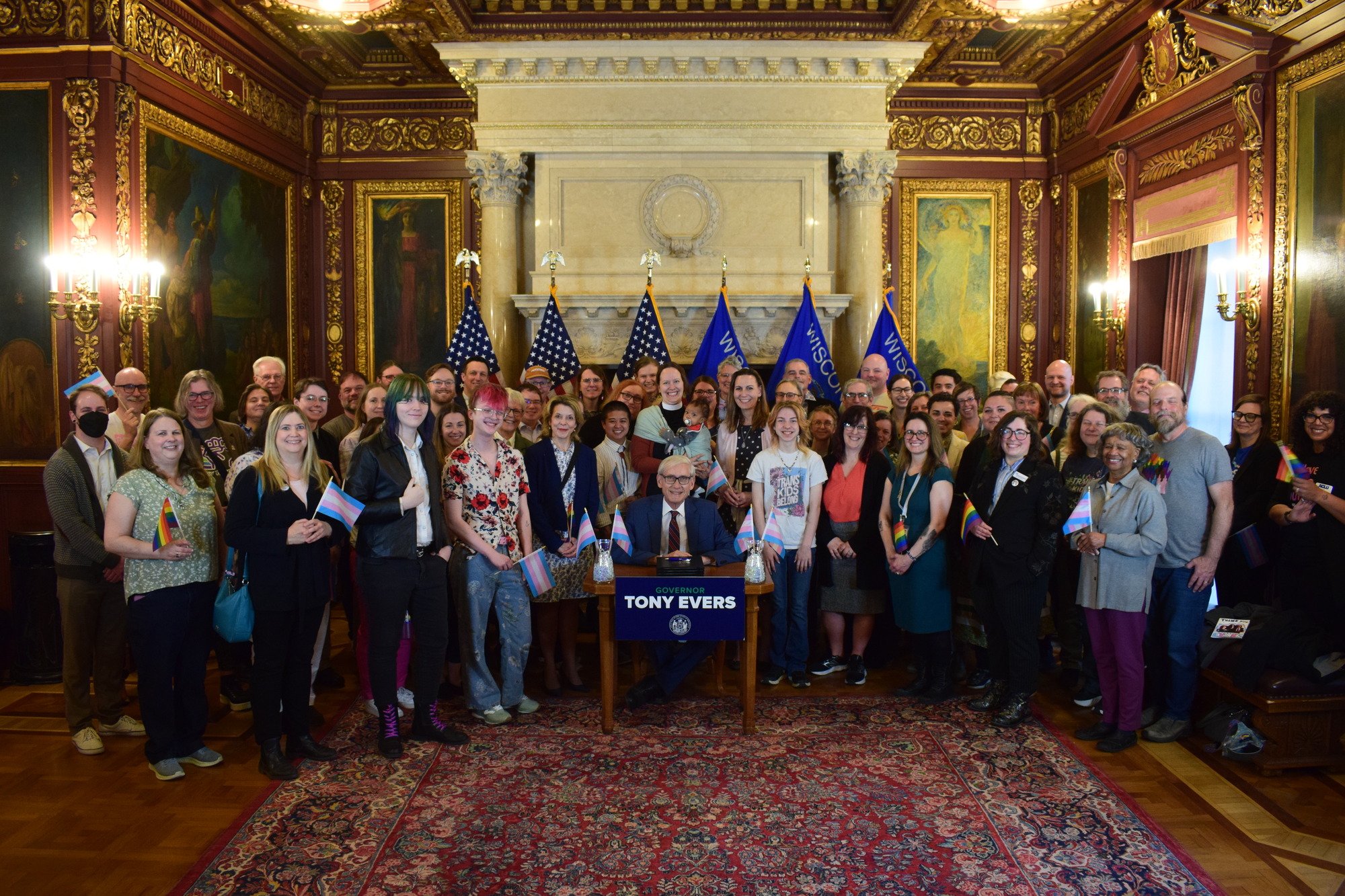
Gov. Evers Keeps Promise to Protect LGBTQ Youth, Again Vetoes Several Anti-LGBTQ BillsTargetingTransand Gender Nonconforming Kids
Mar 31st, 2026 by Gov. Tony EversOn International Transgender Day of Visibility, governor vetoes anti-trans bills surrounded by members of the LGBTQ community
Gov. Evers, DWD Announce Over $1.5 Million in Fast Forward Grants to Help Train Over 700 Wisconsinites for in-Demand Jobs
Mar 31st, 2026 by Gov. Tony EversGrants will go to 19 employers across the state to support job training in construction, child care healthcare, manufacturing, transportation, and more