From Demolition Threat To National Model For Black Modernism
Grant will help Salvation Army preserve Central City Plaza, once slated to be razed.
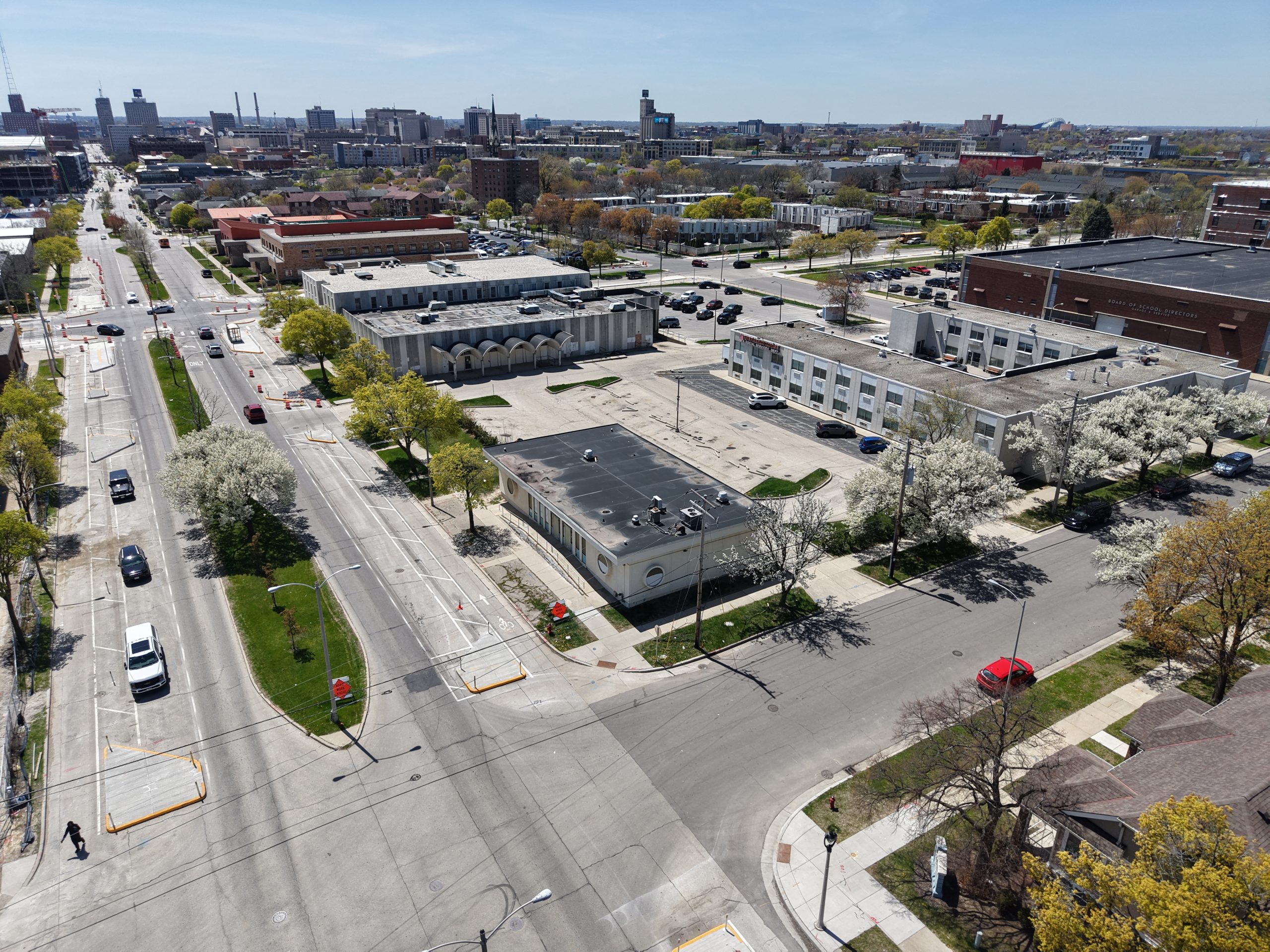
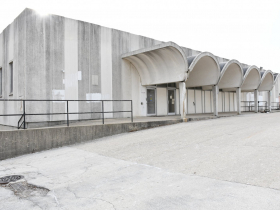
Central City Plaza. Photo by Urban Milwaukee staff.
A planned renovation of Wisconsin’s first and only Black-designed, developed and owned commercial complex has received national recognition and funding for preservation planning.
The Salvation Army of Milwaukee County was selected for a Conserving Black Modernism grant to support the rehabilitation and adaptive reuse of two buildings at Central City Plaza at W. Walnut and N. 6th streets.
The plaza is one of five projects nationwide sharing $750,000 through a partnership between the National Trust for Historic Preservation’s African American Cultural Heritage Action Fund and the J. Paul Getty Foundation. The amount awarded to the Milwaukee project was not immediately disclosed.
According to Historic Preservation Commission senior planner Andrew Stern, the grant will fund preservation planning and preparation of a historic structures report. Such reports typically document a building’s history and physical condition while establishing recommendations for rehabilitation.
The funding comes less than two years after the Salvation Army sought to demolish the same buildings to make way for a larger homeless shelter.
The organization initially said it was unaware of the complex’s historic significance. Preservation advocates successfully pushed for the buildings to be saved, and the city designated Central City Plaza as a historic district in 2025.
After initially opposing the designation, the Salvation Army unveiled a plan to preserve the structures while adding a modern expansion behind them.
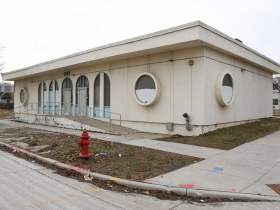
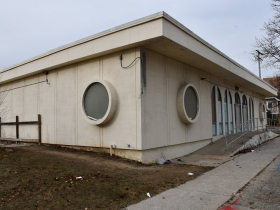
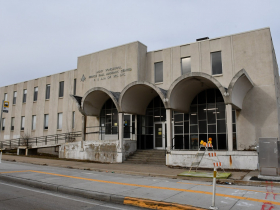
Completed in 1973, Central City Plaza was designed by Alonzo Robinson, Wisconsin’s first registered Black architect. The New Formalist complex was developed by Felmers Chaney, Milwaukee’s first Black police sergeant, and other Black business leaders as a commercial destination owned and operated by members of Milwaukee’s Black community.
The development included a motel, restaurant, grocery store, bowling alley, liquor store and other businesses. Its history reflects both the ambitions of Milwaukee’s Black business community and its response to displacement caused by urban renewal during the 1960s and 1970s.
The Central City Development Corporation, which operated the plaza, went bankrupt only a few years after it opened.
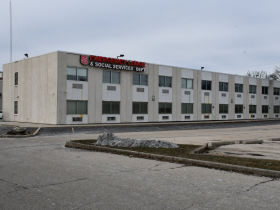
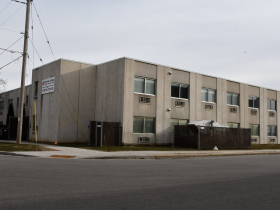
The Salvation Army has operated its Emergency Lodge Homeless Shelter in the former motel building, 1730 N. 7th St., since the early 1980s. It acquired a smaller neighboring building at 1747 N. 6th St. in 2024. That structure was originally a liquor store and was later used as a health clinic and office for the Yellow Cab Cooperative.
The organization originally proposed demolishing both buildings and replacing them with a modern shelter. The demolition request prompted a historic designation nomination from Milwaukee Preservation Alliance member Chris Rute and ultimately gained the support of area Alderwoman Milele A. Coggs.
Preservation advocates encouraged the Salvation Army to expand behind the historic structures instead of removing them.
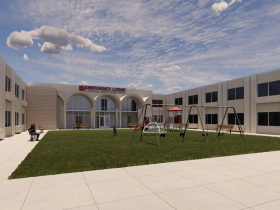
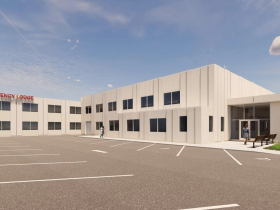
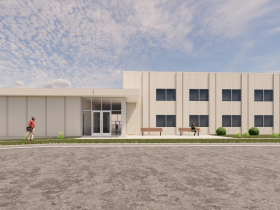
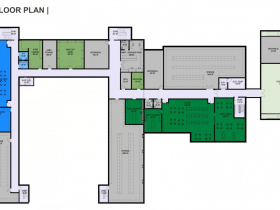
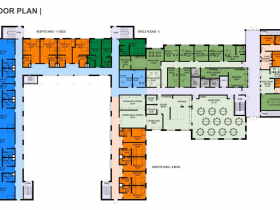
Plans presented in October 2025 call for connecting the two buildings with a glass corridor and a new two-story, 14,000-square-foot structure. The expansion would include rooms for temporary residents, offices and a dining room. It has an estimated cost of $30 million.
The glass corridor would also feature a “walk of history” detailing the story of Central City Plaza and the surrounding Bronzeville neighborhood.
Other planned features include a community food pantry, a playground within the former motel courtyard and a bronze sculpture honoring Robinson. Bray Architects is leading the design.
The expanded shelter was proposed with 135 beds, including respite care rooms and separate family, men’s and women’s areas. Salvation Army officials previously said the new design would better accommodate families of different sizes and residents with specific gender identity needs.
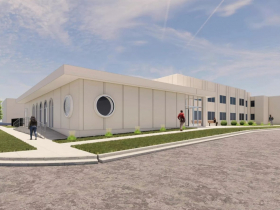
Coggs said Robinson incorporated African symbols into his design, most visibly in the buildings’ circular windows.
“Mr. Robinson was emphasizing a spirit of resilience in his design work for Central City Plaza, as we were moving out of the most active part of the Civil Rights Movement, dealing with urban renewal displacement, and yet moving forward with our eyes on a shopping destination that Black Milwaukeeans could truly call their own,” Coggs said in a statement Friday. “I am so thankful for the further recognition for this important and historic location, and for additional flowers for the award-winning work of Mr. Robinson.”
The African American Cultural Heritage Action Fund awarded a total of $3 million to 27 projects this year. Of that amount, $2.26 million is going to 22 projects through the fund’s national grant program.
The remaining $750,000 is being divided among five Conserving Black Modernism projects intended to protect and promote buildings designed by African American architects.
The third Central City Plaza building, 600 W. Walnut St., is separately owned by developer Kalan Haywood and continues to operate as an office building. It is not part of the Salvation Army’s redevelopment project.
The Salvation Army did not immediately respond to a request for comment.
Renderings and Floor Plans
Photos
Existing members must be signed in to see the interactive map. Sign in.
If you think stories like this are important, become a member of Urban Milwaukee and help support real, independent journalism. Plus you get some cool added benefits.