
Wisconsin’s Population Changes Reduce Projected Housing Need
But shrinking population aged 25 to 64 by 2030 means even bigger decline in workforce.
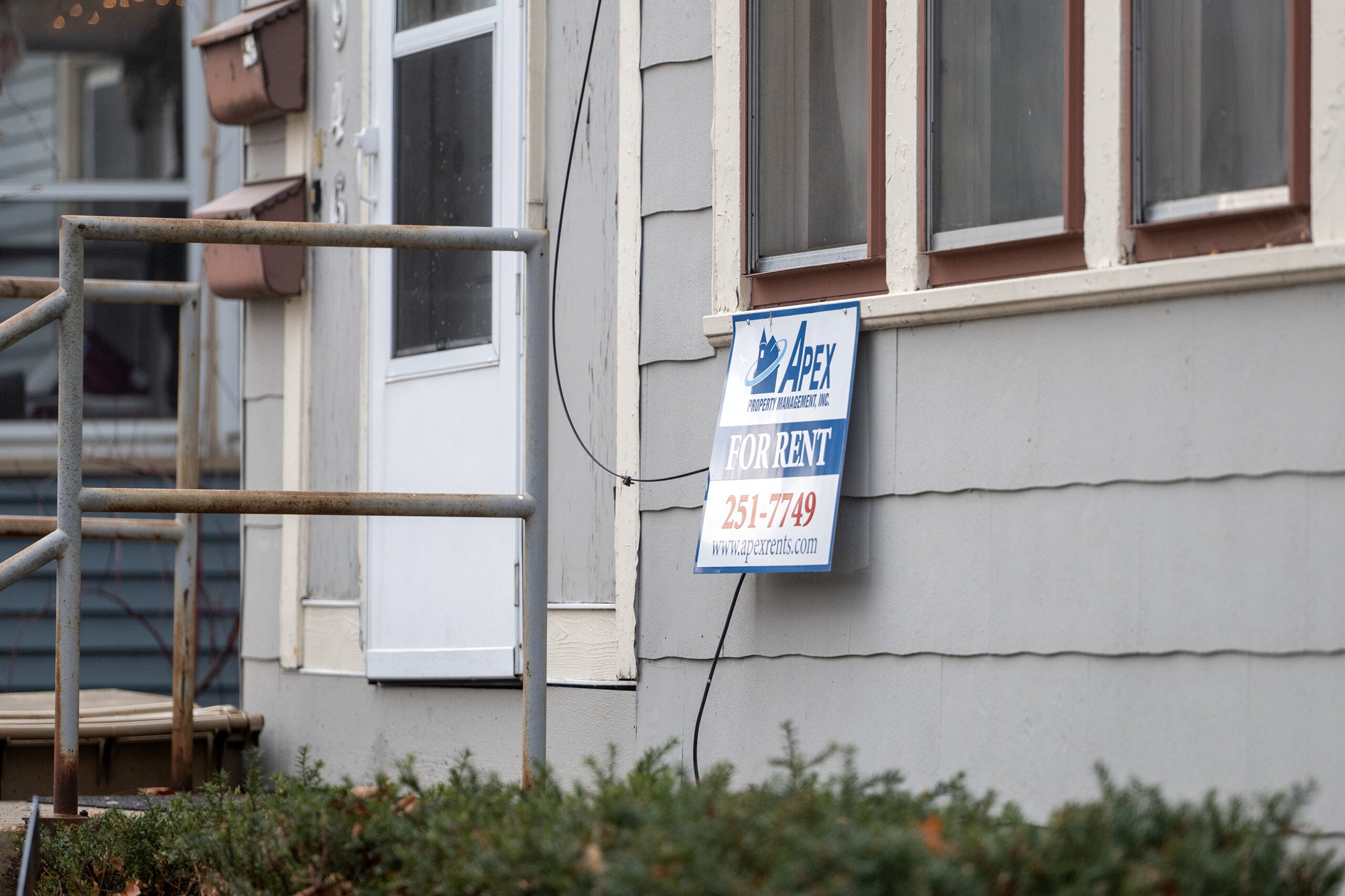
A sign outside of a house advertises units for rent Tuesday, Jan. 6, 2026, in Madison, Wis. Angela Major/WPR
A projected decline in Wisconsin’s working-age population means the state needs to build fewer housing units than previously expected, according to a new report.
The report from Forward Analytics argues that building just enough homes to match that demographic trend could make it harder for the state to grow its economy.
In 2023, Forward Analytics projected the state needed to build 140,000 housing units by the end of the decade to meet current demand. Now, researchers have revised that number down to around 84,000 housing units.
Forward Analytics is the research arm of the Wisconsin Counties Association. Their new report updated expected housing needs based on revised population projections from the Wisconsin Department of Administration using 2020 Census data.
Research analyst Jacob Anderson, who worked on the report, said the previous estimate was based on the expectation that more people would stay in the state.
But he said the new demographic data showed the state’s prime working-age population — those aged 25 to 64 — is expected to decline faster than researchers previously believed.
“As a result, we need less housing than we initially thought,” Anderson said. “Not because we’ve built more to become more affordable, but just because we project that there’ll be less people demanding housing.”
Wisconsin’s prime working age population is expected to decline by around 200,000 between 2020 and 2030, according to the report.
That age group already declined by more than 25,000 from 2020 through 2024, and the trend is expected to accelerate through the end of the decade as more baby boomers age out of the workforce, the report said.
While those shifts helped reduce Wisconsin’s projected housing need, Anderson said that’s not actually a good thing.
“It’s signaling greater demographic pressures and challenges,” he said.
To reverse those trends, he said, Wisconsin may need to build more housing than current population projections suggest, both to retain younger residents and attract new ones.
Brad Boycks, executive director of the Wisconsin Builders Association, said housing is something companies look at when deciding where to expand or relocate, which in turn helps bring residents and jobs to an area.
“If there are a lack of available homes, that is going to be a detriment to that company coming into our state, or the current company looking to expand,” he said. “If all things are tied, but a site in Indiana has a lot more housing available, more than likely we’re going to lose out on that equation.”
The report said a high-end target of building 228,000 housing units “would allow for the full reversal of working-age population loss.”
In that high-growth scenario, 155,084 of those would be single-family homes, according to the report. Meanwhile, in the status quo growth scenario, 57,202 of the 84,000 units would be single-family.
The report also points to signs of “pent-up demand” among younger adults in Wisconsin, noting around 13 percent of the state’s 25- to 34-year-olds live with their parents or in-laws.
David Clark, an economist for the Wisconsin Realtors Association, echoed that finding.
A national survey of recent homebuyers released in 2025 showed millennials and GenZers made up 32 percent of buyers between July of 2023 and June of 2024.
The survey also showed first-time buyers, who tended to be younger, made up 24 percent of those purchasing homes, down from 32 percent the previous year.
“That’s an indication that there’s significant obstacles to buying a home for first-time buyers than we’d seen in previous years,” Clark said. “It hasn’t been unusual in previous years to find first-time buyers accounting for more than 40 percent of home purchases in a given year.”
Clark also said Wisconsin had a seller’s market in April, the most recent month with available data. He said inventory would need to increase by almost 62 percent to get to a balanced market, where supply and demand are roughly equal.
“We certainly need more homes available on the market,” he said.
As baby boomers leave owner-occupied, single-family homes and move into other living arrangements, that will help move Wisconsin toward a balanced market, Clark said.
New construction plays a role as well.
Housing starts have been trending upward since 2022, according to data from the Wisconsin Builders Association.
In 2025, 13,335 single-family permits were issued across the state, up 3.9 percent from the previous year, Builders Association data shows. Permits in the first three months of 2026 were up 5.8 percent from the same period last year, data shows.
Boycks said homebuilders are “much more comfortable” shooting for the Forward Analytics report’s high-growth housing projection than shooting for the status quo projection.
“We need more homes of all types,” Boycks said. “We see this as further proof that we can’t take the foot off the gas, and that we need to continue to build.”
Report: Wisconsin’s shrinking working-age population reduces projected housing need was originally published by Wisconsin Public Radio.
If you think stories like this are important, become a member of Urban Milwaukee and help support real, independent journalism. Plus you get some cool added benefits.