

President Trump Coming to Wisconsin
Visiting state on Friday to campaign for Wisconsin Republicans like Tom Tiffany.
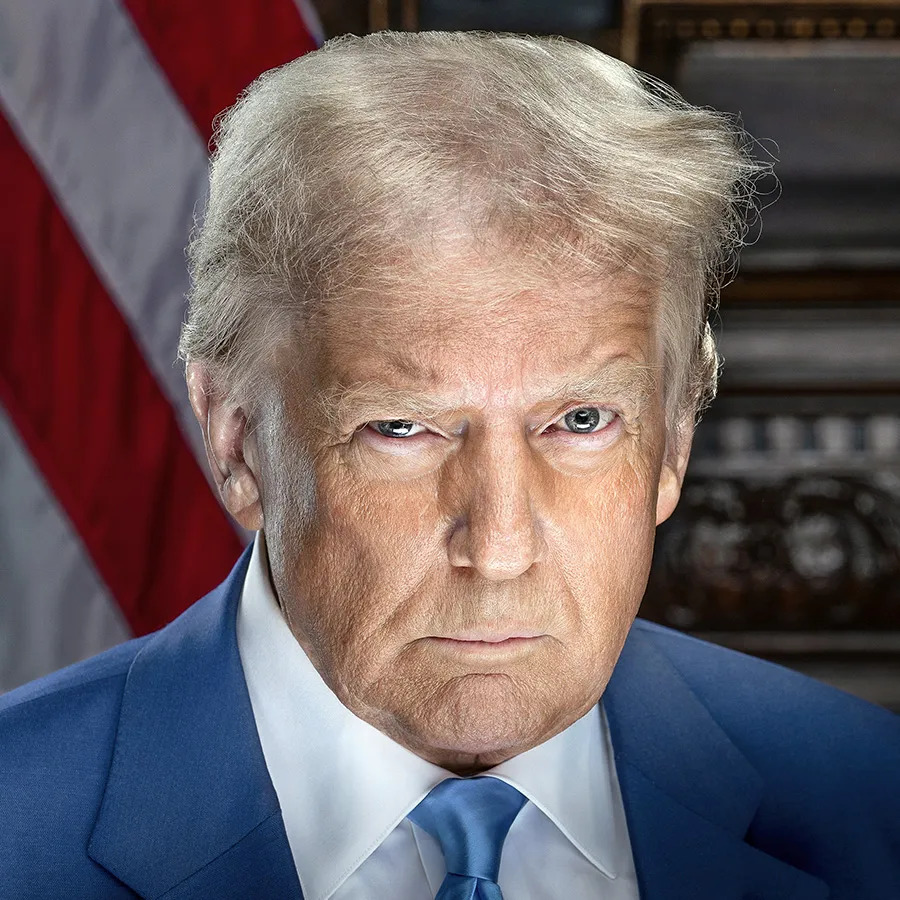
Donald Trump. Photo from the White House.
President Donald Trump is set to visit Chippewa County on Friday, marking his first visit to Wisconsin during his second term.
This comes after Monday’s filing deadline for Wisconsin candidates to get on the ballot for the upcoming partisan primary election on August 11.
The final field of candidates for the Democratic pick for governor is sprawling, while Republicans have already gotten behind U.S. Rep. Tom Tiffany, who represents Wisconsin’s 7th congressional district in the northwest and central parts of the state.
And 14 Republican state lawmakers are retiring, creating an opening for Democrats to flip some of the seats in the Assembly and the state Senate.
“Both chambers are absolutely in play. The governor’s race is in play again,” Wisconsin-based political journalist Craig Gilbert told WPR’s “Wisconsin Today.”
“There are huge opportunities for Democrats here, because it’s been a long time since they were able to win unified control of state government,” he added.
He spoke with Rob Ferrett about the gubernatorial race, the leftward shift of Wisconsin voters who identify as Democrats and Trump’s upcoming visit ahead of the midterms.
The following interview has been edited for brevity and clarity.
Rob Ferrett: We’ve got a crowded field of Democrats for governor, with seven candidates successfully filing on Monday. Republicans, on the other hand, have gotten behind Tom Tiffany. What do you think of that dynamic, with lots of Democrats in their primary while Republicans are unified around one candidate?
Craig Gilbert: Sometimes the number of candidates that get into a primary campaign tells you something about the political cycle, and in this case, I think it tells you that Democrats see the conditions as being good for their party, driven by President Trump’s low and declining ratings. By the same token, you didn’t have a lot of action on the Republican side — you had one candidate, Tom Tiffany, sort of clearing the field.
On the one hand, it’s good for Tom Tiffany to be unopposed in the Republican primary, but it’s also a reflection of the fact that his party faces a lot of headwinds this year, and the reverse is true. The Democrats are looking at a good cycle, but they’re also looking at the uncertainty of a multi-candidate primary. Some Democrats are nervous about whether they’re going to nominate the best candidate or not.
RF: You wrote recently about the changing Democratic primary electorate. What have you seen over the years, and how does it influence that race?
CG: If you look at how voters identify themselves on the left-right spectrum — conservative, very conservative, liberal, very liberal, or moderate — Democratic voters, going back over 15 years of polling we have from Marquette, are increasingly liberal by their own definition. There are very few, if any, conservative Democrats left in the primary electorate and a somewhat declining percentage of moderates.
The majority of Democratic voters are now identified as liberal, and the percentage that identifies “very liberal” has gone up — has doubled in the last decade or so — from about 12 or 13 percent of Democratic voters in Wisconsin to more than 25 percent. So that tells you that there’s more opportunity than there would have been in the past for a candidate on the left side of the Democratic spectrum.
I think the environment is a little bit more challenging than in the past for moderate Democratic candidates, but it’s still a big pool of voters. Wisconsin has an open primary, so there are going to be plenty of independents and plenty of voters in the center to right wing of the party (who) will also be voting in August.
RF: On the Republican side, the state Republican Party is backing Tom Tiffany. It looks like President Trump has backed him. He’s been a very Trump-leaning candidate over the years. What do you think that means for Tiffany’s electability?
CG: It’s in some respects a good thing for him to have the party behind him, unified behind him, and not have to spend a lot of money against other Republicans in the primary. At the same time, he’s not exactly the candidate you draw up on paper to win in a purple state in what looks like a really challenging cycle for Republicans. He’s from northern Wisconsin — we haven’t seen a lot of winning statewide candidates come from that part of the state. He’s fairly conservative. He’s taken some votes that are going to get a lot of attention in this election, including the one against certifying the presidential results in two states.
To the extent that Donald Trump is a potential drag on Republican candidates in competitive states in November, Tom Tiffany, I think, will have a hard time separating himself from Donald Trump. But if he runs a smart and effective campaign, depending on what Democratic opponent he draws, we could have a real contest on our hands.
RF: President Trump is visiting Wisconsin later this week, specifically Chippewa County. Why now and why there, do you think?
CG: Western Wisconsin is a traditional battleground within a battleground. You’ve got the 3rd Congressional (District) race, which is the one House seat of Wisconsin’s eight U.S. House seats that’s really been in play in recent years. It’s a top target for Democrats nationally. You’ve also got a primary for the 7th Congressional District on the Republican side, which is Tom Tiffany’s current seat, which he’s vacating to run for governor. The Trump visit kind of plays in both those races.
These visits by presidents are always kind of potentially double-edged, especially when they have negative job ratings like Donald Trump has. I mean, it’s not a great look in a general election sense. But it also can always have the potential to drive up turnout on your side and motivate your base.
RF: A big topic of Trump’s visit, as advertised so far, is support for farmers. We’ve seen concern from farmers about the impact of tariffs and trade wars, about cuts in rural health care. The Trump administration is saying they’re going to backfill some of those cuts to healthcare. Rural voters have swung Republican in recent years. Is there any reason to think that could change?
CG: We do have this situation of farmers hurting and rural areas hurting. We have the impact of tariffs. That’s a potential crack (or) fault line in the rural base for Republicans. In the past, when tariffs were used as a policy in the first Trump administration, even though they sort of complicated the lives of farmers, that did not shake their support for Donald Trump.
There’s two different questions, I think, about the Republican party’s rural base. One is how they feel about Donald Trump and whether they’ll stick with the Republican Party. The other is whether they’ll vote. Midterm elections are heavily about turnout — about which side is more motivated and more mobilized. We’ve certainly seen a lot of signs in these intervening off-year elections that Democratic voters are hyper-mobilized. The questions about turnout are on the other side.
Pres. Trump to visit Wisconsin on Friday, kicking off an embattled campaign season was originally published by Wisconsin Public Radio.
If you think stories like this are important, become a member of Urban Milwaukee and help support real, independent journalism. Plus you get some cool added benefits.















The Big Cheese coming to town to yap and whine about himself, his ballroom, his arch, the pool/pond, the 2020 election, and radical left lunatic judges that stand in his way, and ostensibly to support a hand-picked reTrumplican gubernatorial candidate. Yawwwwwwwwwwwn.
Big f**king deal.
Just wondering… why is that particular “defiance” photo used, rather than photos capturing his sleepiness, or his making fun of unwanted journalists, etc.?
Dude is such a weirdo, Trump said of Olympic gold medalist Jordan Stolz, “I forgot to touch his leg. I can tell you one thing: his leg is like a rock.” “That’s a winner,”
WTF!