‘George & Gracie’ Is Fun, Funny Theatrical Flashback
Rep's world premiere about Burns and Allen stars James Pickering, Tami Workentin.
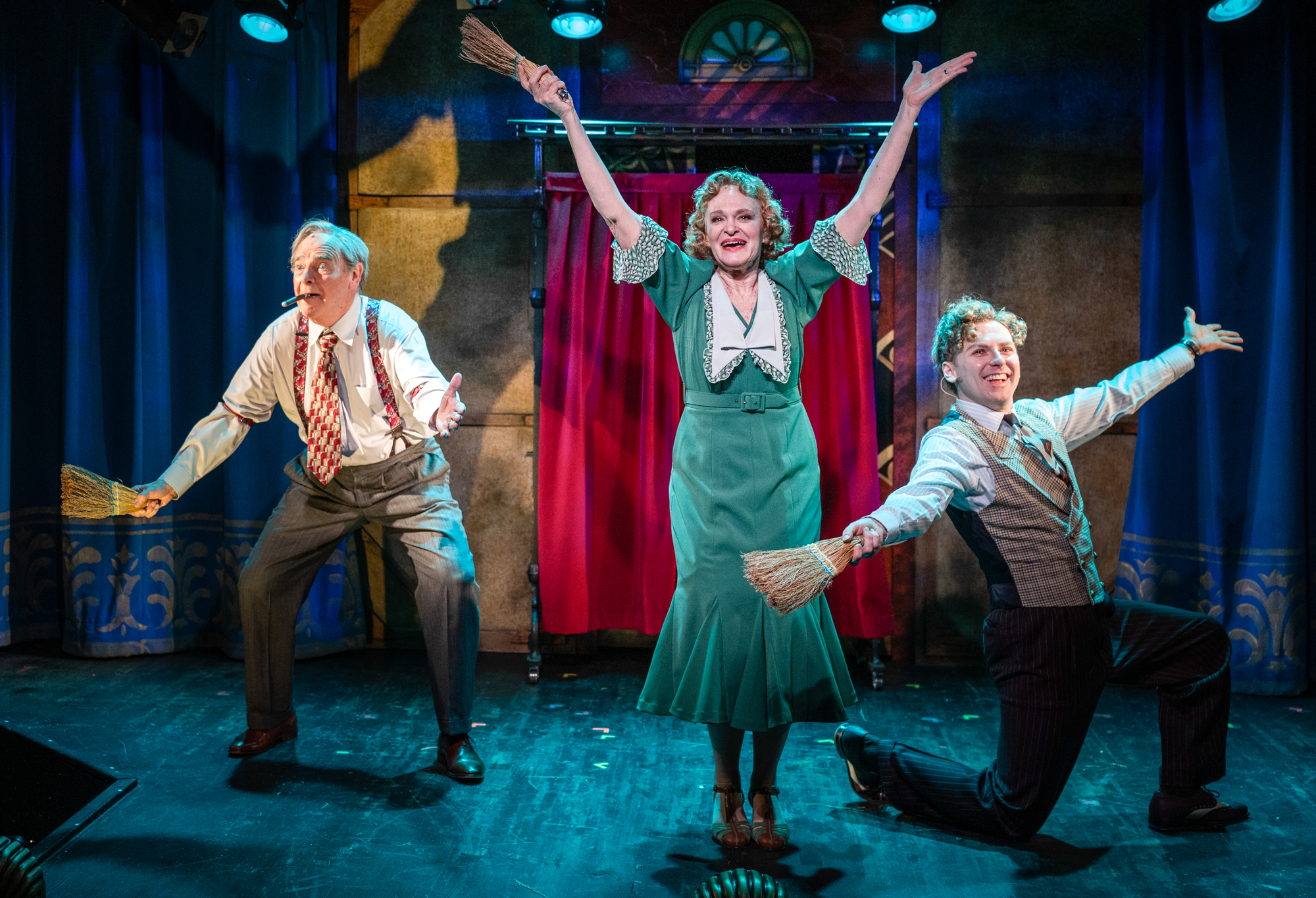
Milwaukee Repertory Theater presents the World Premiere of George & Gracie: A Love Story May 1 – June 4, 2026. Pictured L to R: James Pickering, Tami Workentin, Jonathan Riker. Photo by Michael Brosilow.
Warmth and talent triumph over growing pains for George & Gracie: A Love Story, a world premiere that is unlike many of the Rep’s Stackner Cabaret offerings. These are often shaped as a song-maker showcase, but this show is built around the savvy collision of two show biz married couples.
The play — and it is more a play than a revue, with old songs subordinate to the story’s jocular appeal — is a journey through how George Burns and Gracie Allen became world famous. They emerged from 1920s vaudeville to show biz celebrity on radio, in movies and on television before Gracie retired and left George to continue solo.
His take-charge pursuit of her as a stage partner and wife, while he focused on writing their material, mastering publicity and playing straight man, is the stuff of legend, worth rehearing. It takes time for the plot format to fire up, but the talents involved make it fun — and funny.
But there is a Milwaukee-famous stage couple here, too. It consists of James Pickering as George (I have covered him at the Rep since the 1970s) and his wife, Tami Workentin, who has collaborated often with Pickering and without on Wisconsin stages.
But here Tami is also the playwright who has found an ingenious way to deepen an episodic biography of George and Gracie. There are many — maybe too many — jokes about how show biz grew in those decades, recognizing that while many in the audience may know about the two performers’ careers, other generations need hooks of knowledge into the vaudevillian times and the underlying skills that made them special. So vaudeville trickery and atmosphere we have in abundance.
The staging is busy and a bit facile under director Laura Braza, with many tech hands at work. It still needs some tightening, but transports us by mock elevator, blackouts, faces thrust through curtains and vaudeville-based magic tricks through the decades of the couple’s career and genuine affection.
And who better to demonstrate that than two of Milwaukee’s most talented actors who also happen to be married and frequent collaborators?
Pickering is smart enough to suggest George in the way he drolly tongues a cigar, shows off his exasperated looks and sings an oldie. He uses his own polished skills to skip through some quicksilver transitions, inescapably demonstrating how much stagecraft he represents.
In various costumes and moods, Workentin materializes as the many facets of Gracie, from girl to matron. The facial control is itself amazing. The self-doubting Gracie, the uncertain Gracie, the determined Gracie and then — a brilliant meld of Tami’s gifts with the timing and dizzy dialogue of the original — Gracie full blown.
A running marvel of the play is how to openly discuss the methods while demonstrating that routines written a century ago can still hit home.
The story is framed around George’s doubts about going it alone after Gracie’s death — but the real frame is Jonathan Riker as the Elevator Guy, a combination emcee, musician, magician and elevator operator. His comings and goings are vaudeville based, rely on his gifts for comedy and singing — and also center on elevator doors that transport us to many floors in the couple’s life. Riker is the gifted cog in the play’s construction. His amiability is inviting, though he is overused as the transition device.
The balance of the impact is tilted toward Gracie. The story never quite satisfies us internally on how she turned from shy, sickly Irish lass committed to another guy to fall in love with George, especially since, in real life and this show, George constantly reminds us, tongue in cheek, of his own frailties.
Tami uses Gracie’s routines to establish her own wit, relishing those moments of reverse dizzy dame logic and demolishing George and others around her. It’s a finishing school in how to use your own skill with delivery and sideways looks to become a famous persona. Her mock campaign against FDR in 1940 and her patriotic withdrawal also speak to today’s patrons.
The play also shines in reminding us of Gracie the dancer, who tapped with Eleanor Powell and Fred Astaire. A highlight of the play (with Riker taking a bit of Astaire’s role) is the whisk broom number that all used in Damsel in Distress (1937).
Workentin the playwright has knit together the sequences using a lot of props and lighting effects that only remind a viewer that the Stackner may not be the best stage for this. The play works well to expose the methods of performance — much in George and Gracie’s own words — but the actors and the effects need more space to breathe.
I hope Workentin continues to tinker with the piece. There is something appealing here, a reminder that the story and framework of the Burns and Allen act should live through the ages for other performers and in other repertory.
George & Gracie: A Love Story makes viewers wish to know more about the people and the times. It runs through June 14 at the complex now known as the Associated Theater Center. Check here for tickets.
George & Gracie: A Love Story Gallery




Dominique Paul Noth served for decades as film and drama critic, later senior editor for features at the Milwaukee Journal. You’ll find his blog here and here. For his Dom’s Snippets, an unusual family history and memoir, go to domnoth.substack.com
If you think stories like this are important, become a member of Urban Milwaukee and help support real, independent journalism. Plus you get some cool added benefits.


Review
-
‘Bug’ Creeps You Out in Crafty Way
 Apr 28th, 2026 by Dominique Paul Noth
-
Bay View’s Chettinadu House Is a Winner
 Apr 26th, 2026 by Cari Taylor-Carlson
-
‘Dinner With the Duchess’ Is a Theatrical Feast
 Apr 26th, 2026 by Dominique Paul Noth
Theater
-
‘Bug’ Creeps You Out in Crafty Way
Apr 28th, 2026 by Dominique Paul Noth
-
‘Dinner With the Duchess’ Is a Theatrical Feast
Apr 26th, 2026 by Dominique Paul Noth
-
Agatha Christie Becomes the Play in Rep’s Show
 Apr 20th, 2026 by Dominique Paul Noth