

Wisconsin Gas Prices Top $4, With More Increases Expected
War in Iran, refinery outages and summer demand are pushing prices to their highest since 2022.
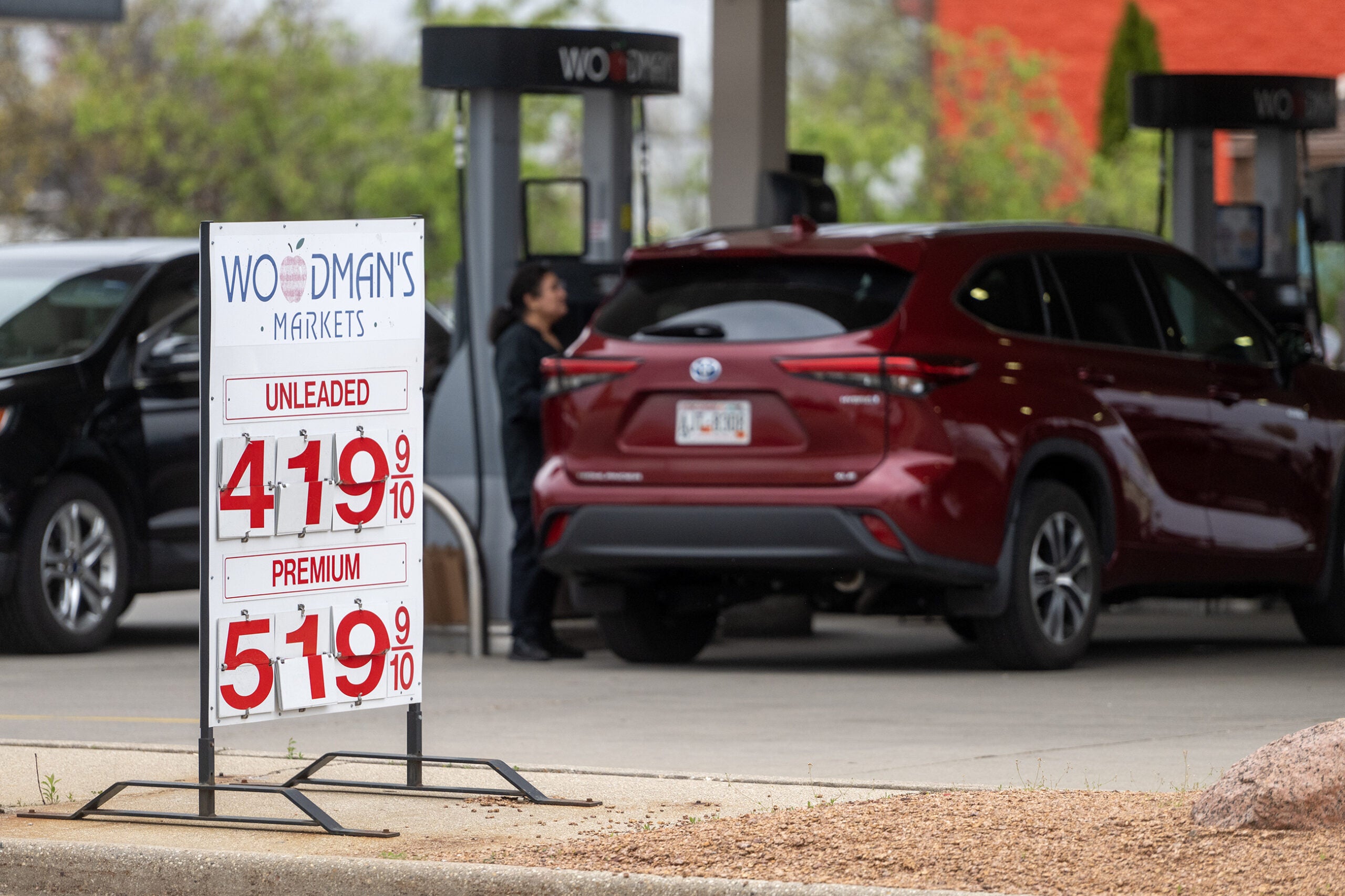
Drivers fill up their cars at Woodman’s on Thursday, April 30, 2026, in Janesville, Wis. Angela Major/WPR
Gas prices in Wisconsin have climbed to an average of more than $4 per gallon this week, their highest point in four years.
Experts say prices are expected to continue rising, driven by disruptions from the war in Iran, domestic refinery issues and rising demand as drivers approach the summer road trip season.
According to data from AAA, the average price per gallon of regular gasoline in Wisconsin was $4.17 on Thursday, up 48 cents from a week ago and $1.20 from one year ago. Meanwhile, the national average was $4.30, up 27 cents from a week ago and $1.12 from one year ago.
Prices were generally higher in eastern and central Wisconsin than in the western side of the state, AAA data shows. The average price per gallon was $4.21 in Milwaukee County, $4.25 in Dane County and $4.24 in Brown County, while it was $3.98 in La Crosse County and $3.90 in Polk County.
Prices haven’t been this high since the summer of 2022, when the average price of regular gasoline in Wisconsin hit a record-high of $4.92 per gallon, according to AAA.
As of 3:35 p.m. Thursday, a live price tracker from the website GasBuddy showed the average statewide price was up to $4.23.
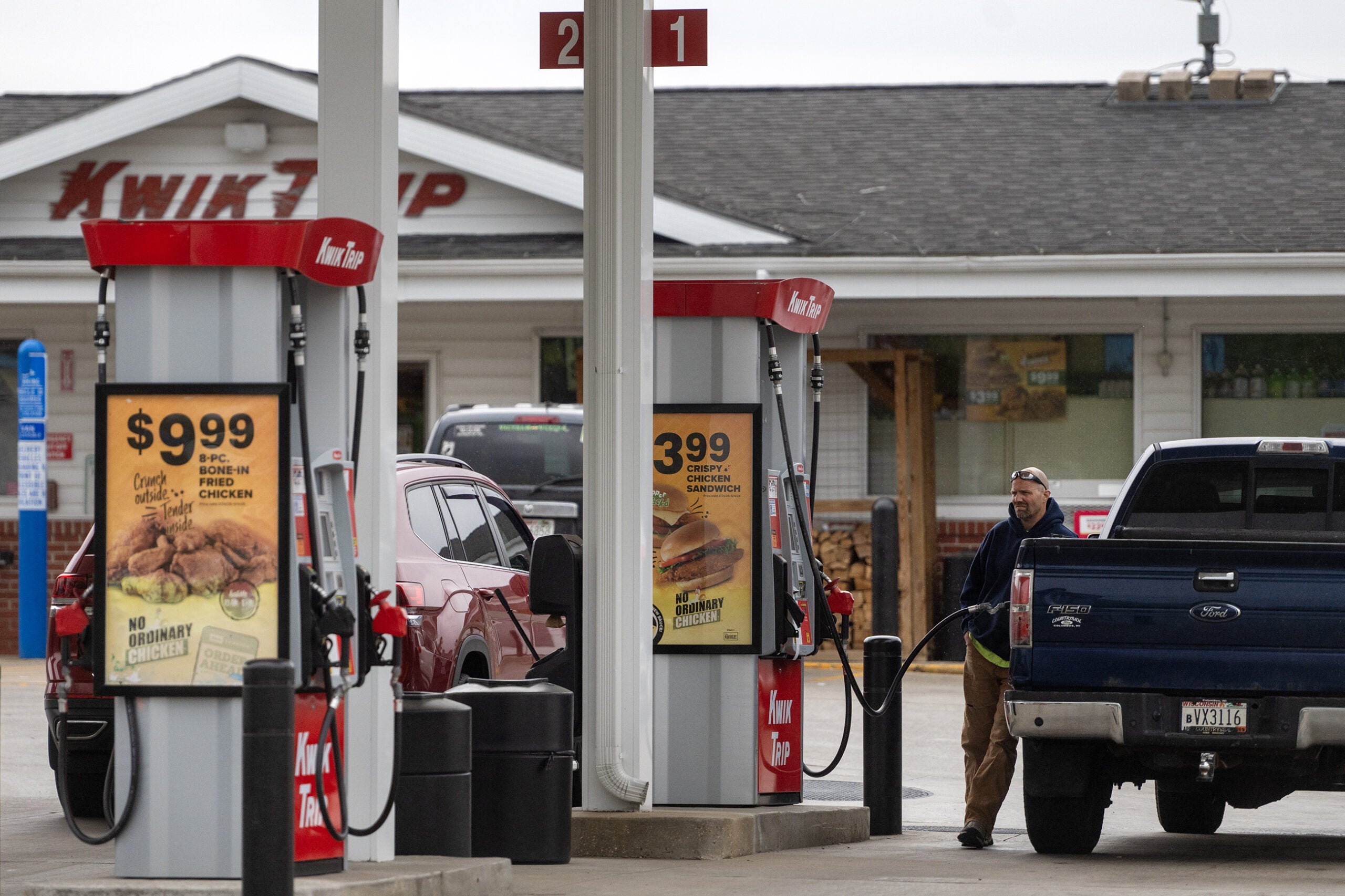
A driver gets gas Thursday, April 30, 2026, at a Kwik Trip in Milton, Wis. Angela Major/WPR
The ongoing disruptions of the war in Iran are a major factor. The Strait of Hormuz, used by tankers that carry about a quarter of global oil flows, has been effectively closed since March 2.
While the U.S. doesn’t get much oil from countries exporting through the Strait of Hormuz, global oil prices have surged as a result, said Nick Jarmusz, director of public affairs for AAA.
“The conflict in Iran is causing a classic supply and demand issue globally. Everyone still needs oil,” he said. “Everyone is trying to now compete economically for the same pools and production of oil. And that is what’s putting this upward market pressure on those oil prices.”
Closer to home, Jarmusz said there’s been disruptions at a refinery in Whiting, Indiana, the largest refinery in the Midwest, and at smaller refineries in the southern Lake Michigan area of Indiana and Illinois.
The Whiting refinery had an outage Monday and also faces an ongoing labor dispute. For other refineries, Jarmusz said some units have been taken offline while they perform scheduled and preventative maintenance, limiting their output and putting a squeeze on supply.
“Those refineries, which are all domestic and based regionally, create the gas out of the oil, and then push it out to our local stations,” he said. “When you see any sort of disruption in their operations that creates a supply and demand issue on that end as well.”
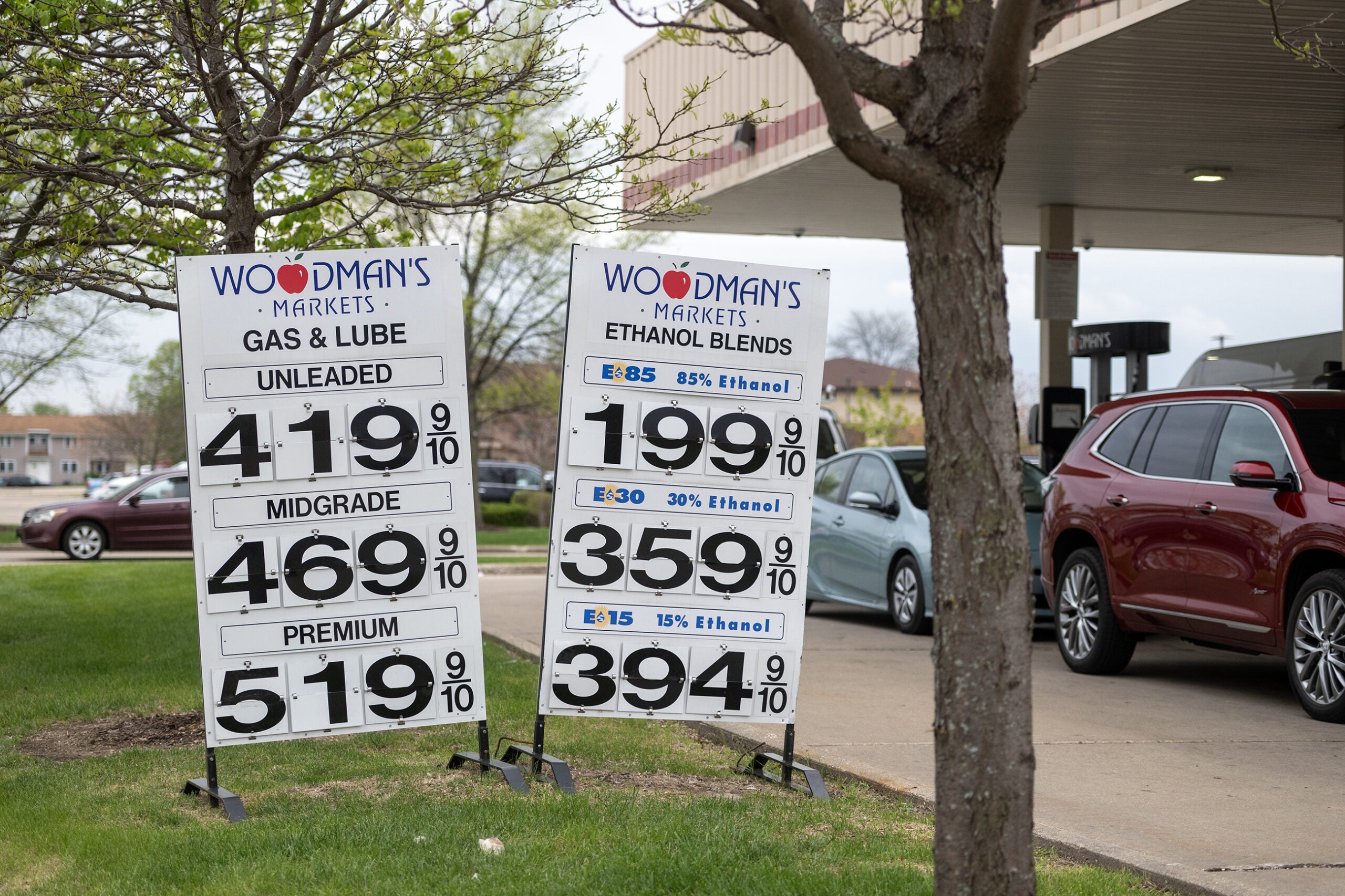
Prices are posted for gasoline Thursday, April 30, 2026, at Woodman’s in Janesville, Wis. Angela Major/WPR
Jarmusz expects prices to continue to climb, but they still have a ways to go before hitting the all-time high average gas price of $4.92 per gallon.
“We’ve got a bit of room before we get to that,” he said. “It’s possible we could. I wouldn’t begin to try to predict the likelihood of that. I think it would be safe to say that we haven’t seen the highest prices quite yet.”
He said demand for gas isn’t likely to come down for the next few months due to the summer road trip season.
But the refinery issues could be resolved, which could help a bit, Jarmusz said. Reopening the Strait of Hormuz could also ease the upward pressure on prices.
“Those are the major factors. If something changes on that end, we could see a shift in the trajectory,” Jarmusz said. “It may not be a complete reversal. We may not see prices come down, but we could see them at least flatten out (or) the increases not be as dramatic. That could keep us from hitting those all time highs as we head into the summer.”
Average gas price in Wisconsin climbs to more than $4 per gallon was originally published by Wisconsin Public Radio.
If you think stories like this are important, become a member of Urban Milwaukee and help support real, independent journalism. Plus you get some cool added benefits.



















Isn’t the current price of gas somehow Biden’s fault, along with tariffs, the war with Iran, the general s**t-show state of the economy, the Russia-Ukraine war, blah, blah, blah.