

Utility CEOs Paid $5.2 Billion in Past 8 Years
New report shows utilities and CEOs get rich while customers struggle to pay, get disconnected.
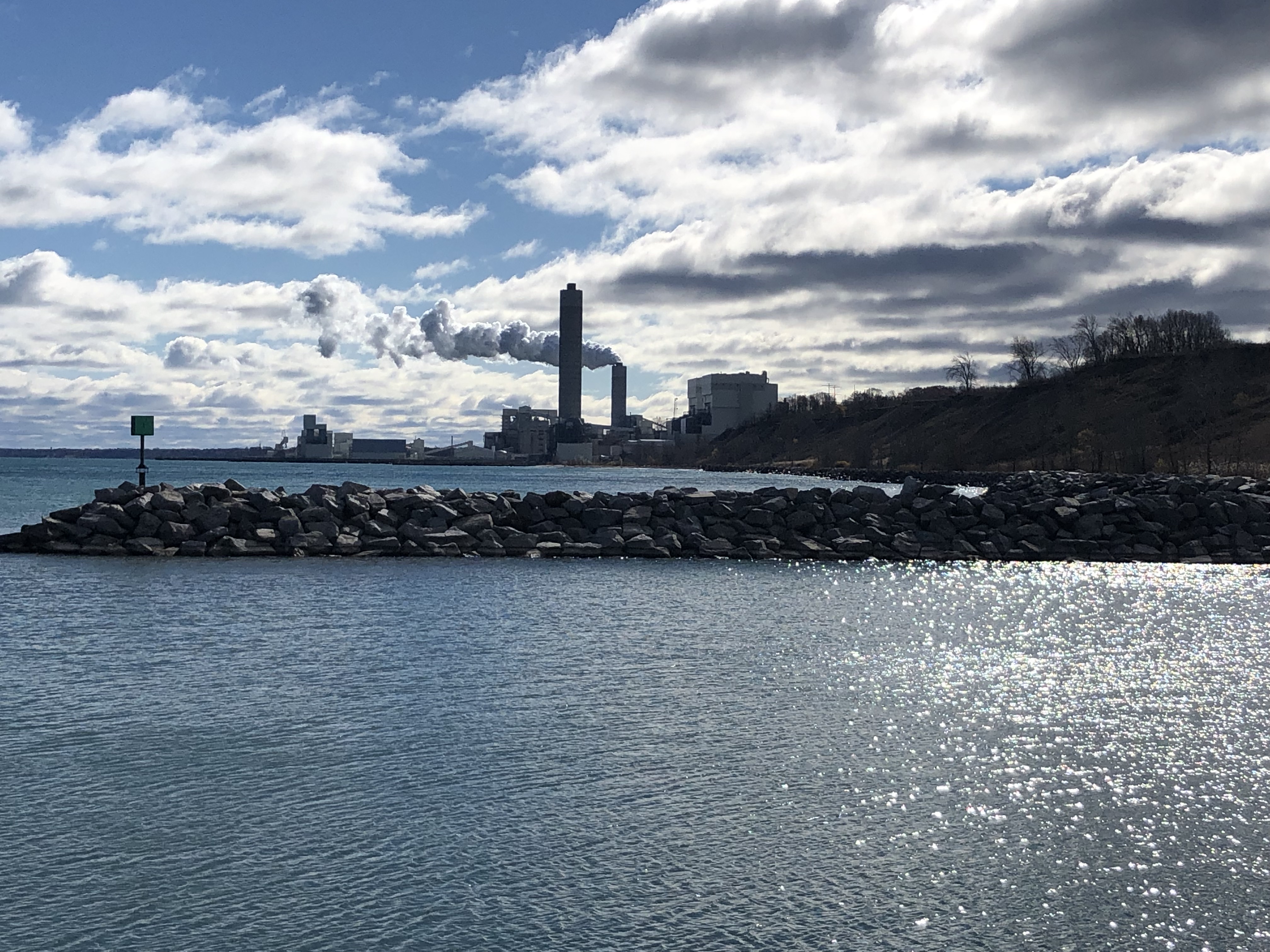
Oak Creek Power Plant. Photo taken November 13, 2021 by Dave Reid.
The last eight years have been richly rewarding for utility executives across the nation. “From 2017 to 2025, utilities paid their CEOs more than $5.2 billion,” a new report analyzing 51 utilities by the Energy and Policy Institute found.
“Since 2017, average utility CEO compensation has risen 47 percent,” the study found, outpacing inflation, which rose 31% over that eight-year period, and average wage growth for American workers, which rose by 38%.
In 2025, the average compensation of these 51 utility chief executive officers was $12.3 million, an increase of nearly 16% from 2024. At the top of the list was Bill Fehrman, CEO of the Columbus utility AEP, who was paid $36.6 million in 2025, a $23.3 million increase in pay over the previous year. “It would take the average worker in AEP’s home state of Ohio 550 years to earn what Fehrman made last year, according to data from the Bureau of Labor Statistics,” the report noted.
But don’t cry for the CEOs of Wisconsin’s utilities; they are doing rather well too:
-11th on the list was Bob Frenzel of Xcel Energy, the Minnesota-based utility that serves northwestern and western Wisconsin; he earned nearly $16 million in 2025, a $3.1 million, or 24 percent, increase in his 2024 pay.
-21st on the list was Scott Lauber of Milwaukee-based WEC Energy, parent company of We Energies, with $12.2 million in compensation.
-31st was Lisa Barton of the Madison-based utility Alliant Energy, with nearly $9 million in compensation.
-50th on the list was Jeffrey Keebler of Madison-based MGE Energy, with $3.6 million in compensation.
Brendan Conway, spokesperson for We Energies, offered this statement on Lauber’s pay: “Virtually all of Scott’s compensation is paid by stockholders of WEC Energy Group, not customers. Less than two cents per month is included in the average energy bill. Scott’s compensation is set as part of an independent board and is targeted in the middle of the pay range for individuals in similar positions in similar companies nationwide.”
And stockholders can afford to pay him that because of the huge profits from ever-rising rates. And his salary is almost exactly at the average for the 51 top utility executives, which rose by 16% last year.
It’s all part of a system where executives “work for shareholders, not customers,” as the report notes. It found that “from 2021 to 2024, U.S. electric utilities collected more than $200 billion in net income, or profit, with an average of 12.8 cents of every dollar collected from customers’ bills going to profit. Preliminary data for 2025 suggests that number has increased to 14.6 cents of every dollar.”
While the Columbus utility AEP used these revenues to pay CEO Bill Fehrman $36.6 million, the company “disconnected Ohio customers more than 173,000 times from June 2024 to May 2025, and during that same period issued nearly 2 million final notices for disconnection to customers who carried a combined past-due balance of $722 million,” the report said.
Chris Womack, CEO of Georgia-based Southern Company, raked in $28.2 million in 2025, “the same year that subsidiary Georgia Power disconnected customers 311,513 times. Overall, Georgia Power customers ended the year behind on their bills by $111.5 million,” the report said. “The average Georgia worker would have to work for 402 years to match Womack’s earnings.”
The report lists utility after utility where CEO compensation of $15 million or more, often in addition to perks like a private jet or private club membership, was accompanied by disconnections of electricity for hundreds of thousands of the company’s customers.
Meanwhile the companies are lowering environmental standards. For instance, “Wisconsin-based WEC Energy Group removed its net-zero methane by 2030 commitment and carbon-neutrality by 2050 goals.”
All of which is possible due to state regulators, like the Wisconsin Public Service Commission (PSC), that allow utilities to maximize profits. “Mounting evidence shows that regulators are authorizing ROEs [returns on equity] that are systematically higher than necessary to attract capital, burdening customers with excessive rates. U.S. residential electric customers saw their rates increase an average of 9.5 percent from January 2025 to January 2026,” the report noted.
But change might be coming for utilities, as a recent story by Urban Milwaukee reported, with some candidates for governor backing reform. Perhaps the first sign of this is a decision last week by the PSC, which changed a plan by We Energies to ensure that customers will not subsidize data centers. “Wisconsin customers should not pay a single cent to subsidize the service of data centers, or very large customers,” PSC Commissioner Kristy Nieto declared.
If you think stories like this are important, become a member of Urban Milwaukee and help support real, independent journalism. Plus you get some cool added benefits.


Back in the News
-
We Energies, Kohl’s Paid Zero Federal Taxes in 2025
 Apr 16th, 2026 by Bruce Murphy
-
Live Nation Must End Deals with Summerfest?
 Mar 11th, 2026 by Bruce Murphy
-
Trump Obsessed With Milwaukee Shoes
 Mar 10th, 2026 by Bruce Murphy




















CEO’S are a waste of money. The gain when they fail. They are a parasite to workers.
Thank you. This is helpful info and context. I appreciate the way you showed how dumb the “shareholders pay it, not the customers” argument is.
Conway’s deflection shows the bald contempt in which they hold the customers, which given their monopoly on our utilities is inevitable. Hopefully we will elect some representatives in Our government who can help change this. Perhaps the winds of change are blowing in our direction – finally.