Wisconsin Could Have ‘A Big Year’ for Lyme Disease
Tick bites and emergency room visits soaring; warmer, wetter weather good for deer ticks.
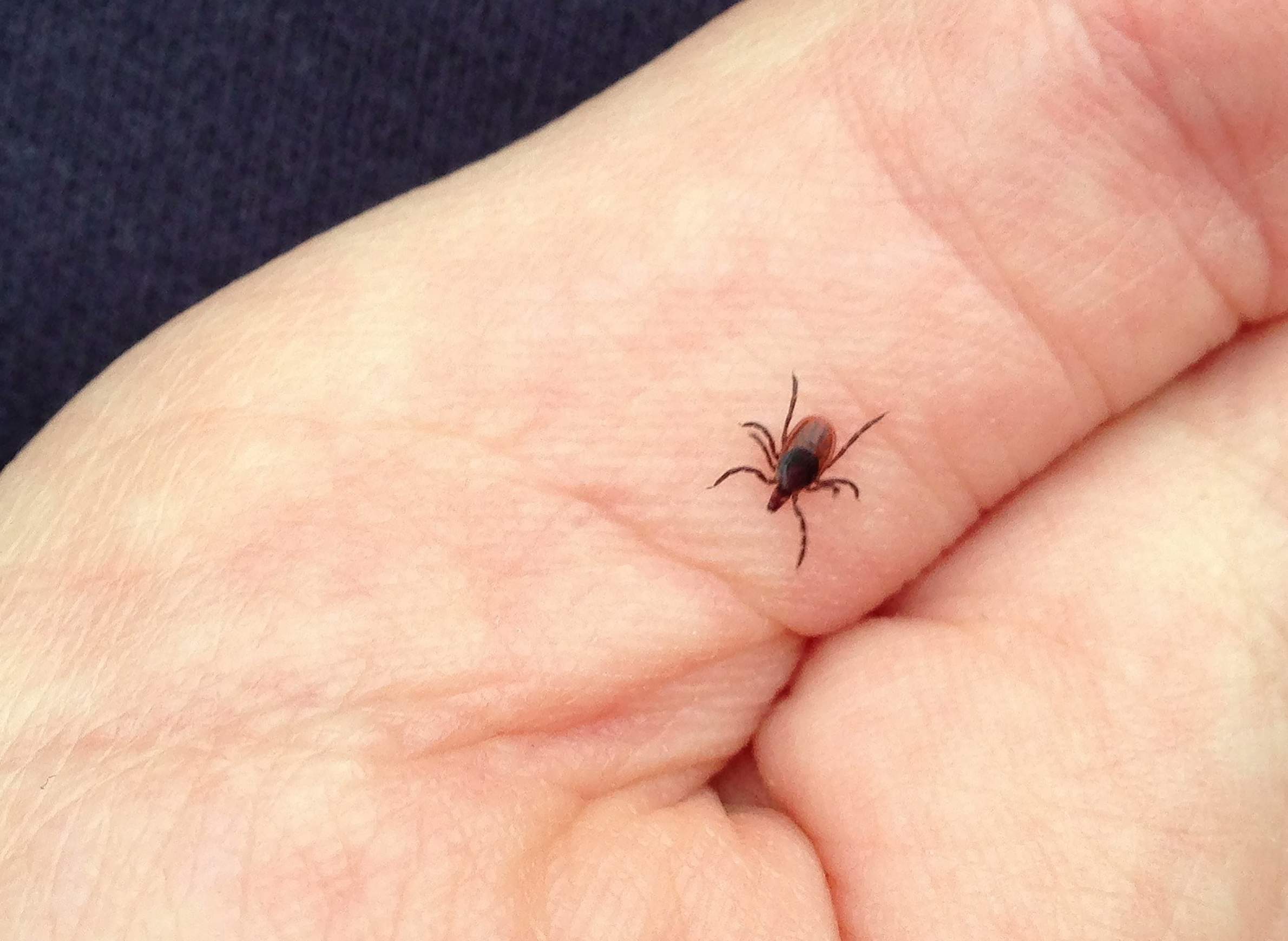
An adult deer tick. Photo by Fritz Flohr Reynolds (CC BY-SA 2.0).
Some Wisconsin health professionals are bracing for a bad year for Lyme disease, as tick activity is already higher in April than it was the same time last year.
In much of the nation, emergency room visits for tick bites are at their highest weekly rate for this time of year since 2017, according to the U.S. Centers for Disease Control and Prevention.
In Wisconsin, data from the state Department of Health Services for the week ending April 19 shows the state is seeing a similar trend, with a rate of 44 tick-bite visits for every 10,000 emergency room visits.
Xia Lee, DHS public health entomologist, said that’s about double the number of ER visits for tick bites at this time last year. Warmer weather is prompting wood ticks in particular to show up about two weeks earlier than normal, he said.
“Compounded with the deer ticks already out there, what we’re seeing is just this large spike in the number of (emergency department) visits because there are more ticks out there a lot earlier,” Lee said.
Dr. Greg Demuri said spring is the most dangerous season for people to get infected with tickborne illnesses, especially Lyme disease. He’s a professor of pediatric infectious diseases at the University of Wisconsin School of Medicine and Public Health.
“I think it’s going to be a big year for Lyme,” Demuri said. “We were bracing ourselves, really, because of the weather.”
Warmer and wetter weather can increase the risk of illness from ticks because they thrive in warm, humid weather, according to DHS. Despite a more normal winter than recent years, February was almost 6 degrees warmer than usual, and the state is seeing its wettest April on record.
Andrew Lewandowski, a pediatrician and board member for Healthy Climate Wisconsin, said warming weather due to climate change is prompting more frost-free days that allow ticks to emerge and increasing tick biting behavior.
“With some of these warm snaps that we get in the winter time, it’s increasing the timeframe that ticks can be active and can spread disease,” Lewandowski said.
Wisconsin had a record 6,469 cases of Lyme disease in 2024, and cases have quadrupled over the past 20 years, due in part to more recognition and reporting. Lewandowski said without efforts to mitigate climate change, he expects cases to continue rising.
As for this year, Lee said state health officials won’t know whether it’s a bad year for Lyme disease until later in the season when cases typically peak around June.
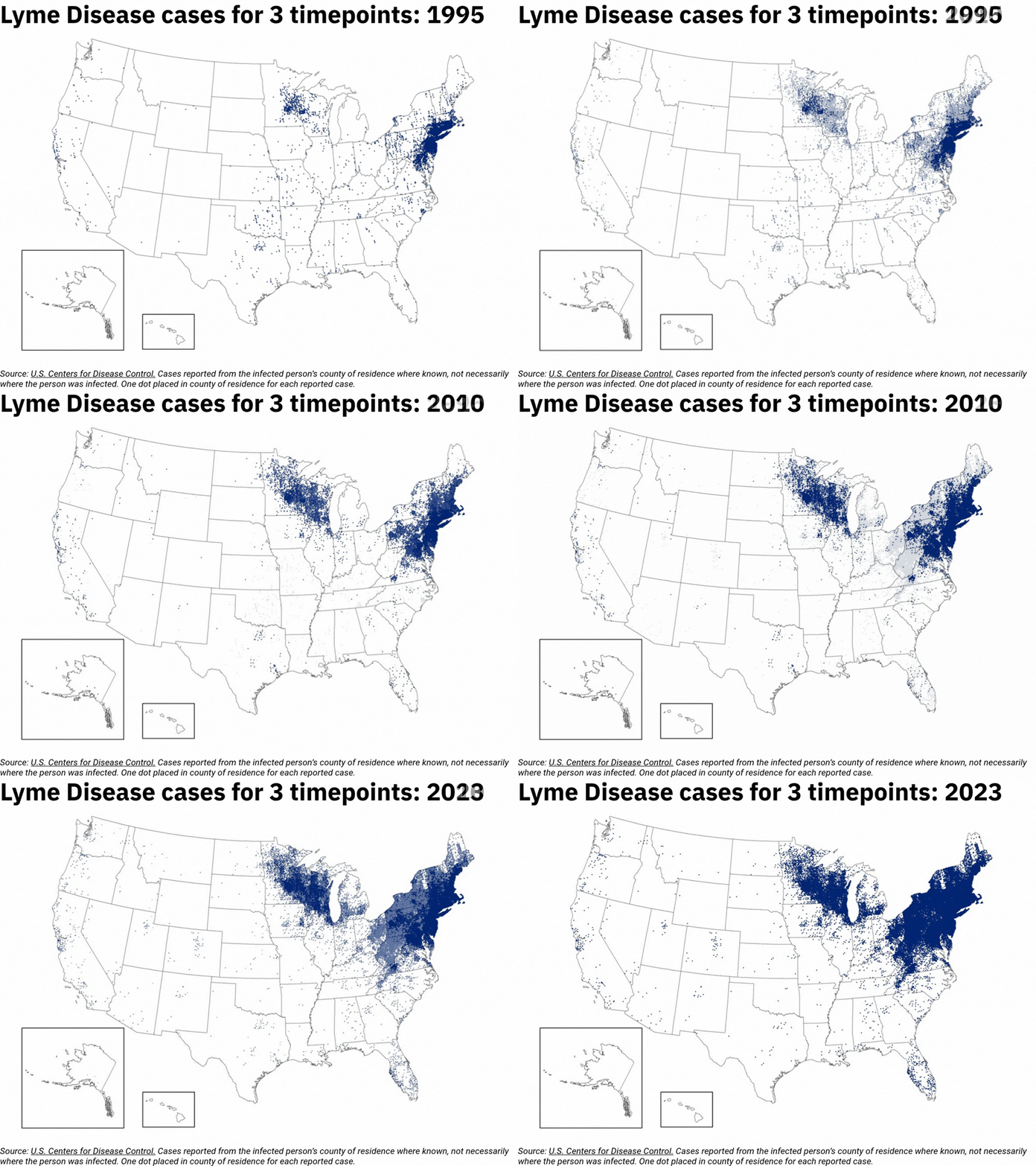
PJ Liesch, an extension entomologist at UW-Madison, said an average of 20 percent of juvenile deer ticks and 40 percent of adult deer ticks are positive for Lyme disease. They have spread from the woods of northwestern Wisconsin to nearly all corners of the state.
“In some locations, they’re showing up more in backyard-type settings, which is alarming. If ticks are continuing to expand into new areas, that’s going to increase the chances of run-ins for both humans and pets, and that could potentially lead to more Lyme cases in the long run,” Liesch said.
Deer ticks can also carry other diseases that include ehrlichiosis and babesiosis, which can destroy red blood cells faster than they’re replaced. Wood ticks or dog ticks can transmit Rocky Mountain spotted fever, but cases are rare in Wisconsin. Cases of alpha-gal syndrome, a red meat allergy, that stem from the Lone Star tick are also rare because they’re not yet established in Wisconsin.
“One thing that’s really important is that people identify the species of the tick because it makes a difference in terms of whether or not we give a preventative antibiotic,” Demuri said.
For Lyme disease, people should watch for the telltale bullseye rash. Other signs may include a red swollen joint that’s painful or facial droop.
If bitten by a deer tick, people are urged to consult a health professional on whether antibiotics are needed. Demuri said antibiotics are most effective at treating Lyme disease within 24 to 72 hours of a bite, and they may prevent more severe illness.
To prevent tick bites, state health professionals and entomologists advise using insect repellants that include DEET, picaridin or permethrin. If trekking outdoors, people should check clothing, pets and gear for ticks and conduct a full body scan for the insects.
Wisconsin could be in for ‘a big year’ for Lyme disease as tick bites soar was originally published by Wisconsin Public Radio.
If you think stories like this are important, become a member of Urban Milwaukee and help support real, independent journalism. Plus you get some cool added benefits.