
Build-to-Rent Companies Needed, Wisconsin Housing Experts Say
Federal housing bill backed by Sen Baldwin requires big companies to sell their rental homes.
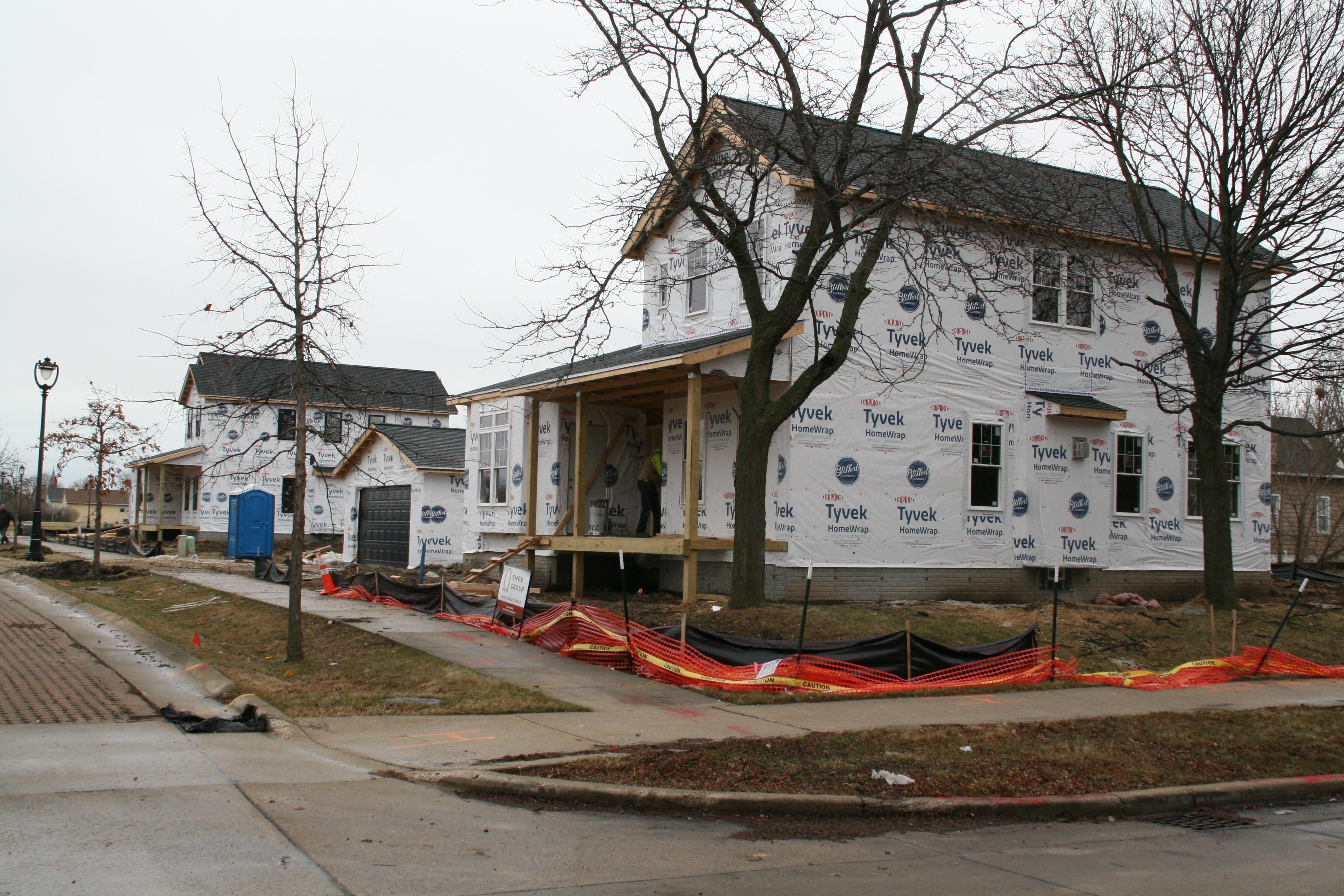
File photo by Jeramey Jannene.
Kurt Paulsen knows that people often need to identify a culprit or bad guy.
That’s the case as frustration boils over about the country’s ongoing housing crisis. “People are reacting to a failure of the housing market, where houses are really expensive and entry-level opportunities are disappearing,” Paulsen told WPR’s “Wisconsin Today.” “The villain to most people is developers and builders and investors, when, of course, that’s not really true. There are larger structural issues in the housing market.”
The scapegoating of housing developers and investors might have been channeled in the 21st Century ROAD to Housing Act, which passed the U.S. Senate with bipartisan support and is being considered by the U.S. House.
The bill includes a number of provisions designed to increase the country’s housing stock. One provision would require companies that own 350 or more single-family rental units or duplexes to sell them within seven years of construction or purchase.
The proposed restriction intends to increase owner-occupied housing. It was supported by Democratic U.S. Sen. Tammy Baldwin who said in a news release: “It’s Wisconsin families who should be buying homes in our neighborhoods — not big, wealthy out-of-state investors. For too long, big corporations and wealthy private equity firms have been allowed to ‘gobble up’ single-family homes just to pad their pockets, driving up housing costs in our neighborhoods and locking families out of homeownership.”
Others say this restriction will exacerbate the housing crisis by limiting a group now building about 100,000 units a year. “There’s a lot of people in the development industry who are concerned that by trying to restrict private equities from investing in single family homes, you’re cutting off one of our biggest supplies of new home construction,” Paulsen said.
Single-family or duplex rental housing is often located in better school districts with lower crime rates, he said. That allows people who can’t afford buying homes in those neighborhoods to rent there.
There are plenty of companies building and buying rental housing in Wisconsin. But so far, they are mainly constructing multifamily developments, Paulsen said, leaving them exempt from the proposed legislation. But it could keep other homebuilders from constructing housing here.
“It’s already stopping a lot of developments, even though the legislation has not passed, because for a lot of the companies, to make the math work to pay off for their investors, they need to hold these build-to-rent single-family units for a long term,” Paulsen said.
Josh Wohlreich is a University of Wisconsin-Madison alum who co-founded Heyday, a developer of build-to-rent properties. Based in Illinois, it has housing developments in Oak Creek, Cottage Grove and Sun Prairie. Wohlreich’s company would be unaffected by the proposed act, because it constructs four to eight units per building.
He’s seeing demand for the multi-family rental housing, with its Wisconsin properties quickly filling up. Wohlreich said that the best thing that could help developers like him is easing regulatory burdens.
“It’s got to happen at the local and state levels. Anything that expedites the ability to get to the permits would really, really be helpful,” he said.
One aspect of the 21st Century ROAD to Housing Act that Wohlreich likes is funding incentives for local governments to come up with pre-approved housing development plans that they want to see built.
“A municipality would go through and decide, ‘This is a product we want,’” Wohlreich said. “And if a builder like myself comes forward and finds an appropriately zoned piece of land and wants to build that approved product, there’s an expedited process to get through the zoning and entitlements and to build your product.”
Build-to-rent unfairly singled out in federal bill, Wisconsin housing experts say was originally published by Wisconsin Public Radio.
If you think stories like this are important, become a member of Urban Milwaukee and help support real, independent journalism. Plus you get some cool added benefits.