
After Health Care Contract Fiasco, Board Passes Changes in Process
'We were blindsided by lapses in contracts that are critical,' supervisor warns.
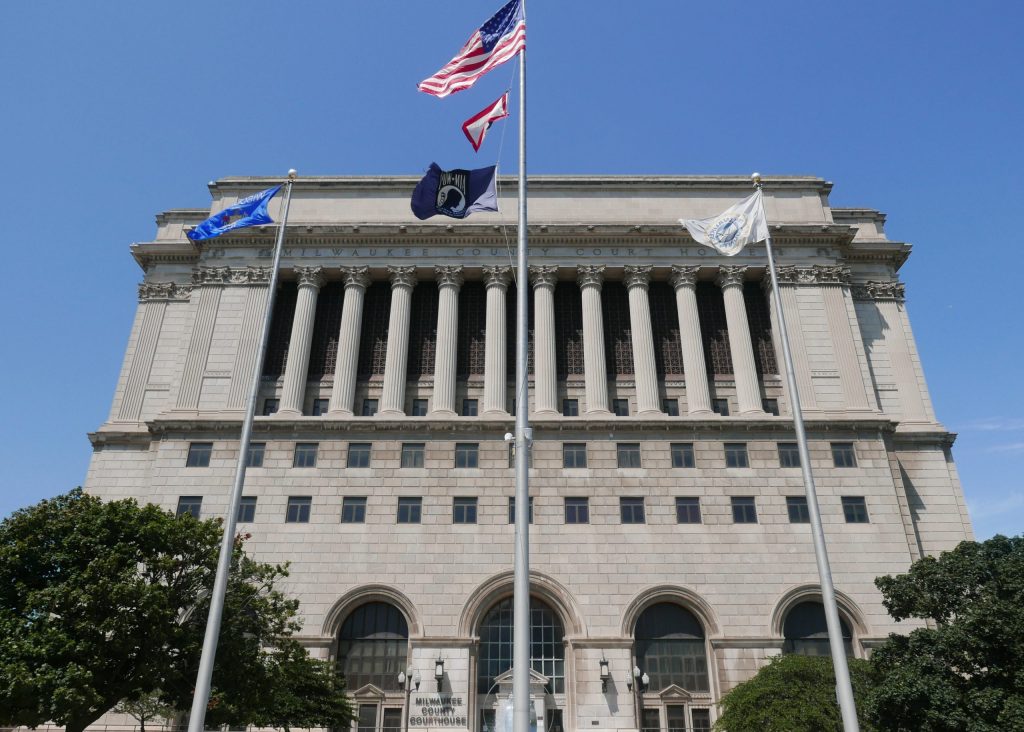
Milwaukee County Courthouse. Photo by Graham Kilmer.
The Milwaukee County Board recently passed three pieces of legislation in response to a contracting debacle in February that forced supervisors to hastily approve a $450 million contract with little time for scrutiny.
The resolutions request an audit of the county’s contracting practices; the creation of a contract transparency tool; and a report breaking down the “policies, practices and internal controls” for contracting.
The legislation is largely responding to a lapse in the county’s employee health care contract revealed in February. On Jan. 1, the county’s contract with UnitedHealthcare lapsed. While employees never lost coverage, the board learned that the county staffer in charge of the contract did not follow government procurement rules for soliciting or negotiating the deal, and that the county’s top financial officials were having trouble verifying the financial projections produced by a third-party consultant.
Sup. Justin Bielinski authored a resolution, passed by the board during its March 19 meeting, that requests the creation of a public-facing dashboard tracking all the county’s contracts: when they expire, how much they cost and who holds the contract. The supervisor wants greater scrutiny of contracts, noting that many come to the board for retroactive approval after county officials have already signed off on the deal. Under state law, county supervisors have limited authority over contracts. They can vote on them, but they can’t amend them.
“We could have more forewarning when things are coming up; we could make more informed decisions; we could schedule advanced meetings with relevant department heads,” he told his colleagues before the board voted unanimously to pass the resolution.
The board also adopted a resolution by Sup. Shawn Rolland that asks the county’s attorneys for information on existing contracting practices. Rolland previously told Urban Milwaukee the legislation was not directly responding to the health care contract situation, but that it would provide an opportunity for the board to consider how the county measures whether contractors are meeting expectations.
The board also approved a resolution requesting an audit of the county’s health care contract — the one recently approved by the board after the government was revealed to be out of contract. The goal of the audit, according to the resolution, is to assess the process for compliance with county contracting requirements and identify any gaps or failures in oversight.
“The issues before us are both immediate and systemic,” Sup. Kathleen Vincent told her colleagues. “Quite frankly, we were blindsided by lapses in contracts that are critical to the health and financial security of our employees, retirees and the county itself.”
Sup. Deanna Alexander voted against the audit, arguing the parameters were too vague for a successful audit. “Right now, we don’t even know where the breakdowns are and how to define the scope of an audit so that we can get back the report that we want,” she said.
The comptroller’s office was responsible for flagging problems with the health care contract in February. Staff from the audit department were somewhat involved in the contracting debacle. Staff were looped in to review contractual language months before the contract lapsed, but were never provided the documents necessary to conduct the review. They later learned the contract had lapsed in January, when the human resources staffer responsible for the contract asked if it could be approved without the contractual language altogether.
Rolland said he thinks it “makes sense” to have the comptroller’s office look at the issue given the concern the lapse caused for thousands of county employees. The comptroller’s office “haven’t ever done an audit that was anything other than totally above board,” he said.
The county board voted 14-4 to pass the audit resolution. Supervisors Alexander, Caroline Gómez-Tom, Felesia Martin and Sequanna Taylor voted against the resolution. Milwaukee County Executive David Crowley signed the resolution authorizing the audit on Monday.
If you think stories like this are important, become a member of Urban Milwaukee and help support real, independent journalism. Plus you get some cool added benefits.
More about the County Health Insurance Contract
- MKE County: Supervisors Changing County Policies After Health Care Fiasco - Graham Kilmer - May 8th, 2026
- MKE County: County HR Director Resigns After Health Care Scandal - Graham Kilmer - Apr 22nd, 2026
- MKE County: After Health Care Contract Fiasco, Board Passes Changes in Process - Graham Kilmer - Mar 25th, 2026
- MKE County: County Paying $890,950 to Consultant in Health Care Scandal - Graham Kilmer - Feb 18th, 2026
- MKE County: Supervisors Want Audit After Health Care Fiasco - Graham Kilmer - Feb 13th, 2026
- ‘Lipstick on a Pig,’ Board Passes Health Contract After Process Failure - Graham Kilmer - Feb 6th, 2026
- MKE County: Who Screwed Up the County Health Care Contract? - Graham Kilmer - Feb 5th, 2026
- Murphy’s Law: Will County Financial Screwup Affect Governor’s Race? - Bruce Murphy - Feb 3rd, 2026
- MKE County: Crowley Fires Contract Director Over Insurance Debacle - Graham Kilmer - Feb 2nd, 2026
- County Executive David Crowley Statement on Healthcare Contract - David Crowley - Feb 2nd, 2026
Read more about County Health Insurance Contract here
Political Contributions Tracker
Displaying political contributions between people mentioned in this story. Learn more.
- December 17, 2015 - David Crowley received $50 from Felesia Martin


MKE County
-
Charles Allis Museum Nonprofit Acquires Historic East Side Building
 Apr 23rd, 2026 by Graham Kilmer
-
County HR Director Resigns After Health Care Scandal
 Apr 22nd, 2026 by Graham Kilmer
-
Milwaukee’s Overdose Deaths Dropped 42.5% Since 2022
 Apr 22nd, 2026 by Graham Kilmer