Milwaukee The Regional Leader In Large Project Permitting
But projects requiring a zoning change can still take more than a year.
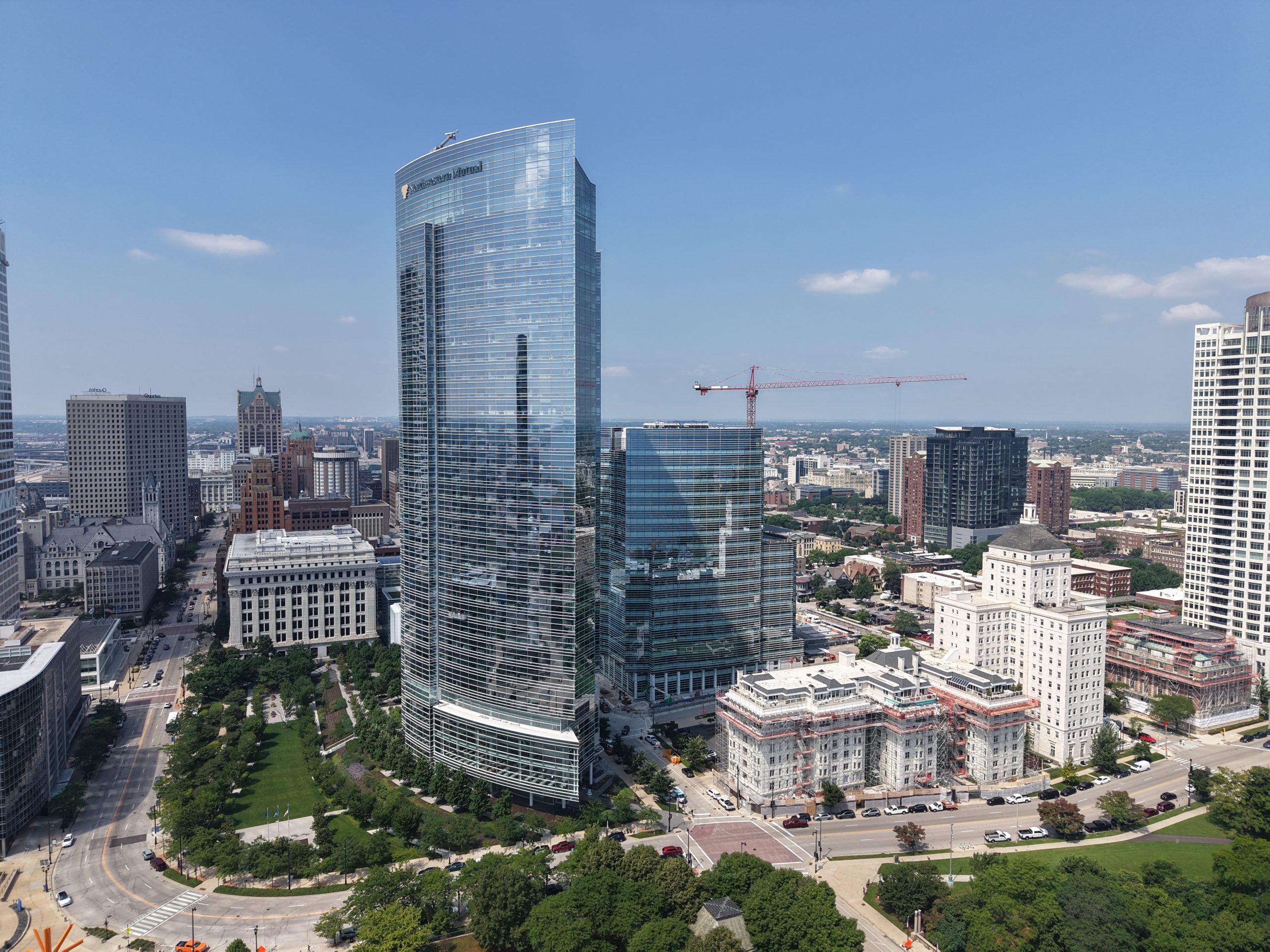
Northwestern Mutual Tower (left) and the North Building (right). Photo by Urban Milwaukee staff.
A new analysis of major development projects in metro Milwaukee found that the City of Milwaukee moves large projects through its approval and permitting process faster than surrounding communities, largely because many proposals can proceed without discretionary political review.
The study by the Wisconsin Policy Forum (WPF) examined development approval and permitting practices in six cities: Milwaukee, Wauwatosa, Waukesha, West Allis, Oak Creek and Brookfield.
Researchers analyzed 240 commercial development projects valued at $5 million or more that received building permits between 2017 and mid-2025. Together, the projects totaled roughly $4.2 billion in construction value and produced more than 8,000 housing units.
Among those communities, Milwaukee recorded the shortest median timeline between the first project application and building permit approval at 145 days. The next-fastest municipality had a median timeline of 222 days, while Brookfield had the longest at 467 days, according to the study.
The report suggests Milwaukee’s relatively quick timelines are tied to its zoning framework, which allows many development projects to proceed “by right.” That means if a proposal complies with zoning and building codes, it can be approved administratively by city staff rather than requiring votes from the City Plan Commission or Common Council.
“Milwaukee stands out as the most streamlined,” the report notes, with fewer layers of required approvals for many projects.
City officials, after the report was released, pointed to that structure as evidence that Milwaukee is working to support new housing and economic development.
“This report shows Milwaukee is serious about thoughtful development that produces new housing and job opportunities for our residents,” said Mayor Cavalier Johnson in a statement. “During this Year of Housing, we will continue to carry out a variety of initiatives … to remove barriers to housing growth and choice throughout the city.”
Between 2017 and mid-2025, Milwaukee recorded the highest volume of large projects among the cities analyzed. Researchers identified 94 major developments in the city with a combined estimated value of more than $1.4 billion, including more than 3,100 housing units.
More than half of those projects required only a standard building permit review by city staff, without additional zoning approvals or legislative action. Those projects moved particularly quickly, advancing from initial plan submission to permit approval in a median of 86 days, according to the report. Projects requiring special zoning approvals took longer — a median of 288 days — while those requiring zoning changes took a median of 510 days.
The study notes that the timelines include periods when developers themselves control the schedule, such as assembling financing or finalizing construction plans after zoning approvals. When that developer-controlled time is removed, Wauwatosa appeared the fastest for the period when projects are actively under municipal review.
Researchers found several broader patterns across the region.
Projects that require zoning changes or special permits generally take significantly longer to move forward because they require public hearings and votes from planning commissions or elected officials. Communities that require such approvals for most developments tended to have longer timelines overall.
Residential and mixed-use developments also took longer to advance than other project types. In several cities, the median timeline for housing projects exceeded 400 days, while institutional or industrial developments often moved forward in fewer than 200 days.
Large projects also required more time. Developments valued at more than $20 million — which typically involve more complex financing and engineering review — consistently took longer than smaller projects.
The report was commissioned by the Commercial Association of Realtors Wisconsin with additional support from several regional business groups and philanthropic organizations.
Researchers also interviewed 10 development professionals as part of the study. A common theme from those interviews was that developers value predictable and transparent approval processes even more than speed.
“Interviewees emphasized that uncertainty has more potential to delay or derail a project than local regulations,” the report states.
The study suggests that regional collaboration and sharing of best practices could help improve development processes across municipalities.
For Milwaukee, officials said the findings reinforce the city’s push to expand housing development. The city adopted a new Housing Element in its comprehensive plan last year aimed at allowing more housing types in neighborhoods and along commercial corridors, which could further reduce the need for zoning changes that slow projects.
The report was authored by WPF research director Joe Peterangelo, research intern Luis Navarrete and WPF President Jason Stein.
“We hope that this report and our findings help to strengthen understanding of how proposed development projects move through local government approval processes in metro Milwaukee and provide a foundation for deliberations among local leaders on potential improvements,” says the report’s conclusion.
Legislation Link - Urban Milwaukee members see direct links to legislation mentioned in this article. Join today
If you think stories like this are important, become a member of Urban Milwaukee and help support real, independent journalism. Plus you get some cool added benefits.