Merger of Student Centers at UWM Raises Concerns
Plans to combine centers for veterans and Black, Latino, woman and LGBTQ+ students.
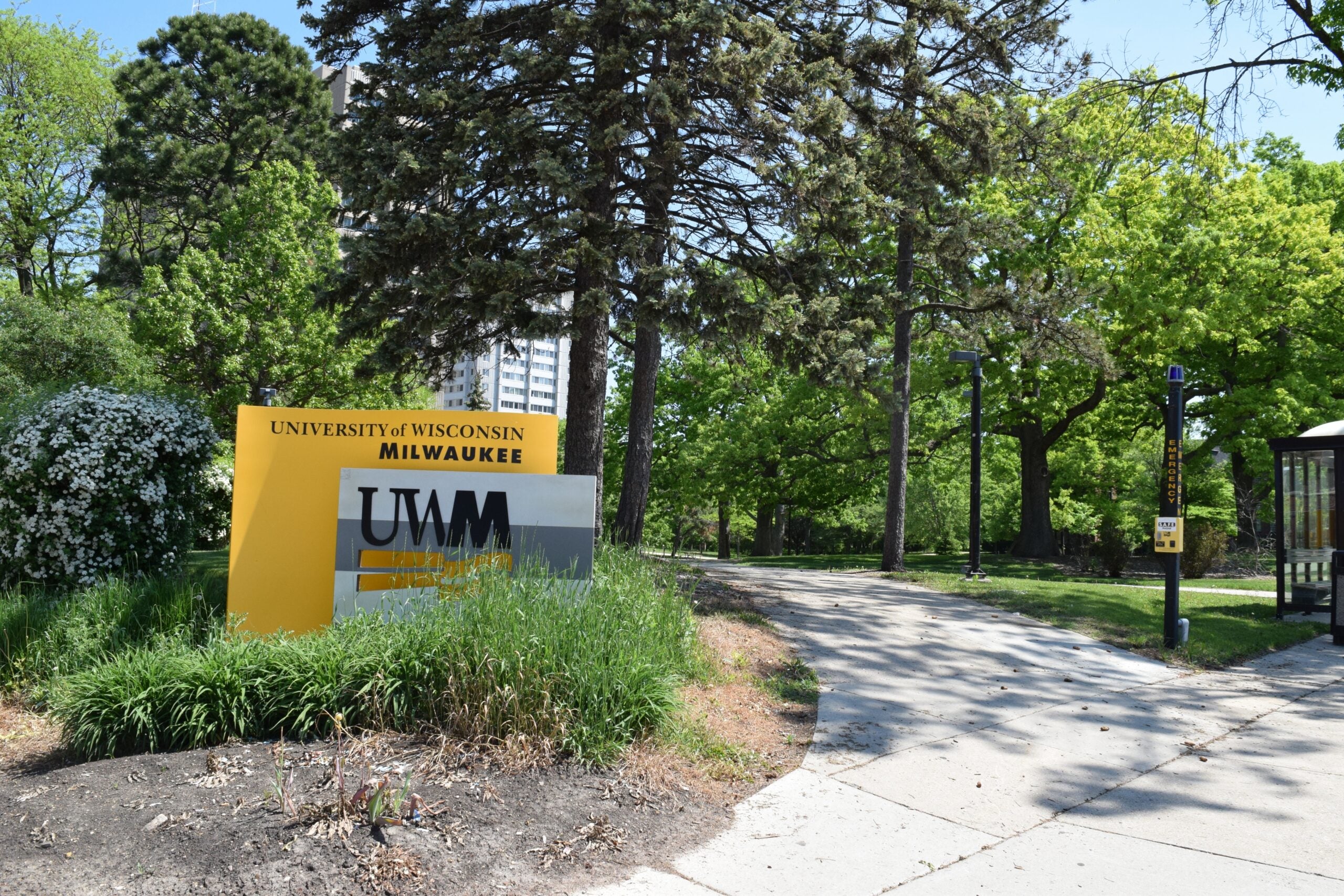
University of Wisconsin-Milwaukee. Gretchen Brown/WPR
When Mackenzie Nickeas, a first generation biology student at the University of Wisconsin-Milwaukee, first came to campus, the First-Generation+ Student Center helped her with financial aid by setting up a tuition payment plan.
So Nickeas said she was “baffled” this week when she and other students received an email announcing the center would close at the end of the spring semester. The closing is part of a move from the university to consolidate several student cultural and resource centers into a new “unified, student-focused hub.”
Along with the First-Generation+Student Center, the consolidations will include the Black Student Cultural Center , the LGBTQ+ Resource Center, the Military and Veterans Resource Center , the Off-Campus Resource Center, the Roberto Hernández Center for Latino students, the Southeast Asian American Student Center and the Women’s Resource Center.
UW-Milwaukee said all current resources offered by the separate programs “will continue in the new center.” But the plan has left some students worried about access.
Nickeas said a combined center could be confusing for some.
“It could be very overwhelming for students, for that to be all one center that has so many services, because you have first gen, women’s, LGBTQ+, veterans,” Nickeas said. “It’s a lot of people in one place with a lot of different needs.”
The university has more than 23,000 students. Almost half of UW-Milwaukee undergraduates are first-generation college students. More than 1,200 students have military ties or are veterans. Around one out of every three students is from an “underrepresented group.” That includes Black, Latino, Native American and southeast Asian students.
The change comes more than a year after the Trump administration began its cuts to diversity, equity and inclusion programs in the government and schools.
Chia Youyee Vang is the university’s vice chancellor of community empowerment and institutional inclusivity. She says UW-Milwaukee began discussing changes to the resource and cultural centers last spring.
“This is our attempt to do better for our students,” Vang said. “It doesn’t feel like it to many students right now, and I understand, but I think it’s also because we really do want to make sure that we can sustain the services.”
Vang said a combination of a changing state and federal landscape as well as equity gaps in the school’s graduation and retention rate lead to the decision.
“We have many students from all walks of life, and we owe it to them to make sure that they graduate,” Vang said.
She said the university will make sure staff members continue to serve students.
Malcolm Rio is an architecture teaching fellow at UW-Milwaukee. He was “shocked” to hear about the consolidation.
“It’s very unfortunate,” Rio said. “Sadly, it’s not surprising with the way so many institutions right now seem to be clawing back a specific and necessary visibility around minoritized students and support.”
Rio, who described himself as LGBT, recently moved from Los Angeles to do research at the university. He said he is the only full-time Black faculty member in the architecture department.
He said the new student hub may make marginalized students and faculty feel more “opaque.”
“I’m sure (the announcement) comes with some type of skewed, I would say, equity language, and some odd reasoning that it’s going to better serve students,” Rio said. “But I think those are thinly veiled.”
Merger of cultural, resource centers at UW-Milwaukee leaves some students, faculty concerned was originally published by Wisconsin Public Radio.
If you think stories like this are important, become a member of Urban Milwaukee and help support real, independent journalism. Plus you get some cool added benefits.