
Legislators Adjourn in Two Months, Will Any Bills Get Passed?
Republican leaders plan to go home in two months, reconvene in Jan 2027.
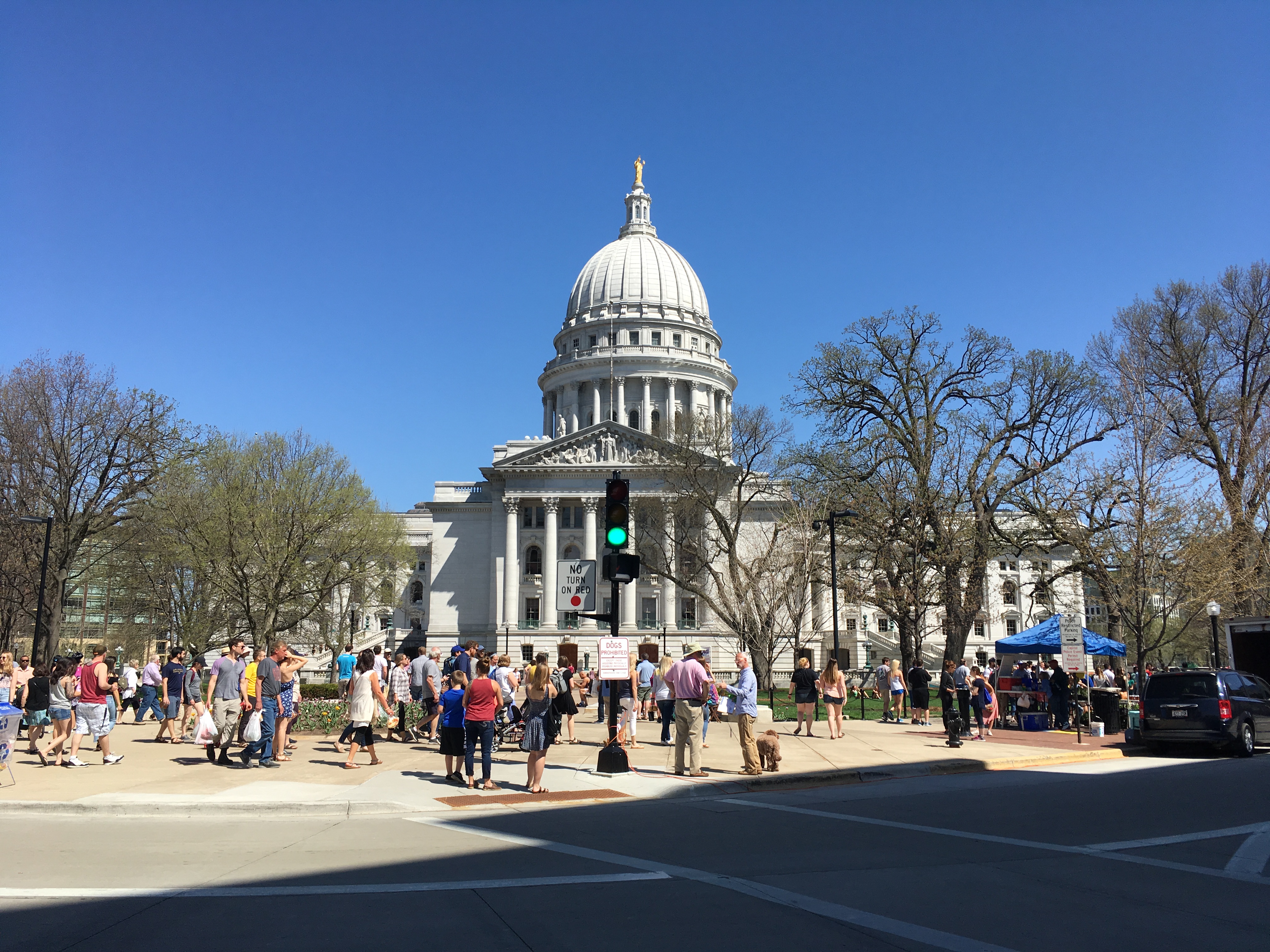
Wisconsin State Capitol. Photo by Mariiana Tzotcheva.
With legislators planning to go home in two months, a list is emerging of what changes won’t become law this year.
One traditional rule — any bill that hasn’t passed one house of the Legislature by now, the second year of a legislative session, has little chance of becoming law — doesn’t apply so much anymore.
For example, Assembly Bill 840, the plan of Assembly Republicans to regulate future AI data centers, rocketed through that house in less than two weeks. AB 840 wasn’t even introduced until Jan. 9, then was rushed through committee and passed on a party-line vote on Jan. 20.
That 53-44 Assembly vote sent it to the Senate, where its future is uncertain. Only six of the 18 Senate Republicans, and no Senate Democrats, are cosponsoring it.
An aide to Democratic Gov. Tony Evers said it’s “unlikely” he would sign it into law if Assembly and Senate Republicans agreed on a version that landed on his desk. The director of legislative affairs for the utility-regulating Public Service Commission (PSC) also warned that the Assembly-passed bill “could invite litigation and cause confusion.”
The debate over data center regulation is so controversial that almost 30 groups, including labor unions, utilities and conservation advocates, have registered to try and shape the Assembly-passed bill.
All this means the chances of a bill regulating where future data centers get their electricity and water, and how the PSC must respond to them, are dim.
There is also almost no chance Republican legislators and Evers will agree on spending the new, higher budget surplus — now estimated at $2.5 billion by mid-2027 — for property tax relief.
On Jan. 13, Evers asked Republicans to spend much of that surplus boosting aid to public schools, including special education programs.
But that would require reworking the $114 billion, two-year budget Evers and Republicans agreed to last summer. With legislators planning to end the session by mid-March, and Republicans blaming the December jump in property taxes on an Evers veto that locked in school spending increases for 400 years, there is no will in the Legislature to rework the budget.
Instead, Republicans are content to take election-year victory laps touting the new $2.5 billion surplus.
Consider, for example, the statement of the co-chairs of the budget-writing Joint Finance Committee, Sen. Howard Marklein and Rep. Mark Born, who are both up for reelection in November: “These revenue estimates are further proof that legislative Republicans’ longstanding commitment to responsible budgeting and fiscal discipline is working. Through careful planning, conservative assumptions and thoughtful decision-making, Wisconsin remains on strong financial footing, even in the face of economic uncertainty.”
There’s also no spring-session political upside to using some of that $2.5 billion surplus to control the next round of property tax bills, since homeowners won’t open them until December — after November elections that will determine which party controls the Legislature.
Another controversial proposal that won’t pass is the much-lobbied “right of first refusal” bill that would have given a utility based or operating in Wisconsin the first chance to “construct, own and maintain” transmission lines approved by the Midcontinent Independent System Operator (MISO).
Many conservatives, including the MacIver Institute, applauded when MISO opened bids for two new transmission lines and Wisconsin’s American Transmission Company, based in Madison, was not the low bidder.
“This is a big win for competition, free markets, ratepayers, and Wisconsinites as a whole,” the MacIver Institute reported. “The winners trounced the competition by offering some of the lowest bids, returns on equity and revenue requirements.”
State Ethics Commission records show about 40 utilities, local governments, consumer advocacy groups and unions lobbied for and against the bill for two years. Some Assembly Republicans rewrote the bill, but it did not get a vote in either the Assembly or the Senate.
Another casualty is a proposal to legalize medicinal marijuana. Evers has repeatedly asked Republican lawmakers to legalize medical marijuana and also legalize and tax recreational marijuana.
Some Republican leaders, including Senate President Mary Felzkowski, a cancer survivor, last year tried to find a compromise that would have legalized only medical marijuana. But the fine-print details could never be worked out.
Legislators will fight to get hundreds of other pet bills debated and voted on, or killed, in the next few weeks. Will, for example, a bill requiring the first sandhill crane hunt finally cross the legislative finish line this year?
Steven Walters started covering the Capitol in 1988. Contact him at stevenscotwalters@gmail.com
If you think stories like this are important, become a member of Urban Milwaukee and help support real, independent journalism. Plus you get some cool added benefits.


The State of Politics
-
What Happened to Tax-Cut Negotiations?
 Apr 6th, 2026 by Steven Walters
-
Republicans Badly Divided in Final Senate Session
 Mar 30th, 2026 by Steven Walters
-
Why the Rise in Property Tax Anger?
Mar 16th, 2026 by Steven Walters




















DNR has a couple of meanings.
Department of Natural Resources
Do Not Resuscitate
Here in Wisconsin, as in Washington, DC it means Do Nothing Republicans.
Not surprising.
C’mon, they’re Conservatives. Conserving their energy.