

Evers Calls on Republicans to Offer Property Tax Relief
Discussing his final year in office, objects to immigration crackdown.
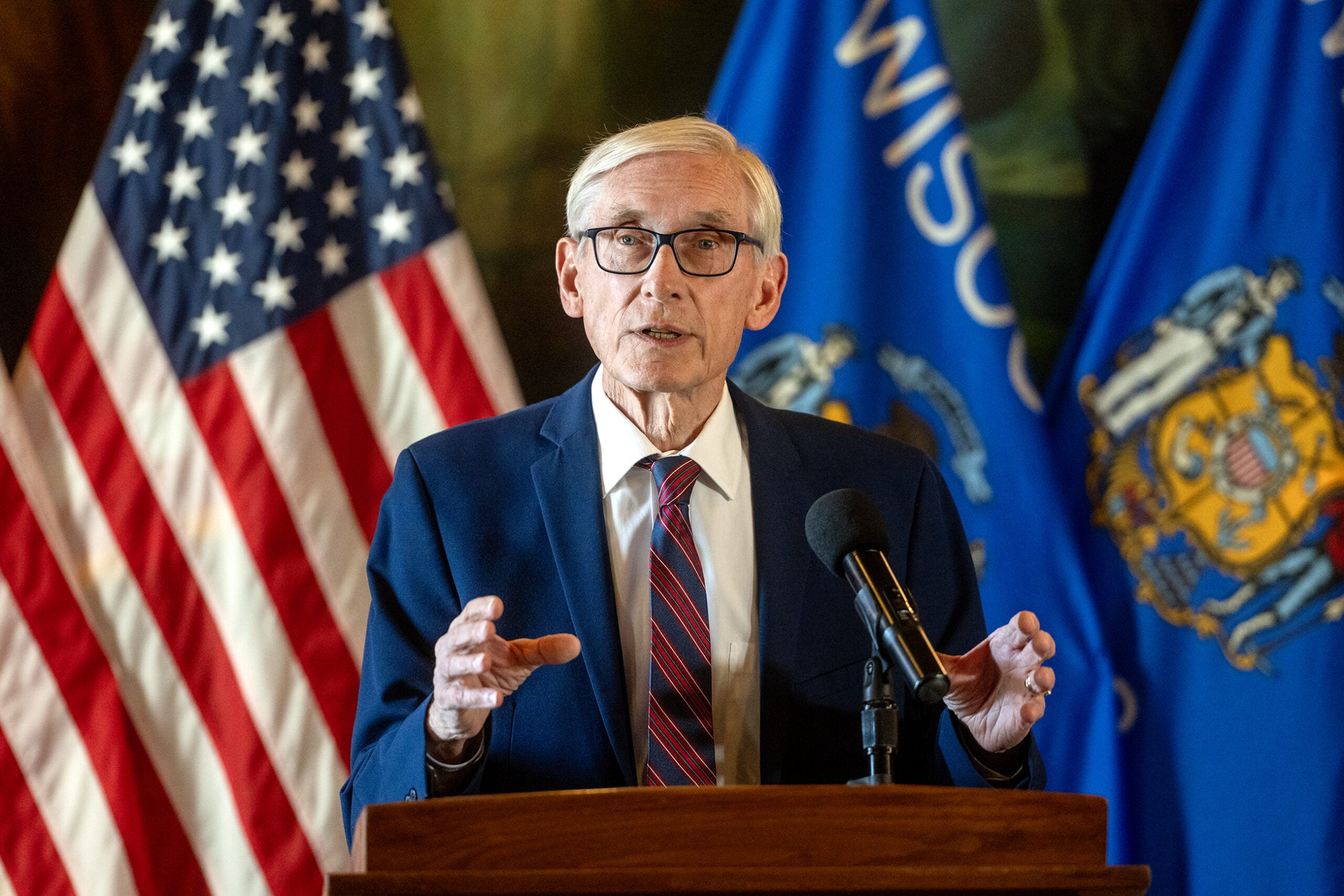
Gov. Tony Evers speaks to the press Monday, Jan. 12, 2026, at the Wisconsin State Capitol in Madison, Wis. Angela Major/WPR
As he begins his final year in elected office, Gov. Tony Evers is calling on the Republican-held state Legislature to release money for property tax relief, even as GOP leaders have sought to blame him for rising taxes.
And as both parties seek to make affordability a cornerstone of their election year policies, Evers unveiled his 2026 legislative agenda at a press conference Monday centered around “addressing rising costs.”“Things are simply not affordable, and paychecks aren’t going as far as they used to,” he said.
Evers was sworn in as governor in 2019 and has spent his entire tenure in office dealing with a Legislature led by the opposing party. On some issues, he’s been able to reach agreements with Republicans. On many others, the two sides have been at odds.
While Evers will serve for the remainder of this year, the Legislature is racing to finish its business by March, meaning time is of the essence for any last-minute deals.
Taking questions from reporters, Evers called for the Legislature to release money for special education spending to match the reimbursement rate agreed upon in the bipartisan budget deal, after reports from the Department of Public Instruction indicated that schools are being shortchanged. He also re-upped a proposal to exempt certain household products, like diapers, toothpaste and breast bumps, from the state sales tax.
The governor criticized Republicans for rejecting his prison overhaul plan, which would eventually close the Green Bay Correctional Institution, a move both parties support.
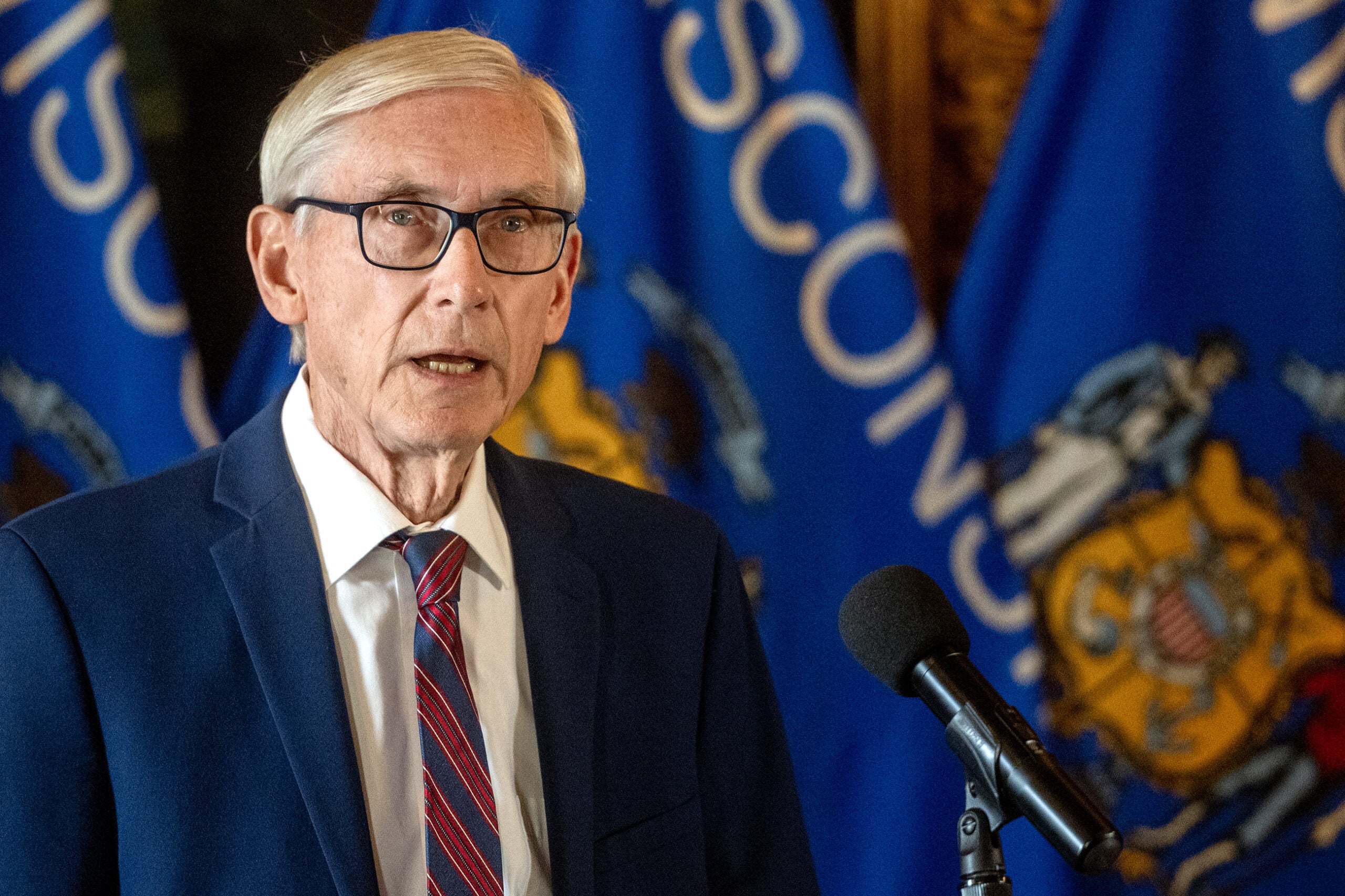
Gov. Tony Evers speaks to the press Monday, Jan. 12, 2026, at the Wisconsin State Capitol in Madison, Wis. Angela Major/WPR
As he has for years, Evers pointed to the relative fiscal health of the state, which ended the last budget year with $4 billion in its general fund. He called on lawmakers to tap into those funds for priorities like supporting farmers, offsetting the increased cost of administering federal food assistance and replacing cut federal funds for crime victims.
Republicans in the Legislature have repeatedly said that the state surplus should be returned to Wisconsinites in the form of tax cuts, rather than additional governmental spending.
Evers also responded to escalating crackdowns on immigration, days after an officer with U.S. Immigration and Customs Enforcement shot and killed a woman in Minnesota, sparking protests across the country.
“Frankly, I don’t see a need for the federal government … coming into our state and making decisions that we can make at the state level,” Evers said.
A blame game for rising property taxes
Evers has secured some bipartisan wins during his two terms in office, including last year’s state budget, a 2023 funding plan for the Brewers’ Milwaukee stadium, and a sweeping rewrite of how the state funds local governments.
“I’m hopeful that the Legislature is ready to get back to work, continue working together, spend the next 11 months of the legislation session building upon the bipartisan successes we had last year,” Evers said.But many of Evers’ bigger asks have been rejected by Republicans before.
That includes the governor’s call for $1.3 billion in property tax relief, a proposal he also included in his proposed budget last year, only to see it nixed by Republican lawmakers.
Instead, Republicans have pointed fingers at Evers for recent property tax hikes, after he infamously increased school revenue limits for four centuries in a 2023 budget veto move. On Monday, Evers shifted the blame back to Republican lawmakers.
“Republicans want to blame my 400-year veto (for) property taxes going up. The problem with that is … Wisconsinites were going to referendum for an increasing number of years, long before I became governor,” he said.
“Why? Because of a decade of Republicans consistently failing to meaningfully invest in our kids and K-12 schools,” Evers continued. “That has consequences, folks.”
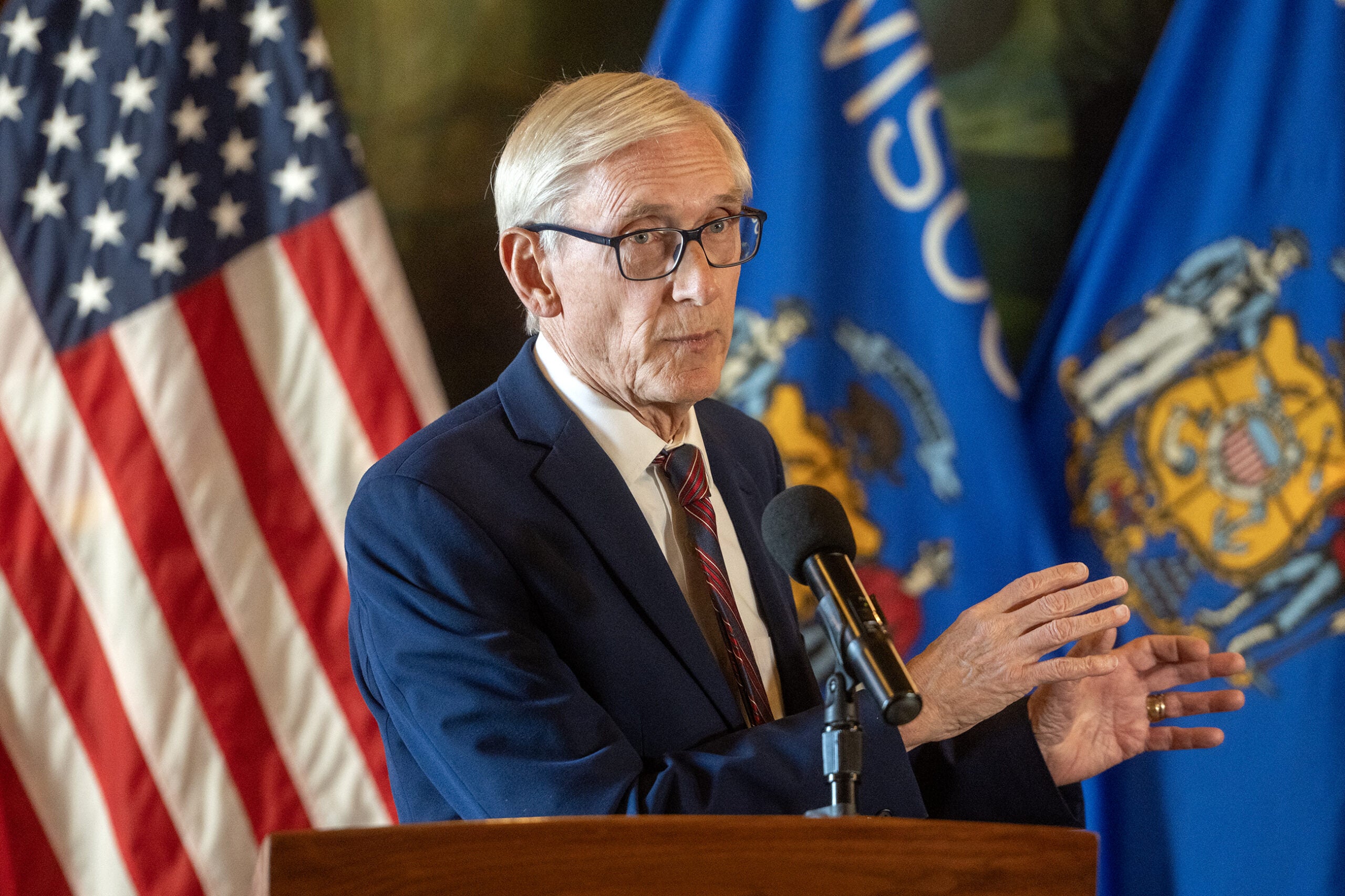
Gov. Tony Evers speaks to the press Monday, Jan. 12, 2026, at the Wisconsin State Capitol in Madison, Wis. Angela Major/WPR
Evers reacts to immigration enforcement in Minnesota
On Monday morning, Lt. Gov. Sara Rodriguez, who is seeking the Democratic nomination to replace Evers next November, issued a statement calling for a ban on immigration arrests in courthouses, hospitals, child care centers, schools and houses of worship.
Evers said he is “not sure that we have the ability” to enact such a policy, saying that it could invite increased federal involvement in the state.“They don’t tend to approach these things appropriately,” he said.
But he spoke forcefully about the response to the shooting death of Renee Macklin Good last Wednesday in Minnesota, saying that local and state officials need to be part of the investigation.
“Our state will be destroyed economically if suddenly we decide anybody undocumented is going home, or has to leave Wisconsin,” he added.
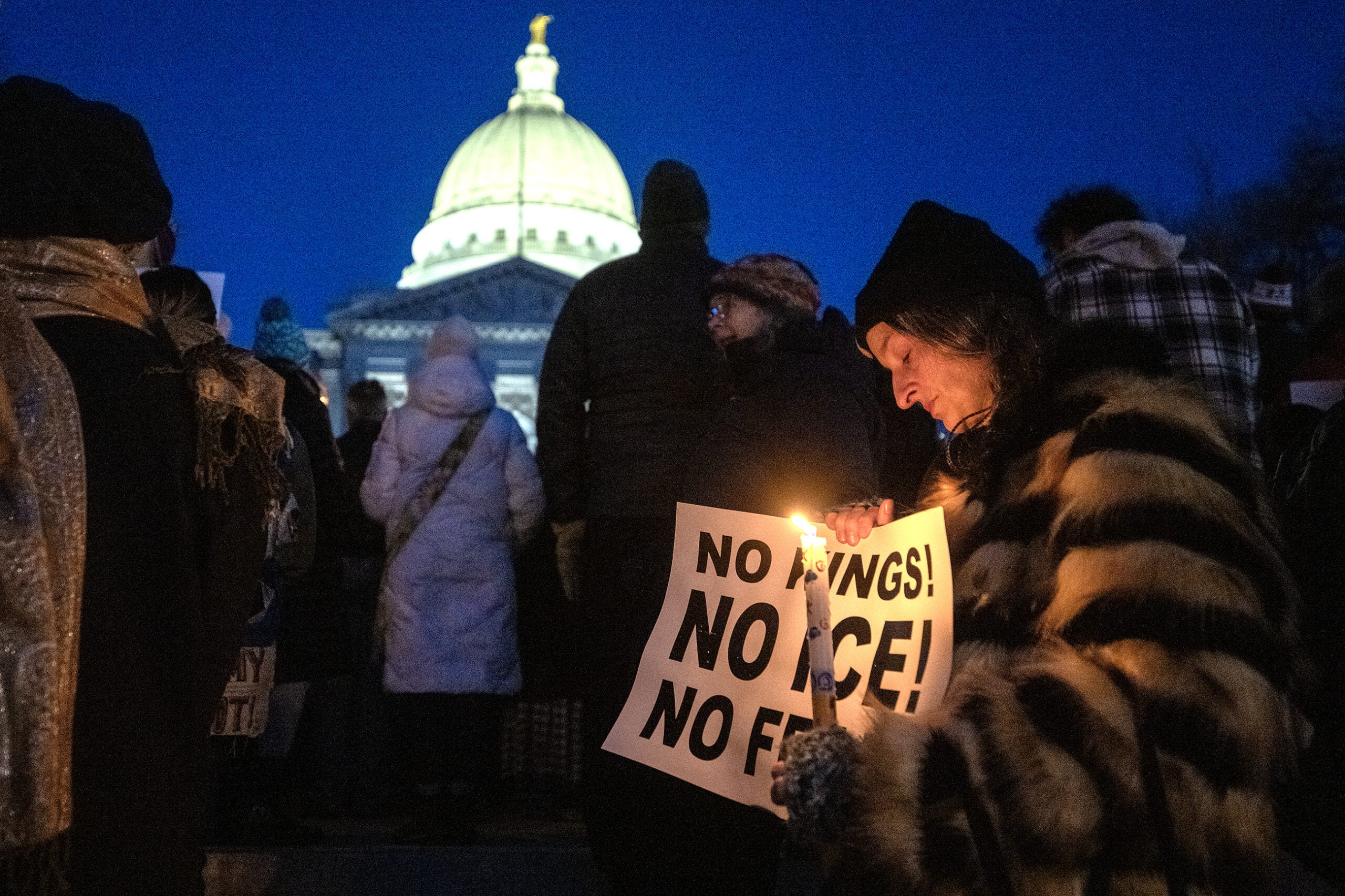
Tosha Kowalski of Madison holds a candle as she attends a vigil to remember Renee Macklin Good on Friday, Jan. 9, 2026, at the Wisconsin State Capitol in Madison, Wis. “Our government is killing American citizens,” she said. Angela Major/WPR
Prison plan ‘most disappointing’ part of state budget
Evers said the lack of progress on closing the Green Bay prison was “one of the areas that was most disappointing” in the budget he signed last summer. He touted his own multi-tiered, half-billion dollar prison overhaul as the best way toward accomplishing that goal.
While Republicans say they share the goal of decommissioning the prison by 2029, they reject some of Evers’ other priorities, including reducing overall capacity in the prison system.But in October, lawmakers on the State Building Commission approved $15 million for planning funds for the state prison system, even as they disagreed on what they are planning for.
On Monday, Evers argued that, without further action, those millions won’t add up to anything.
“The cost of these projects will only go up,” Evers said. “I encourage the Legislature to continue to work with my administration to build consensus on enumerating all the necessary building projects.”
As Evers nears the end of his political career, some criminal justice advocates have also called on him to issue sentence commutations before leaving office. Asked if he would do so — and become the first governor to do so since Republican Tommy Thompson in 2001 — Evers left the option open.
“We’re looking at that,” he said.
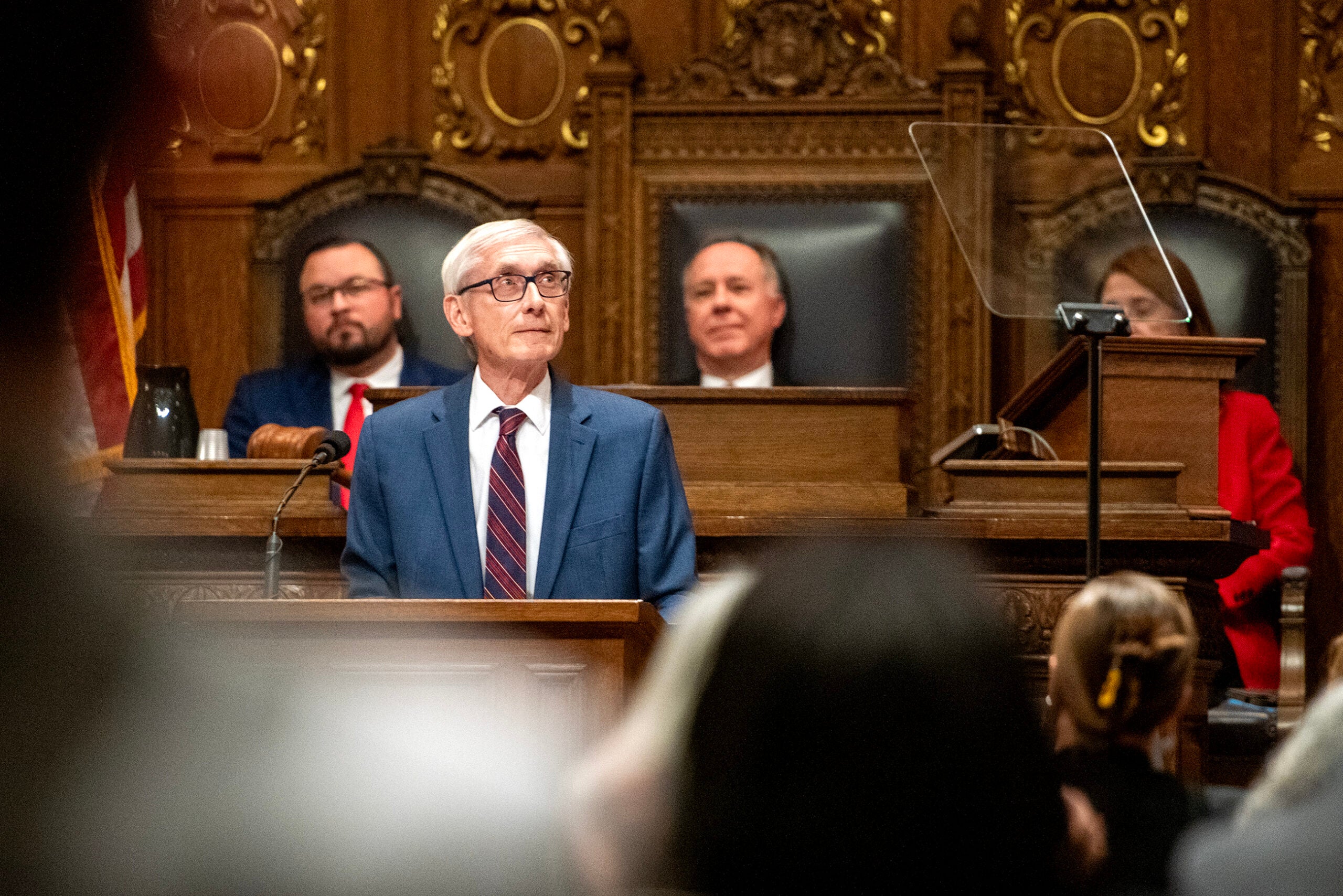
Gov. Tony Evers delivers the State of the State address Wednesday, Jan. 22, 2025, at the Wisconsin State Capitol in Madison, Wis. Angela Major/WPR
No endorsement in the crowded Democratic primary
Evers announced in July that he won’t be seeking reelection. The end of his term, next January, will effectively kick off his retirement from public office, which includes two terms as governor. Asked about how he imagines his legacy, Evers held his fingers together closely, saying that’s how much the word meant to him.
“It’s not all about me. All the things that need to be addressed, many of them can be,” he said. “I’m not into legacies, but what I am all for is making sure we leave Wisconsin in a better place than what we had when I took office.”
His departure from politics has sparked a crowded Democratic primary, with many figures close to him in the race. In addition to Rodriguez, his current lieutenant governor, other candidates include Mandela Barnes, Evers’ former lieutenant governor, Missy Hughes, the former head of the state’s economic development agency, and Joel Brennan, Evers’ former top cabinet secretary.
Asked whether he’d endorse in that primary race, Evers was firm.
“No, no, no. Not getting involved with that,” he said.
Looking toward final year in office, Evers discusses affordability, immigration was originally published by Wisconsin Public Radio.
If you think stories like this are important, become a member of Urban Milwaukee and help support real, independent journalism. Plus you get some cool added benefits.


















My Wauwatosa property taxes increased 22% in 2025. I really don’t care who’s to blame. But I can tell you that there’s gonna be hell to pay if the State ends its fiscal year with another multi-billion dollar surplus and our State legislators and governor don’t agree to give some of that money back to homeowners.
I’d like to see the surpus spit 50=50.
50% back to homeowners.
50% to a few GREAT needs.
I feel we should help our communities.
Pioneers helped each other build cabins centuries ago.
They understood the value of community.