
GOP Bill Targets Local Wheel Taxes
100 proposals restricting local governance passed since 2011.
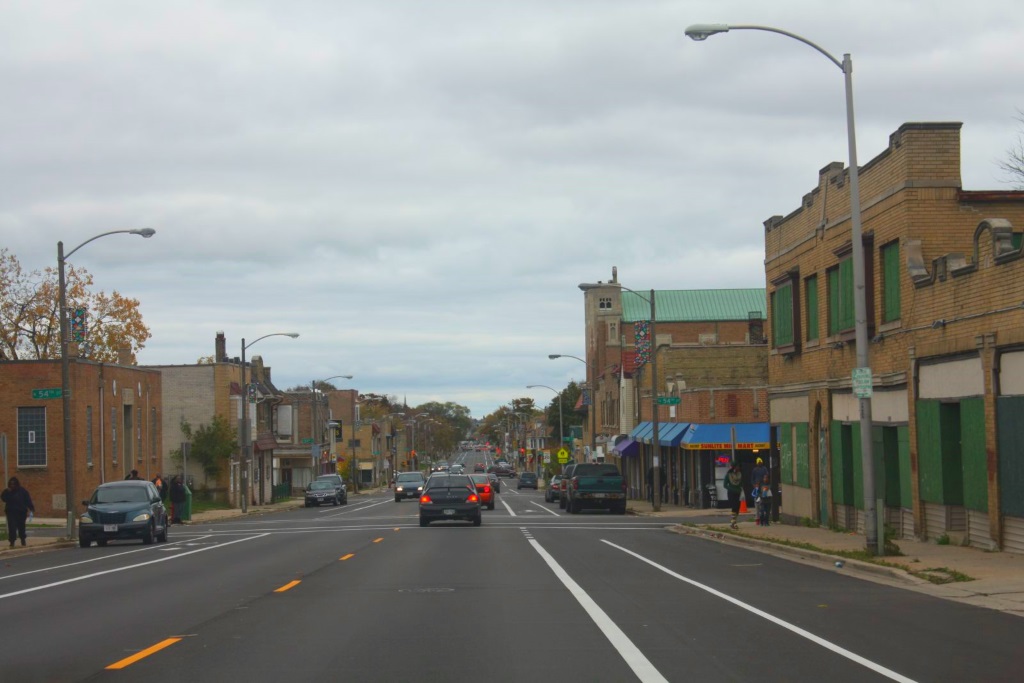
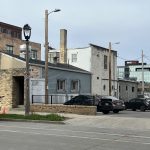
Center Street. Photo by Carl Baehr.
In another swipe at local control, a GOP legislative plan would require counties and municipalities to pass referendums if they want wheel taxes to help fix their roads. A wheel tax is another term for a vehicle registration fee.
Rep. Michael Schraa, of Oshkosh, is sponsoring a bill that would require local governments to sponsor such wheel tax referendums only during regularly scheduled elections. If his bill is approved in current form, it would also require communities that already have a wheel tax to hold a referendum within 18 months after the bill becomes law in order to retain their wheel tax.
Under current law, local governments may enact ordinances imposing an annual flat municipal or county registration fee on all motor vehicles. The fees that are collected are required to be used for transportation-related purposes only.
State law has allowed local wheel taxes since 1967, but few local governments have imposed them until recently as state and federal transportation dollars shrink and roads deteriorate. As of late last year, 16 counties and communities had wheel taxes, and 13 of them were enacted in the past two years, according to the state Department of Transportation. These include Milwaukee and Marathon counties, and the cities of Kenosha, Beloit, and Appleton. Most existing wheel taxes and recent proposals for local wheel taxes appear to range from $10 to $30 annually per vehicle.Schraa was first elected to the Assembly in 2012 and has raised about $70,400 in large individual and political action committee contributions from special interests. His top three contributors, all from Oshkosh, were Ken Bressers, owner of the Omro Pharmacy; Steven and Patricia Landolt, owners of Landolt Securities; and David Willeford, president of H. Derksen & Sons, and his wife, Karla. Bressers and the couples have each contributed $1,500 to Schraa’s campaign.
Since 2011, the GOP-controlled legislature and Walker have approved more than 100 proposals that prohibit or restrict the ability of local governments to pass ordinances affecting environmental, land use, transportation, construction and other matters. Several of these restrictions on local control were highlighted last year in a Wisconsin Democracy Campaign report entitled Walker’s Worst 100.


Campaign Cash
-
Outside Groups Spent Record $28.8 Million on State Supreme Court Race
 May 7th, 2023 by Erik Gunn
-
Top 20 Donors to State Political Parties
 Apr 4th, 2023 by Peter Cameron and Hina Suzuki
-
$38 Million Spent on High Court Race
 Mar 29th, 2023 by Erik Gunn
Transportation
-
Milwaukee Plans 60 Traffic Safety Projects for 2026
 Apr 8th, 2026 by Jeramey Jannene
-
State To Reveal New I-794 Cost Estimates
 Apr 7th, 2026 by Jeramey Jannene
-
Bus Riders Can Finally Pay With Credit Card
 Apr 6th, 2026 by Graham Kilmer








The gas tax should be used for property tax relief, I don’t see the point of earmarking the funds just for state highways and freeways. All the other streets we drive on everyday need to be fixed too!
There are legitimate reasons to restrict local control as it relates to specific laws/ordinances. As in when it creates a patchwork of regulations that complicate compliance for businesses and such. It may not necessarily be what every municipality or local government agrees on policy-wise, but there is a logic to uniform state-wide laws on many things.
However, considering existing state law denying local governments the means to diversify revenue streams so as not to be wholly reliant on either (diminishing) shared revenue or (capped) property taxes, is simply one more nail in the fiscal coffin for many municipalities in this state.
I swear conservatives won’t be satisfied until every city’s fiscal situation is hopeless.