Havenwoods State Forest Offers New ‘Braille Trail’
Nature trail in Milwaukee state park designed for those with blindness or low vision.
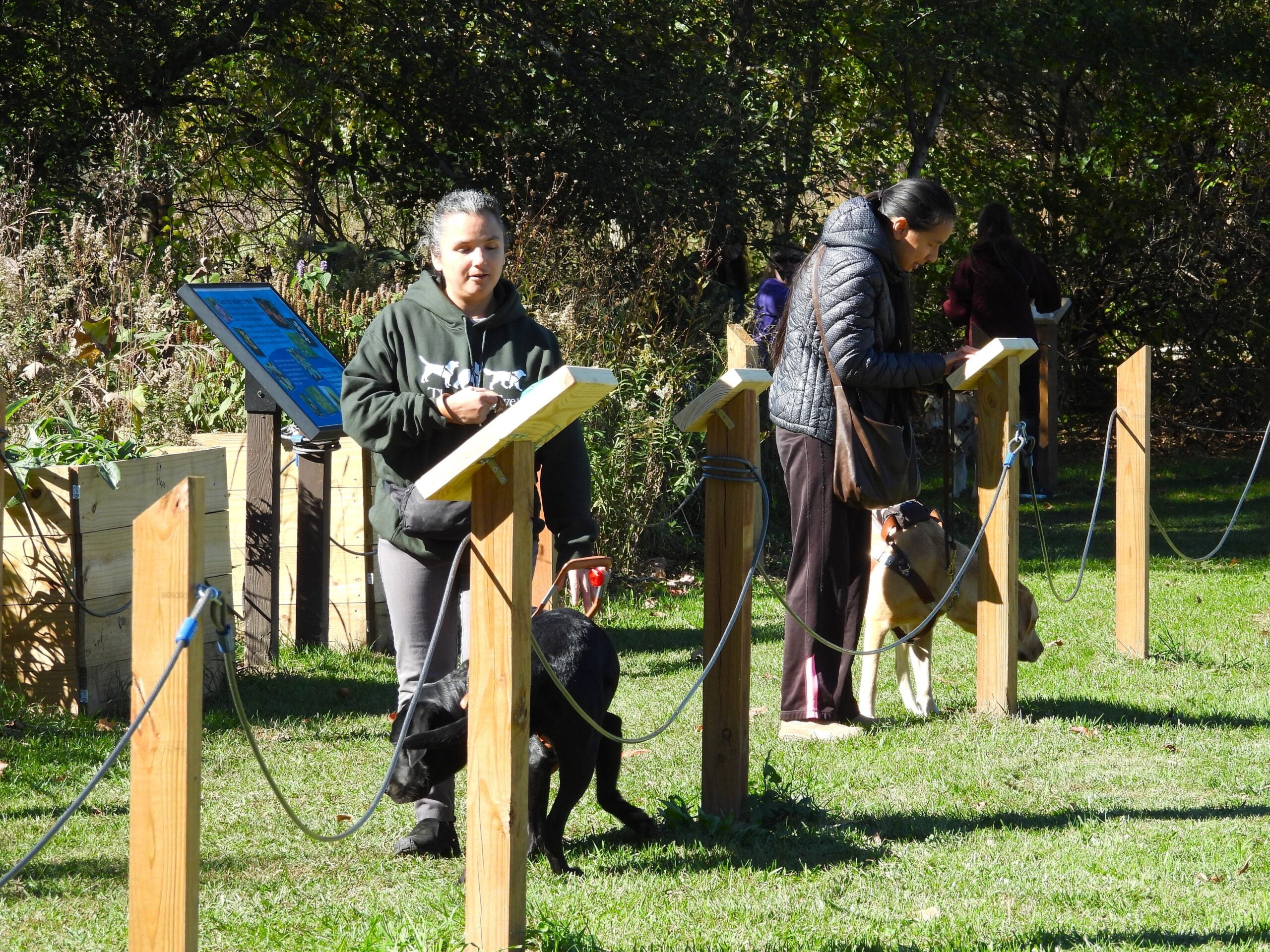
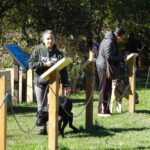
People walking the new Braille Trail at Havenwoods State Forest in Milwaukee. Photo courtesy of the Wisconsin Department of Natural Resources
When Xinyue Hippe was working with the Wisconsin Department of Natural Resources on plans for a new state forest trail in Milwaukee, a question came up: Should organizers clear the trail of twigs, roots and rocks that people might encounter while walking it?
It was an apt question, because Havenwoods State Forest would become home to Wisconsin’s first trail designed for people with blindness and low vision.
Hippe, who is blind, is secretary of the board for the nonprofit Audio & Braille Literacy Enhancement, or ABLE, which worked on the trail. She said there’s something empowering about being allowed to trip, just as anyone who can see might. And so the organizers decided not to scrub the trail of nature.
“People have this idea that if you’re blind, you need your hand held, you need everything removed from your path,” Hippe told “Wisconsin Today.” “This is a chance to just be allowed to experience that natural space. If you trip, you trip.”
“I’m not saying that you will,” Hippe added. “It’s a really nice trail. But just being allowed that possibility (to trip) means a lot.”
The Braille Trail is a ⅓-mile loop that opened last month in Havenwoods. People with blindness or low vision can trace a guideline that takes them around the trail. The line connects 97 informational posts, which include sound recordings, information about their surroundings written in Unified English Braille, and tactile elements like molds of critters that people can feel.
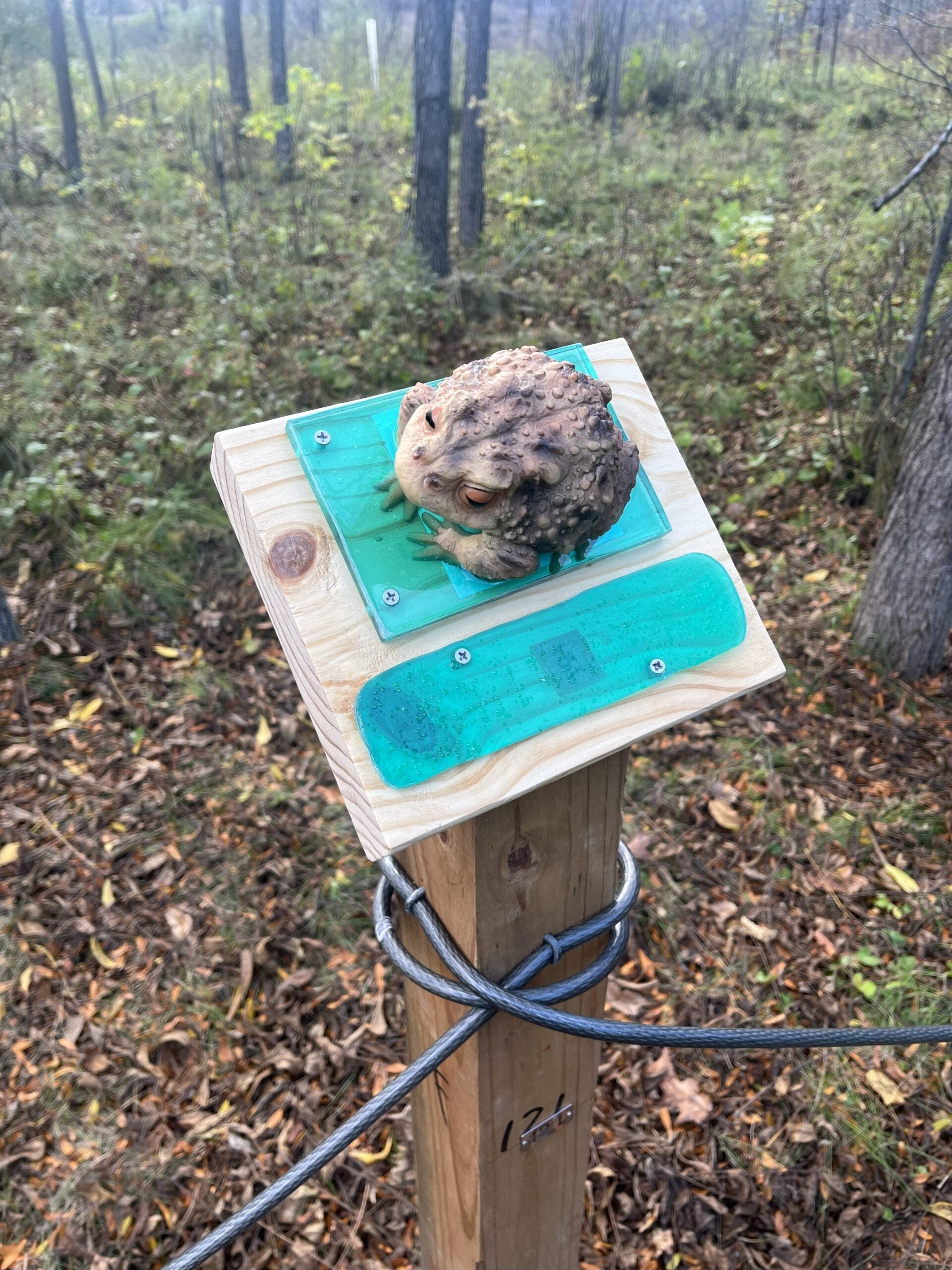
An information post at the Braille Trail in the Havenwoods State Forest in Milwaukee, which features the mold of a toad for people to touch and braille with information about the animal. Photo courtesy of Wisconsin Department of Natural Resources
Hippe felt recognized by the effort. “I felt emboldened. Because I felt confident in being able to walk the trail independently, and then I also felt like I learned a lot because of all of the plaques with braille information. So it was such a coherent experience that I’ve never really had before.”
Angela Vickio, the natural resources property supervisor for the DNR in the Milwaukee area, spearheaded the effort. She had previously taught at a high school that included blind children and was interested in creating a trail that was accessible for people with blindness or low vision. She connected with advocacy groups, including ABLE, to find out what they would want in a trail.
The ideas for what to include on the information posts bloomed. For instance, one post has a mold that was made from a green darner dragonfly that died at the park. “So you can feel what an actual green darner dragonfly is like in terms of the size,” Vickio said. “You can feel the details in the wings.”
Most of these displays had to be made by hand by DNR staff and volunteers.
“We find manufacturers, and you ask them, ‘Hey, can you put this in UEB Braille?’ And we have to go and make corrections to it. So there’s a lot of learning that needs to be done.”
“It would be amazing if at some point somebody did this as a company,” Vickio added. “But in the meantime, we have other organizations that are interested in learning what we’ve done and how we’ve done it, so that they can potentially implement things like this on their properties as well. That’s a step in the right direction. I’m really glad we’ve heard that interest from others.”
Hippe said that the tactile features increased her new understanding of the natural world. “We hear these terms like ‘toad’ and ‘dragonfly,’ and we can describe them using words because they’re the same words that we hear, but the likelihood of having ever actually touched a toad or a dragonfly is not very high,” Hippe said. “So some of this is exposure to concepts that we’ve never actually gotten to feel or experience before, and that is really incredible.
“People sometimes take for granted understanding the shape of an animal. If someone tells me, ‘Just imagine a walrus,’ I couldn’t do it. I couldn’t even begin to imagine what kind of shape it would have. And the same thing was true for toads. I’d never held a frog before.”
But the thing that Hippe most appreciates about the trail experience is the fact that someone thought to include the blind community.
“You would not believe how many people talk about accessibility or what blind people need without ever consulting us,” Hippe said. “There’s just so much here in inclusion, in being asked, in the commitment for our community even if you’re not into trails or hiking or nature. For our community, it’s such a big step forward.”
New nature trail at Havenwoods State Forest welcomes people with blindness, low vision was originally published by Wisconsin Public Radio.
If you think stories like this are important, become a member of Urban Milwaukee and help support real, independent journalism. Plus you get some cool added benefits.