
Audit of Sewerage District Finds Problems
Outside audit finds MMSD operates under capacity, with staffing, maintenance issues.

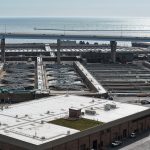
Jones Island Reclamation Facility. Photo by Urban Milwaukee staff.
The Milwaukee Metropolitan Sewerage District (MMSD) has problems with its wastewater treatment operations that need fixing, according to an independent audit.
There are issues with equipment maintenance, staffing and facility capacity at the Jones Island and South Shore water reclamation facilities operated by Veolia Water Milwaukee, according to the audit conducted by EMA Inc., based in St. Paul, Minnesota. The firm analyzed records and data dating back to 2018 and interviewed 54 current and former employees of MMSD and Veolia, including 16 whistleblowers who had contacted Common Ground.
The audit was ordered after Veolia came under public scrutiny this year for allegations, leveled by the community organization Common Ground, that the company was mismanaging MMSD facilities and contributing to basement backups, sewer overflows and pollution.
Common Ground called for an independent, third-party audit. MMSD leadership, Executive Director Kevin Shafer and MMSD Commission Chair Corey Zetts initially disputed the allegations and resisted the demand for an audit. In June, the MMSD Commission relented and ordered an audit overseen by a five-person advisory commission, creating a layer of separation between the sewerage district and the auditors.
The audit found Veolia was only “partially” in compliance with the contract to operate MMSD’s wastewater treatment facilities. But the audit also found MMSD was only “partially” monitoring Veolia’s compliance, Sharon Peters, president and CEO of EMA, told the MMSD Commission Monday morning.
MMSD made monitoring compliance with state and federal permits for pollutant discharge the highest priority. The contract compliance department was found to be under-resourced for the breadth and complexity of the contract with Veolia.
“During the audit, MMSD staff disagreed about whether all contract terms should be enforced or only those tied to permit compliance, and this unresolved disagreement is eroding trust in MMSD leadership,” Peters said.
Veolia, a French transnational corporation, has operated the two sewer treatment plants since 2008. For the past two years, Veolia has bid on a new 10-year operations and maintenance contract valued at approximately $700 million. Veolia lost out to the only other bidder, the Dallas-based engineering firm Jacobs.
The audit found maintenance and record-keeping were the biggest weaknesses in Veolia’s operations of the two plants. A significant amount of equipment is often left out of service for long periods of time, Peters said.
The audit also confirmed that the South Shore water reclamation facility is frequently operating below the treatment capacity it was designed for. Equipment outages and maintenance issues explain some, but not all, of this frequent undercapacity, according to the audit. EMA is recommending MMSD commission a “root cause study” to determine what exactly is causing South Shore to operate under capacity so frequently.
The facilities are also chronically understaffed under Veolia. They were below minimum staffing levels during nearly every month over the past eight years examined by auditors, and approximately 20% of key positions have been vacant at any given time, Peters said.
During interviews with employees, EMA found employees of both MMSD and Veolia expressing fear of retaliation for raising concerns and little confidence in human resources departments in either organization.
While reviewing the allegations raised by Common Ground, EMA found 60% were either confirmed or partially confirmed. EMA did not find evidence of falsification of testing records, nor were there widespread safety concerns. What EMA heard about those issues seemed confined to specific employees who are no longer employed by MMSD or Veolia, Peters said.
The audit did not make a connection between staffing, maintenance and record-keeping issues and pollution or sewer overflows and community flooding. The audit found Veolia was in compliance with permitting for combined sewer overflows for the eight years of data and records examined during the audit.
“Our assessment is that almost everything that our whistleblowers in Common Ground said has been verified,” said Bob Connolly, a co-founder of Common Ground. Connolly believes the connection can be inferred from what the audit did confirm, that South Shore is running below capacity and that maintenance is an ongoing issue. “If it’s not running at peak efficiency and there’s overflows, right, then you’re going to have more crap going into the lake than is really necessary,” he said.
Veolia is currently suing MMSD, alleging the bidding process was unfair and that Common Ground was allowed to manipulate the process, causing Veolia to lose the bid. The MMSD Commission selected Jacobs largely because its bid came in $54 million below Veolia’s. MMSD denies the contracting process was unfair, but agrees with Veolia’s allegation that Common Ground was trying to affect the bidding process. Common Ground leaders have denied the allegation and repeatedly stated their primary concern is uncovering the truth of what is happening at the sewerage plants. U.S. District Judge Brett Ludwig has ordered MMSD not to sign a final contract until the lawsuit by Veolia is settled.
The audit included 64 recommendations for MMSD to address moving forward, particularly as it finalizes a new 10-year contract with Jacobs. MMSD is already advancing some of the recommendations, including a centralized maintenance management system owned by MMSD. EMA estimated that approximately 61% of the recommendations are fully included in the new contract with Jacobs and another 34% are partially addressed.
“There’s a lot of work ahead with 64 recommendations that we’ll all be reviewing and working to understand,” Zetts said. “So I look at this as an opportunity for continuous improvement.”
Veolia Responds
One day before the results of the MMSD audit were publicly released, Veolia published the results of an operations evaluation it had commissioned. The review was conducted by the California-based engineering firm Exponent and found Veolia “maintained consistent and substantive compliance with monitoring requirements.” While equipment failures do affect plant capacity, they were not caused by “systemic deficiencies in Veolia’s maintenance program.”
After the independent audit was released, Veolia released a statement saying the audit “confirms that Veolia has complied with environmental requirements to protect public health and the water quality in Milwaukee.” It also said the audit shows “the most outrageous allegations promoted by Common Ground, like its bogus claims about falsified documents, have no basis in fact.”
If you think stories like this are important, become a member of Urban Milwaukee and help support real, independent journalism. Plus you get some cool added benefits.
More about the MMSD and Veolia Wastewater Facility
- Audit of Sewerage District Finds Problems - Graham Kilmer - Nov 9th, 2026
- MMSD Denies Unfair Contracting Practices - Graham Kilmer - Oct 7th, 2026
- Despite Lawsuit, MMSD Picks New Private Operator - Graham Kilmer - Sep 28th, 2026
- Federal Judge Orders Pause In Issuing New Sewage Contract - Graham Kilmer - Sep 15th, 2026
- Veolia Sues MMSD, Alleges Biased Contracting Process - Graham Kilmer - Sep 11th, 2026
- Committee Recommends New Operator for Sewerage District - Graham Kilmer - Aug 18th, 2026
- DNR Investigating Allegations Against Sewerage District - Graham Kilmer - Jul 28th, 2026
- Op Ed: MMSD’s Record Shows A Clear Path For Milwaukee’s Water Future - Michael Murphy - Jul 16th, 2026
- Clogged Sewer Pipe May Have Worsened Bay View Flooding - Graham Kilmer - Jul 16th, 2026
- CG Backs City Investigation as New Evidence Validates Whistleblowers: Milwaukee Needs Accountability and Transparency. - Common Ground Southeastern Wisconsin - Jul 15th, 2026
Read more about MMSD and Veolia Wastewater Facility here