

Just How Conservative Is Tom Tiffany?
A consistent record — with a nasty edge —in state and federal politics.
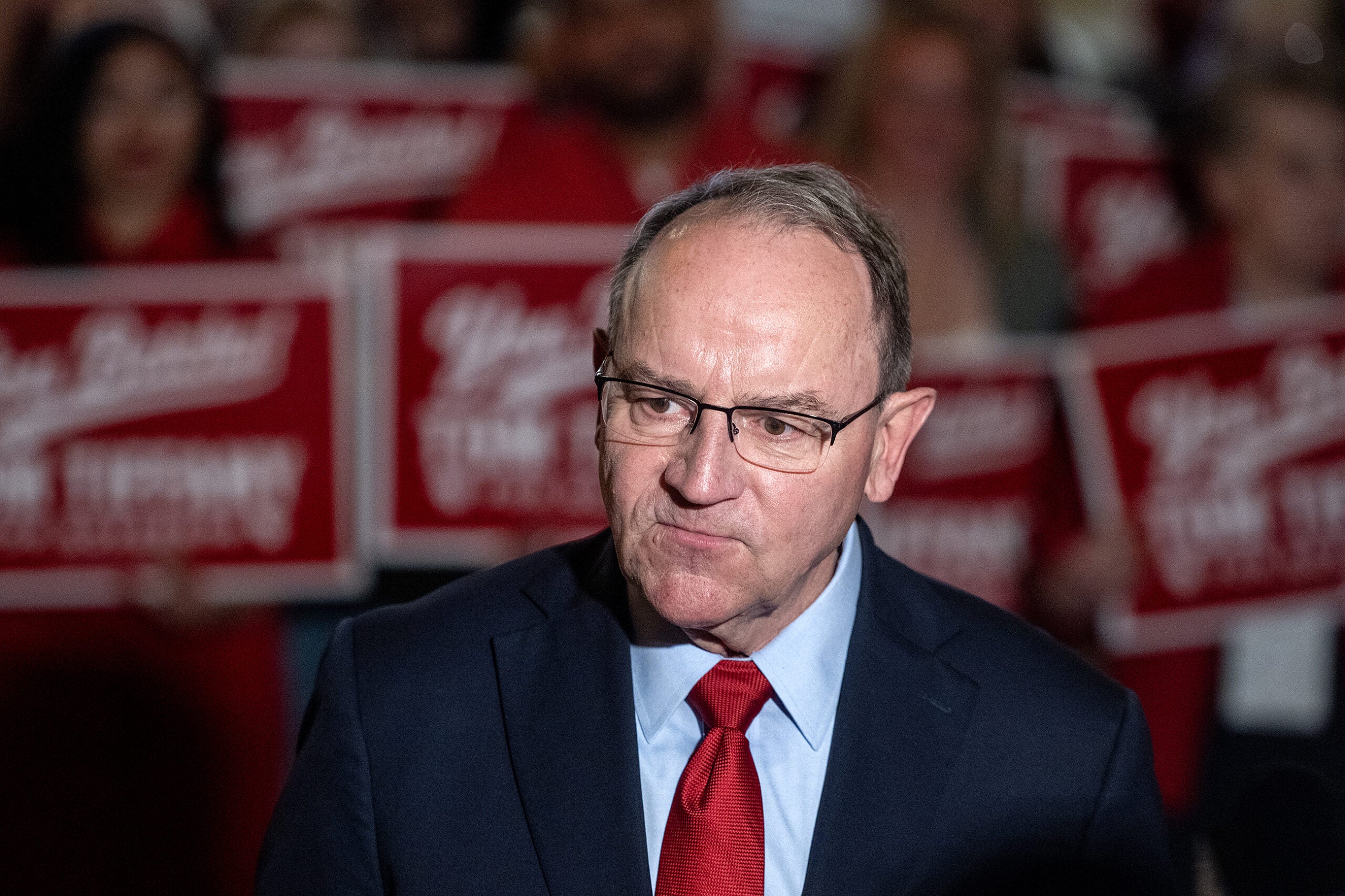
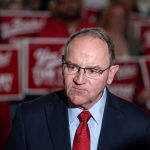
U.S. Rep. Tom Tiffany speaks to the press after being endorsed by the party for governor Saturday, May 16, 2026, during the Republican Party of Wisconsin State Convention at Kalahari Resorts & Conventions in Baraboo, Wis. Angela Major/WPR
As he runs for governor, Republican U.S. Rep. Tom Tiffany has introduced himself to voters as a get-along kind of conservative, but his lengthy record in the state Legislature and Congress tells a different story.
Tiffany, a Republican from Minocqua, has often invited political fights. He came into state government during an era when Republicans fundamentally reshaped Wisconsin, and he was sworn into Congress at a time when its agenda has been set by President Donald Trump.
Shortly after being sworn into the U.S. House, he voted to reverse Trump’s loss in two swing states during the 2020 election. After the U.S. Supreme Court overturned Roe v. Wade in 2022, he supported new national limits on abortion. And last year, an analysis of congressional roll call votes found he voted with Trump 99 percent of the time.
This followed nearly a decade of experience in the state Legislature, where he was first elected as part of the 2010 Republicans wave. As a freshman state representative, he was a reliable vote for Gov. Scott Walker’s agenda, including Walker’s landmark collective bargaining law that drew tens of thousands of protesters to the state Capitol. When Walker called for a bill to clear the way for a massive iron mine in northern Wisconsin, Tiffany was its lead sponsor.
Longtime GOP strategist Mark Graul says the work Tiffany and other Republicans did in Wisconsin laid the foundation for the budget surplus the state enjoys today.
“He’s willing to be bold, he’s willing to be aggressive, he’s willing to do things that get our state back on the right track,” said Graul, who describes Tiffany as “tough as nails.”
But former Democratic state Sen. Jon Erpenbach, a Democrat from Middleton who served with Tiffany, remembers it differently.
“He’s not an aw-shucks, you betcha kind of guy,” Erpenbach claimed. “He’s going to do whatever it takes to steamroll Democrats, basically, into oblivion.”
Tiffany sponsored bill to allow for a massive iron mine
While the nation was climbing out of the Great Recession, job creation was Republicans’ rallying cry. In his 2012 State of the State Address, Walker called on lawmakers to clear the way for a company called Gogebic Taconite to open a proposed iron mine in northern Wisconsin that could create thousands of jobs.
“We’ve all debated this for months,” Walker told the joint session of the Legislature. “Now it is time for us to move forward on a project that’s not only about jobs but also about the history of our Badger State.”
This was roughly a year after Walker had introduced his bill that curbed union rights, not to mention a long list of other GOP priorities. On all the big bills, from requiring a photo ID to vote, to allowing the concealed carry of firearms, to drawing legislative maps that enshrined GOP power, Tiffany was a reliable supporter.
When it came to mining, Tiffany took a more active role. Then a member of the state Assembly, he was the lead author of the Gogebic Taconite bill. It passed the Assembly but failed in the Wisconsin Senate when one Republican lawmaker joined all Democrats to vote against it.
The proposal faced sharp backlash from tribal nations and environmental groups warning about pollution from mining waste destroying the Bad River watershed that flows into Lake Superior. Once completed, they said, it could be a thousand feet deep, three-quarters of a mile wide and eventually 22 miles long — the type of hole in the ground that would be visible from outer space.
Later that year, Tiffany won an open seat for the state Senate, which grew Republicans’ majority in the chamber. He reintroduced his mining bill and blocked a bipartisan alternative.
When Tiffany’s bill made it to the Senate floor in February 2013, he said the mine was too important to hold out for bipartisan consensus, and people who needed the jobs wouldn’t care how the vote shook out.
“Five or 10 years from now, when those people at that mine site are cashing their paychecks, do you think they’re going to be asking, ‘Gosh, I wonder if that was passed on a bipartisan basis?’” Tiffany asked his fellow senators. “No, they are going to be happy to have those jobs.”
Despite the regulatory rewrite, the jobs never came. Gogebic Taconite withdrew its application to mine in 2015. Walker and Tiffany blamed the U.S. Environmental Protection Agency under former President Barack Obama.
Tiffany’s repeal of sulfide mining moratorium turned personal
With the iron mining bill now law, Tiffany set his sights on bringing sulfide mining for minerals like copper and gold back to Wisconsin. It was a heavy lift because Tiffany would have to repeal a bipartisan sulfide mining moratorium law signed 20 years earlier by former Republican Gov. Tommy Thompson.
Tiffany’s 2017 bill, eliminated a “prove it first” provision requiring companies give examples of mines that hadn’t polluted over a 20 year span. It also mandated faster permitting, changed groundwater regulations and lifted wetland rules related to impacts from mining.
As mining committee chairman, Tiffany scheduled a public hearing at a high school in Ladysmith, just down the road from the retired Flambeau copper mine. Attendees walked past a Toyota Prius that Tiffany’s staff had parked by the school’s front doors, with a sign listing all the copper and other minerals in its components.
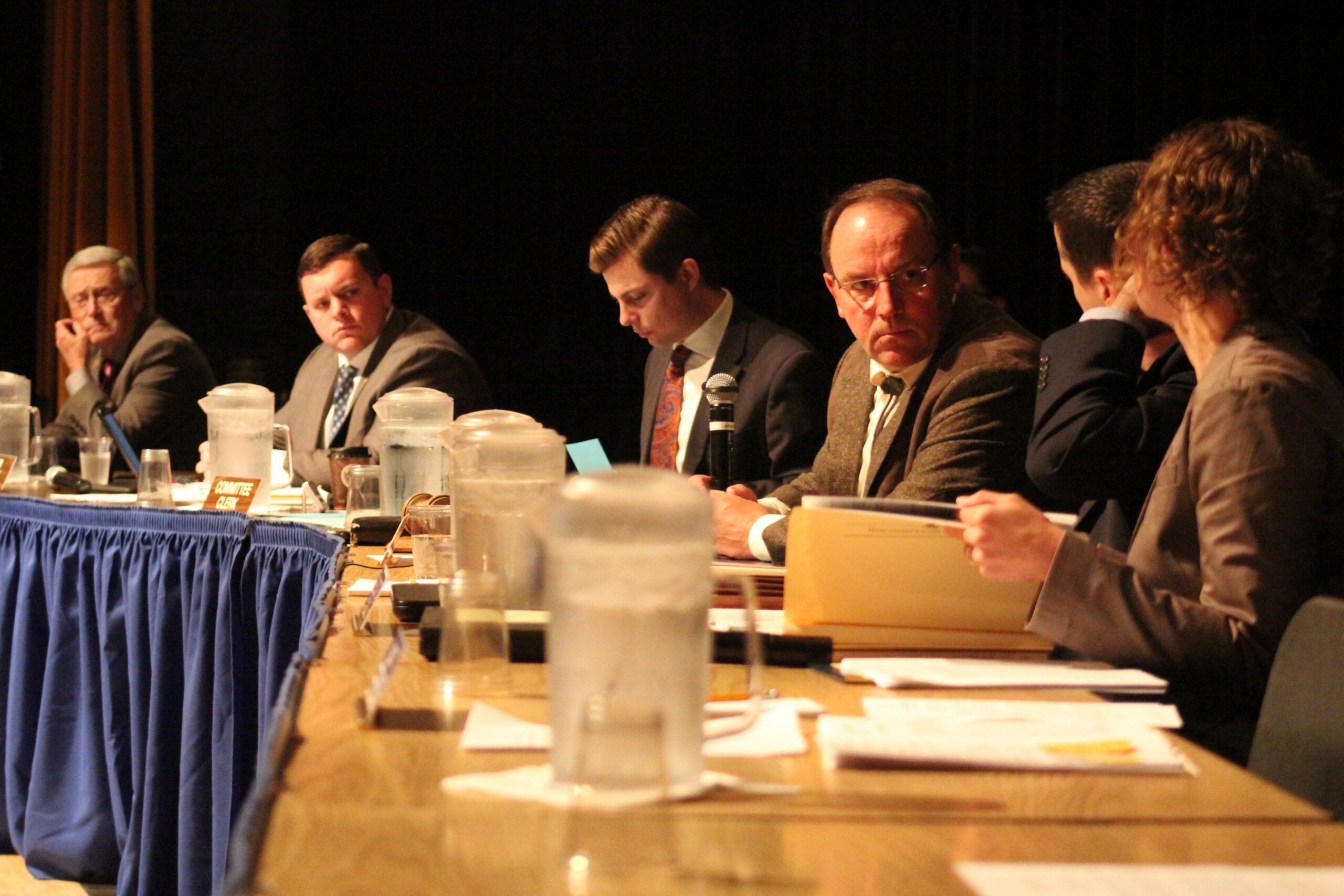
The Legislature’s Committee on Sporting Heritage, Mining and Forestry listened to public testimony Thursday on a bill to repeal the state’s 20 year-old mining moratorium law. Rich Kremer/WPR
During hours of testimony, Tiffany got into a debate with Al Gedicks, the late University of Wisconsin-La Crosse Professor who was a longtime anti-mining activist. When it was Gedicks’ turn to testify, Tiffany turned the discussion to Gedicks himself.
“You were charged with attempted arson in your past,” Tiffany said. Gedicks appeared stunned as many in the crowd booed or groaned.
Tiffany was referring to Gedicks’ arrest in 1970 during anti-Vietnam protests at the University of Wisconsin-Madison. Gedicks has claimed he was arrested in the vicinity of an attempted arson attack but that he was not involved.
Gedicks accused Tiffany of reaching “unfathomable depths of deviousness” to defend a mining bill with no scientific credibility.
“Are you referring to the depths of being convicted of possession of a fire bomb to bomb an army ROTC?” responded Tiffany, before moving on.

The Flambeau mine is the only copper-gold mine to operate in Wisconsin under modern-day mining laws prior to the moratorium that was repealed last fall. The site was reclaimed in the late 1990s. Rich Kremer/WPR
Erpenbach was there that night and said it was “about as low rent as I’ve ever seen from a legislator.”
“It’s a typical Tom Tiffany move,” said Erpenbach. “If you don’t think you necessarily have an audience on your side on the issue, or even the facts on your side on an issue, you go out and you absolutely slaughter the messenger.”
Tiffany’s bill to repeal the mining moratorium passed despite five of his fellow Republicans voting against it. No mines have since opened, but Canadian mining company GreenLight Metals is conducting exploratory drilling for copper-bearing sulfides containing gold and silver in Taylor County.
Tiffany pushed to overturn 2020 presidential election
After nearly a decade in the Wisconsin Legislature, Tiffany won a special election for Wisconsin’s open 7th Congressional District seat in 2020, following the resignation of former Republican U.S. Rep. Sean Duffy.
He took office roughly six months before the 2020 presidential election, an event that would leave its mark on U.S. history and test the resilience of Congress.
Trump had been making false claims about widespread fraud leading up to that year’s elections, and after the election was over, he did not acknowledge that he’d lost to former President Joe Biden.
Tiffany was in the president’s corner. A day after the election, Tiffany issued a press release “in response to the media’s projected outcome of the 2020 Presidential election.”
“Let’s halt the premature rush to declare a winner in the presidential race to ensure that every legal vote is counted and that every legitimate legal challenge is heard and addressed by our independent judiciary,” he said.
Tiffany took things further than other GOP members of Wisconsin’s congressional delegation that year. He signed onto a legal brief in a lawsuit filed by Texas Attorney General Ken Paxton asking the U.S. Supreme Court to throw out election results in Wisconsin, Pennsylvania and Georgia, and let the states’ legislatures decide the winner. The U.S. Supreme Court rejected the suit.
A day before Trump supporters stormed the U.S. Capitol in the Jan. 6 riot, Tiffany announced he would object to Wisconsin’s results. His press release accused clerks in Dane and Milwaukee counties of taking “active steps to undermine and circumvent” election laws amid the COVID-19 pandemic, which he claimed “disenfranchised the great majority of Wisconsin voters who followed the law.” He also chided the Wisconsin Supreme Court for dismissing the Trump campaign’s attempt to throw out hundreds of thousands of absentee ballots from those counties.
“And while I take no pleasure in casting this vote, this is the last option that remains to protect the rights of millions of Wisconsin voters who cast legal ballots,” said Tiffany.
Tiffany never got the chance to formally object to Wisconsin’s results, but he was among the lawmakers who voted to overturn election results in Pennsylvania and Arizona. The votes came hours after the Capitol was taken over by Trump supporters on Jan. 6, 2021.
Tiffany has said he doesn’t regret voting against certifying the 2020 results. This year he acknowledged that Biden won the election but still claims there were improprieties and said he welcomes the FBI investigating Milwaukee County’s six-year-old results.
After Roe was overturned, Tiffany pushed for national limits on abortion
After the U.S. Supreme Court’s conservative majority struck down federal Roe v. Wade abortion protections in 2022, Tiffany backed a national law that would replace it.
He cosponsored legislation in 2023 banning abortions after six weeks with no exceptions for rape or incest. Only three of the six Republican members of Wisconsin’s congressional delegation signed on to the bill.
Abortion was a go-to issue for Democrats in the past two elections, as candidates like Gov. Tony Evers campaigned on a promise to protect abortion rights. And on the day he announced his own candidacy for governor, Tiffany sought to get ahead of the issue.
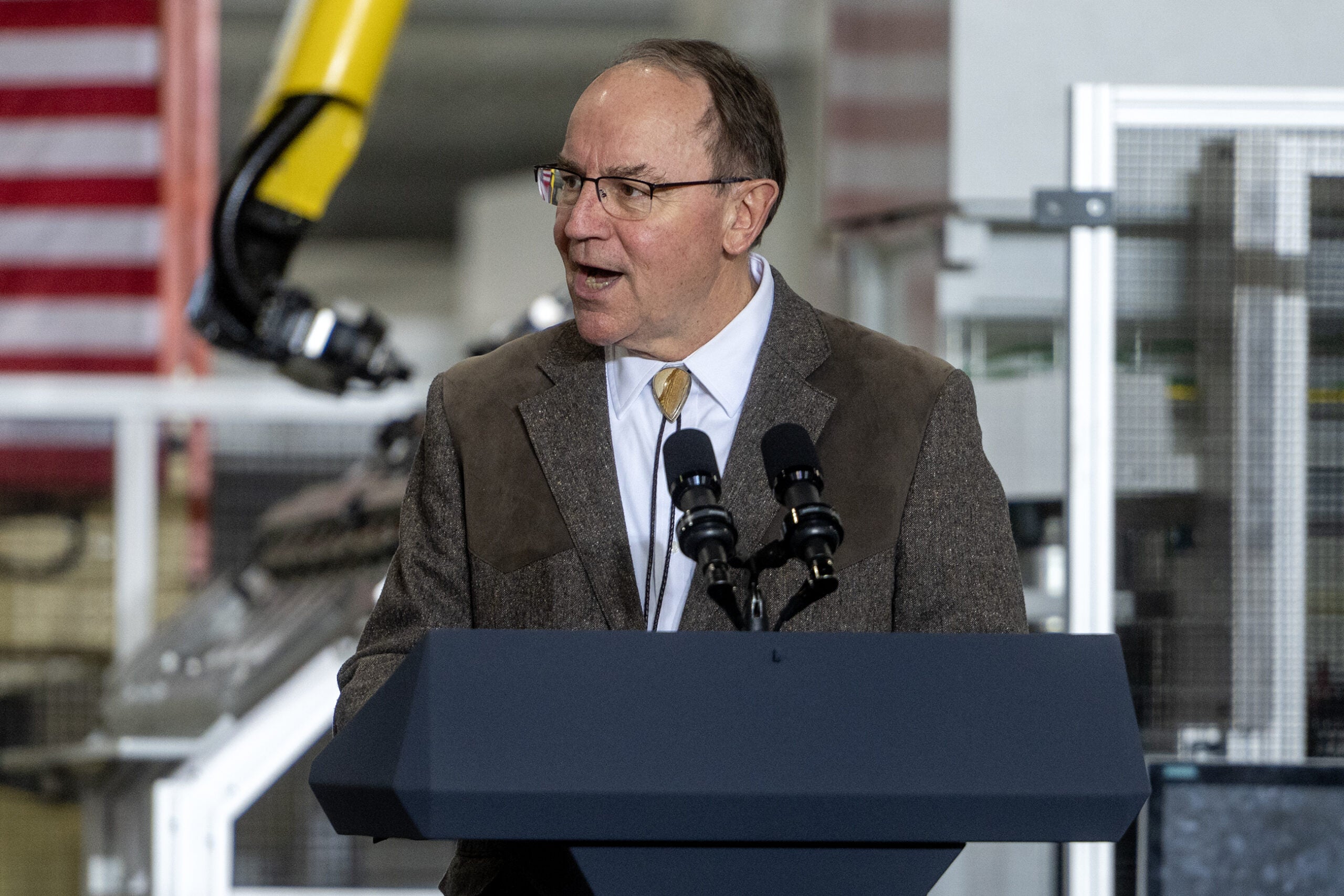
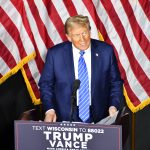
U.S. Rep. Tom Tiffany speaks before Vice President JD Vance’s remarks Thursday Feb. 26, 2026, at Pointe Precision in Plover, Wis. Angela Major/WPR
During an interview on WISN-AM, he said the six-week abortion ban that he had cosponsored was not his position as a candidate for governor. Instead, he pointed to the state’s current 20-week abortion ban, which he voted for as a member of the Legislature.
“I do support that law, and I will uphold it as governor of the state of Wisconsin,” Tiffany said.
As a state legislator, Tiffany also backed a 24-hour waiting period before getting an abortion, mandatory in-person counseling with a physician and mandatory ultrasounds.
Tiffany has stood by Trump in his second term
Since Trump’s second term as president began in 2025, Tiffany has defended the president at nearly every turn.
He’s voted several times against Democratic bills aimed at blocking Trump’s tariffs against allied nations. After Trump threatened a 35 percent tariff on Canadian imports last year, Tiffany complained about Canadian wildfire smoke in a social media post and said the president should demand “more responsible forest management as part of any future trade deal with Canada.
Trump’s decision to launch military strikes against Iran in February has been another major factor in rising prices for American consumers. While Tiffany has said it’s time to “wrap up” the war, he’s previously voted against five bills directing Trump to do so.
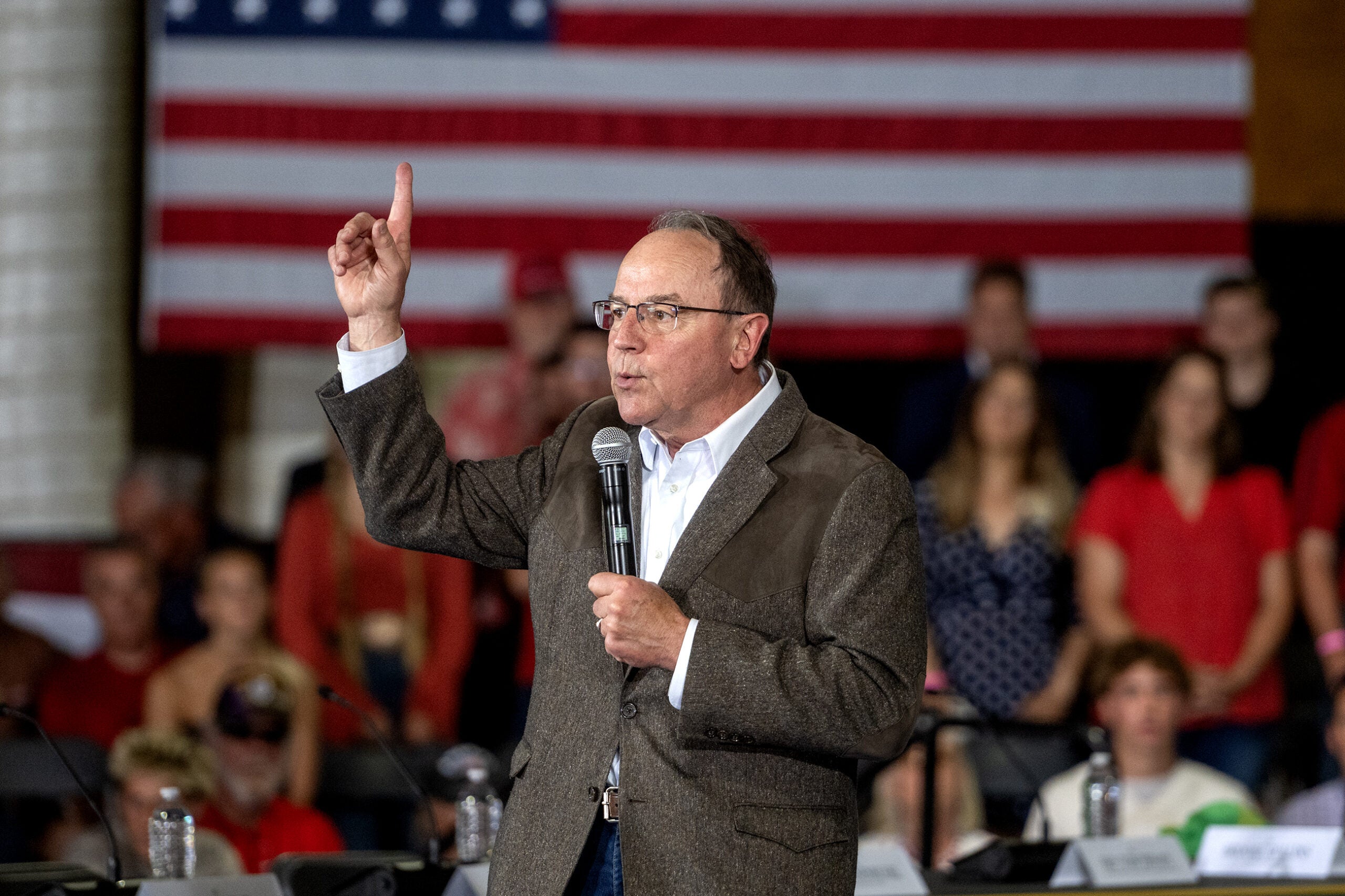
Rep. Tom Tiffany, who is running for Wisconsin governor, speaks before President Donald Trump arrives at a roundtable event Friday, June 5, 2026, in Chippewa Falls, Wis. Angela Major/WPR
University of Wisconsin-La Crosse political science professor Anthony Chergosky told WPR Tiffany’s legislative history shows he’s “been a key figure in two different but related iterations” of the Republican Party.
“The first being the Walker era rise of conservatism in Wisconsin, and the second being the rise of Trumpism,” Chergosky said. “Those brands of Republican party politics have not always coexisted precisely, but Congressman Tiffany has found his place in both of those iterations of the Republican Party.”
The Walker and Trump iterations of the party were at odds in the 2022 race for governor, when former Lt. Gov. Rebecca Kleefisch, Walker’s favored candidate, lost a hard-fought Republican primary against construction executive Tim Michels, the Trump-endorsed candidate.
Tiffany’s close alliance with Walker and Trump helped him avoid that kind of primary in 2026. That freed him up to spend most of his time attacking the record of his Democratic opponent, Milwaukee County Executive David Crowley, while introducing himself to voters on his own terms.
Tom Tiffany’s conservative record dates back years in state and federal politics was originally published by Wisconsin Public Radio.
If you think stories like this are important, become a member of Urban Milwaukee and help support real, independent journalism. Plus you get some cool added benefits.
Political Contributions Tracker
Displaying political contributions between people mentioned in this story. Learn more.



















Toxic Tom is a Trump loving pedophile protecting child rapist apologist who is only in it for himself.
He is a drifter and traitor for trying to overturn the election. He is a villian.
The question really should be how MAGA is Toxic Tom.
Vote for David Crowley.