Crowley Avoids Transit Cuts In 2027 Budget Proposal
County Executive also proposes a property tax increase and endorses a paid-parking program along the lakefront.
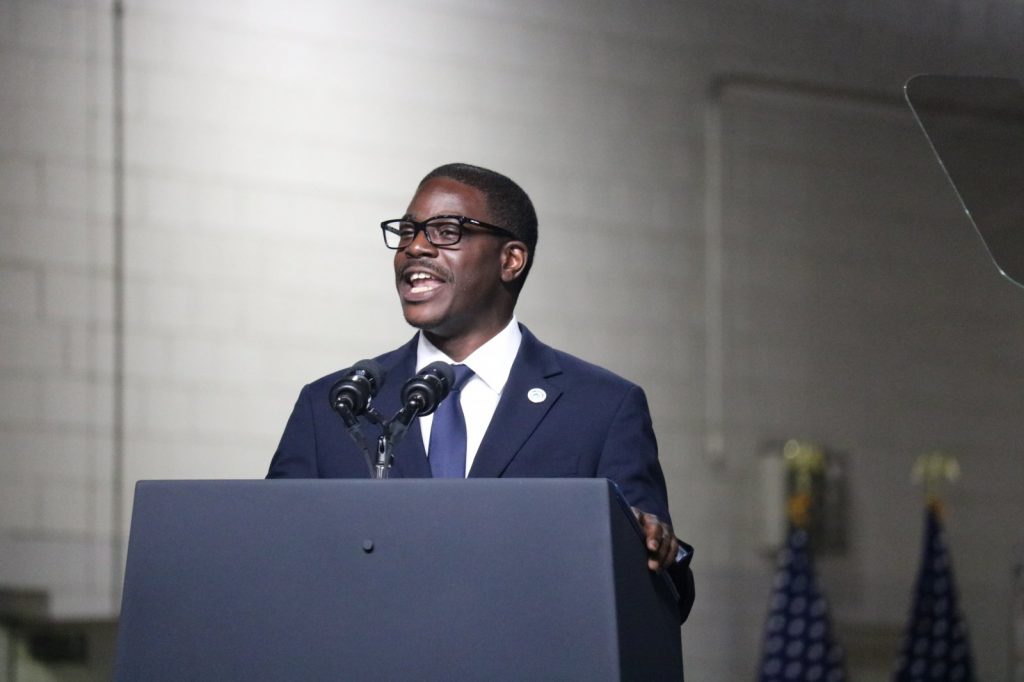
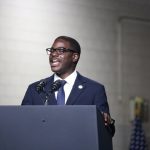
County Executive David Crowley. Photo by Sophie Bolich.
Three years ago, Milwaukee County Executive David Crowley was taking a victory lap.
After months of negotiations, he had secured a new 0.4% sales tax to help pay down the county’s huge pension obligations caused by a disastrous pension plan more than two decades prior. He signed a budget that delivered a historic property tax cut. It was the first time since 2004 that the county’s property tax levy went down, and in early 2024, he declared “What’s good for Milwaukee County is good for the entire state.”
On Thursday, heading into the final weeks of his campaign for governor, Crowley delivered what could end up being his final budget address as county executive. The budget reflects the challenge that the optimism of 2023 and 2024 didn’t last and the local government funding overhaul didn’t erase the county’s structural budget gap, a challenge the city and communities across the state are grappling with. But Crowley maintained his message that the county’s health is tied to the state.
The 2027 structural gap is estimated at $50 million. To balance the county’s budget, Crowley is proposing a combination of spending cuts, a 2.55% increase in the property tax levy and a large withdrawal from the county’s rainy day fund.
Despite the 2.55% property tax, the county’s overall property tax rate will decline, as the rate of increasing property values. Crowley’s budget also proposes a 2% salary increase for county employees. With rising health care costs, though, his proposal would require employees to contribute more to their health plan.
Crowley’s proposed budget does not include a property tax increase to fund development of a new criminal courthouse to replace the aging Safety Building, 821 W. State St. The administration is seeking authorization from the Milwaukee County Board — outside of the budget process — for an $857 million debt issuance to pay for the project. If approved, the county would need to increase property taxes to pay back the debt.
Transit
The Milwaukee County Transit System (MCTS) is facing a projected $15.7 million budget gap in 2027. For more than a decade, state mass transit operating aid, the largest source of funding for MCTS, has been frozen. In 2026, as federal pandemic stimulus funds ran out, MCTS implemented a $9.3 million budget cut.
Since then, MCTS officials have been contemplating a massive 25% budget cut to reduce service to a level that could be sustained for three years while it worked to redesign the bus network. Crowley’s budget instead includes a $12.1 million withdrawal from the county’s rainy day fund to reduce the cut to $3.6 million. The budget would also maintain an on-demand transportation program for people with disabilities.
“For decades, one of our toughest challenges has been securing sustainable funding for public transit,” Crowley said in his budget address. “That’s why I’ve directed my administration to make securing sustainable state funding our top legislative priority… While we pursue those longer-term fixes, we can’t let riders bear the cost of delay. Essential transportation services have to keep running while these solutions take shape.”
Parks
As a greater and greater share of the county’s tax levy has been dedicated to providing state-mandated services — currently 75% of the county tax levy pays for services required by state law — Milwaukee County Parks has been forced to generate more than 50% of its annual budget through business services, fees and rentals.
The system has a massive backlog of infrastructure projects estimated at approximately $500 million. Without new revenue, the department estimates it will have to implement nearly $1 million in budget cuts in 2027, including a $450,000 cut to aquatics, closing two additional pools, 15 splash pads and wading pools, and reducing hours at others; a $50,000 cut to traffic safety project spending; and a $300,000, across-the-board cut to general park operations.
To avoid this, Crowley’s budget endorses a pilot program requing parking fees in a handful high-traffic parking spots and spaces; primarily along the lakefront. Since 2018, Parks has spent approximately $23 million maintaining parking infrastructure. In an exclusive, Urban Milwaukee reported on the proposal in August.
“To help close that gap, my budget introduces a creative solution: a paid parking pilot program at high-demand locations, such as the lakefront,” Crowley said.
Courthouse Project
Crowley’s administration is pushing to begin development of a new criminal courthouse. The massive debt issuance required for the project is not included in his budget and will be voted on by the county board outside of the traditional budget process.
Still, Crowley used his speech to advocate for the new courthouse, which would be the largest public works project in the history of county government.
“This is a generational opportunity to think beyond buildings, to re-envision how infrastructure can support improved outcomes, and to advance key county priorities,” Crowley said. “This new facility will allow us to build a structure and environment that supports fair and just policies for all and deliver the services our community needs.”
Flock Cameras
Crowley’s proposed budget does not include funding for controversial Flock surveillance cameras. Currently, there are 42 Flock cameras located in 11 county parks. County supervisors are also moving to pass legislation removing them from parkland.
The funding for Flock — approximately $140,000 — would be moved to the Right to Counsel program run by Legal Aid Society of Milwaukee. The program provides legal representation for people facing eviction proceedings.
“I recognize the value this technology can offer our public safety partners, but the concerns for residents’ constitutional rights must take precedence,” Crowley said. “I want to acknowledge the Milwaukee County Sheriff’s Office for the work they’ve done to address accountability concerns in the policy framework. And while we’ve seen troubling news stories nationally about public safety officials misusing surveillance data, none of that has happened within Milwaukee County offices.”
Health and Human Services
The Department of Health and Human Services (DHHS), the largest department in county government, will see service cuts again as the county struggles to close its budget gap, according to county budget officials.
Funding for substance abuse services would be reduced by $1 million; youth literacy and parenting skills programs would be eliminated; three mental health partnerships funded in 2026 with reserve funds would end; funding for GPS monitoring in the youth justice system would be cut; the cost of youth placements in the state juvenile corrections system is budgeted to increase by approximately $2.1 million.
The Credible Messengers program, which began under Crowley and provides mentorship and violence intervention for justice-involved youth, would be cut by $532,000, though funding would remain at $1.27 million.
Milwaukee County Sheriff’s Office
The Milwaukee County Sheriff’s Office (MCSO) requested a $10 million budget increase, including $8 million for overtime and $2 million for new positions. Crowley’s proposed budget does not provide a significant increase, only enough to maintain the existing budget and account for inflationary cost increases, according to county budget officials.
Crowley Defends Financial Stewardship
In the campaign for governor, Crowley has faced an onslaught of ads attacking his tenure as county executive from expenditure groups aligned with his Republican opponent, U.S. Rep. Tom Tiffany.
In his speech to the Milwaukee County Board of Supervisors, Crowley defended his stewardship of taxpayer dollars, pointing out that his administration has managed to maintain a sizable rainy day account and secure a sales tax increase to help pay down the county’s legacy pension costs.
“Year after year, we collectively take on what can feel like an impossible task: preserving the services our residents rely on, investing in the critical infrastructure that will serve generations to come, and maintaining financial stability without placing that burden on our taxpayers,” Crowley said. “It is not an easy task. But together, we’ve delivered real, tangible wins for Milwaukee County that have moved us closer to our goal of generational fiscal stability.”
Crowley reiterated his message of nearly three years ago, that Milwaukee County’s challenges are not unique and that the solutions his administration has pushed for at the state level would benefit communities across the state.
“The rest of the state is watching how we respond, how we solve problems, and how we lead,” Crowley said. “Because what’s good for Milwaukee County is good for Wisconsin.”
The county board will spend the next month reviewing departmental budgets and considering amendments before adopting a final budget in November.
If you think stories like this are important, become a member of Urban Milwaukee and help support real, independent journalism. Plus you get some cool added benefits.
More about the 2027 Milwaukee County Budget
- MKE County: Crowley Avoids Transit Cuts In 2027 Budget Proposal - Graham Kilmer - Oct 1st, 2026
- MKE County: Parks Proposing Charging For Parking in Busy Areas - Graham Kilmer - Aug 14th, 2026
Read more about 2027 Milwaukee County Budget here
Political Contributions Tracker
Displaying political contributions between people mentioned in this story. Learn more.


MKE County
-
Committee Endorse Removing Flock from Parks
 Sep 30th, 2026 by Graham Kilmer
-
Another Inmate Charged With Witness Intimidation Using Jail Tablet
 Sep 25th, 2026 by Graham Kilmer
-
Supervisors Cut Tens of Millions From Courthouse Project Budget
 Sep 24th, 2026 by Graham Kilmer