
How Fresh Produce Reaches Needy Milwaukee Families
The story of Hunger Task Force's farm, a crucial source of fresh produce at local food pantries.
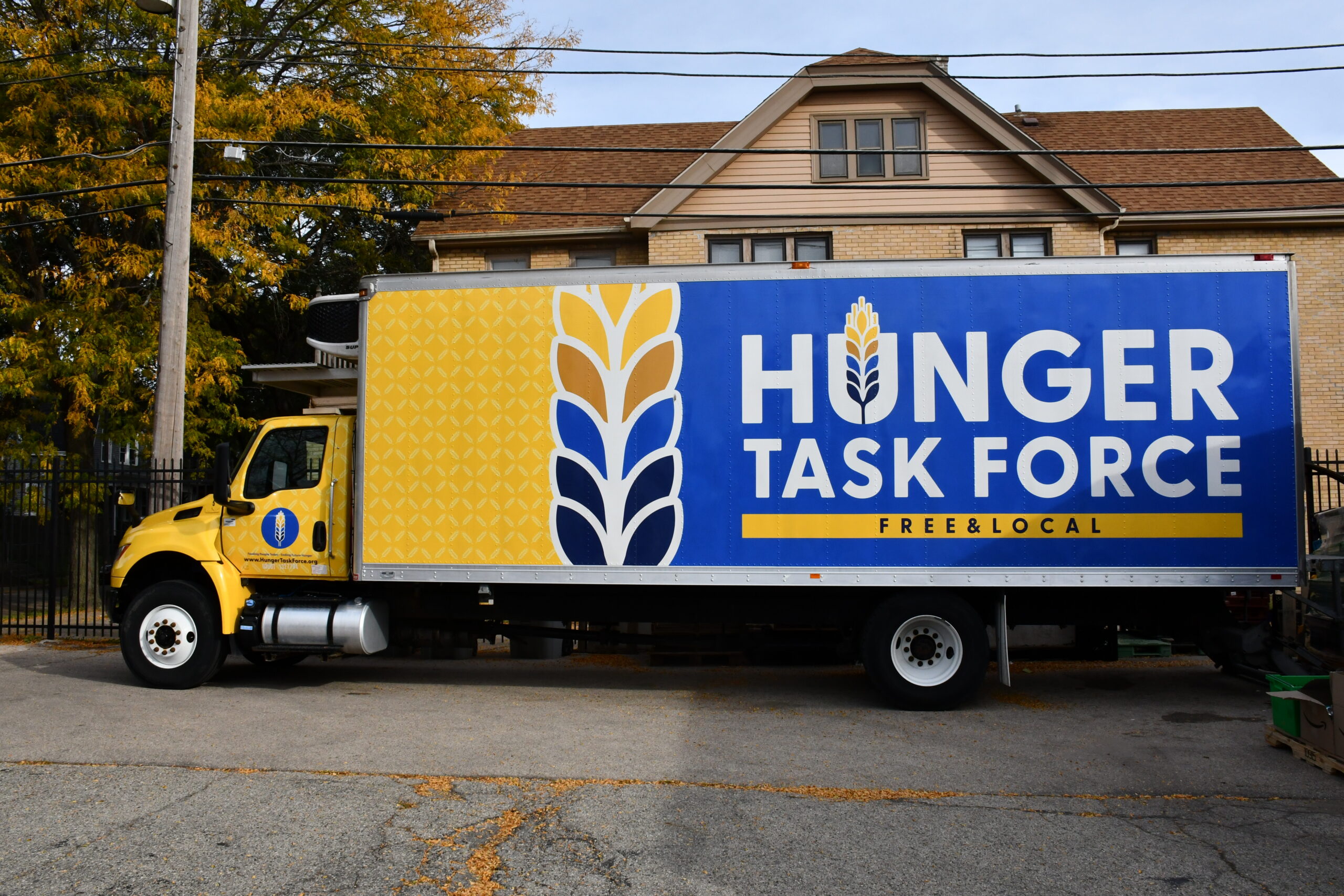
Hunger Task Force delivery truck at the Hmong American Friendship Association. Photo by Lauren Hafeman on Oct. 9, 2026.
On a sunny October day, a line outside the Hmong American Friendship Association food pantry stretched down N. 39th St. At noon, pantry volunteers began welcoming shoppers down the aisles, where they browsed the shelves stocked with bread, milk, macaroni noodles, apple cider vinegar, squash, oranges, apples, cilantro and collard greens.
Fifteen minutes later, nearly all of the cilantro had been picked up and placed into shoppers’ take-away bags. By 3 p.m., when the distribution ended, all of the fresh produce was gone.
One woman, Tiffany, who was accompanied by her sister, filled a paper grocery bag to its brim with collard greens. She planned to prepare them alongside cornbread and barbecue. The meal, she said, would be served to her and her sisters’ families and then shared with elders who live on her street “to make sure they got a plate.”
Tiffany visits the Hmong American Friendship Association (HAFA) food pantry every week, sometimes by herself, sometimes with her sister or a friend. She said picking up fresh produce here, for free, helps lower their weekly grocery costs.
“They have it here, the stuff we like to cook, the stuff we like to eat, like fruits, collard greens, other vegetables, cornbread,” Tiffany said. “I’m glad they help us out in this community. They should do that more around Milwaukee.”
Like Tiffany, other pantry shoppers described how HAFA’s selection of fresh fruits and vegetables offers an opportunity to prepare nutritious meals without stretching their limited budgets. Some described HAFA as their only reliable source of fresh food that they otherwise couldn’t afford. Many expressed gratitude that the pantry is stocked with food other than canned goods and nonperishables, which, at most pantries are the only options.
Their accounts illustrate how access to fresh food, which the United Nations has declared a human right, is denied to many Milwaukeeans. According to Feeding America, one in six people living in Milwaukee County experienced food insecurity in 2024 and may live in what has been described as food deserts.
So where do the fresh options at HAFA come from?
One key source is the Hunger Task Force Farm, a 208-acre farm in Franklin, Wisconsin, where a team of farmers grows, harvests and distributes more than half a million pounds of fresh fruits and vegetables every year. Delivering this produce across its network, thousands of Milwaukeeans facing food insecurity gain access to healthy, local options.
It’s a distinctly Wisconsin approach to addressing fresh food access: grow produce on Wisconsin soil and bring it directly to the people who need it most.
The Farm
Sarah Bressler, director of the Hunger Task Force Farm, walks out into a thriving field of mustard greens, wearing a pair of work boots and carrying a harvesting knife. She crouches down, moves some soil around with her hands and shows this reporter how to properly harvest the greens. If the greens are cut just above the soil, they will continue to grow, allowing them to be harvested many times throughout the season.
Every year at the Hunger Task Force Farm, over 70 varieties of 28 different crops are planted, cultivated and harvested by farm staff and an average of nearly 6,000 volunteers.
The farm includes crops sought by Milwaukee’s varied racial and ethnic groups, food that is familiar and rooted in cultural culinary traditions. Collard greens, which Tiffany picked up at HAFA, were added specifically to address Black pantry shoppers’ requests. Bok choy and napa cabbage were added in recent years at the request of Hmong pantry shoppers.
Planting of field crops, which requires meticulous planning in itself, occurs in late spring. This year, the farm used around 60 acres of field, each of which was tested for soil health before planting and supplemented with the nutrients needed to ensure robust growing, Bressler said.
After tending to the crops through summer’s heat, most harvesting begins in September and typically lasts until late October or early November, though the farm will keep harvesting “until the weather shuts us down,” Bressler noted. Some years they have harvested cabbage and greens during mild snowstorms.
“In the last three years, the need for fresh food has gone up 50%,” Bressler said. “We try to produce as much as we can from each acre, to make sure we are increasing our yield number every year.”
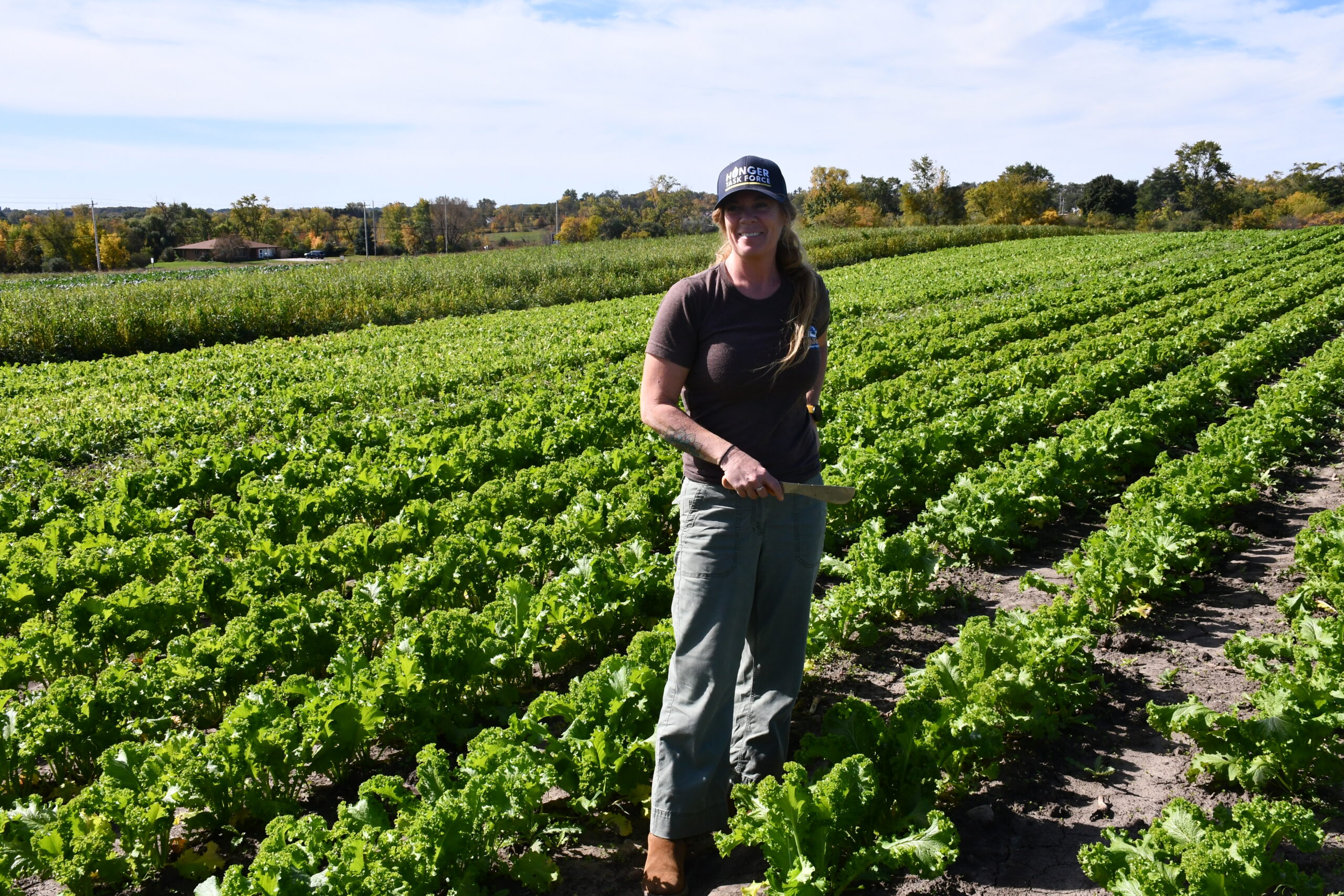
Sarah Bressler, Hunger Task Force farm director. Photo by Lauren Hafeman on Oct. 8, 2026.
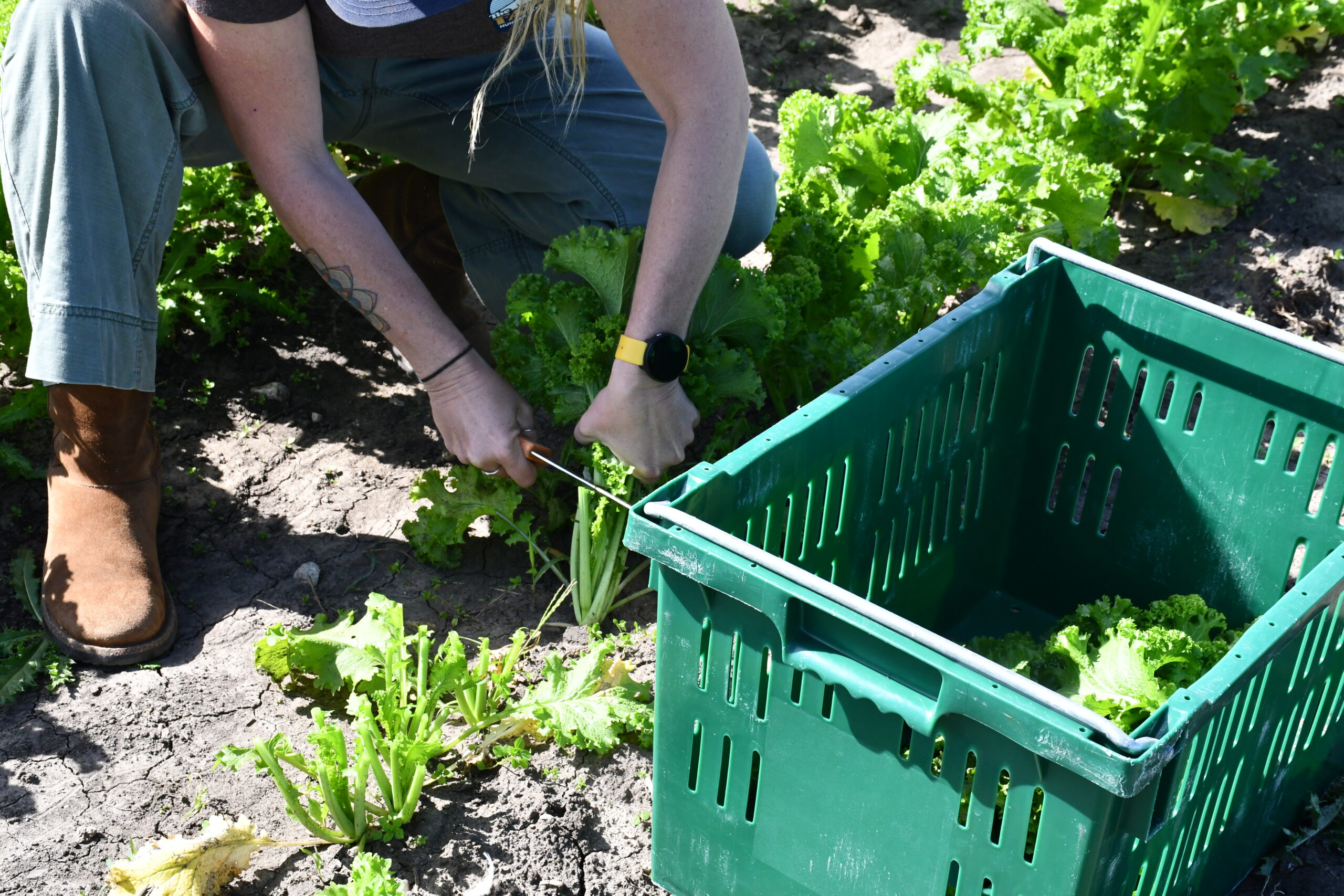
Bressler harvesting mustard greens. Photo by Lauren Hafeman on Oct. 8, 2026.
The crops are then transported to the farm’s central operations facility. Here, teams of volunteers and farm staff wash the produce in cold water, extending its shelf life.
On Urban Milwaukee’s visit, members of the Porsche Club of America Milwaukee Region were washing mustard greens as volunteers. As a farm staff member moved the yield into a long, cold water sink, volunteers swished the greens around, chatting happily though staying diligent to their work.
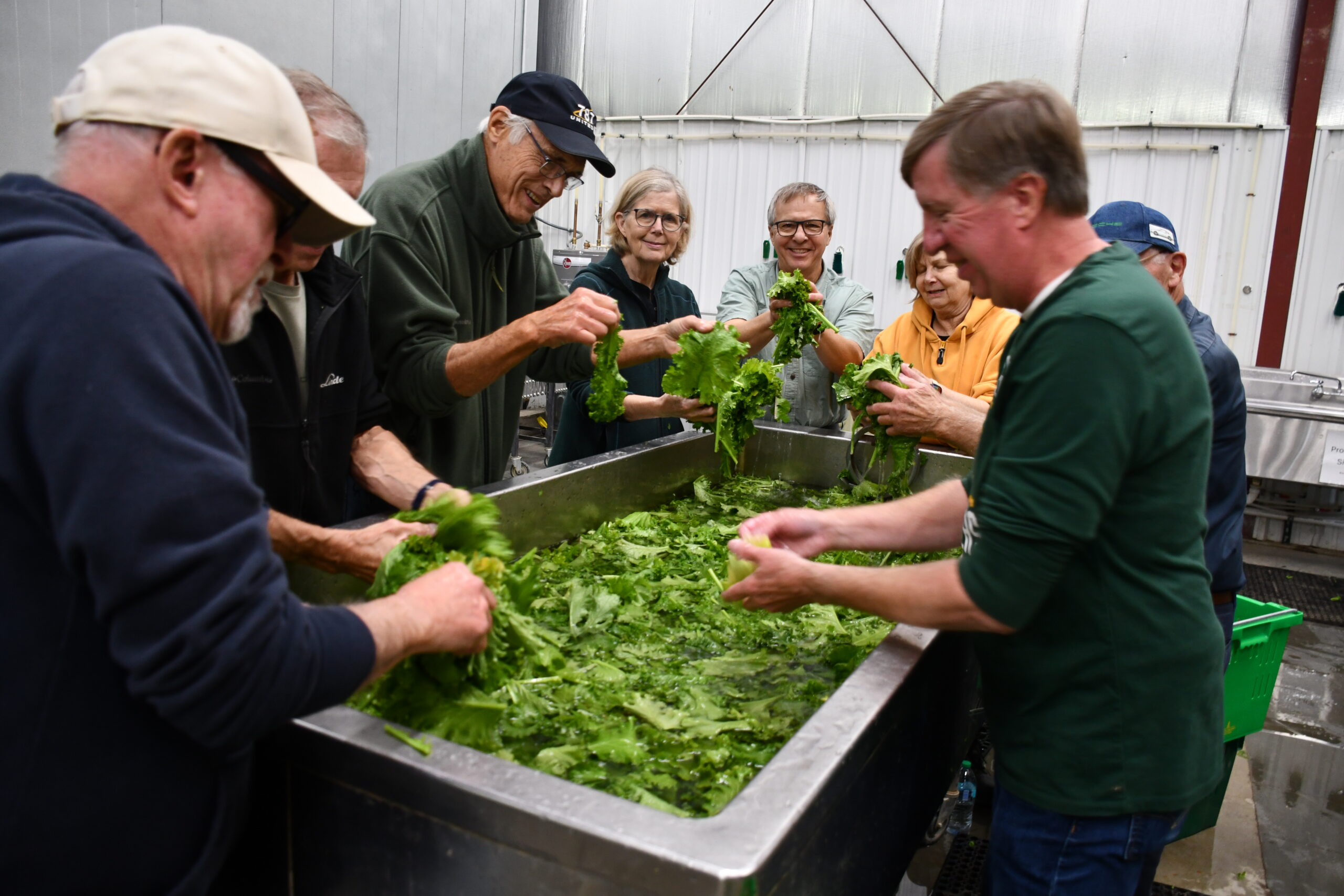
Volunteers from Porsche Club of America Milwaukee Region washing mustard greens. Photo by Lauren Hafeman on Oct. 8, 2026.
Roger Franzel, the club’s charitable outreach committee chair, told Urban Milwaukee that Hunger Task Force has been the club’s designated charity for years and he has visited the farm countless times to volunteer.
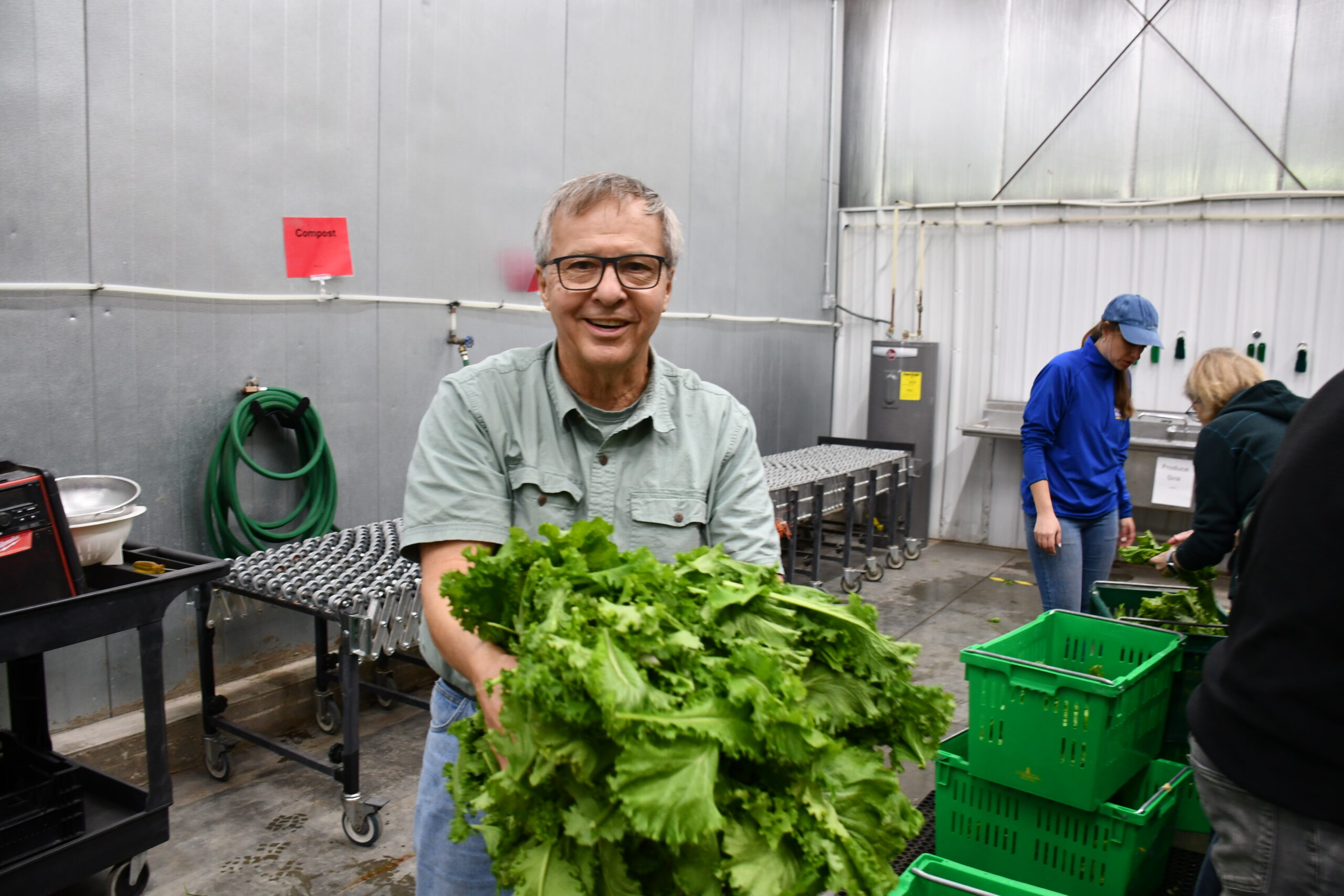
Roger Franzel. Photo by Lauren Hafeman on Oct. 8, 2026.
Farm staff then stack moving containers filled with the freshly washed produce three to four containers high, wrapping them with industrial-sized cling wrap, ensuring they are secured and preserved during transportation.
The central operations facility features a truck loading zone, which streamlines the distribution process. Throughout the harvesting season, the farm distributes fresh produce daily, with the goal of delivering it within 24 to 48 hours of being harvested.
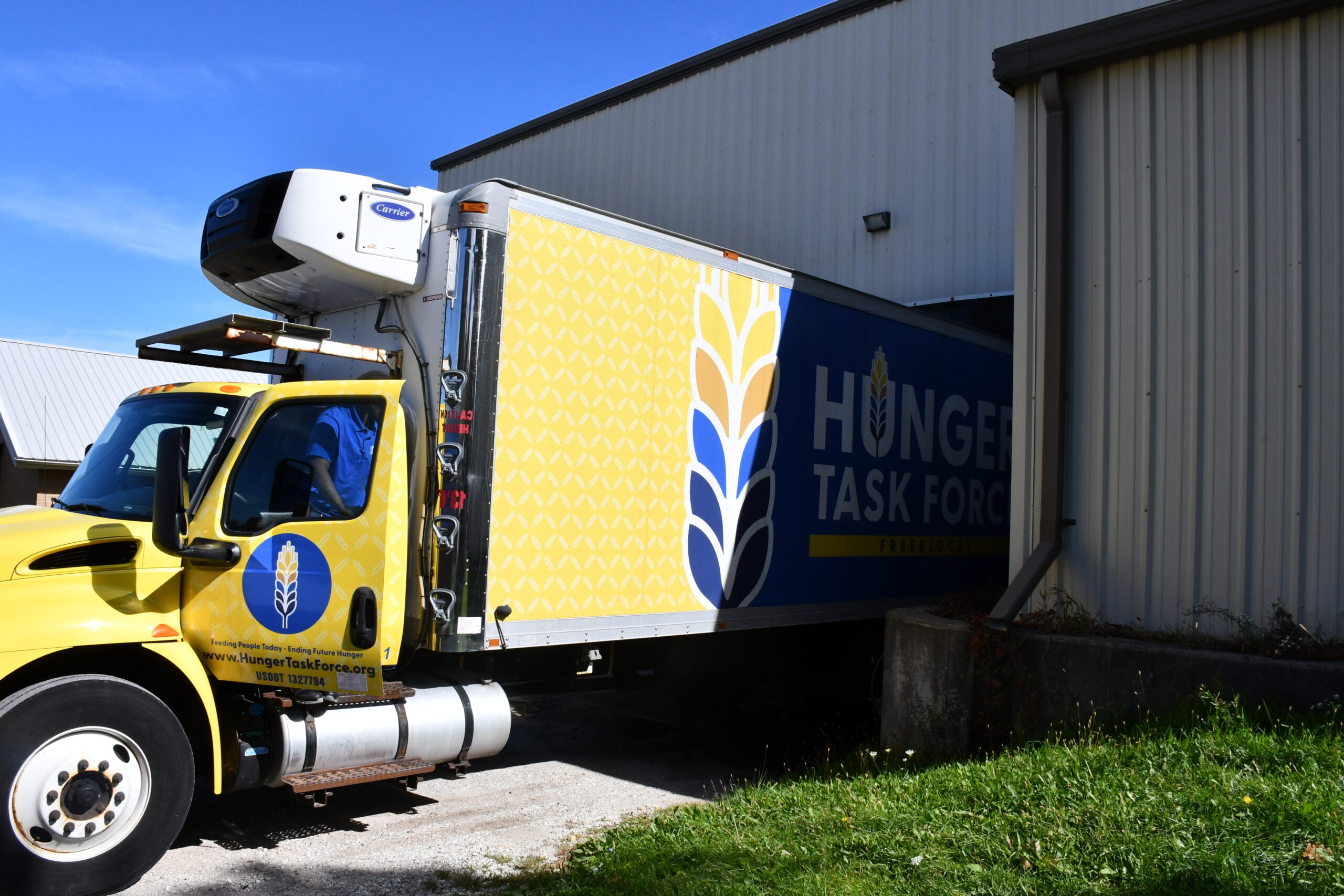
Hunger Task Force Truck docked at farm’s central facility. Photo by Lauren Hafeman on Oct. 8, 2026.
Distribution and Delivery
At promptly 9 a.m., the sound of a Hunger Task Force delivery truck’s wheels grinding across the asphalt in HAFA’s parking lot could be heard from inside the pantry. The slow beeps of the truck’s backup alarm announced the farm’s fresh produce safely made its 15-mile, cross-county journey.
Driver Sal Gonzalez jumped from his seat, opened the truck’s back hatch and meticulously began loading the green containers of fresh produce onto a large motorized pallet jack.
One Keo Phongsavath, a Hmong immigrant from Laos who volunteers at HAFA every Tuesday and Friday for delivery and distribution, and Ed, a longtime HAFA volunteer, were there to help Gonzalez stock the produce in the pantry’s aisles.
Phongsavath, Ed and Gonzalez had a lively, friendly rapport. Gonzalez said they see each other weekly and often catch up on what’s going on in their lives.
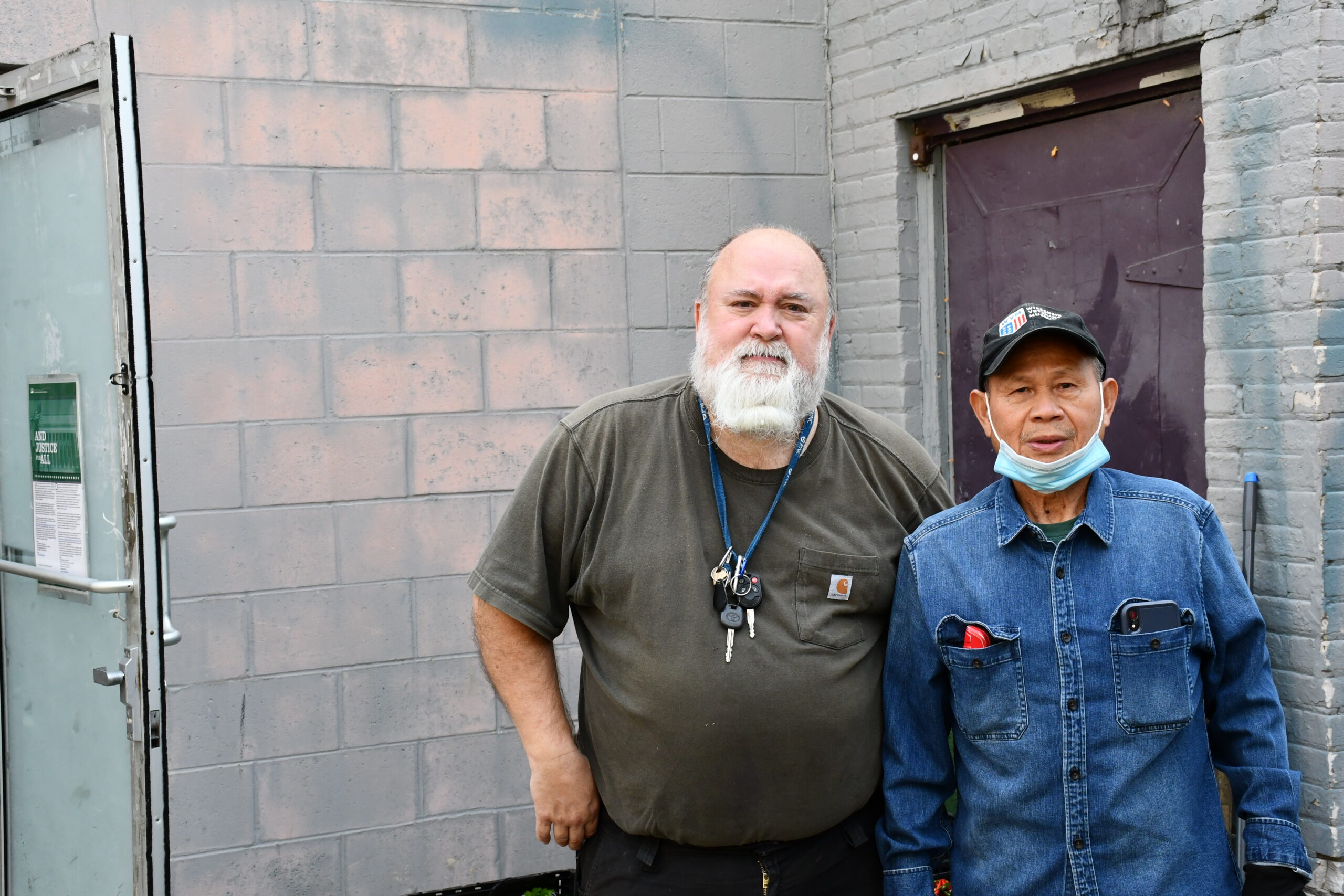
Ed and One Keo Phongsavath, volunteers at HAFA. Photo by Lauren Hafeman on Oct. 9, 2026.
Gonzalez typically makes two delivery stops per day, but said the number of stops doesn’t equate to how busy he is. The time it takes to safely deliver the food, he said, takes a whole workday.
He said sometimes there are leftovers, and rather than throwing them out or returning them to Hunger Task Force coolers, “All us drivers, we’ll drive around the city and make phone calls to senior centers, pantries and we will find out if they can use any of the products that we have. A lot of people can.”
Gonzalez expressed pride in his position and said it’s fulfilling to help people through his work.
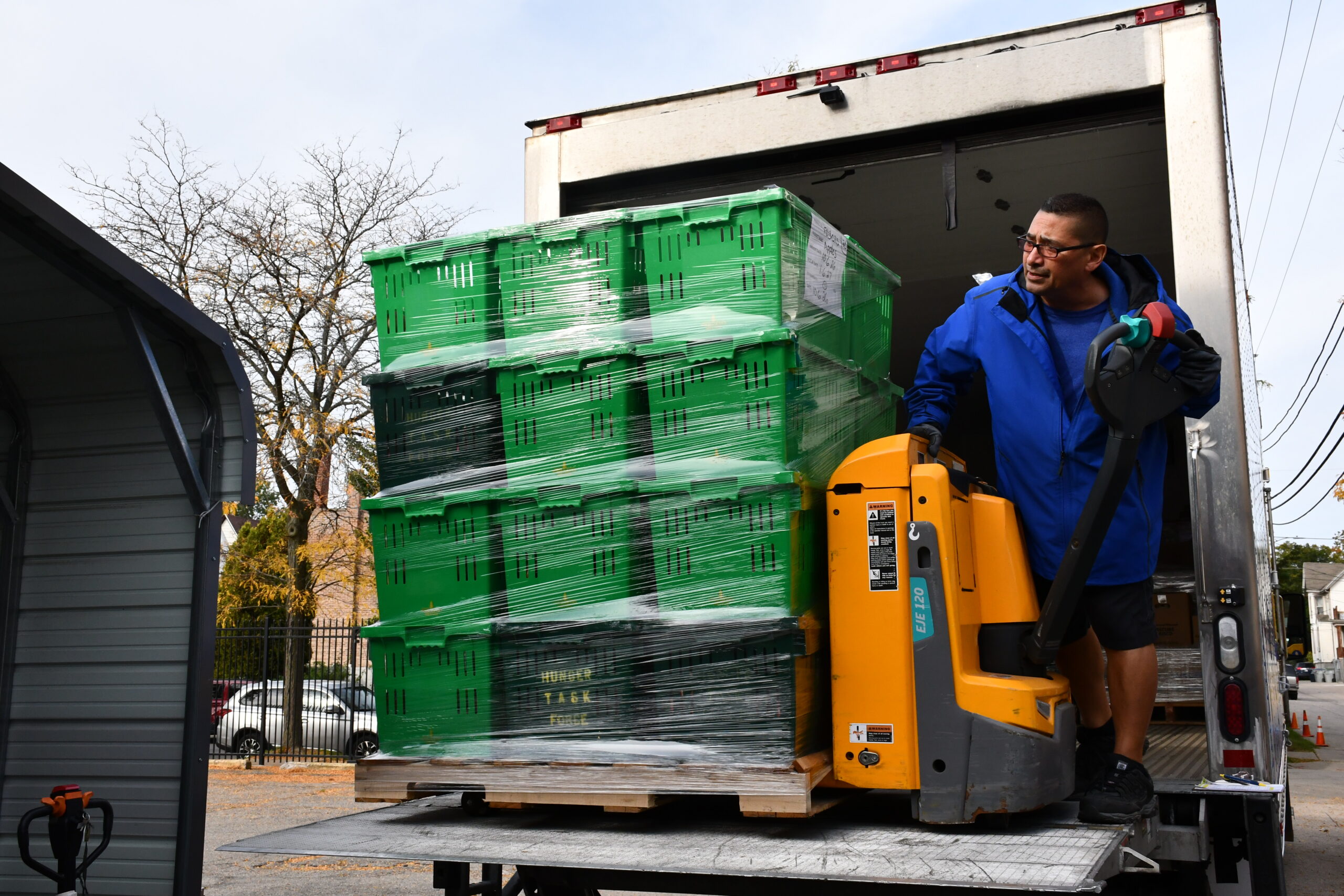
Sal Gonzalez unloading apples from Hunger Task Force Farm at HAFA. Photo by Lauren Hafeman on Oct. 9, 2026.
Lo Neng Kiatoukaysy, HAFA’s executive director for nearly 30 years, described the important role Hunger Task Force plays at the pantry.
“We serve about 40,000 families each year here, so it’s always nice to get a truckload of stuff: apples, mustard greens, bok choy, parsley, collard greens,” Kiatoukaysy said. “Without them, I don’t think we would be able to serve that many people.”
Kiatoukaysy is a refugee from Laos. Settling in the Twin Cities as a child, he remembers visiting food pantries with his mother. He said he can relate to those who visit HAFA.
Kiatoukaysy expressed special gratitude to Hunger Task for growing culturally significant foods.
“We don’t just serve the Southeast Asian community [at HAFA], it’s open to the whole community. We serve the African American community, Hispanic community, different communities, and they all like different stuff,” he said. “Hunger Task Force doesn’t just grow whatever they want. They’ve really thought about what we like. They really care about what we put in our bodies. You don’t see too many big organizations that go out of their way to care for minorities.”
He said every distribution day at HAFA, the same story plays out: fresh foods leave the pantry shelves first.
“The food price is so high in the grocery store, even at Aldi, it really jumps. People really appreciate the fresh food. It tends to go faster than the canned and dry items, which are usually second or third pick,” he said.
“What happens when people are forced to take items they don’t really want or know what to do with?” Kiatoukaysy said, referencing non-perishable items. “It sits on their shelves and it limits their freedom.”
“Food choice gives you freedom,” he concluded.

Lo Neng Kiatoukaysy, HAFA’s executive director. Photo by Lauren Hafeman on Oct. 9, 2026.
Shoppers Spotlight
Fred Willis, who moved to Milwaukee from Arkansas 30 years ago, lives near HAFA and visits the pantry weekly. He does not own a car and lives with a disability that makes it challenging for him to walk far distances. He said being able to access fresh fruits and vegetables is very important to him.
“It’s healthier for me,” he said, gesturing to the collard greens he placed in his cart.
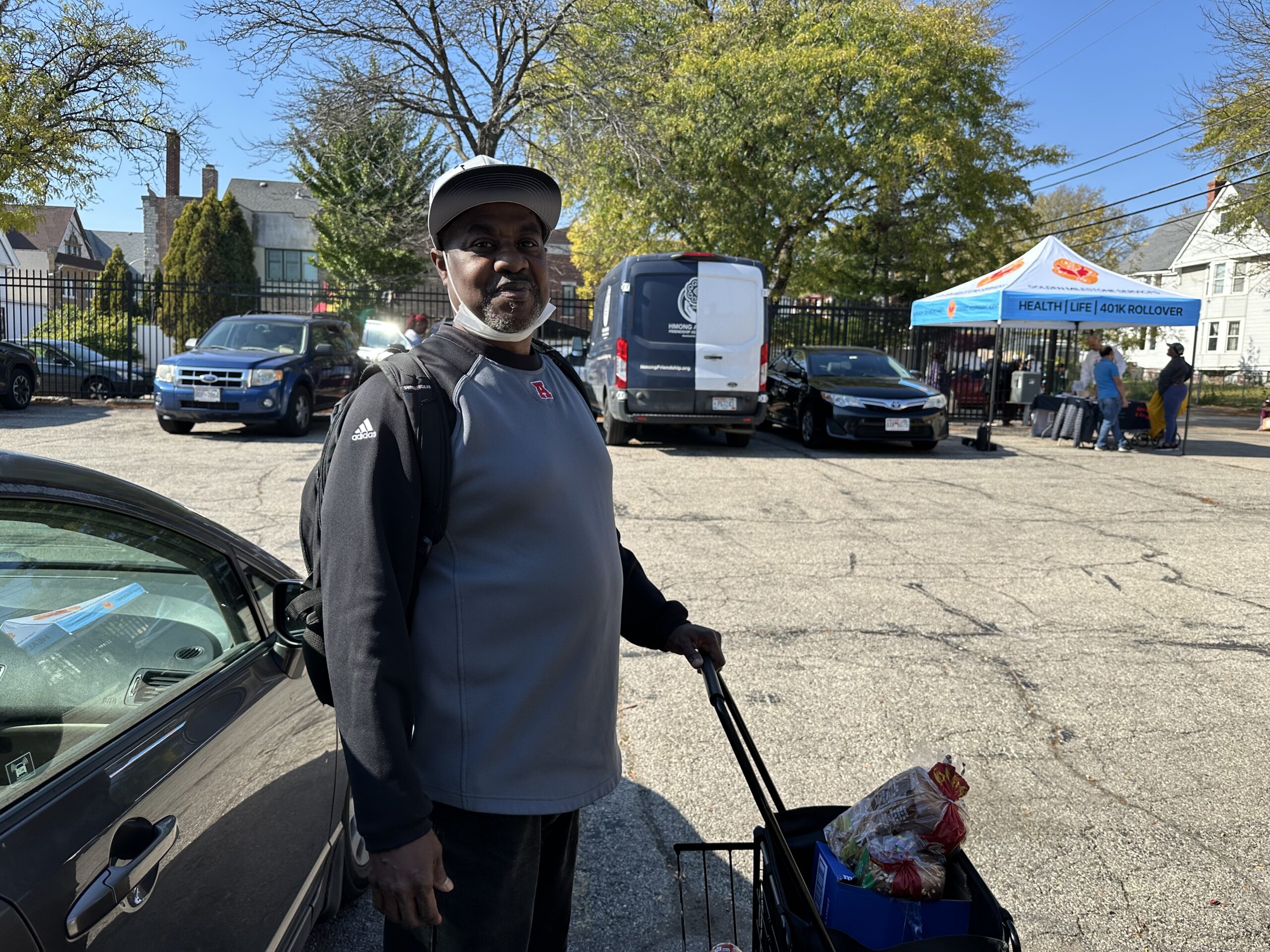
Fred Willis. Photo by Lauren Hafeman on Oct. 23, 2026.
Ying Vang is a refugee from Laos. She moved to Milwaukee in 1983. She is a retiree and finds it hard to support herself on Social Security. She picked up cilantro.
“Thank you to the organization that brought the produce to us here. As a widow with low income, every little bit helps,” Vang said. Lang Xiong, HAFA’s community advocate, provided interpretation.
Chansouk, who is also from Laos, moved to Milwaukee in 1979. She requested her last name remain private. She picked up collard greens and planned to make soup with it.
She said, “A lot of people here, like us, like Lao people, Myanmar people, Thai people, like fresh food because it’s good for your body. It has to do with the food from our culture.”
“The food is fresh from the farm here, it’s a very nice thing” she continued. “Sometimes I don’t want to eat canned food.”
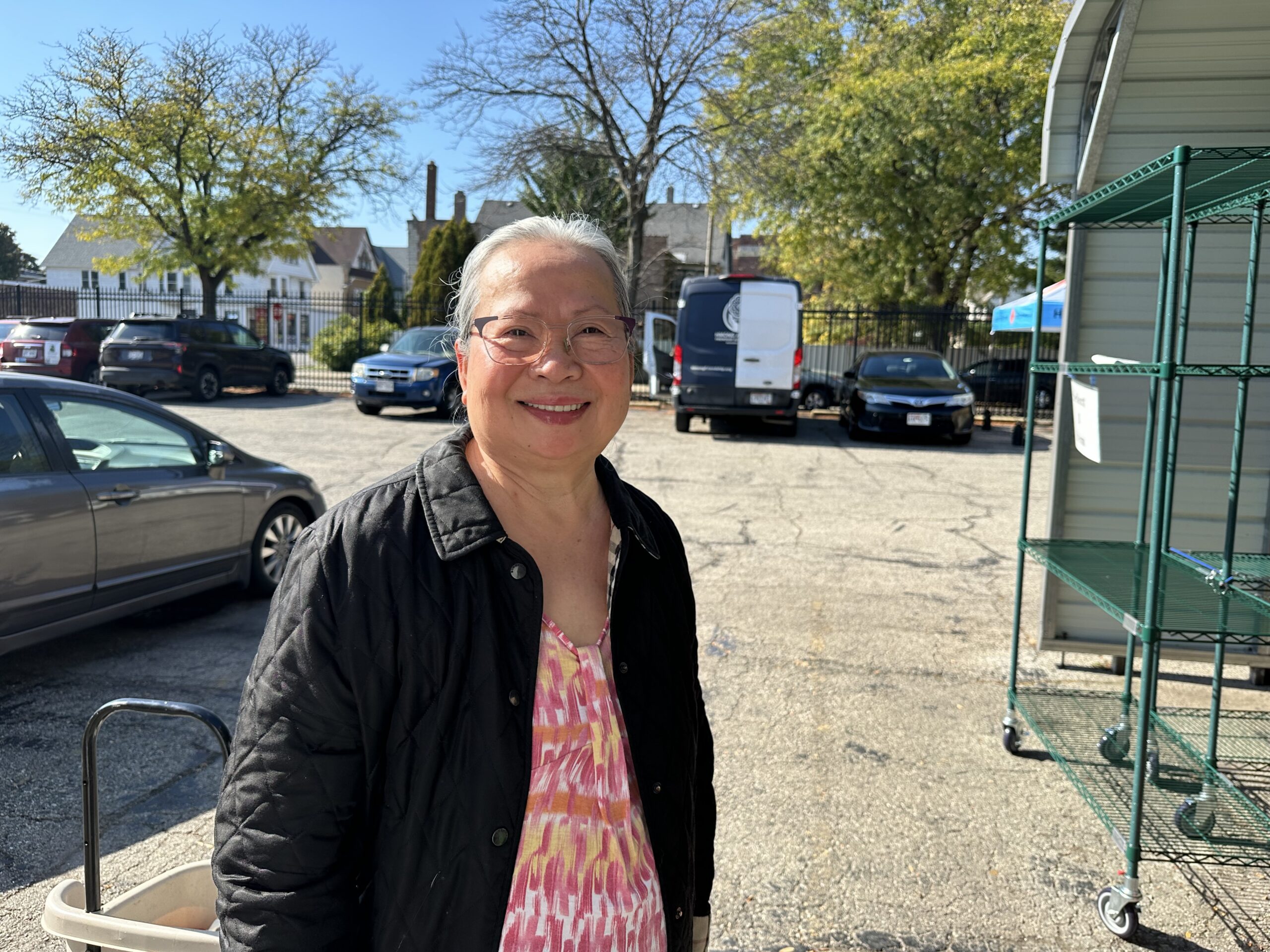
Chansouk. Photo by Lauren Hafeman on Oct. 23, 2026.
Dwayne, who also requested his last name remain private, is homeless. He lives in his car, which he drives to HAFA weekly and uses to transport himself to friends’ kitchens, where he cooks.
“I like the food from the farm, it helps me not get sick,” Dwayne said, noting that HAFA is “the only place” where he can reliably pick up fresh options.
“It helps me to be healthy, to survive pretty much.”

Existing members must be signed in to see the interactive map. Sign in.
If you think stories like this are important, become a member of Urban Milwaukee and help support real, independent journalism. Plus you get some cool added benefits.