2026 Election Has Parallels with 1982
Both were World Series years with a similar roster of election contests.
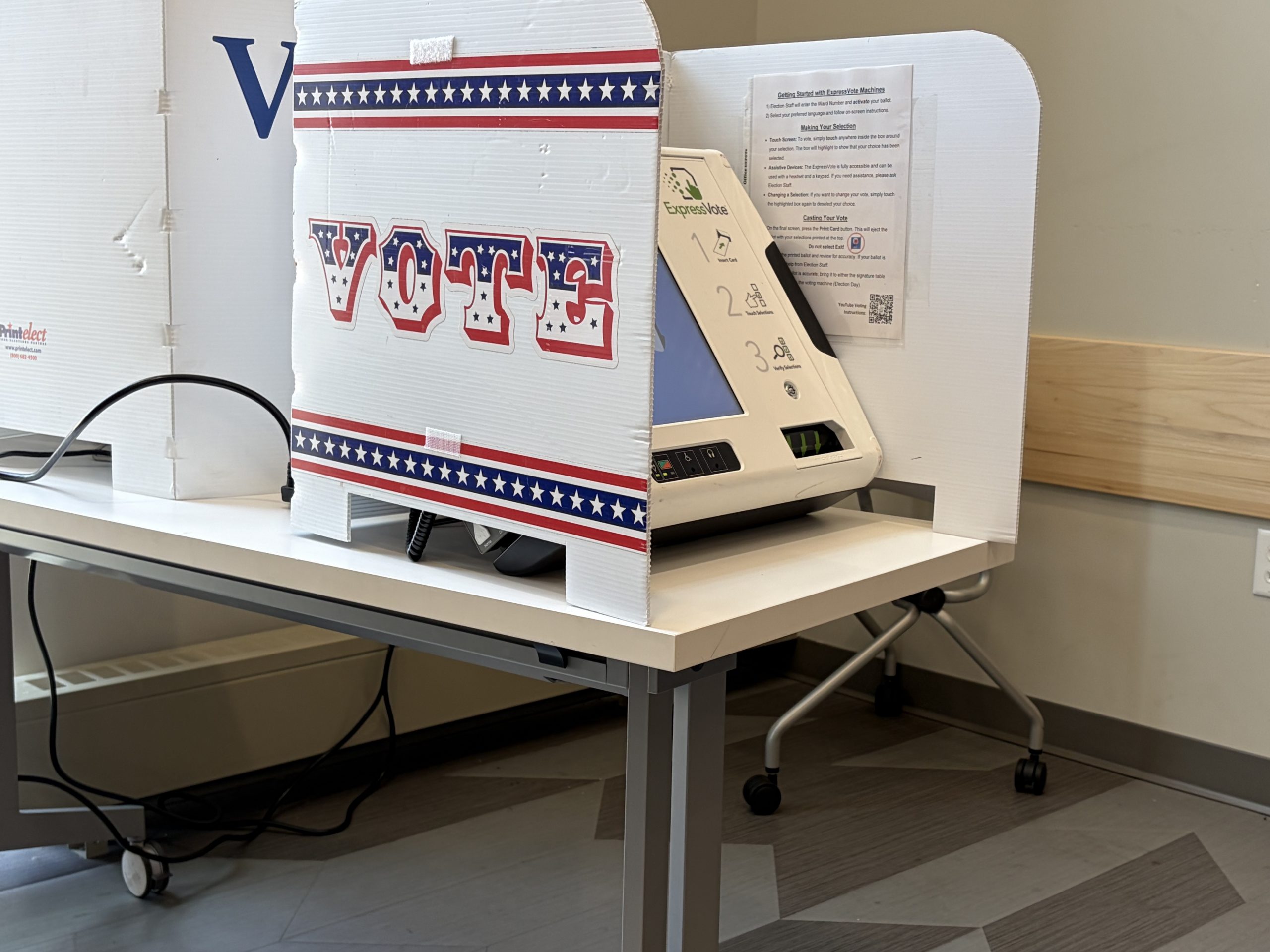
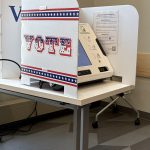
Voting booth. Photo taken July 28, 2026 by Sophie Bolich.
For all the right Brewers reasons, the year 1982 has been fondly remembered this fall. This year’s Brew Crew avenged the Brewers’ Oct. 20, 1982, loss to the St. Louis Cardinals in the seventh game of the World Series, and some members of the old team were on hand for the celebration of the Brewers’ first World Series championship.
Beyond the mania over the Brewers in both 1982 and 2026 are interesting political parallels: elections for a new governor in both years, following the incumbent’s retirement. Voters in both years also elected an attorney general, decided partisan control of the Legislature, and considered multiple amendments to the state Constitution.
One difference in the two election cycles is that there is not a U.S. Senate election this year. In November 1982, Democrat William Proxmire won his fifth and final term in the Senate.
Proxmire defeated a state senator, Republican Scott McCallum, by a margin of 63% to 34%. McCallum later served as lieutenant governor from 1987 until 2001, when he became governor after Republican Tommy Thompson resigned to join the Cabinet of President George H.W. Bush.
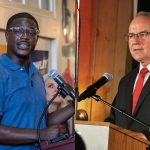
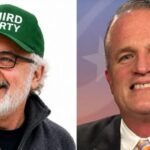
This year, Milwaukee County Executive David Crowley is the Democratic nominee for governor, and U.S. Rep. Tom Tiffany, who has represented northwest Wisconsin in the U.S. House, is the Republican candidate.
In 1982, Democrat Tony Earl, a lawyer, former Assembly leader and respected secretary of the state Department of Natural Resources, was the Democratic nominee for governor.
Earl’s opponent was Terry Kohler, a business executive whose father and grandfather had served as governor. Kohler entered the race “walking in the footsteps of my father and grandfather,” he said, after one-term Republican Gov. Lee S. Dreyfus announced in May — seven months before the election — that he would not run again.
If you’re curious, Democratic Gov. Tony Evers gave members of his party far more warning, announcing his retirement in July 2025 — sixteen months before the election.
Earl and Kohler argued over one issue — jobs — that is being debated again. But this year, state government has a $3 billion budget surplus — unlike 1982, when Earl claimed the state faced a post-recession deficit.
Frank Ryan, a Capitol reporter for United Press International, a news syndicate that shut down in 1999, summarized the 1982 campaign this way: “Accusing Kohler of oversimplifying Wisconsin’s economic difficulties, Earl has claimed Wisconsin is staring at a $1.5 billion deficit … and that an unpopular tax increase probably will be needed.
“Kohler has disputed the deficit figures, and has pledged a no-tax-increase state budget if elected.”
Wisconsin, added Ryan, “a state with a well-balanced mix of agriculture, tourism and industry, rarely has been touched by economic downturns. But that changed in the current recession. Unemployment soared to record post-World War II double-digit highs and Kohler, a wealthy Sheboygan businessman, claimed government spending and its restrictions on business contributed to it.”
“I’m the only one running so far who has ever created a job,” Kohler said.
On May 1, 1982, six months before the election, the state sales tax was raised from 4% to 5% — what it is today, although local governments now levy surtaxes and wheel taxes. The 1982 increase was supposed to be temporary.
On Nov. 2, 1982, Earl beat Kohler by a margin of 56% to 42% — a landslide victory that seems impossible today, since Wisconsin’s statewide elections are now often decided by less than 1% of the vote.
In that election, Democratic Attorney General Bronson La Follette made history by becoming the first statewide candidate to get more than one million votes.
This year, Democratic Attorney General Josh Kaul is being challenged for a second time by Fond du Lac District Attorney Eric Toney, who narrowly lost to Kaul four years ago.
In 1982, voters also re-elected all nine U.S. House members — five Democrats and four Republicans. Wisconsin lost one of those seats after the 1990 Census. Republicans now hold six of the state’s eight U.S. House seats.
On Nov. 3, Democratic state Senate candidates hope to win two or more seats now held by Republicans, giving them Senate control for the first time since 1990.
In the 1982 elections, Democrats kept their 19-14 margin of Senate control.
This year, Democrats hope to gain enough seats to control the 99-member Assembly after 16 years of being in the minority. In 1982, Democrats kept their 59-40 lock on that house.
One other similarity between this year and 1982 elections is proposed constitutional amendments. Nine were approved by voters 44 years ago; voters will decide three Republican-drafted proposed changes on Nov. 3.
Back in 1982, of course, far less money was spent on elections and the political discourse seemed far less nasty. But most citizens back then, like now, far preferred talking baseball to politics.
Steven Walters started covering the Capitol in 1988. Contact him at stevenscotwalters@gmail.com.
If you think stories like this are important, become a member of Urban Milwaukee and help support real, independent journalism. Plus you get some cool added benefits.
Political Contributions Tracker
Displaying political contributions between people mentioned in this story. Learn more.


The State of Politics
-
How The Tax Break for Data Centers Was Passed
 Oct 26th, 2026 by Steven Walters
-
Lt Governor Race Offers Stark Contrasts
 Oct 19th, 2026 by Steven Walters
-
Will Fox Valley Voters Disappoint Democrats?
 Oct 12th, 2026 by Steven Walters