The Relic Ensemble Will Play Peruvian Period Music
Early Music Now presents expert ensemble in Spanish colonial Latin American music.
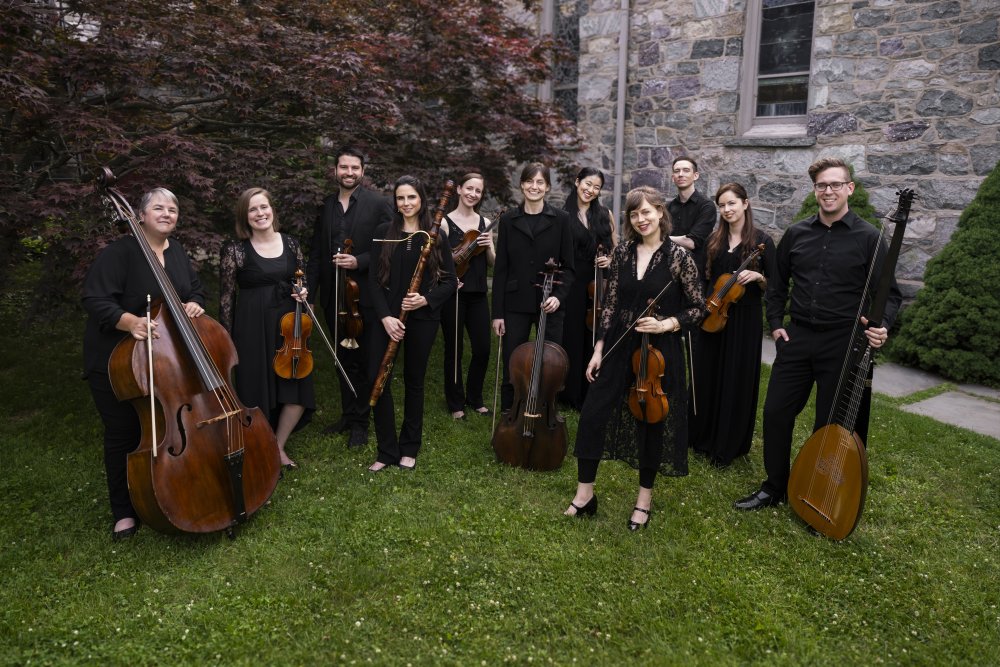
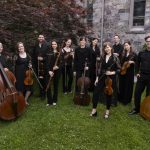
Relic Ensemble. Photo from Early Music Now.
Early Music Now’s concert season includes many of the world’s preeminent early music artists and ensembles. The season opens Saturday with a new group, the Relic Ensemble, which has made an impact in its first three years. Critics have praised the ensemble for its “clarity and transparency” and “fleet, precise, and often virtuosic playing,” calling it an “airtight ensemble” and an “exceptional, sonically rich continuo group.”
University education in the United States over the past half-century has introduced “historical performance” into its curriculum, preparing fresh sets of performers steeped in the details of 15th- to 17th-century period instruments and music. More recently, a well-endowed program created by Juilliard in 2009 was home to six artists who decided after graduation to establish the core group of the Relic Ensemble.
The Relic Ensemble’s program for this concert takes as a starting point music likely to be heard in 17th- and 18th-century Peru. Lima, Peru, was the seat of the Spanish viceroyalty, an administration that included large parts of Spanish Latin America from Ecuador to Bolivia and east to Argentina. The influences included sacred and secular music representing composers with European careers and a few South American residents who were introduced to Spanish Baroque traditions by Jesuits who administered a network of churches.
The concert framework draws on a colonial opera that premiered in Lima. Heavily defined by Italian and Spanish influences, La Púrpura de la Rosa (The Blood on the Rose) by Tomás de Torrejón y Velasco tells the story of Venus, who is rescued by Adonis, a mythical but mortal hero, from an attack by a wild boar. The attack, the love affair, the jealousy of Mars (god of war and lover of Venus), the untimely subsequent death of Adonis and the transfiguration of Venus and Adonis by Jupiter are told in chapters. Each chapter is introduced by lyric poetry from the opera, followed by selections of music matched to the emotions of each scene. Taken together, the concert draws from a variety of Baroque composers, mostly Spanish, many of whom spent some time in Peru.
Baroque styles influenced by the villancico infused even Spain’s sacred music with dance forms, folk rhythms and popular texts. The villancico became the favorite genre of Spanish and colonial Latin American worship in the 17th and 18th centuries. The concert’s program extends beyond this core, recognizing the broad influence of Spanish composers across the Spanish colonial empire.
Even though much of the music was written for voice, this concert is entirely instrumental, with many pieces transcribed for this concert by ensemble members, primarily cellist Cullen Coty O’Neil (identified as the group’s “agent,” effectively the artistic director).
The core group that founded the Relic Ensemble works as a collective, sharing program development and direction. Eight bowed string players are supplemented by harpsichord, theorbo, guitar, bassoon, recorder and percussion.
Relic Ensemble YouTube recordings reveal an energized concert style that contrasts with the sometimes cautious playing of groups that perform on gut strings. Performances, even for 12 players, are accomplished without a conductor. That focused communication adds to the excitement of the music.
The ensemble’s stated mission, to perform in all 50 states, reflects its chartered intention: to maintain the quality and focus of the founding group’s experience at Juilliard in concert performances. After three years, with many states to go, this exciting new ensemble is building an audience.
Two Milwaukee connections complete the story. Sue Yelanjian, a double bass player, grew up in South Milwaukee and was involved in the Milwaukee Symphony Youth Orchestra before studies in Boston and Ohio led to her settling in Cleveland. Learning of historical performance after her formal education, she now performs with Apollo’s Fire and, like her colleagues, with a number of other groups around the country. Baroque double bass is rarely represented in early music ensembles, but it adds strength to the common bass line of the period — the basso continuo.
Héctor Alfonso Torres González graduated from the classical guitar program at UW-Milwaukee. He plays the theorbo (a long-necked bass lute) with the ensemble but switches to Spanish guitar for many pieces.
This Early Music Now concert is scheduled for Saint Paul’s Episcopal Church, 914 E. Knapp St. in downtown Milwaukee, at 5 p.m. on Saturday, Oct. 24. A pre-talk is offered at 4:00 p.m. Tickets are available online or at the door. Parking is available in the school lot across the street from the church.
Next, a Christmas concert on Dec. 12 will feature a medieval vocal group, Concordian Dawn, at Saint Joseph’s Chapel.

Existing members must be signed in to see the interactive map. Sign in.
If you think stories like this are important, become a member of Urban Milwaukee and help support real, independent journalism. Plus you get some cool added benefits.


Preview
-
Boo at the Zoo, Pow Wow at the Baird Center
 Oct 15th, 2026 by Michael Holloway
-
Frankly Music Explores The Soul of a Nation In Season 23 Kickoff
 Sep 26th, 2026 by Martha Brown
-
Concert Remembers and Honors 9/11 Victims
 Sep 8th, 2026 by Martha Brown