As Measles Spreads, Wisconsin Warns Families To Check School Vaccines
Nearly half of cases are in school-age children.
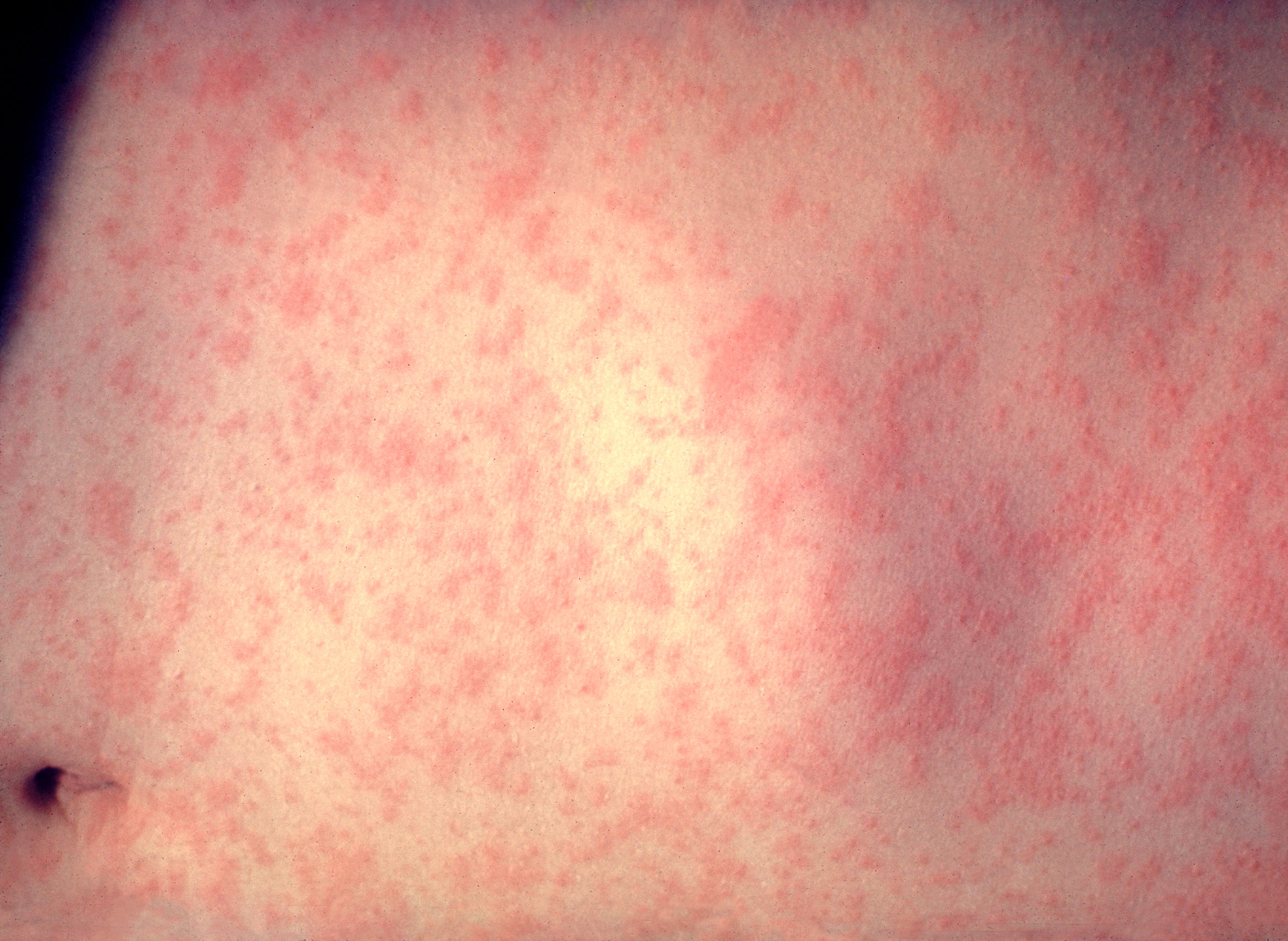
A skin rash is observed on a patient’s abdomen 3-days after the onset of a measles infection. The image was captured at New York Hospital-Cornell Medical Center in 1958. Photo by Heinz F. Eichenwald, MD /CDC Public Health Image Library.
As measles continues to spread in southwestern Wisconsin, state health officials are urging families to ensure their children are fully vaccinated before heading back to school.
Since Aug. 11, there have been 108 confirmed and probable cases across Iowa, Lafayette and Grant counties.
Nearly 45 percent of all the state’s measles cases have been in school-age children, according to state data. More than 15 percent of cases have been in children who are 4 years old and younger.
Dr. Stephanie Schauer, Wisconsin Immunization Program Manager, pointed out that the measles, mumps and rubella vaccine is one of the vaccinations required by the state for children to attend school.
She said K-12 districts, as well as local health departments and health care providers, are important partners in ensuring students are meeting the requirement.
“Schools are always, at the start of the school season, actively reviewing records to ensure that children are up-to-date,” Schauer said on a call with reporters. “They’re aware of the information from the previous school year and know where to focus their efforts.”
Schauer told WPR the county health departments have connected with local school nurses to ensure they are measles-aware. She said DHS has also provided measles education to parents and guardians by working with the state Department of Public Instruction and childcare centers.
The Vaccines for Children program provides free shots for children who have Medicaid insurance, are uninsured or considered underinsured. Schauer said residents can access the program by reaching out to their county health departments or local health care providers.
Federal data show only 85 percent of Wisconsin kindergartners were vaccinated against measles during the 2025-26 school year. The rate is similar to the previous school year.
More than 7 percent of kindergarten students in the state had a non-medical exemption to the state’s vaccination requirements last year. That’s an increase of 1 percentage point from the previous school year and continues a multi-year trend, Schauer said.
“The waiver rates are going up and have been doing that particularly since the (COVID-19) pandemic,” she told reporters. “I think there are a number of things we can attribute that to. It may be in part that there’s increased hesitancy. There’s more mis- and disinformation, and parents are trying to get answers.”
Schauer said the data also suggests that challenges with access to care could be playing a role in the overall vaccination rate. She pointed to the more than 3 percent of children who have received some vaccines but are behind the recommended schedule during the previous school year.
For families living in the counties with the ongoing measles outbreak, Schauer said people who are fully vaccinated don’t need to worry or take additional precautions other than standard practices like hand washing and staying home if you’re feeling sick.
The two-shot MMR vaccine is 97 percent effective and is thought to provide lifelong immunity.
Wisconsin health officials urge back-to-school shots as measles spreads was originally published by Wisconsin Public Radio.
If you think stories like this are important, become a member of Urban Milwaukee and help support real, independent journalism. Plus you get some cool added benefits.