Madison Fought for Years About Police Body Cams. Things Have Changed
Pressure builds for police to wear cameras after killing of Corey Ruiz.
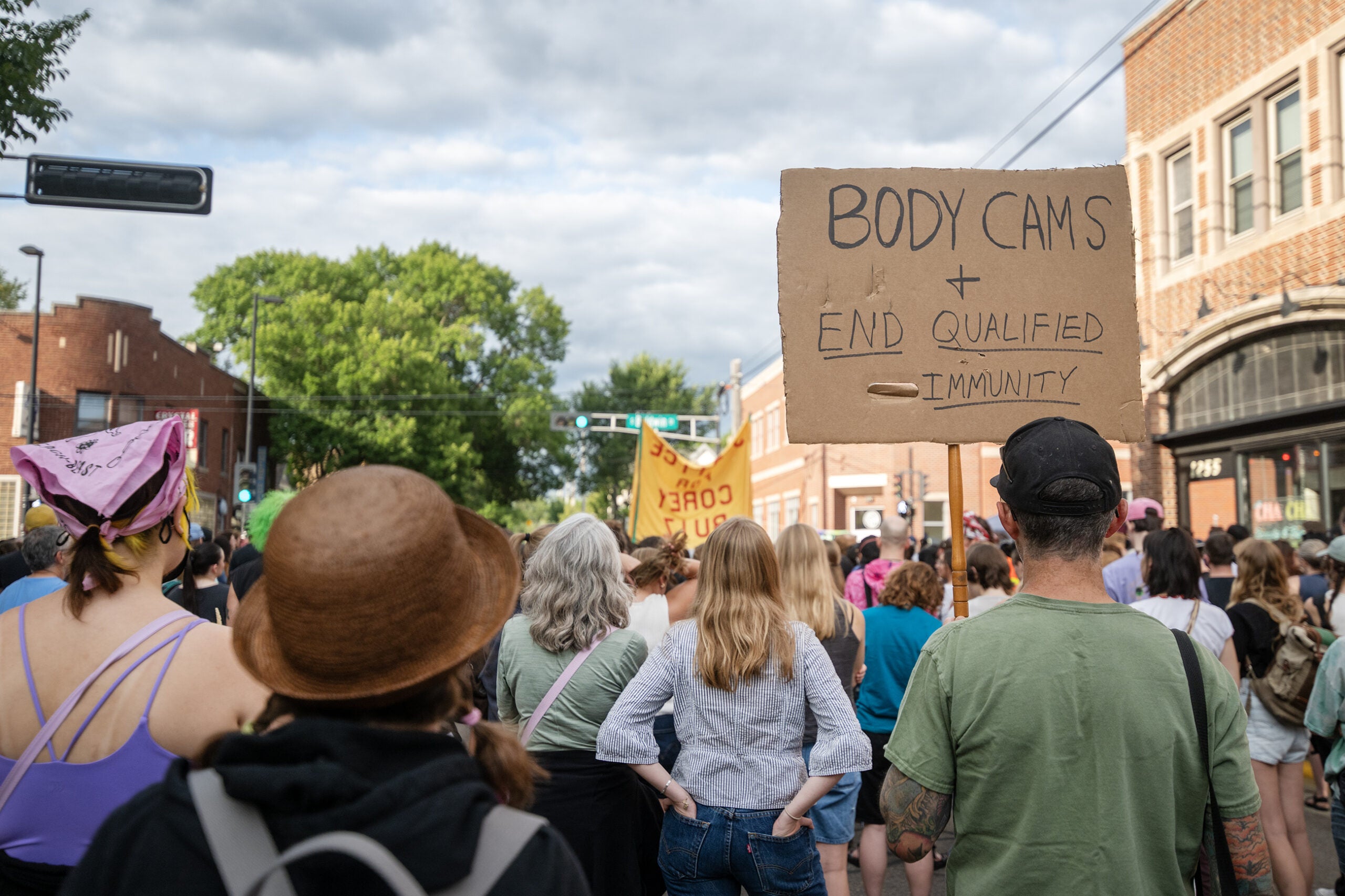
People hold signs as they listen to speakers at a vigil for Corey Ruiz on Thursday, July 23, 2026, in Madison, Wis. Angela Major/WPR
As far back as 2014, Madison officials have been debating whether the city’s cops should wear body cameras.
They’ve discussed the topic for hours in contentious public meetings. They created a Community Policing and Body Camera Ad Hoc Committee and a Body-Worn Camera Feasibility Review Committee.
Most law enforcement agencies across the nation use body-worn cameras. Among larger departments, their use is near-universal.
But in Madison, efforts to adopt the cameras on a department-wide basis have stalled for more than a decade.
That appears to be changing after a Madison police officer fatally shot Corey Ruiz, a 38-year-old Black man on July 22.
Following that shooting, pressure has been building for Madison police to adopt the cameras. The day after Ruiz’s killing, Madison Mayor Satya Rhodes-Conway announced her support for a police body camera program that could clear the Common Council by the end of this year.
DOJ expected to review video evidence of Madison police shooting
The shooting happened in the middle of the day at a busy intersection, and bystanders took video with their cellphones.
That video shows officers struggling to restrain Ruiz. While Ruiz was down on the pavement, one officer fired three shots. The video shows Ruiz being shocked with a Taser before he was shot, although Madison’s police chief has said the Taser didn’t work properly.
The police department says Ruiz pulled out a knife during the encounter, which led to an officer being injured.
Wisconsin’s Department of Justice is expected to review video evidence as part of an ongoing investigation into the shooting.
But those investigators will not be looking at body cam footage. That’s a problem, lawyers for the Ruiz family say.
“If the mayor and the chief want to build trust in the community, we got to do something about these body cameras,” attorney Ben Crump said at a news conference two days after Ruiz was shot. “It really is about transparency plus accountability, and that’s how you equal trust.”
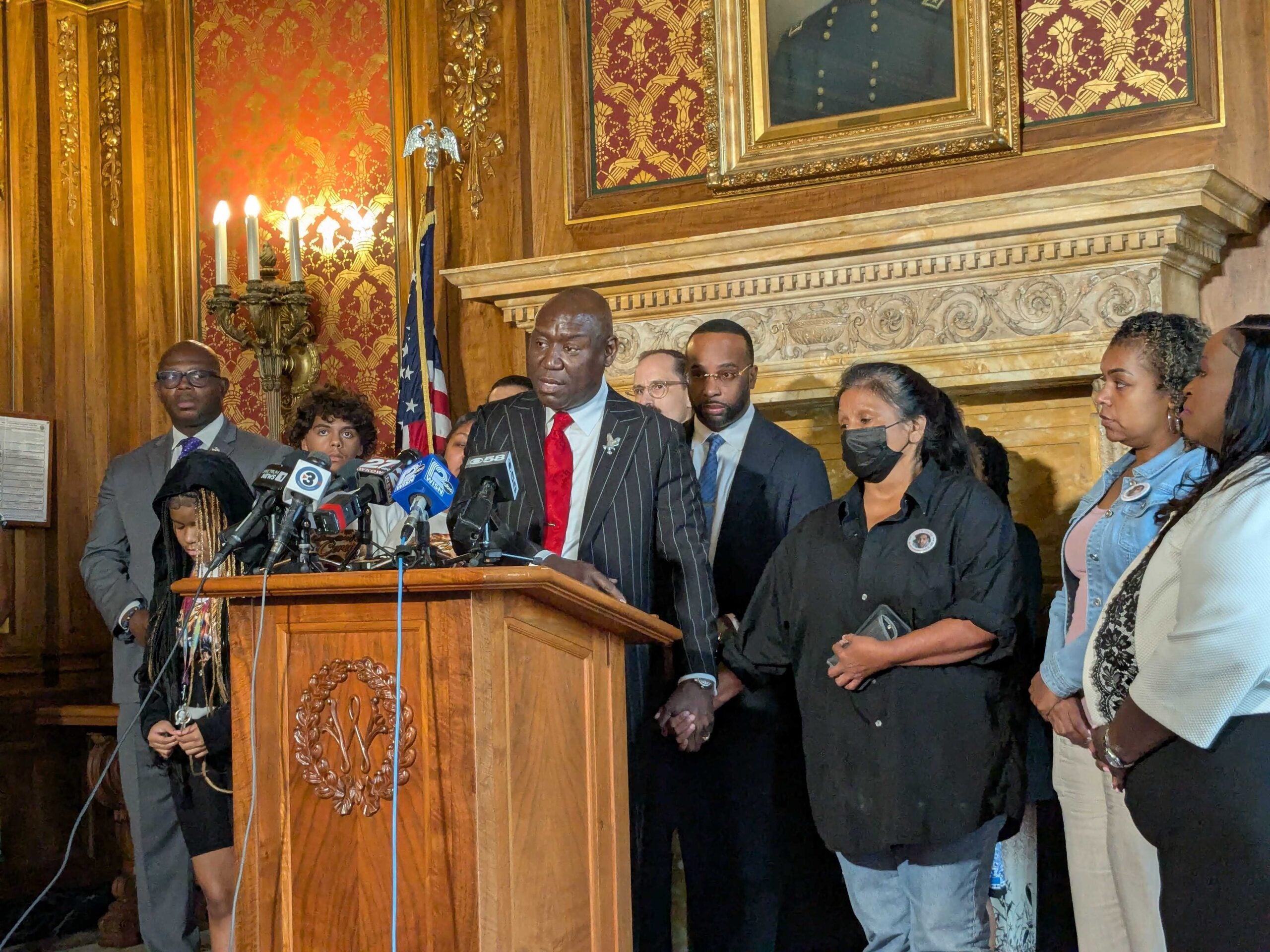
Attorney Ben Crump was joined by family members of Corey Ruiz at a press conference on Friday, July 24. Richelle Wilson/WPR
2015 Tony Robinson killing prompted some to call for body cameras
Madison police cruisers have cameras mounted on their dashboards. And officers on the department’s SWAT team and motorcycle unit wear body cams. But the rest of the department’s nearly 500 officers don’t.
In 2015, Madison saw large-scale protests after a city police officer fatally shot Tony Robinson, a biracial Black teenager. That shooting happened inside an apartment building, and the officer who shot Robinson wasn’t wearing a body camera, because the department never outfitted him with one.
The Dane County district attorney did not file charges against the officer, following a DOJ investigation. The resolution, however, left many residents unsatisfied, and some called for Madison police to start wearing body cameras.
Local debate focused on body cam limitations, potential misuses
At the time, the Obama administration was making grants available to help local police departments pay for body cameras. But not everyone in Madison felt they should be adopted. Some objected to the price tag, especially when it came to hefty costs for data storage.
In public meetings about the topic, some expressed misgivings about how the police department would handle footage and said they couldn’t trust officers to keep the cameras rolling at key moments.
During a Common Council meeting in 2018, then-Alder Amanda Hall said body cameras don’t provide a complete picture.
“A body-worn camera worn on the the chest of an officer is going to show those viewing the tape what was right in front of the officer,” Hall said. “It’s not going to give you the officer’s peripheral vision. … It’s going to essentially give you one angle, one visual.”
During that meeting, Hall joined the majority of alders in voting down funding for a program that would have tested out the cameras on a limited basis.
“This is once again not the right answer for Madison,” Hall said at the time. “There’s no need to do a pilot program to show us that it’s not the right answer for Madison.”
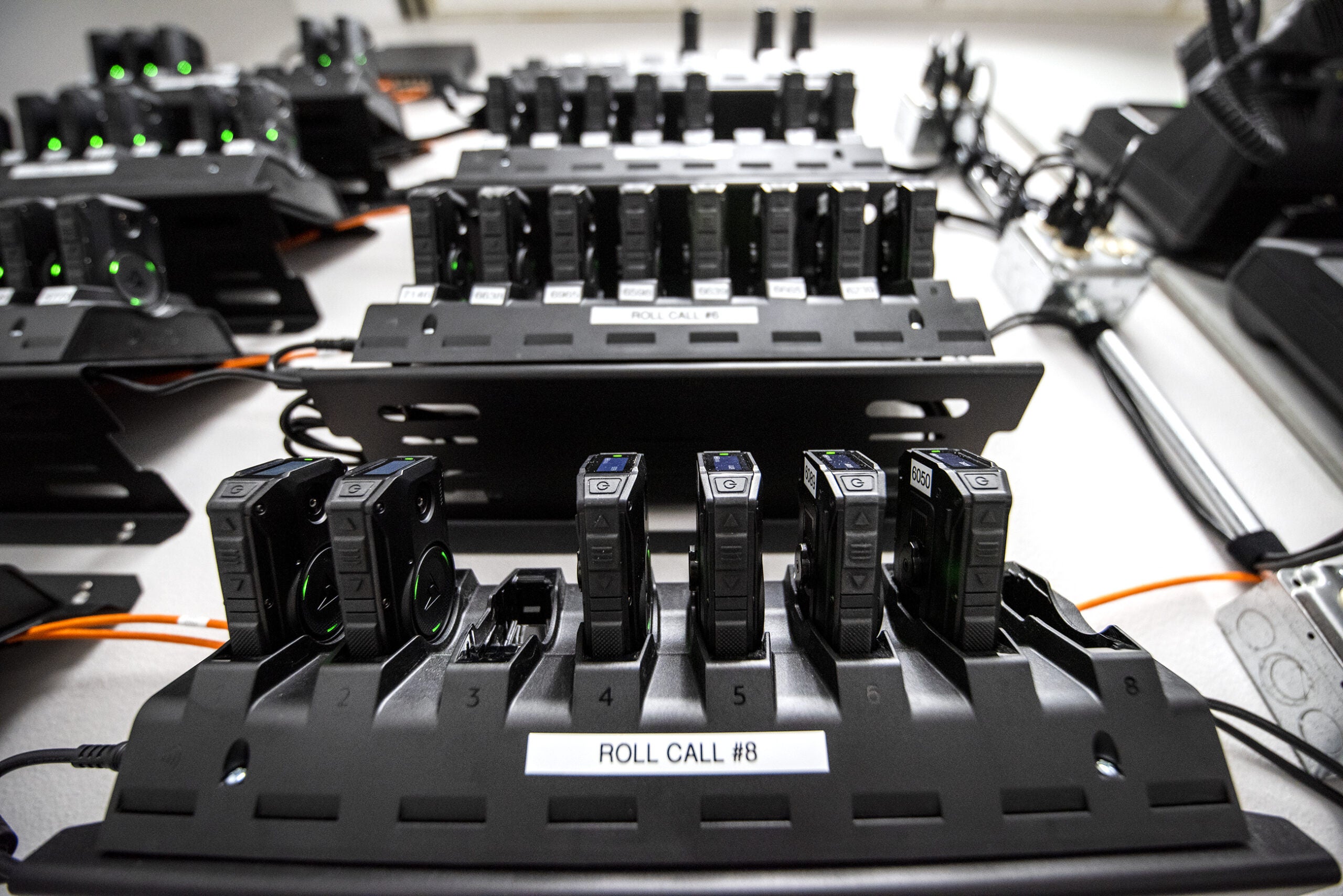
Body cameras are docked onto charging stations Tuesday, April 20, 2021, at the Wauwatosa police department. Angela Major/WPR
Hall and other alders also raised concerns about privacy. During that meeting in 2018, then-Alder Shiva Bidar-Sielaff worried that the presence of body cameras would make unauthorized immigrants scared to talk to the police.
“My fears of Immigration and Customs Enforcement possibly having access to this information is not overblown,” Bidar-Sielaff said.
Other Madison residents have suggested that body cameras could lead to authorities filing more charges against people. Body camera footage is often used as evidence in court to help police and prosecutors secure convictions.
“They hit marginalized communities with more and more prosecutions, including for for low-level offenses,” Madison resident Steve Verburg said while speaking against body cameras during a Common Council meeting in 2023. “This ongoing surveillance ends up worsening over-policing of marginalized communities.”
Over the years, the social justice group Freedom Inc. has been a vocal opponent of body cameras in Madison. The group has also called for diverting funding from Madison’s police department.
“It’s just giving them another tool to surveil our communities, which they don’t need,” Mahnker Dahnweih, a leader with Freedom Inc., said at a 2020 committee meeting. “Body-worn cams do not lead to accountability. … Let’s not give any more money … to a really well-resourced department.”
Former Mayor Paul Soglin said he regrets that body cameras weren’t adopted on a department-wide basis before he lost a re-election campaign in 2019. He blames the Common Council for blocking them, and he contends that rhetoric about defunding the police played a role.
“I think the the slogans about defunding the police have more to do with why Madison does not have body cameras than anything else,” Soglin said, noting that body cameras cost money. “You’ve got this curious, almost idiotic notion, which is shared by both the left and the right, that if you’re unhappy with an agency, what you do is you cut its funding.”
Body cams can provide valuable information, but may not reduce violence
Over the last decade of discussion in Madison, both opponents and proponents of body cameras have acknowledged that body cameras alone won’t stop all violent encounters, nor will they serve as a standalone cure for mistrust between police and residents.
Research is “mixed” on whether body cameras reduce the likelihood of an officer using force, says Nusret Sahin, a criminal justice professor at Rutgers University. Similarly, he said there’s a mixed body of evidence about whether body cameras have a definitive effect on police-community relations.
Still, Sahin noted that the cameras can provide valuable information. The footage is used by both defense attorneys and prosecutors to bolster their cases in criminal proceedings. And, when it comes to police discipline, body camera footage can be used to either clear or implicate an officer.
Increasingly, Sahin says, body cameras are seen as the norm in policing.
“The public expects their agency to use the camera,” Sahin said. “So when a high-profile incident happens, they can see what actually happened.”
Madison mayor says cost swayed her the decision
Madison Mayor Satya Rhodes-Conway supported a pilot program, which allowed some Madison officers to try out body cameras in 2024. In the past, she’s stopped short of backing body cameras for the full department.
That’s changed, and during a news conference on July 23, Rhodes-Conway said costs swayed her decision.
“When we initially got the estimates from the pilot (program), there was a very large price tag, and the (police) chief has worked to bring that price tag down in various ways,” the mayor said.
Rhodes-Conway is asking the Common Council to approve a body camera funding request that was submitted by the city police chief back in April. That proposal calls for about $400,000 over a three-year period to pay for cameras and other equipment. Additional costs are expected to cover personnel needed to deal with a body camera program.
For 2026, Madison police department has a $49 million capital budget in addition to an operating budget of more than $98 million.
Madison Police Chief John Patterson is a vocal proponent of body cameras. So is the Wisconsin Professional Police Association, a union representing law enforcement officers including those in Madison.
Madison’s Common Council President Sabrina Madison has said she believes the body will vote to approve body cameras by the end of this year. Madison first joined the council in 2022.
Madison’s independent police monitor supports body-worn cameras, and so does the Police Civilian Oversight Board — with caveats.
“We need to be part of the policy implementation, policy writing and implementation of how police body-worn cameras are rolled out,” PCOB Vice Chair Helyn Luisi-Mills said at a recent news conference.
Candidates for governor call for body cams
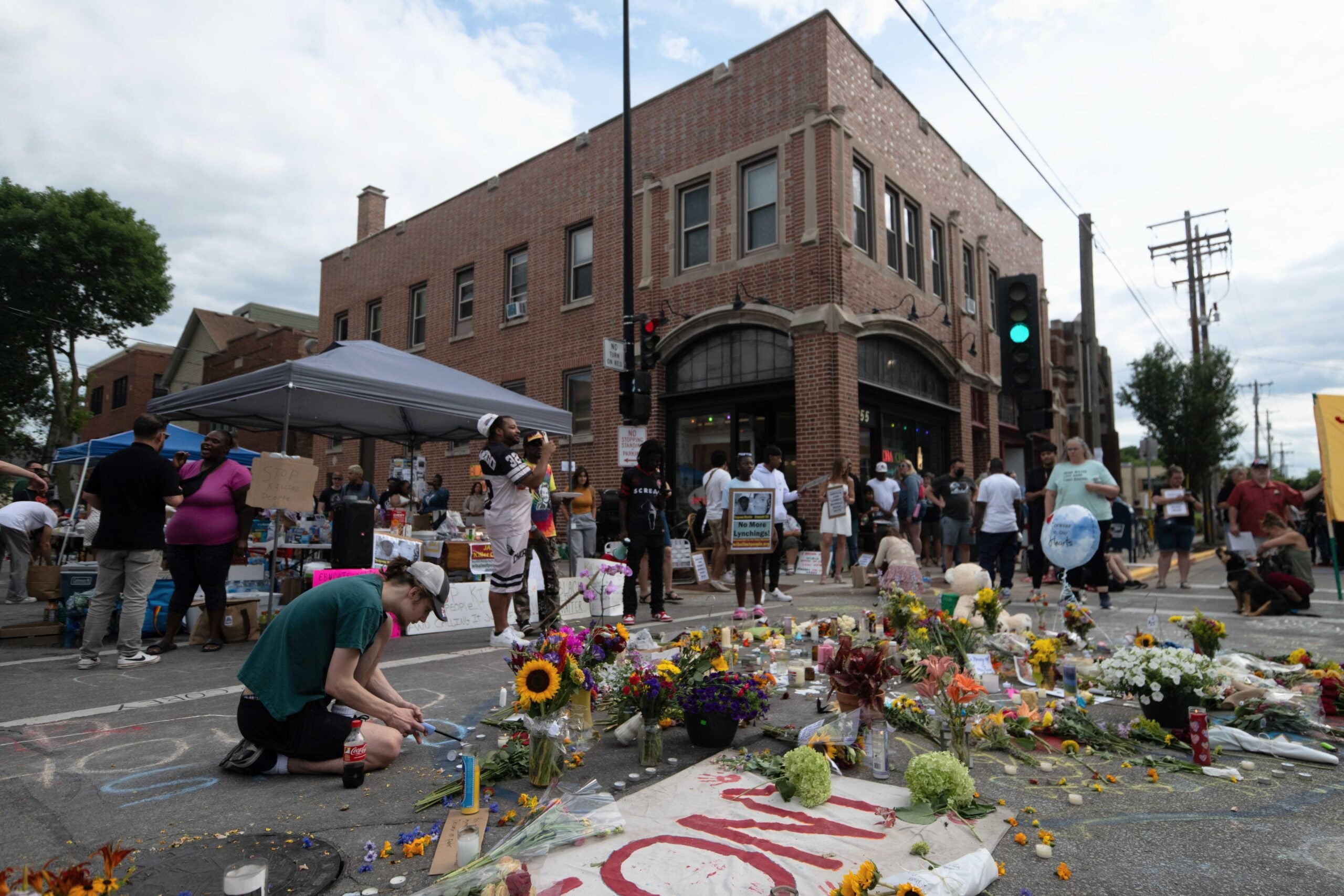
Community members add to a memorial for Corey Ruiz, 38, on July 23, 2026 at the intersection of Williamson Street and S. Baldwin Street Madison, Wis. Ruiz was shot and killed by police on July 22, 2026. Angela Major/WPR
Since the shooting of Ruiz, the groups calling for Madison police to wear body cameras have ranged from the state’s Libertarian Party to Ex-Incarcerated People Organizing of Wisconsin.
During a gubernatorial debate hosted by WISN-TV last week, several Democratic primary candidates raised the need for Madison police to wear body cameras.
And all of the Democratic candidates promised that, if elected governor, they’d sign a law requiring body cameras for all law enforcement agencies in the state.
Madison Alder Davy Mayer, who represents the near east side neighborhood where Ruiz was shot, expects body camera funding to clear the Common Council as part of a budget vote in November. Mayer says he believes the pros of body cameras outweigh the cons.
“Unfortunately, sometimes it takes an incident to get change to happen,” said, Mayer who was elected to the council in April 2025. “And that’s what we’re seeing here.”
Madison fought for years about police body cams. Leaders say things have changed. was originally published by Wisconsin Public Radio.
If you think stories like this are important, become a member of Urban Milwaukee and help support real, independent journalism. Plus you get some cool added benefits.