

Amani Homeownership TIF Would Add 95 Houses To CDA Pipeline
'Backbone' TIFs will have created 228 homes.
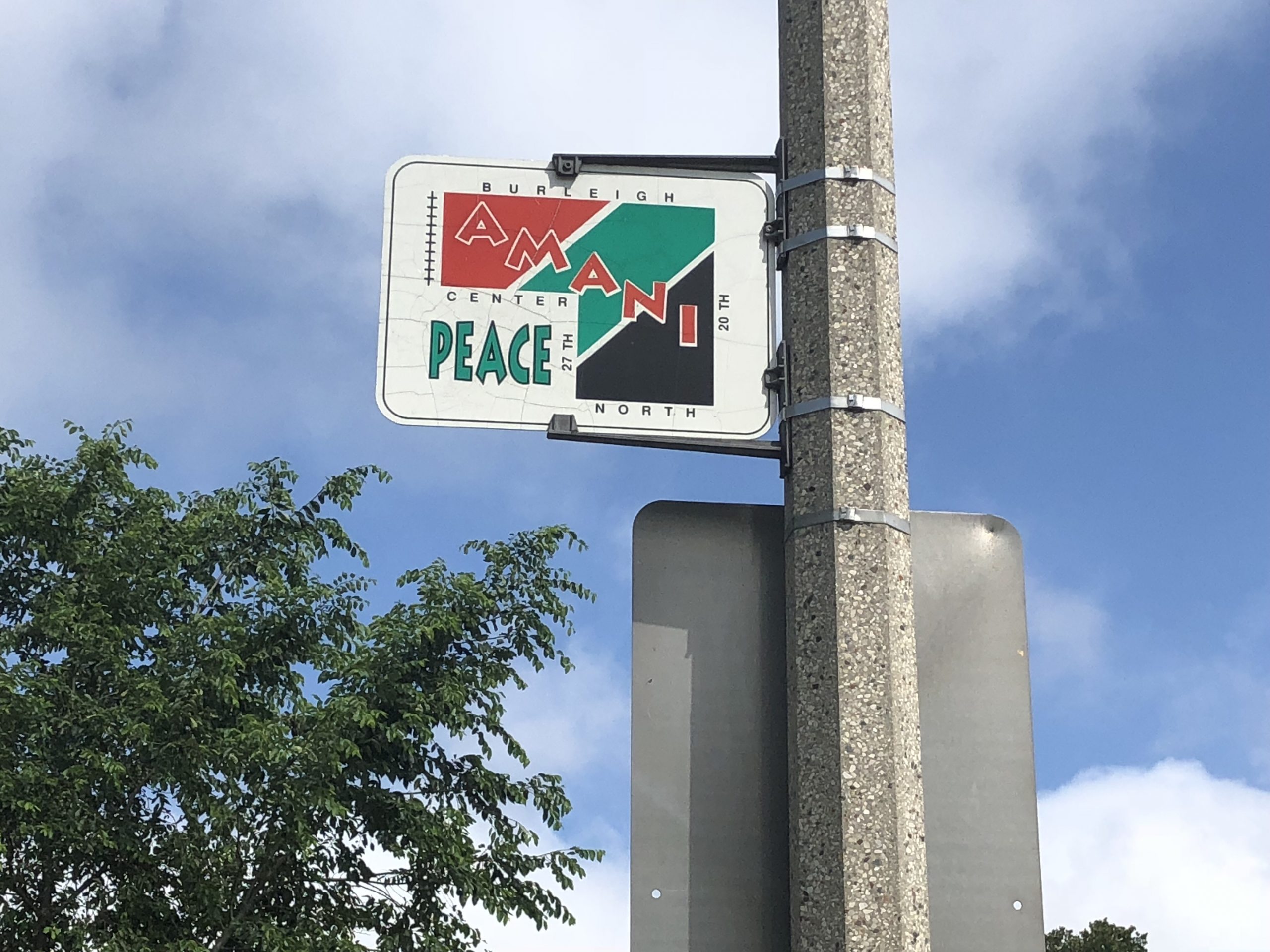
Amani neighborhood sign. Photo by Jeramey Jannene.
The City of Milwaukee is pursuing a third “backbone” tax incremental financing district to support the construction of a cluster of affordable homes.
The board of the Redevelopment Authority of the City of Milwaukee approved the creation of the Amani Homeownership Initiative TIF district on July 16. The measure next goes to the Common Council for approval.
The $3.57 million city financing package would support the construction of 95 single-family homes in the Amani neighborhood through a collaboration involving Milwaukee Habitat for Humanity, Emem Group, Milwaukee Community Crossroads, Ezekiel HOPE and the Community Development Alliance (CDA).
“We think that Amani and the residents of Amani deserve this investment,” said Frank Martinez, CDA deputy director, during the authority’s meeting.
The development plan calls for Habitat to construct 50 homes, Emem Group to build 40, Milwaukee Community Crossroads to develop four and Ezekiel to build one.
The Habitat, Community Crossroads and Ezekiel houses would be sold as affordable homeownership opportunities. Emem’s 40 houses would initially operate as rentals under the federal low-income housing tax credit program before being sold to owner-occupants after the 15-year tax-credit compliance period.
All 95 homes would be constructed on vacant, city-owned lots.
The TIF district, #136, includes 358 parcels totaling approximately 35.8 acres. It is generally bounded by W. Burleigh Street, W. Meinecke Avenue, N. 18th Street and N. 26th Street.
But the district is not shaped like a traditional development site. It instead connects scattered vacant lots across the neighborhood, creating a “backbone” that allows the city to capture the increased property tax revenue generated by the new houses.
State law requires TIF districts to be contiguous, forcing the city to connect the individual development parcels into a single district.
“This is our third backbone TIF,” said Department of City Development redevelopment and special projects director Larry Kilmer.
He said the first two districts, which support similar housing initiatives from the CDA and its partners in the Midtown and Harambee neighborhoods, “have been going very, very well.”
The city’s contribution would be structured as a developer-financed TIF. The Community Development Alliance and its partners would advance the money for the housing projects and be repaid only from the increased property tax revenue generated within the district.
The authority would repay up to $3.57 million, plus interest of up to 2.5%, over no more than 25 years. The district is projected to close by 2051.
Unlike a traditional city borrowing package, the arrangement places the initial financing risk on the development partnership. If the new houses do not generate the projected tax revenue, the city would not be required to use its general property tax levy to cover the shortfall.
The TIF funding is intended to close part of the substantial gap between the cost of constructing a new house and the price an income-qualified buyer can afford.
“The funding gap is about $100,000 for each of these homes,” said Milwaukee Habitat CEO Brian Sonderman of the construction cost versus sales price for his organization’s homes.
He said the TIF district would cover approximately $40,000 of that gap for each Habitat house. The nonprofit would privately raise the remainder through donations, grants, volunteer labor and other funding sources.
Habitat expects to complete its portion of the initiative over three years, with the first four houses scheduled to begin this year.
The district’s 358 parcels currently have a combined assessed value of approximately $10.8 million. The city’s project plan says the initiative would return long-vacant land to productive use, expand the supply of affordable housing and increase homeownership opportunities for low- and moderate-income residents.
Emem Group previously partnered with Habitat on the city’s first backbone TIF district in the Midtown neighborhood. That project included 20 duplexes containing 40 rental units and 34 Habitat houses.
Firm President Michael Emem said the earlier development was completed on time and is now fully occupied.
“That project is a success,” the representative said.
The city created its second backbone district in 2025 to support 59 affordable houses in the Harambee neighborhood, including 51 Habitat houses and eight houses reserved for early-childhood educators.
Combined, the three districts would support the creation of 228 houses.
The RACM board approved the Amani district with board member Montavius Jones abstaining. The Common Council must approve the TIF plan before the financing package can move forward.
Existing members must be signed in to see the interactive map. Sign in.
If you think stories like this are important, become a member of Urban Milwaukee and help support real, independent journalism. Plus you get some cool added benefits.



















This is a great program to create homes that families can live in and gain an equity stake in their house and home appreciation. We have enough mega apartment complexes often financed with handouts from the local government. The powers to be need to find ways to have incentives for more homebuilding that is available for working class families.