New Plan For Mitchell Street Building Once Targeted For Demolition
Third time's the charm for Zuwena Cotton?
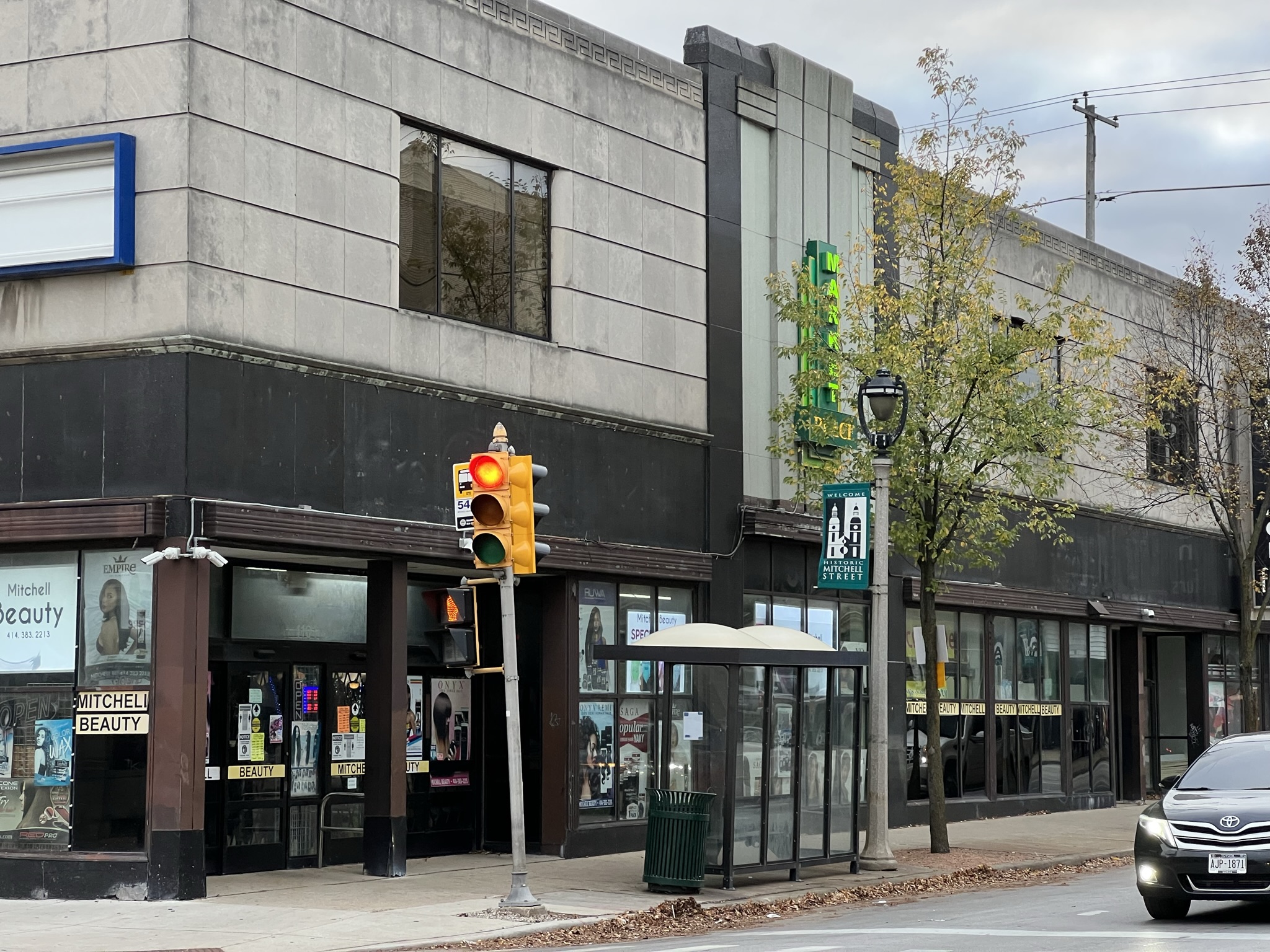
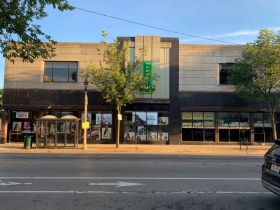
1101-1113 W. Historic Mitchell St. Photo by Jeramey Jannene.
Developer Zuwena Cotton is moving forward with a substantially smaller housing plan for a prominent Historic Mitchell Street property, pivoting to a new city financing program intended to support workforce housing.
It is the third time she has advanced a plan to redevelop the two-story, 47,300-square-foot building at 1101-1113 W. Historic Mitchell St.
The Redevelopment Authority of the City of Milwaukee unanimously approved a $480,000 tax incremental financing (TIF) subsidy Thursday for Cotton’s redevelopment, sending it to the Common Council for review.
The revised $9.5 million proposal calls for creating 25 apartments on the building’s second floor, a mix of studio and one-bedroom units. The first floor would continue to house commercial and community-serving tenants, including Cesame Street Child Development Center and IMAN Community Health Center.
Cotton, president of BBE Investments and Development, called it a “right-sized” proposal for the property.
Construction, she said, is expected to begin in September and be completed in late 2027.
Cotton previously pursued two different redevelopment strategies for the property that involved low-income housing tax credits.
In late 2022, Cotton went public with her plans to demolish the building and construct a five-story, 55-unit apartment building. She also planned townhouses on nearby parking lots.
By late 2023, she pivoted to saving the historic commercial building and partnering with Cinnaire Solutions to develop a five-story, 51-unit building on a privately-owned parking lot, 1718-1734 S. 12th St. She planned to add eight three-bedroom, two-story townhomes on a city-owned parking lot across the street at 1747 S. 12th St.
But she returned the credits to the Wisconsin Housing and Economic Development Authority (WHEDA) in 2025 after being unable to close a financing gap amid rising construction costs.
The latest proposal would instead use a city program, first unveiled in April 2025, that supports privately financed workforce housing developments through developer-financed tax incremental districts.
Under the structure, the developer finances the project upfront and is repaid from the incremental property tax revenue generated by the development. The $480,000 city obligation would carry a 5.75% interest rate and a maximum repayment period of 15 years.
The property is currently assessed at $1 million.
The current rent structure, said Cotton, would be targeted to households earning approximately 75% of the Milwaukee area median income, though the city agreement permits rents affordable to households earning no more than 80% of the area median income. A studio apartment is projected to rent for approximately $1,354 per month.
The affordability requirement would remain in place for 20 years or until the tax incremental district is closed, whichever period is longer.
The city program is intended to serve households earning more than those typically supported by state and federal low-income housing tax credits, while still requiring rents below unrestricted market rates.
The Historic Mitchell Street project would be the development located farthest from downtown to use the new financing structure. Other projects using the program include the Mitchell Building redevelopment, the 100 East office tower conversion and New Land Enterprises’ Via and Forma developments.
The agreement also contains a profit-sharing provision intended to allow the city to recover additional money if the project performs substantially better than anticipated.
If the development is sold or refinanced during the affordability period and generates a return greater than 15%, the city would be entitled to 30% of the proceeds above the established threshold. The 30% share is greater than the clawback included in some of the city’s earlier workforce-housing agreements.
The development team includes Que El-Amin of Scott Crawford Inc. Additional project partners include Khalek Building Services and Continuum Architects + Planners.
The financing package relies heavily on historic preservation tax credits and securing at least one loan from two relatively new WHEDA competitive loan programs.
Total project costs are estimated at $9,484,390. The proposed financing includes a $2.99 million conventional loan, approximately $1.33 million each in federal and state historic preservation tax credit equity, a $1.25 million WHEDA Restore Main Street loan, a $1.25 million WHEDA Vacancy-to-Vitality loan, an $853,595 deferred developer fee and the $480,000 city TIF contribution.
Cotton has applied for both WHEDA loans, with funding announcements expected by the end of July. City officials described the WHEDA programs as competitive and said securing the awards remains an important piece of the financing package.
The Vacancy-to-Vitality program supports the conversion of vacant or underused commercial buildings into housing, while Restore Main Street is aimed at residential development in upper floors of commercial buildings.
The developer also voluntarily agreed to comply with the city’s Small Business Enterprise and Residents Preference Program requirements, the latter of which requires at least 40% of project work hours to be completed by unemployed or underemployed city residents. Twenty parking spaces would be reserved for residents on an adjacent parcel.
“These deals are very complicated,” said RACM Commissioner Montavius Jones, who called the proposal a “great project.”
Jones said he was happy to see Cotton and her team continuing to work through the financing and development challenges.
The building had eight tenants as of 2025.
The structure dates back to 1895 and was long a home for The Grand department store. A 2022 preservation report prepared by then-commission staffer Carlen Hatala says the building is an important piece of the history of the store, created by a Jewish immigrant and the first in the city to cater exclusively to women.
Cotton purchased the Art Deco-style building in September 2020 for $350,000.
Exterior modifications to the building will require approval from the Historic Preservation Commission.
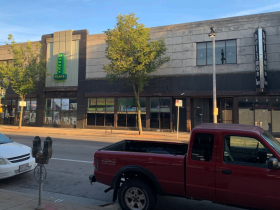
2022 Photos
Existing members must be signed in to see the interactive map. Sign in.
If you think stories like this are important, become a member of Urban Milwaukee and help support real, independent journalism. Plus you get some cool added benefits.