

State Officials Celebrate Extended Medicaid Coverage After Pregnancy
Wisconsin becomes 49th state to extend postpartum Medicaid coverage.
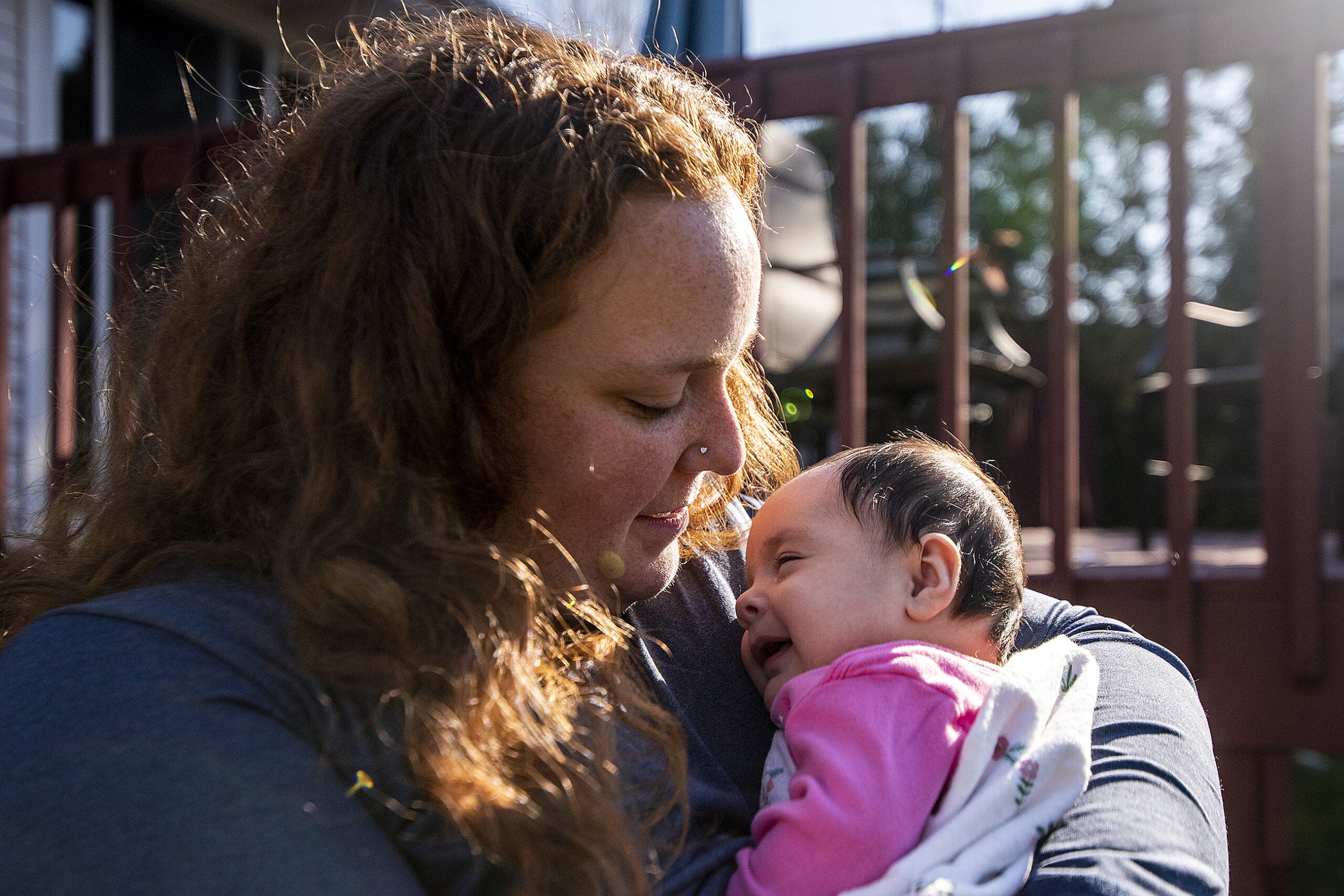
Leah De Gabriel holds her infant daughter Aubree on Nov. 6, 2021, in Madison, Wis. De Gabriel said with all the changes going on in a woman’s body after childbirth, returning to work too soon can be really challenging. “I don’t think anybody benefits when mothers have to go back before they’re ready,” she said. Angela Major/WPR
Wisconsin health officials hope newly extended Medicaid coverage will save the lives of both mothers and babies in the state.
Those who are pregnant and eligible for the program can now qualify for one year of Medicaid coverage postpartum instead of only 60 days, thanks to a state law passed earlier this year.
The coverage extension went into effect on Wednesday, and will apply to anyone who is currently pregnant or whose 60-day postpartum period was scheduled to end on March 31 or after.
Two of every five births in Wisconsin are covered by Medicaid, according to the Wisconsin Department of Health Services. The agency estimates 16,000 pregnant people will benefit from extended coverage in the first year.
DHS Secretary Kirsten Johnson said on a call with reporters that the coverage applies no matter the outcome of a pregnancy, allowing those who experience a miscarriage or stillbirth to also get the care they need.
“We know after pregnancy, a person’s body goes through significant changes that can impact the way they feel physically and mentally,” Johnson said. “Sometimes more serious care is needed to help those who experience delivery complications or miscarriage, or those who are having a difficult time navigating intense feelings as they transition to being a parent.”
Wisconsin is the 49th state to extend postpartum Medicaid coverage after a federal law in 2021 first gave states the option to stretch coverage up to one year.
Dr. Jasmine Zapata, state epidemiologist for maternal and child health and chronic diseases at DHS, said mental health conditions, including overdose, are a leading cause of pregnancy-related deaths in the state.
“Several of those deaths happen after that 60-day postpartum period,” Zapata said on a call with reporters. “So extending this coverage is literally going to save lives.”
She said offering one year of Medicaid coverage postpartum is projected to prevent between 1 and 7 maternal deaths for every 100,000 births in the state.
Data from states that have already extended Medicaid coverage shows a 50 percent or greater decline in infant mortality rates compared to states without extended coverage, according to Zapata.
She said the reduction is both from mothers being healthy enough to care for their children and from preventing “short interval” or back-to-back pregnancies, which increase the risk of preterm birth and infant death.
The coverage extension could also help address the significant disparity in maternal deaths for Black Wisconsinites. DHS data show Black people in Wisconsin die from pregnancy-related causes at more than twice the rate of the general population.
Cardiovascular conditions, including preeclampsia and stroke, are the leading cause of death for Black mothers in the state. Johnson said treating these conditions takes both immediate care and long-term management.
“(Being) 60 days postpartum does not mean that you heal from a cardiovascular disease, which is frequently a chronic disease,” she said.
Johnson said DHS will be tracking the impact of the coverage extension in the coming year. The state will evaluate claims data to understand what services are being used and how frequently people are taking advantage of the coverage.
State health officials celebrate extended Medicaid coverage after pregnancy was originally published by Wisconsin Public Radio.
If you think stories like this are important, become a member of Urban Milwaukee and help support real, independent journalism. Plus you get some cool added benefits.




















Good news for Maternal Health. Republicans in the Assembly capitulated after 8 years. Leader, Robin Voss and others retired. A latch ditch effort public relations ploy. Yet they let people die. Why? Fewer Democratic voters. Fewer poor workers, fewer Black Citizens, etc
They know District Maps are no longer rigged. The playing field is leveled.
We will rise from the lowest 2% in the United States.
It’s well past time! Thank you to Sen Jesse James, Rep Robyn Vining, and many others who fought so hard for this bill to pass. We are 49th in public health funding, and mental health care, especially in Milwaukee, is abysmal. We still have work to do!